St. Euphrosyne of Alexandria, the Nun Who Lived as the Monk Smaragdus
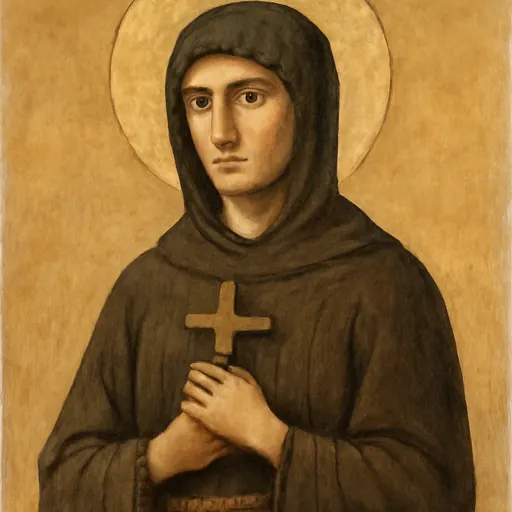
St. Euphrosyne of Alexandria was, by the ancient story, the only daughter of a rich Christian named Paphnutius. To escape a marriage, she dressed as a man and, as the monk Smaragdus, lived thirty-eight years in a monastery of men near Alexandria. She revealed herself only as she died, about 470. The Eastern Church keeps her feast on September 25.
Who was St. Euphrosyne of Alexandria?
St. Euphrosyne of Alexandria is one of the holy women of the early Egyptian desert, remembered for a life hidden so completely that even her own father did not know her. As her story is told in the Lives of the Fathers, she was the only daughter of a wealthy Christian of Alexandria named Paphnutius. Wanting to belong to God alone, she ran from a planned marriage, dressed as a man, and lived for thirty-eight years in a monastery of men as the monk Smaragdus. Only on her deathbed, about 470, did she tell her father who she was.
The Catholic Encyclopedia frankly places her story among the legends of women who "put on male attire and passed for men" in order to live the ascetic life they had vowed. We honor her as the Church always has, while being honest that the details come from a pious narrative, not a record we can check. Her feast in the East is September 25.
The story of St. Euphrosyne
A daughter of Alexandria
The Orthodox Church in America's life tells the story this way. Euphrosyne was born early in the fifth century to illustrious parents. Her mother died when she was twelve, and her devout father raised her. Paphnutius often visited a monastery outside the city, where the abbot was his spiritual father, and he took his daughter with him.
When she was eighteen, her father arranged a rich marriage for her and went to the monastery to ask the abbot's blessing on the wedding. The abbot spoke with Euphrosyne and blessed her, but her heart was already set on the monastic life.
Smaragdus
One day she gave away her possessions to the poor and slipped out of the house. She feared that her father would search every women's convent in Egypt, so she cut her hair, put on men's clothing, and went to the very monastery she had known since childhood. She asked to be received under the name Smaragdus, and the monks, who did not recognize her, took her in.
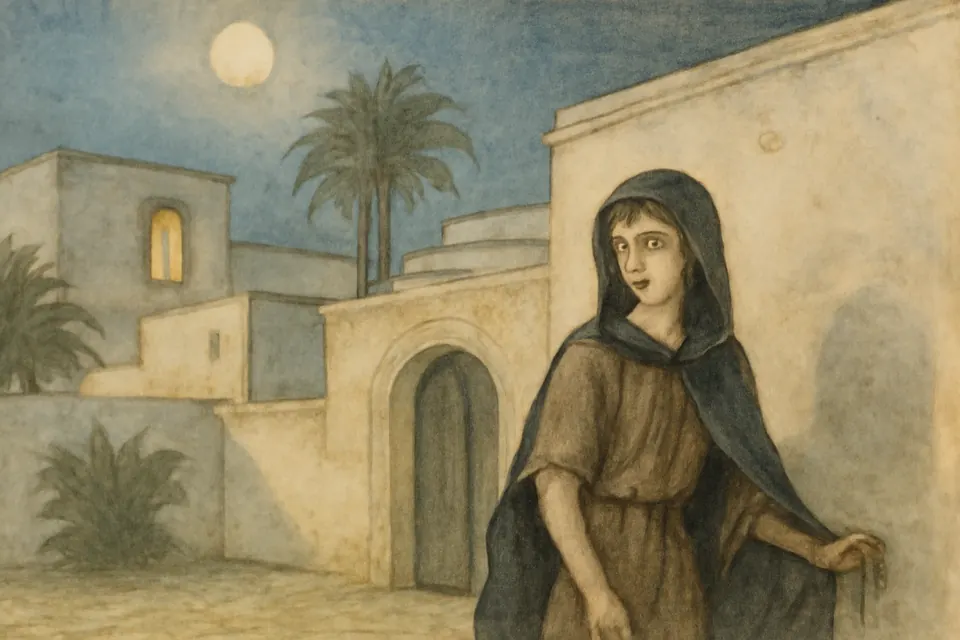
The abbot soon noticed how quickly the young monk advanced in prayer and self-denial. She lived in a solitary cell, fasting and praying, and served everyone willingly.
The father and the monk
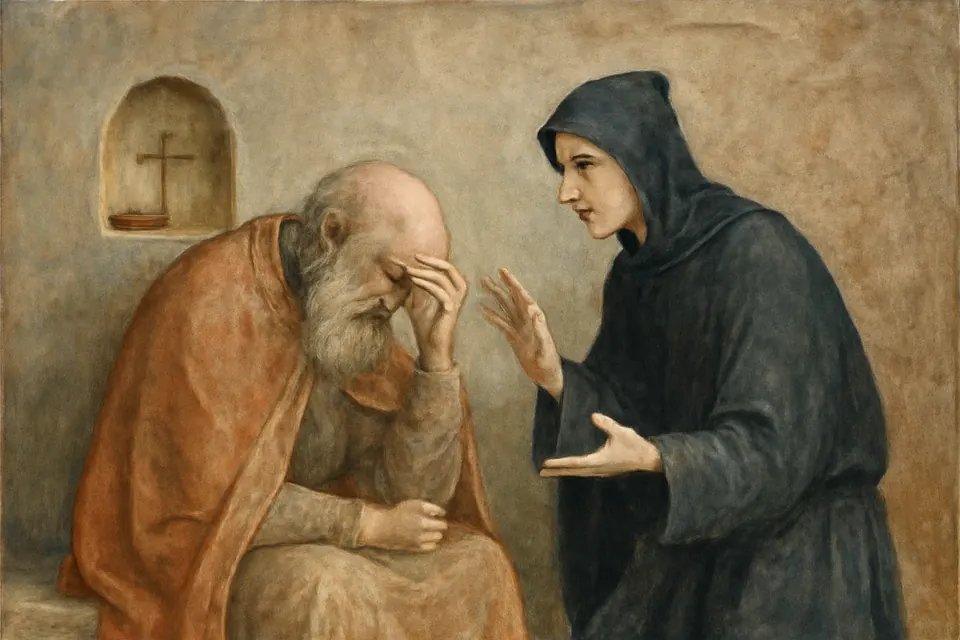
Paphnutius was heartbroken. He searched for his daughter and came again and again to the abbot for comfort. The abbot sent him to talk with the young monk Smaragdus. Over the years the grieving father poured out his sorrow to his own daughter, and she counseled and consoled him without once giving herself away.
Her death and her father's vow
After thirty-eight years, as she lay dying, Euphrosyne told Paphnutius the truth and asked that no one but he should prepare her body for burial. After her death he gave his wealth to the poor and to the monastery, became a monk himself, and lived for ten years in his daughter's cell until he died. The Church honors father and daughter together.
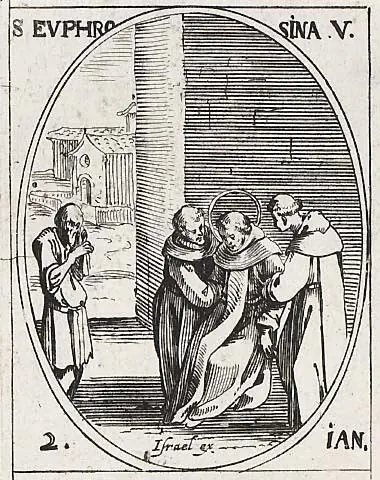
History and legend
- Traditional: the whole narrative, from the flight from home to the deathbed revelation, comes from her life in the Vitae Patrum, the Latin collection of lives of the desert saints. The Catholic Encyclopedia lists the Latin and early printed versions, including the Acta Sanctorum for February.
- Traditional: her father Paphnutius is honored with her as a saint in the Eastern Church.
Her story is close to those of St. Marina the Monk and St. Theodora of Alexandria. Monks and nuns retold it through the Middle Ages, and the Catholic Encyclopedia points to Latin, Greek and early printed versions of her life. What the story asks of us is plain enough: to want God more than comfort, and to serve without being noticed.
Symbols of St. Euphrosyne in art
- Monk's habit and cowl: her hidden life as Smaragdus. Western prints often show her as a hooded monk, and you may only know it's a woman from the inscription.
- Cross and book: her life of prayer and penance.
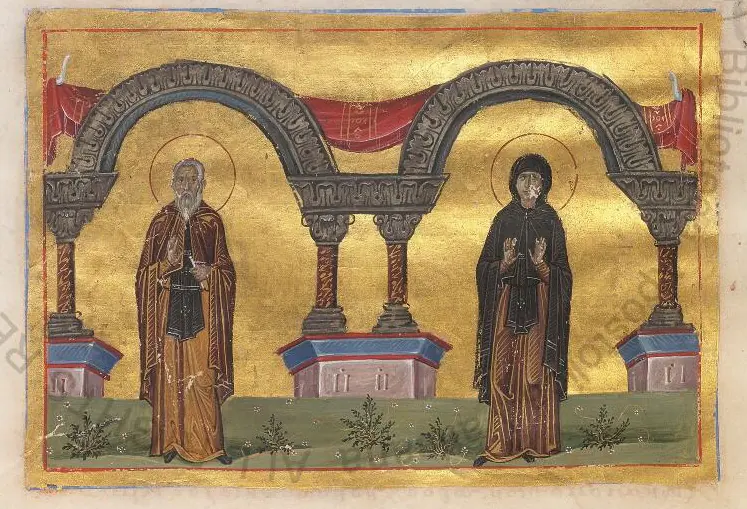
- An old man at her side or her deathbed: her father Paphnutius, often shown with her in Byzantine art, as in the Menologion miniature above.

Feast day
We keep her memory on September 25, with St. Paphnutius, as the Orthodox and Eastern Catholic churches do; the Orthodox Church in America also remembers father and daughter on February 15. The older Roman Martyrology placed her on January 16, and the Carmelites on February 11. See the other saints of September on our feast days page.
Praying with St. Euphrosyne
We know of no traditional English prayer addressed to her. We can ask her help for young people discerning a vocation, for parents who grieve a child's absence, and for the grace to do good without being seen. St. Euphrosyne of Alexandria, pray for us.
Frequently asked questions
Who was St. Euphrosyne of Alexandria?
According to her life in the Lives of the Fathers, she was the daughter of Paphnutius of Alexandria. She left home to avoid marriage and entered a men's monastery disguised as the monk Smaragdus, living there for thirty-eight years until her death, about 470.
Is the story of St. Euphrosyne true?
The Catholic Encyclopedia says her story belongs to a group of legends about women who lived as monks to follow the ascetic life. The Church honors her holiness, but the details of the narrative can't be checked against other records.
When is the feast of St. Euphrosyne of Alexandria?
September 25 in the Orthodox and Byzantine calendars, with her father Paphnutius. The older Roman Martyrology placed her on January 16, and the Carmelites kept her on February 11.
Is she the same as St. Euphrosyne of Polotsk?
No. St. Euphrosyne of Polotsk was a twelfth-century princess and abbess in what is now Belarus. Euphrosyne of Alexandria lived in fifth-century Egypt.
Keep exploring
Sources
- St. Euphrosyne, Catholic Encyclopedia (1909), New Advent. The legend's source in the Vitae Patrum and its place among the stories of women living as monks; thirty-eight years as Smaragdus; feasts on September 25, January 16 and (Carmelites) February 11
- Venerable Euphrosyne of Alexandria, Orthodox Church in America. Her mother's death when she was twelve; her age at the planned marriage; her father's ten years in her cell; commemoration also on February 15