Blessed Francis Xavier Seelos
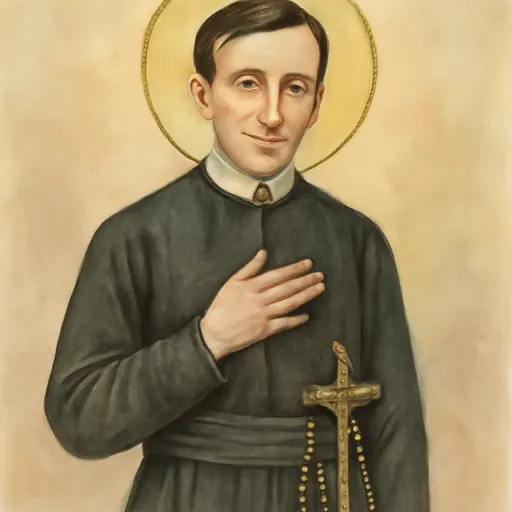
Blessed Francis Xavier Seelos (1819–1867) was a Bavarian-born Redemptorist priest who served German and English-speaking immigrants across the United States, worked beside St. John Neumann in Pittsburgh, and died of yellow fever in New Orleans after nursing its victims. Pope John Paul II beatified him on April 9, 2000. His feast day is October 5, and his remains rest at his national shrine in New Orleans.
Who was Blessed Francis Xavier Seelos?
Blessed Francis Xavier Seelos was a Redemptorist priest from Bavaria who gave his life to the immigrant Catholics of the United States. For twenty-four years he served as a pastor, novice master, seminary rector and traveling preacher from Pittsburgh to Detroit to New Orleans. People lined up for hours to confess to him. He died in New Orleans in 1867, at forty-eight, after catching yellow fever while caring for its victims. Pope John Paul II beatified him in 2000.
He built no great church and wrote no great book. The shrine that keeps his memory puts it well: "his spirit continues to speak to thousands today by the cheerfulness and gentleness that marked his life."

The life of Blessed Francis Xavier Seelos
A sickly boy in Füssen
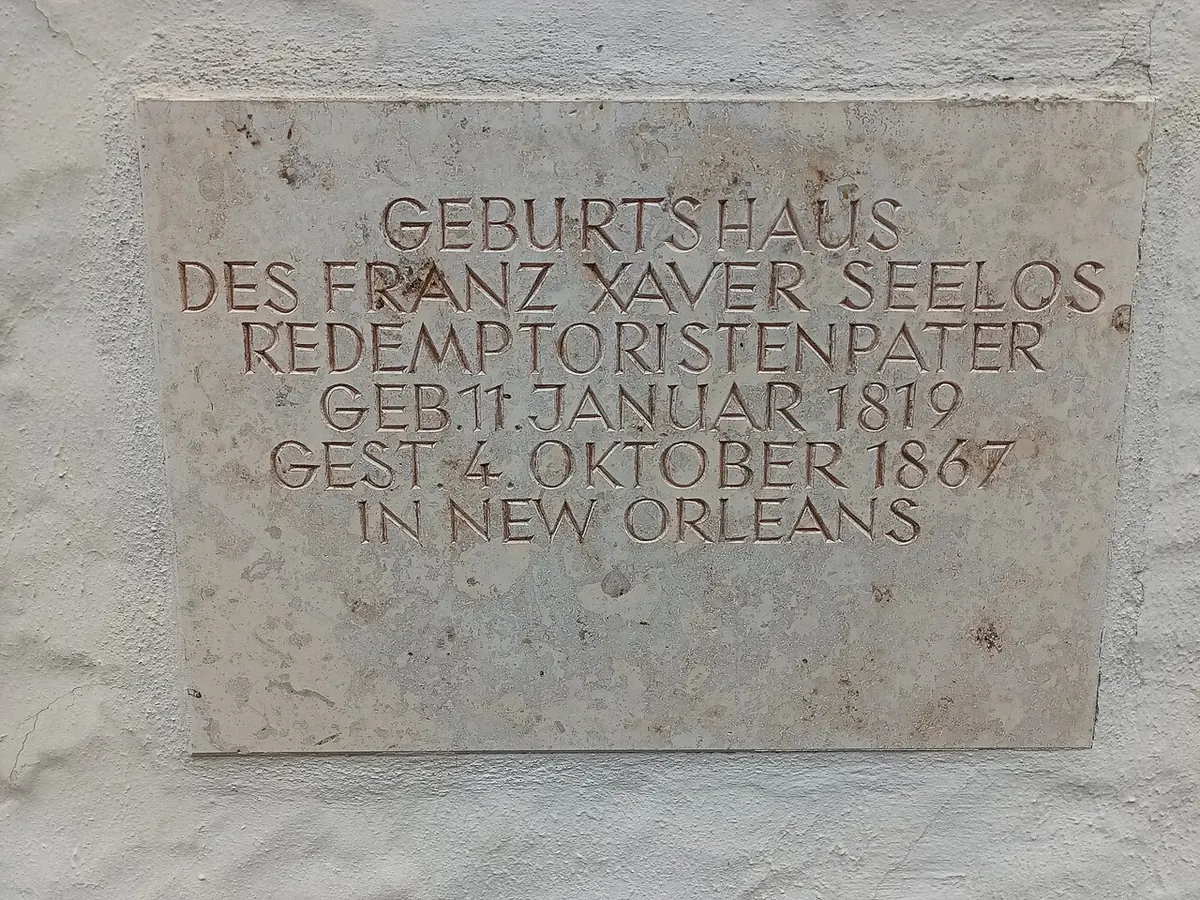
Franz Xaver Seelos was born on January 11, 1819, in Füssen, a small town in the Bavarian Alps, and baptized the same day in the parish church of St. Mang. He was one of twelve children. Until he was nine he was so often ill that his family didn't expect him to survive childhood. His sister Antonia remembered: "He was always so amiable and tranquil that we loved him most of all."
He studied at the gymnasium in Augsburg, where classmates nicknamed him "Banker Seelos" because he lent or gave away every penny he had, and then philosophy at the University of Munich. A fellow student remembered how loudly he sang at Mass: "Sometimes I said to him, 'Seelos, don't shout so loud,' but to no avail."
To America
In 1842, after meeting Redemptorist missionaries who served the German immigrants of America, he asked to join them. They accepted him on November 22, 1842, the feast of St. Cecilia. He left the seminary at Dillingen, wrote his family a farewell letter fifteen minutes before boarding ship at Le Havre, and arrived in New York on April 20, 1843. He made his vows as a Redemptorist in Baltimore on May 16, 1844, and was ordained a priest there on December 22, 1844.

Pittsburgh, with St. John Neumann
His first assignment was St. Philomena's in Pittsburgh, under the future St. John Neumann. Seelos later said of him, "He loved me as his own son." Neumann introduced him to mission preaching and was his confessor. Seelos stayed nine years, became novice master at twenty-eight, and in 1851 became pastor and superior himself. He heard confessions in German, English and French, from white and Black Catholics alike, and people came from neighboring towns to find him.
His English was never good. A fellow Redemptorist recalled an Irish woman who said, after one of his sermons, "It does me good to see that holy priest struggle so hard."

Baltimore, Cumberland, Annapolis
In 1854 he became pastor of St. Alphonsus in Baltimore, then rector and prefect of students at the Redemptorist seminary in Cumberland and later Annapolis, Maryland. A superior who sent him there wrote, "He is a saint in spirituality, and an angel in sweetness." During the Civil War he went to Washington and met President Abraham Lincoln to ask that his seminarians be spared the draft. They were never drafted.
Not everyone loved him. In 1862 a confrere's critical letters to Rome got him removed as prefect of students, and it hurt him deeply. He stayed on as pastor of St. Mary's.
In 1860 his name was sent to Rome among the candidates for Bishop of Pittsburgh. Pope Pius IX excused him from the office.
Missionary in ten states
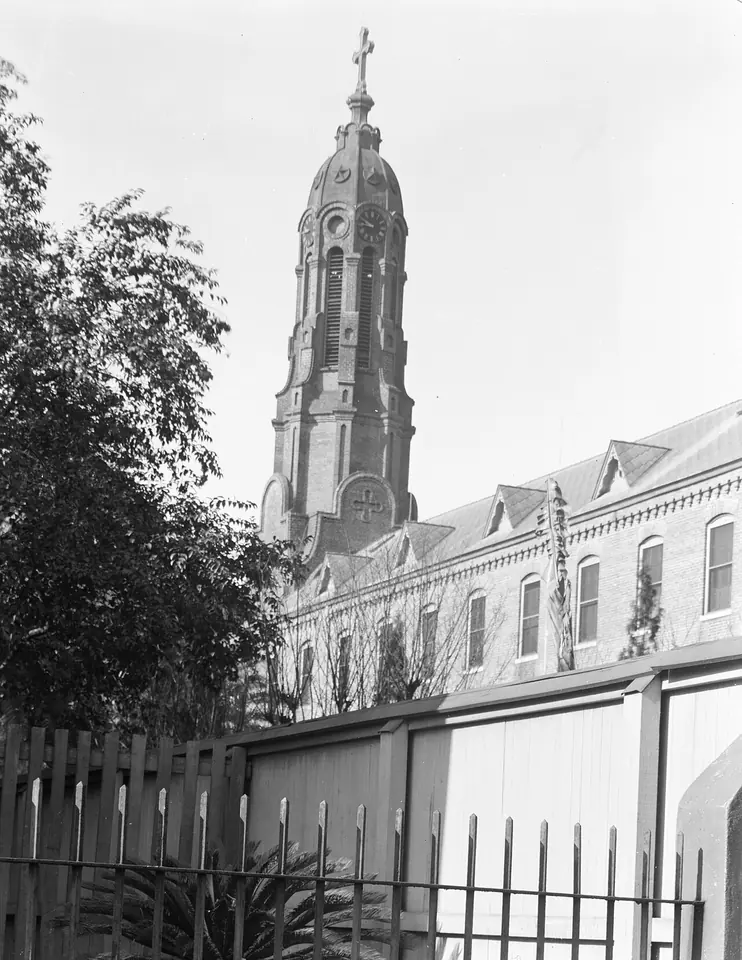
From 1863 to 1866 he led a band of mission preachers through Connecticut, Illinois, Michigan, Missouri, New Jersey, New York, Ohio, Pennsylvania, Rhode Island and Wisconsin. After a short time in Detroit he was sent in 1866 to New Orleans, to St. Mary's Assumption Church in the Irish Channel. On the train south he told a Sister of Notre Dame that he would stay "for a year and then I will die of yellow fever."
Death in New Orleans
Yellow fever came to New Orleans in September 1867. Seelos wore himself out visiting and caring for the sick, and on September 17 he showed the signs of the fever himself. He lingered for several weeks. His confrere Father Benedict Neithart wrote that through it all he kept "a kind tone and a smiling face." He died on October 4, 1867. Neithart said that at the end "his eyes were fixed on the crucifix until they could see no more."

The miracles of Blessed Francis Xavier Seelos
- The healing of Angela Boudreaux: approved. In 1966 Angela Boudreaux, a mother of four, was told she had terminal liver cancer and about two weeks to live. She prayed at Father Seelos's grave and was blessed with his mission cross. A month later she was still alive and was put on an experimental chemotherapy that doctors expected to leave her in agony for a year. She had no side effects and recovered completely. Her doctor, an Episcopalian, called it the closest thing to a miracle he had seen. Tests in 1999 confirmed her health, and the Church accepted the cure as the miracle for his beatification.
- Cures during his lifetime: reported. The shrine says Pittsburgh parishioners believed his prayers were powerful because several sick people were cured.
- Healings at his shrine: reported. The shrine collects accounts of favors and cures for the canonization cause. One of these will need to be approved before he can be named a saint.
Why we ask Blessed Seelos to pray for the sick
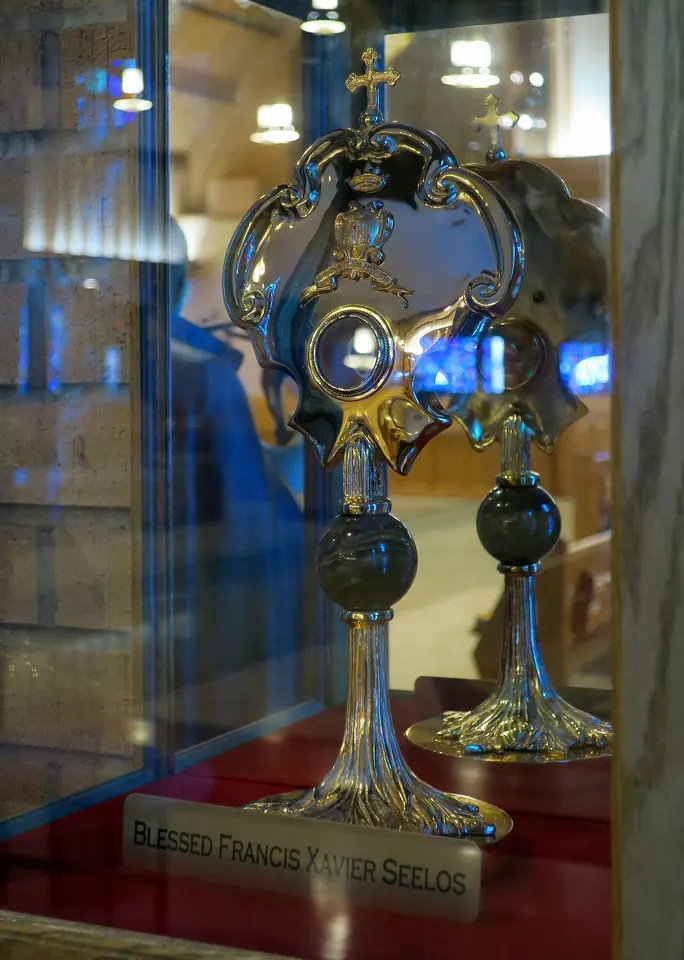
He has no official patronage, but the faithful turn to him above all for healing. He knew sickness from his own childhood, suffered a violent hemorrhage in 1857 that he called "one of the greatest gifts of grace from the Lord," and died nursing fever victims. The shrine sends trained blessers with a first-class relic to hospitals and homes. Immigrants, confessors and parish priests also have good reason to call on him. See more on our patron saints page.
Symbols of Blessed Francis Xavier Seelos in art
Seelos lived in the age of photography, so the best images of him are photographs, and later paintings follow them closely. Look for:
- The black Redemptorist habit with a plain white collar, and often a large rosary at the belt, the dress of the Congregation of the Most Holy Redeemer.
- A mission crucifix: Redemptorist preachers carried one in the sash. The shrine still blesses the sick with his.
- A gentle smile and thin face: nearly every witness spoke of his cheerfulness, and artists keep it.
- Immigrants, children and a steamboat: the great woven banner unveiled at his beatification showed him with St. John Neumann, immigrants, children, St. Mary's Assumption Church and a steamboat on the Mississippi.
No traditional icon type has formed for him yet. In Füssen, his birthplace, a side altar in the basilica of St. Mang honors him.

Feast day and the National Shrine
The feast of Blessed Francis Xavier Seelos is kept on October 5. He died on October 4, the feast of St. Francis of Assisi, so his memorial follows the next day. Find more on our feast days page.
The National Shrine of Blessed Francis Xavier Seelos, founded by the Redemptorists in 1959, is in St. Mary's Assumption Church in New Orleans. His remains were exhumed on February 26, 1999, for the beatification process and rest in the shrine with his original lead coffin. A welcome center beside the church has a small museum on his life.

At the beatification Mass in St. Peter's Square on April 9, 2000, Pope John Paul II said that Seelos "invites the members of the Church to deepen their union with Christ in the sacraments of Penance and the Eucharist."
Prayer to Blessed Francis Xavier Seelos
The National Shrine offers this prayer for the canonization of Blessed Seelos:
O my God, I truly believe you are present with me. I adore your limitless perfections. I thank you for the graces and gifts you gave to Blessed Francis Xavier Seelos. If it is your holy will, please let him be declared a saint of the Church so that others may know and imitate his holy life. Through his prayers please give me this favor… (Here mention your special intentions)
Let us ask Blessed Francis Xavier Seelos to pray for the sick, for immigrants far from home, and for every priest who sits for long hours in the confessional. If you receive a favor through his intercession, the shrine asks that you write and tell them.
Frequently asked questions
Who was Blessed Francis Xavier Seelos?
A Redemptorist priest from Füssen in Bavaria who came to America in 1843 to serve German-speaking immigrants. He was a pastor in Pittsburgh, Baltimore, Cumberland and Annapolis, a traveling mission preacher in ten states, and finally a pastor in New Orleans, where he died of yellow fever in 1867 at the age of 48.
What miracle led to the beatification of Francis Xavier Seelos?
The cure of Angela Boudreaux, a mother of four, who was told in 1966 that she had liver cancer and two weeks to live. She prayed at his grave and was blessed with his mission cross, then recovered completely. Tests in 1999, as part of the cause, gave her a clean bill of health. The Church approved the cure as a miracle, and he was beatified on April 9, 2000.
When is the feast day of Blessed Francis Xavier Seelos?
October 5. He died on October 4, 1867, but that day belongs to St. Francis of Assisi, so the Redemptorists and his shrine keep his memorial the next day.
Where is Blessed Seelos buried?
At the National Shrine of Blessed Francis Xavier Seelos in St. Mary's Assumption Church, in the Irish Channel neighborhood of New Orleans. Visitors can pray before his remains and see his original lead coffin.
Is Francis Xavier Seelos a saint?
Not yet. He is a blessed. One miracle was approved for his beatification, and a second miracle, after beatification, is needed for canonization. The shrine is collecting reports of healings for the cause.
Keep exploring
- Patron saint pages
- Healing
- Appears in
- American saints
- Feast-day calendar
- Saints remembered in OctoberSaint of the day
- More
- Saints A to ZPatron saints A to ZExplore every section
Sources
- John Paul II, Homily for the Beatification of Francis Xavier Seelos and Four Others, 9 April 2000
- National Shrine of Blessed Francis Xavier Seelos: Biography
- National Shrine of Blessed Francis Xavier Seelos: Historical Timeline
- National Shrine of Blessed Francis Xavier Seelos: Cause for Canonization
- National Shrine of Blessed Francis Xavier Seelos: Important Relic Information
- National Shrine of Blessed Francis Xavier Seelos: Prayers to Bl. Seelos