St. Reparata

St. Reparata was a young virgin martyr of Caesarea in Palestine, put to death, tradition says, under Emperor Decius about 250. Legend holds that angels guided the boat carrying her body to the shore of Nice, giving the Bay of Angels its name. She is the patron saint of Nice and the titular saint of Florence's first cathedral, and her feast is October 8.
Who was St. Reparata?
St. Reparata was a young virgin martyr of Caesarea in Palestine, the port city where St. Peter baptized the centurion Cornelius. Tradition says she died for Christ in the persecution of Emperor Decius about the year 250. We keep her feast on October 8. Two great cities claim her: Nice, where she is the patron saint and the cathedral bears her name, and Florence, whose first cathedral was dedicated to her.
Her story has been handed down as a legend, and it should be read that way: the accounts of her sufferings were written long after her death. Aleteia's French edition notes that the traditional date under Decius is probably wrong and that she more likely died in one of the persecutions that struck Palestine again and again at the end of the third century and the start of the fourth. What we can say with confidence is that the Church has honored a girl martyr of Caesarea named Reparata for well over a thousand years.
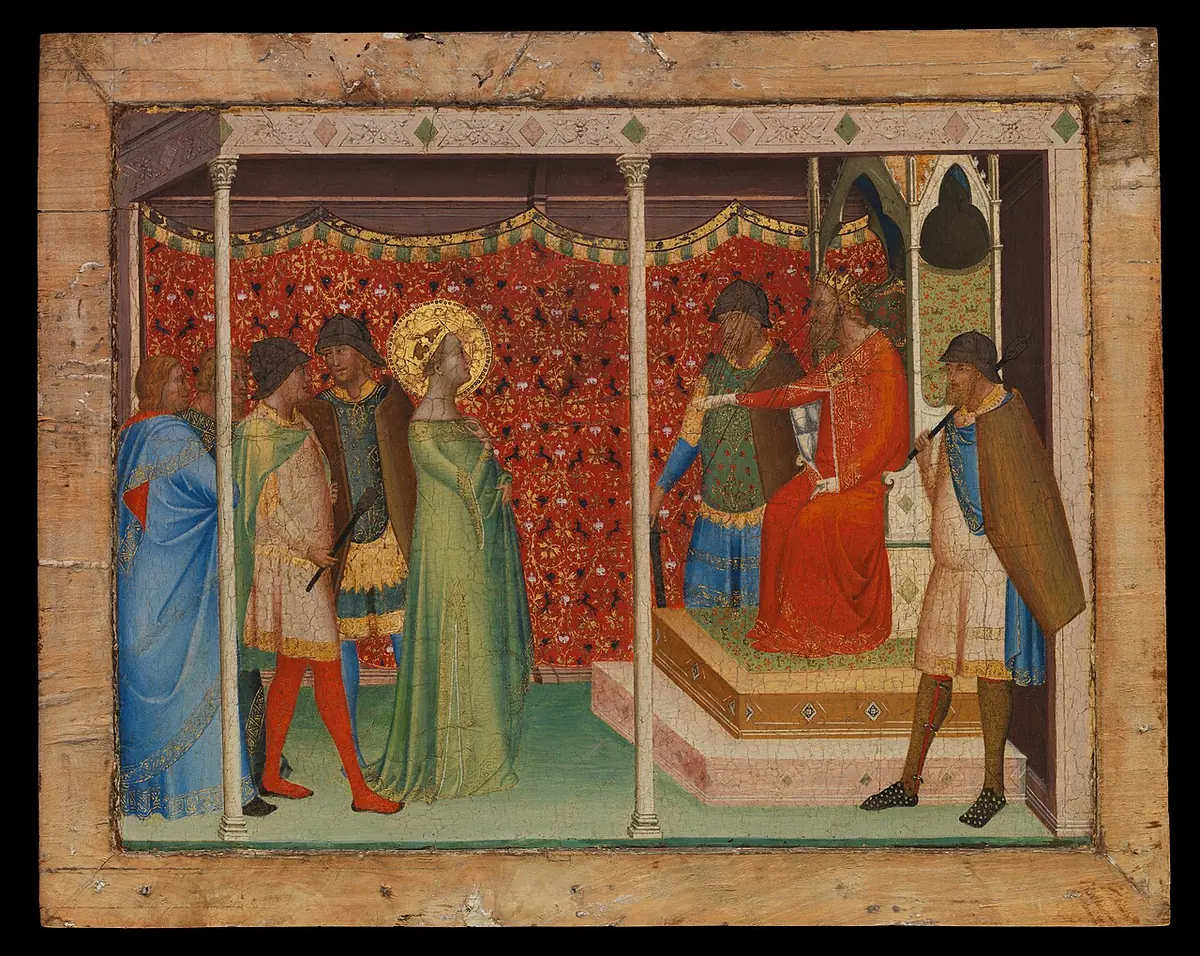
The legend of St. Reparata
The traditional story, as the city of Nice tells it, begins with fire. Reparata was condemned to be burned, but a sudden rainstorm put out the flames. Her torturers then tried to make her swallow boiling pitch, and she survived that too. At last she was beheaded. The Roman Martyrology adds: "Her soul was seen to leave her body in the shape of a dove, and ascend to heaven."

The Bay of Angels
Then comes the story that made her the saint of Nice. Her body, the legend says, was laid in a little boat with no sail, oars or rudder and pushed out to sea. Angels guided it across the Mediterranean to the shore of Nice, and the great curve of the coast there has been called the Baie des Anges, the Bay of Angels, ever since.
Aleteia points out that Roman magistrates in the East did sometimes set Christians adrift in boats without sails or rudders to die, and that relics and sacred images were sometimes sent across the sea the same way. Monaco tells a similar story of its patron, St. Devota. The legend is traditional.

St. Reparata and Florence
Before the Florentines began their enormous Duomo in 1296, their cathedral was the smaller church of Santa Reparata. According to the Opera di Santa Maria del Fiore, which cares for the cathedral, the oldest church on the site dates from the beginning of the fifth century: a basilica 50 meters long with three aisles and a mosaic floor with a peacock, the symbol of resurrection.
In the ninth century the church was rebuilt, and the relics of St. Zenobius, Florence's first bishop, were brought there and laid in a new crypt. Two popes, Stephen IX (died 1058) and Nicholas II (died 1061), were buried in it.
Florentine tradition credited Reparata's intercession for the city's deliverance in 406, when the Ostrogoth Radagaisus and his army were defeated in the hills above Florence. The Opera gives the date as August 23, 406. The old church stood until 1375. Excavations between 1966 and 1972 uncovered it beneath the floor of the Duomo, together with the tomb of Filippo Brunelleschi, the architect of the dome.

Today visitors can walk among the remains of Santa Reparata under the cathedral. The Opera says the first mosaic floor was laid by Roman craftsmen from the best workshops of North Africa, with the names of the donors who paid for it set beside the peacock. Rare buckles from the Lombard period, found in the dig, are on display. In the south side apse a fourteenth-century fresco of Christ as the Man of Sorrows between Our Lady and St. John survives, painted while the walls of the new cathedral were already rising around the old church.

Why St. Reparata is the patron saint of Nice
The city of Nice says her remains were first buried in a chapel in the old town. In 1690 they were placed in the new cathedral built where the chapel had stood, and when the cathedral was consecrated in 1699 it was put under her protection. A large painting of her hangs above the high altar. Every year, on the Sunday nearest October 8, the city honors its patron with a parade from city hall to the cathedral, Mass and a concert.

Symbols of St. Reparata in art
- Palm: her victory as a martyr.
- White banner with a red cross: the standard of the risen Christ, a sign of victory given to several martyrs.
- Dove: her soul rising to heaven at the moment of death.
- Boat with angels: the Nice legend of the Bay of Angels.
- Crown or circlet: the crown of virginity and martyrdom.
In Florentine art she is a young girl in a long gown, sometimes crowned. The two Bernardo Daddi paintings on this page are predella panels, the small scenes painted along the base of an altarpiece, telling her story in order.
Feast day and prayer
Her feast is October 8. There is no widely known traditional prayer to St. Reparata in English. In Nice the cathedral offers Mass in her honor on her festival. Let us ask St. Reparata to pray for young people who are pressured to give up their faith, for the cities of Nice and Florence, and for all who travel by sea. Find more virgin martyrs on our feast days calendar.
Frequently asked questions
Who was St. Reparata?
A Christian girl of Caesarea in Palestine, very young according to her legend, who was tortured and beheaded for the faith in the third century. The earliest traces of her cult are much later than her death, so her story is mostly legend, but she has been honored for well over a thousand years in Italy and southern France.
Why is St. Reparata the patron saint of Nice?
Nice's tradition says her body was set adrift in a boat after her martyrdom and that angels steered it to the shore of Nice. Her relics were kept in a chapel in the old town, moved in 1690 into the cathedral built on the site, and the cathedral, consecrated in 1699, bears her name.
What does St. Reparata have to do with Florence?
Florence's first cathedral was Santa Reparata, a church begun in the early fifth century. Florentines credited her intercession with the defeat of the Ostrogoth leader Radagaisus in 406. The old church was replaced by the Duomo, and its remains can be visited beneath it.
When is St. Reparata's feast day?
October 8. Nice celebrates with a parade from city hall and Mass in the cathedral on the Sunday closest to that date.