St. Gregory the Illuminator

St. Gregory the Illuminator (about 257 to about 331) is the apostle of Armenia. After years in a pit at Khor Virap, he converted King Tiridates III, and Armenia became the first kingdom to make Christianity its official faith, by Armenian tradition in 301. The Roman Martyrology keeps his feast on September 30.
Who was St. Gregory the Illuminator?
St. Gregory the Illuminator is the apostle of Armenia, the bishop who brought King Tiridates III and his people to Christ around the year 301. Armenians call him Grigor Lusavorich, "the Illuminator" or "the Enlightener," and honor him as the father of their Church. Through him Armenia became, by its own reckoning, the first kingdom in the world to take Christianity as its official faith.
He was not the first to preach the Gospel there. Armenians trace their faith to the apostles Bartholomew and Thaddeus, and the Catholic Encyclopedia notes that there were Christians and even bishops in Armenia before Gregory. But that early church had been crushed under Persian rule. Gregory rebuilt it, converted the king and set up the bishops, churches and schools that made Armenia Christian for good.
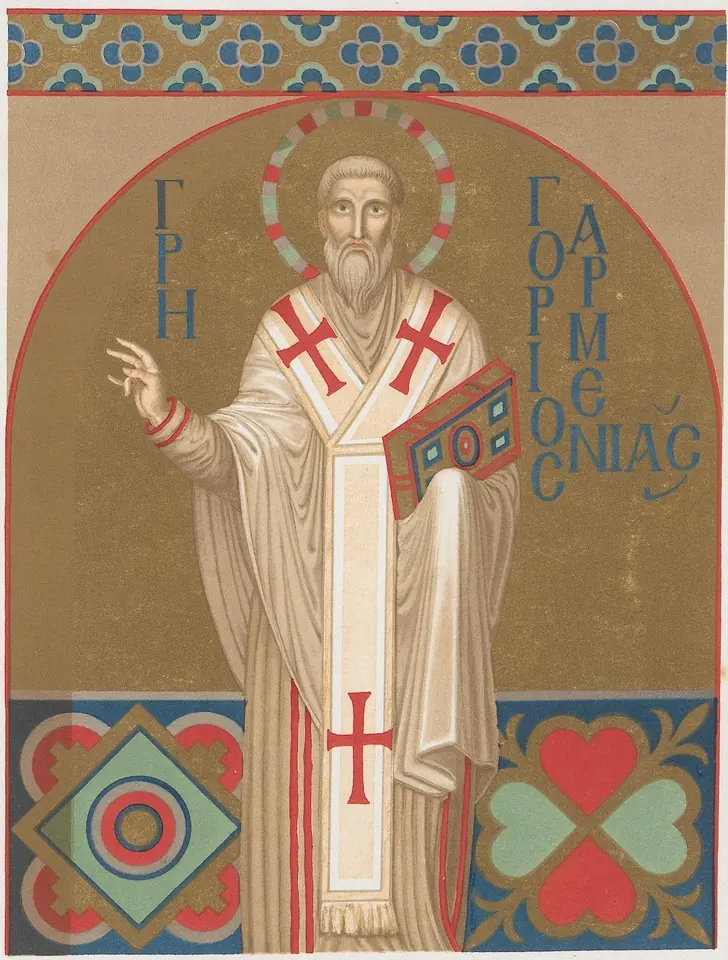
Most of what we tell about him comes from the History that bears the name of Agathangelos, who presents himself as King Tiridates's secretary. In its present form it was written in the fifth century, more than a hundred years after Gregory's death. The Catholic Encyclopedia, in 1910, judged its wonders to be stories "that need not be taken very seriously" and separated them from the plain facts. In what follows we tell the history first and the tradition second.
The life of St. Gregory the Illuminator: what history records
The historical outline is short. Gregory came from an Armenian or Parthian noble family and was raised a Christian at Caesarea in Cappadocia, the city St. Basil the Great would later lead as bishop. He married and had two sons, Aristakes and Vrtanes.
Gregory was persecuted by King Tiridates III, who held to the old Armenian religion, and then converted him. With the king's backing the faith spread through the country. Temples were turned into churches, and thousands were baptized. Gregory went back to Caesarea, where Bishop Leontius consecrated him bishop of the Armenians, and for generations afterward Armenia's chief bishops, the Catholicoi, went to Caesarea to be ordained.
He made his seat at Ashtishat, in the province of Taron, where a pagan temple became "the mother of all Armenian churches." He set up bishops across the land and, the Catholic Encyclopedia notes, preached in Armenian and used it for worship, which gave the Armenian Church the national character it still has.
In old age he withdrew to live as a hermit. His son Aristakes succeeded him as head of the Church and attended the Council of Nicaea in 325. Gregory died around 331 and was buried at Tordan.
The life of St. Gregory: the tradition of Agathangelos
The story Armenians tell on his feast days is much fuller. All of it is traditional.
The son of the assassin
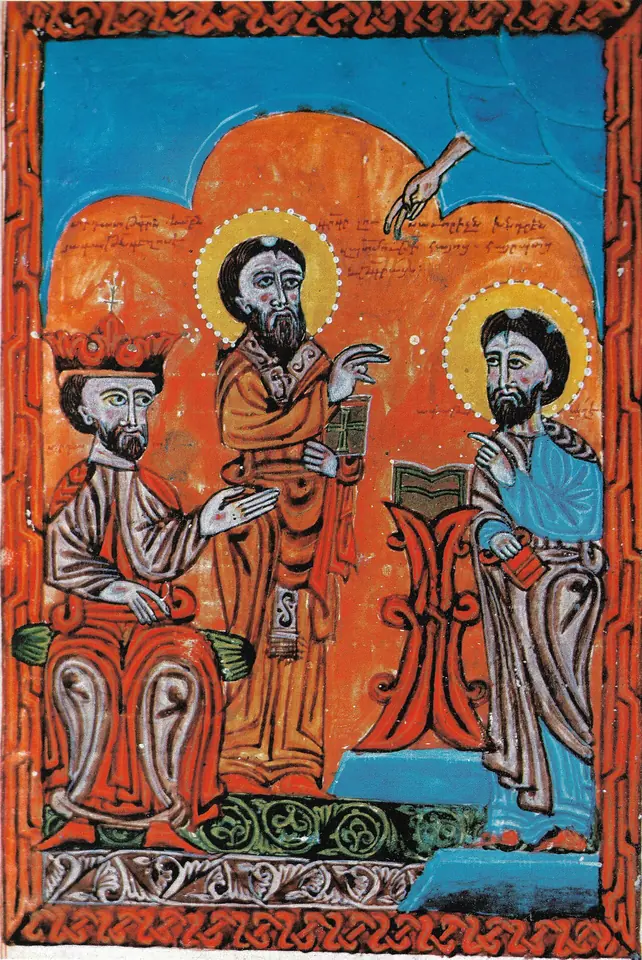
In the tradition Gregory was the son of Anak, a Parthian noble who murdered King Khosrov of Armenia. Anak's family was put to death, but a Christian nurse carried the infant Gregory to Caesarea, where he was baptized. Khosrov's own son, Tiridates, also escaped and was raised among the Romans. When Tiridates came back to take his father's throne, Gregory, now grown, entered his service, by some accounts to make up for his father's crime.
Refusal and the pit
When the new king offered thanks to the goddess Anahit, Gregory refused to join him and confessed that there is only one Creator. Tiridates had him tortured, and his rage grew when he learned whose son Gregory was. At last he ordered him thrown into the deep pit of the royal fortress at Artashat, a dungeon full of snakes where no one had survived. The Armenian text of Agathangelos says:
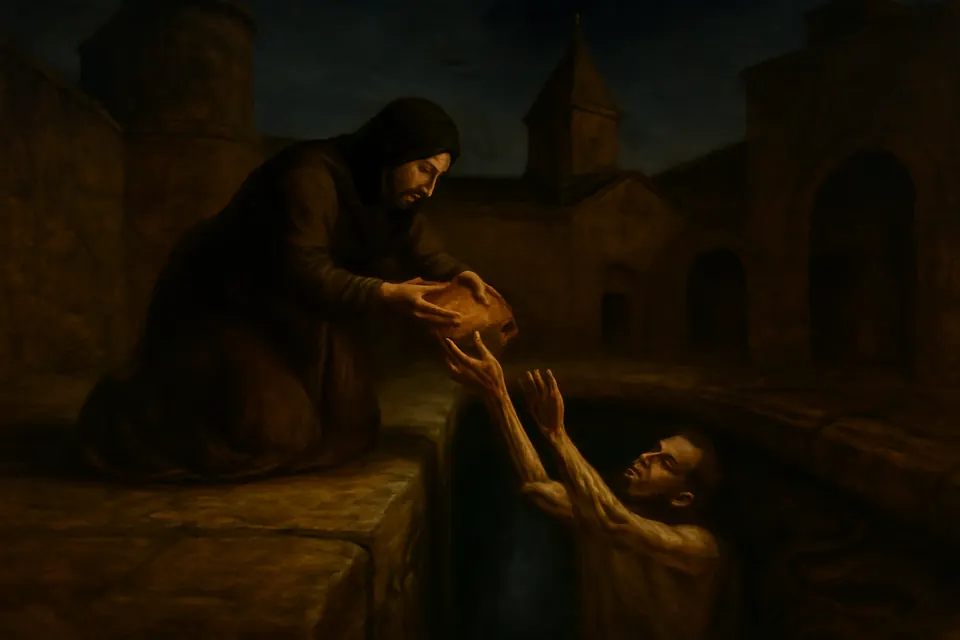
During those thirteen years that Gregory was in the dungeon of the fortress, in the deep pit, a certain widow who lived in that fortress received a command in a dream to prepare a loaf a day and to throw it into the deep pit.
Other versions give fourteen or fifteen years. The place is Khor Virap, "the deep pit," near the Turkish border, where a monastery now stands over it and pilgrims climb down a ladder into the pit.
Hripsime and the king
While Gregory was in the pit, a group of consecrated virgins led by Gayane fled the Roman emperor Diocletian and took refuge in Armenia. Among them was the young Hripsime. Tiridates wanted her, she refused him, and he had her and her companions put to death. These are the holy virgins Hripsime and Gayane, honored by Armenians and by the Orthodox Church.
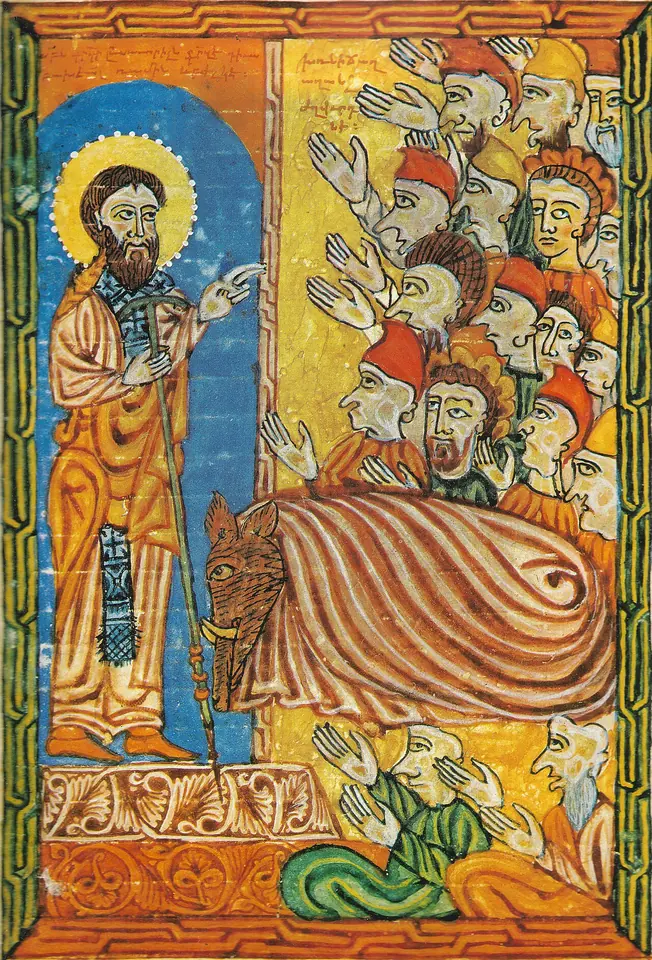
The tradition says God then struck the king, who took on the form of a wild boar, like Nebuchadnezzar in the Book of Daniel. His sister Khosrovidukht had a vision: only Gregory could heal him. Everyone believed Gregory long dead, but they went to the pit and found him alive.
The conversion of Armenia
Gregory came out of the pit, buried the martyred virgins with honor, preached to the people, and through his prayers the king was restored. Tiridates was baptized with his family and his army, and Armenia became a Christian kingdom. The Armenian Church dates these events to 301.
The vision at Vagharshapat
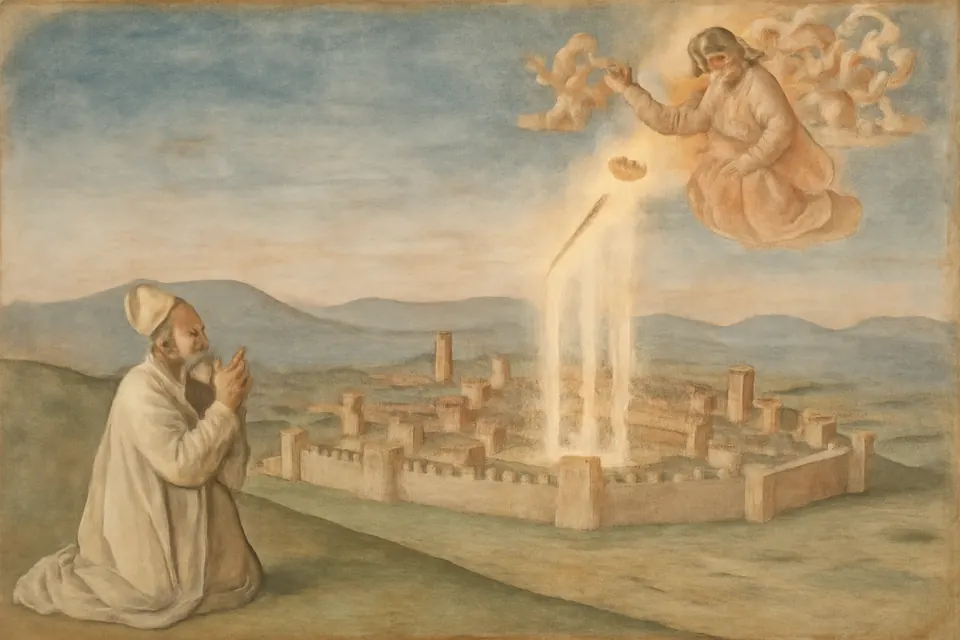
Agathangelos also tells of a vision. Gregory saw heaven open and a man of light come down and strike the earth with a golden hammer in the middle of the royal city of Vagharshapat, showing where the main church should stand. In Agathangelos the figure is "the providence of God." Robert Thomson, the modern translator of the History, shows that only later writers, the earliest an eleventh-century poem attributed to Anania of Sanahin, identified him with Christ himself. That reading gave the cathedral and the city their name: Etchmiadzin, "the Only-begotten descended."
The miracles of St. Gregory the Illuminator
- Surviving the pit (traditional). Thirteen years among snakes in a pit where everyone else died, kept alive by a widow's loaf.
- The healing of King Tiridates (traditional). The king, struck down in the form of a boar, was restored through Gregory's prayers.
- The vision of the golden hammer (traditional). The vision that marked out the cathedral of Etchmiadzin.
- Mass baptisms (traditional). Agathangelos says he baptized four million people in seven days; the Catholic Encyclopedia mentions the number as an example of the History's exaggerations.
Pope John Paul II, writing for the 1700th anniversary in 2001, called the account "a tale full of symbolism" with "legendary aspects," and pointed to its meaning: Armenia's first baptism "was truly one of blood," through the sufferings of Gregory and the martyrdom of Hripsime and her companions.
Why St. Gregory is the patron saint of Armenia
He is Armenia's patron because he is its father in faith. He converted its king, organized its Church and consecrated its first bishops, and his son Aristakes followed him as its head. Armenians have even been called "Gregorians" after him. His patronage is shared by the Armenian Apostolic Church and the Armenian Catholic Church, and in the West the Catholic Church honors him as the apostle of Armenia.
Symbols of St. Gregory the Illuminator in art
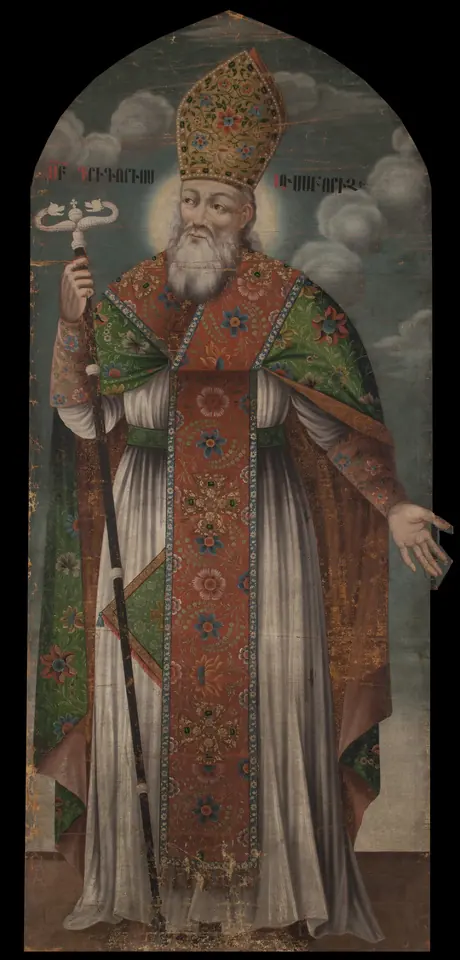
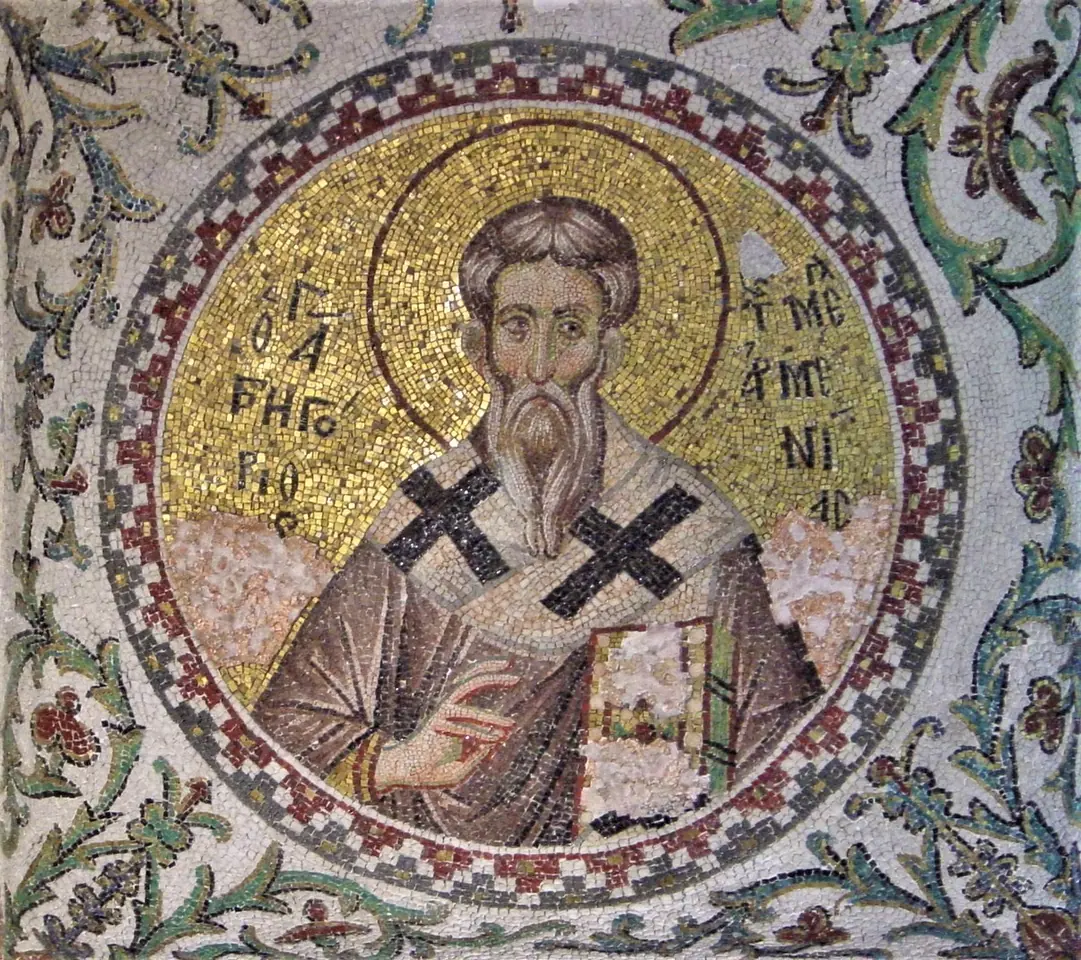
Gregory is painted in two different ways, depending on which Church made the image.
In Byzantine icons and mosaics, he looks like the other great bishops of the East: a gray or white beard, a white omophorion (the bishop's stole) covered with large black or red crosses, a Gospel book in one hand and the other hand raised in blessing. The mosaics in Hagia Sophia and in the Pammakaristos Church in Istanbul show him this way, among the Fathers of the Church.
In Armenian art, he usually wears the pointed hood or tall miter and rich vestments of an Armenian bishop and holds a staff or a cross. Look also for:
- The pit, sometimes with snakes, for his years at Khor Virap.
- A king with a boar's head, Tiridates under God's punishment, often lying sick while Gregory prays over him.
- The historian Agathangelos, writing beside him and the king.
- Mount Ararat, the snowy mountain that rises over Khor Virap.

In Western churches he is rarer, but he has a place of honor in Rome: a statue of Gregory in Armenian vestments stands in a niche on the outside wall of St. Peter's Basilica.
Feast day and where St. Gregory the Illuminator is honored
The Roman Martyrology keeps his feast on September 30, the day his relics were laid to rest at Tordan; the Orthodox Church and the Byzantine Catholic churches honor him on the same day. In 1837 Pope Gregory XVI allowed his feast in the Roman calendar for certain places on October 1. The Armenian Church keeps several feasts of Gregory on movable days through the year, among them his entry into the pit, his coming out of the pit and the finding of his relics.

Places to honor him:
- Khor Virap Monastery, south of Yerevan near the Turkish border, built over the pit. A chapel was first raised there in 642.
- Holy Etchmiadzin, the cathedral of his vision and the seat of the Catholicos of All Armenians, which keeps an arm relic in a silver reliquary. It is brought out about every seven years for the blessing of the holy chrism.
- The Catholicosate of Cilicia at Antelias, Lebanon, which keeps a second arm reliquary.
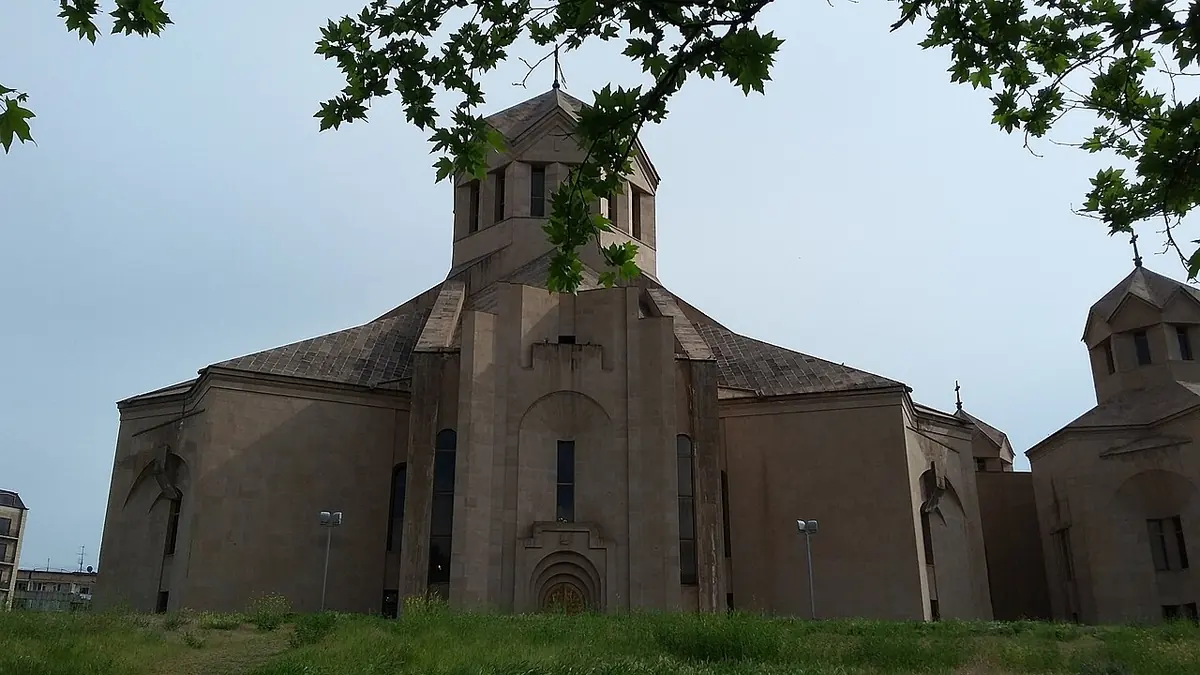
- St. Gregory the Illuminator Cathedral in Yerevan, built for the 1700th anniversary, which holds the relic Pope John Paul II gave from Naples in 2000.
- San Gregorio Armeno in Naples, a convent church founded by tradition by Armenian nuns who fled the iconoclast persecution with his relics in the eighth century.
Prayer to St. Gregory the Illuminator
On his feast, September 30, the Orthodox Church sings the troparion it keeps for bishop-martyrs, which praises a successor of the Apostles who taught the truth without error and shed his blood for the Faith. The OCA prints the full text on its website.
Pope John Paul II wrote in 2001 that "St Gregory still intercedes from heaven today, so that all the children of your great nation may at last gather round the one table prepared by Christ." Let us ask St. Gregory the Illuminator to pray for Armenia and for Armenians scattered around the world, for Christians who suffer for their faith, and for the unity of the Churches. St. Gregory the Illuminator, pray for us.
Frequently asked questions
Why is St. Gregory called the Illuminator?
In Armenian he is Grigor Lusavorich, "the one who gives light." Pope John Paul II explained that "illumination" is the old Christian word for baptism, which brings a person from darkness into Christ's light, and that in Armenian it also means bringing learning, since the schools and teachers who followed Gregory taught the nation to read the Scriptures.
When is the feast day of St. Gregory the Illuminator?
September 30 in the Roman Martyrology and in the Byzantine calendar of the Orthodox and Eastern Catholic churches. The Armenian Church honors him several times a year on movable days, including the feasts of his entry into the pit, his coming out of the pit and the finding of his relics.
How long was St. Gregory in the pit of Khor Virap?
The Armenian text of Agathangelos says thirteen years, and Pope John Paul II repeated that number in 2001. Other versions and later writers give fourteen or fifteen. By the same tradition a widow of the fortress, told in a dream, threw a loaf of bread down to him every day.
Was Armenia the first Christian nation?
The Armenian Church dates the conversion of King Tiridates III and his kingdom to 301, which makes Armenia the first state to adopt Christianity. The Catholic Encyclopedia puts it more cautiously, during the reign of Diocletian (284–305), and still grants Armenia's claim to be the first Christian state.
Where are the relics of St. Gregory the Illuminator?
Holy Etchmiadzin in Armenia and the Catholicosate of Cilicia in Antelias, Lebanon, each keep an arm reliquary used to bless the holy chrism. Naples has venerated relics at San Gregorio Armeno since the eighth century, and in 2000 Pope John Paul II gave a relic from them to the new cathedral of Yerevan. The Gregoriou Monastery on Mount Athos claims his skull.
Keep exploring
Sources
- Catholic Encyclopedia (1910): Gregory the Illuminator. What is historical and what comes from Agathangelos; the Naples relics; the 1837 feast
- Pope John Paul II, Apostolic Letter for the 1700th anniversary of the Baptism of Armenia (February 17, 2001). The meaning of "Illuminator"; the relic given for the Yerevan cathedral
- Robert W. Thomson, The Lives of Saint Gregory: The Armenian, Greek, Arabic, and Syriac Versions of the History Attributed to Agathangelos (2010). The widow and the loaf, the thirteen years, the vision at Vagharshapat and the later name Etchmiadzin
- Orthodox Church in America: Hieromartyr Gregory, Bishop of Greater Armenia, Enlightener of Armenia (troparion and kontakion)
- St. Thomas Armenian Apostolic Church: St. Gregory the Enlightener (from Garo Bedrosian, Feasts of the Armenian Church and National Traditions, 1993; archived). Armenian feasts of the saint, the arm relics and the pit at Khor Virap