Blessed Columba Marmion

Blessed Columba Marmion (1858–1923) was an Irish priest of Dublin who became a Benedictine monk in Belgium and the third abbot of Maredsous. His conferences, published as Christ, the Life of the Soul and its companion books, taught that every baptized Christian is truly a child of God in Christ. Pope John Paul II beatified him in 2000; his feast is October 3.
Who was Blessed Columba Marmion?
Blessed Columba Marmion was an Irish priest who became a Benedictine monk in Belgium and the third abbot of Maredsous Abbey. He was born Joseph Aloysius Marmion in Dublin on April 1, 1858, to an Irish father and a French mother, and he died at Maredsous on January 30, 1923. We keep his feast on October 3.
He wrote no books in the usual sense. He talked: to monks in chapter, to nuns on retreat, to priests and lay people who came to him for direction. His secretary gathered those conferences into Christ, the Life of the Soul and the books that followed it, and they went around the world. Pope John Paul II, who read Marmion himself, beatified him in St. Peter's Square on September 3, 2000, together with Pius IX and John XXIII.
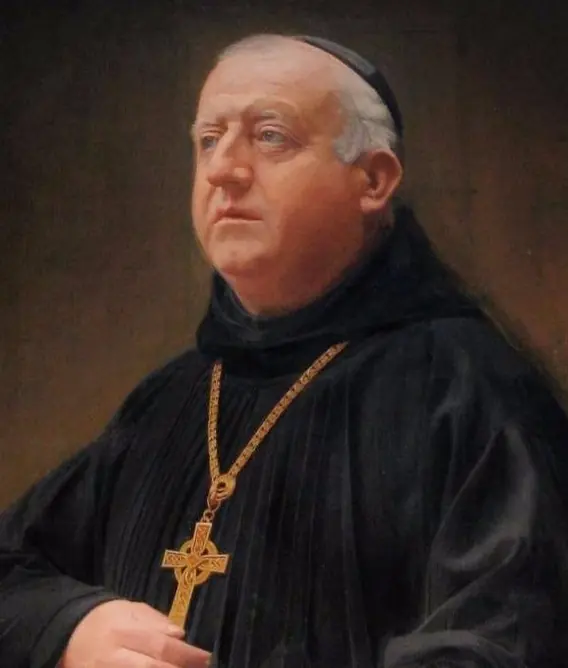
A Dublin priest
Joseph entered the diocesan seminary at Clonliffe in 1874 and finished his studies in Rome, where he was ordained a priest on June 16, 1881. He had dreamed of being a missionary monk in Australia. On a visit to Maredsous, a young Benedictine abbey founded in 1872 in the hills of southern Belgium, he discovered a monastic life both missionary and contemplative, and it stayed with him.
Back in Dublin he served as a curate in Dundrum, taught philosophy at Clonliffe, and was chaplain to a convent and to a women's prison. The Vatican's biography for his beatification says it was there, listening to prisoners and sisters, that he learned the art of guiding souls.
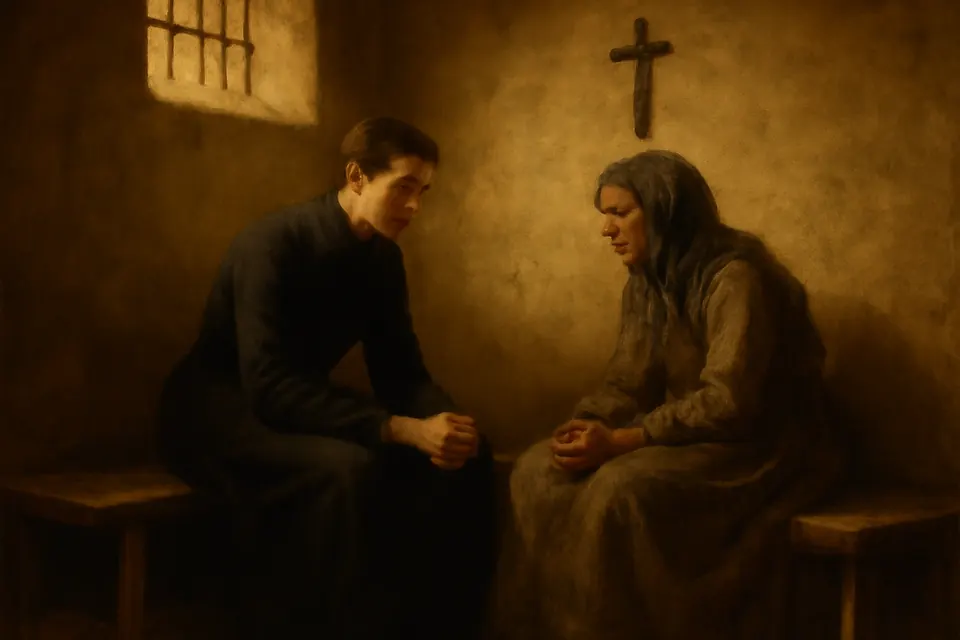
The call to the cloister
In 1886 he left a promising career in the Dublin Church and entered Maredsous. He took the name Columba, after the Irish monk of Iona, and made his profession in 1888. He was twenty-eight, a priest and a seminary professor, and now a novice among younger men in a foreign country. He made his solemn profession in 1891.

Prior, confessor and abbot
In 1899 he was sent to Louvain to help found the Abbey of Mont César, where he served as prior and taught the young monks. There he became confessor and friend to Désiré-Joseph Mercier, later Cardinal Archbishop of Malines.
In September 1909 the monks of Maredsous elected him their third abbot. He governed a large community with schools and a farm. In 1913 he helped the Anglican monks of Caldey Island in Wales when they asked to be received into the Catholic Church. Then came the First World War: he sent his young monks to safety in Ireland, saw the German brothers expelled, and lived through the painful separation of the Belgian monasteries from their German congregation.
His teaching: children of God in Christ
The heart of Dom Marmion's message, as the postulation of his cause puts it, is that we can be really and truly sons and daughters of God through Jesus. Holiness, for him, was not a technique. It was Christ living in the baptized soul, received in the sacraments and the liturgy, and returned to the Father in love.
At the beatification Pope John Paul II said Marmion "left us an authentic treasure of spiritual teaching for the Church of our time." He quoted a letter the abbot once wrote to a young man preparing for ordination:
The best of all preparations for the priesthood is to live each day with love, wherever obedience and Providence place us.

His death and the miracle
Dom Columba died at Maredsous on January 30, 1923, during an influenza epidemic, and was buried in the monks' cemetery. His cause opened in 1955. On April 29, 1963, his body was moved into the abbey church.
- Approved: on January 25, 2000, the Church recognized as miraculous a healing that took place at his tomb at Maredsous. This was the miracle accepted for his beatification.
Pope John Paul II had declared his heroic virtues on June 22, 1998, giving him the title Venerable. The postulation continues to gather reports of favors in hope of his canonization.
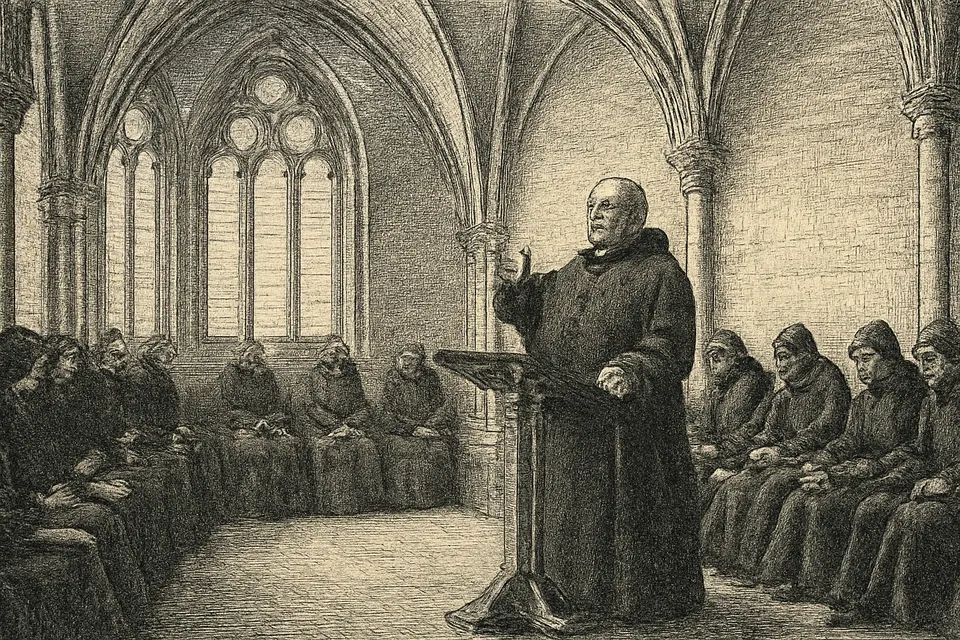
Symbols of Blessed Columba Marmion in art
Blessed Columba lived in the age of photography, so most of his images are photographs or paintings made from them.
- Black Benedictine habit: the dress of the monks of Maredsous.
- Pectoral cross: the cross worn by an abbot, seen in his best-known portrait.
- Book: his conferences, which became Christ, the Life of the Soul.
Prayer cards printed for his cause in the 1940s show his round, kindly face in a small oval, beside prayers for his beatification.
Feast day and prayer
We keep his feast on October 3. His tomb in the abbey church of Maredsous, near Namur, is visited by pilgrims, and the postulation there publishes a novena and receives reports of favors. See also the feast day calendar.
There is no traditional prayer to Blessed Columba. Let us ask him, in his own spirit, to help us live each day with love wherever Providence places us, and to pray for priests, monks and all who seek God in the ordinary work of each day.
Frequently asked questions
Who was Blessed Columba Marmion?
A Dublin-born priest who left a promising career in the diocese to become a Benedictine monk at Maredsous Abbey in Belgium. He helped found the Abbey of Mont César in Louvain, was abbot of Maredsous from 1909 until his death in 1923, and was one of the best-known spiritual directors and writers of his time.
When is the feast of Blessed Columba Marmion?
October 3. Pope John Paul II set that date after beatifying him on September 3, 2000. He died on January 30, 1923.
What miracle led to the beatification of Columba Marmion?
The Congregation for the Causes of Saints recognized on January 25, 2000, that a healing which took place at his tomb at Maredsous was miraculous. That approved miracle opened the way to his beatification in Rome that September.
What books did Columba Marmion write?
His conferences were edited by his secretary, Dom Raymond Thibaut, and published as Christ, the Life of the Soul (1917), Christ in His Mysteries (1919) and Christ, the Ideal of the Monk (1922). A fourth book, Christ, the Ideal of the Priest, appeared after his death.
Keep exploring
Sources
- Pope John Paul II, homily at the beatification of Pius IX, John XXIII, Tommaso Reggio, William Chaminade and Columba Marmion (September 3, 2000). The Pope's words on his teaching and the quotation on preparing for the priesthood
- Vatican: Columba Marmion (1858–1923), biography for the beatification. His hope to be a missionary monk, his chaplaincy at a women's prison, Cardinal Mercier, Caldey and the war years
- Postulation of the Cause of Blessed Columba Marmion: Historique de la Postulation. The dates of the cause, the transfer of his body in 1963, the decree on heroic virtue (1998) and the miracle (2000)
- Postulation of the Cause of Blessed Columba Marmion: The Beatification, 3rd September 2000. The October 3 feast assigned by John Paul II