St. Gregory of Khandzta
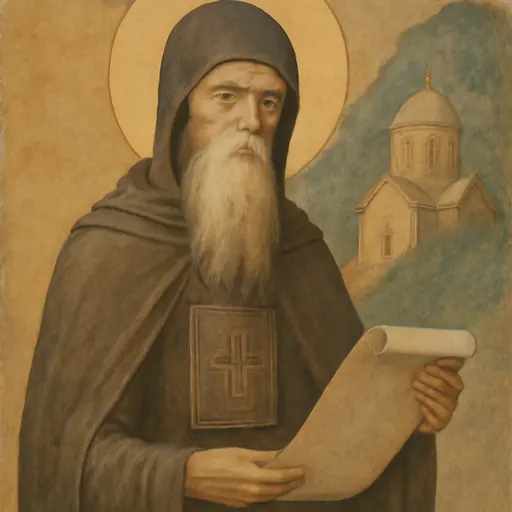
St. Gregory of Khandzta (759–861) was a Georgian priest and monk who fled a bishop's miter to live in the wilderness of Klarjeti, in southwestern Georgia, where he built the monastery of Khandzta and became father of a whole network of monasteries. He was a counselor and conscience to the Bagratid princes and lived to 102. The Orthodox Church honors him on October 5.
Who was St. Gregory of Khandzta?
St. Gregory of Khandzta was a Georgian priest and monk of the eighth and ninth centuries who built a monastery in the wild mountains of Klarjeti and became father of the great monastic revival of southwestern Georgia. He lived to the age of 102. In the Georgian Church he is Grigol Khandzteli, and the Orthodox Church keeps his feast on October 5.
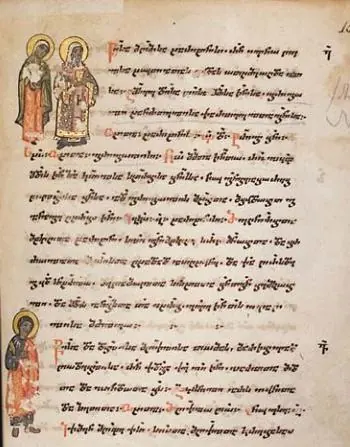
Almost all we know of him comes from his Life, written at Khandzta in 951, about ninety years after his death, by the monk Giorgi Merchule, who gathered what Gregory's disciples and their disciples remembered. The scholar Nicholas Marr, its first editor, called it a "Georgian Baedeker" for its many descriptions of places, according to David Marshall Lang, who translated selections from it.
A young priest who ran from a miter
Gregory was born in 759 and brought up at the court of Duke Nerses of Kartli by the duchess, who was his aunt. The Life describes a quiet, studious boy who never touched meat or wine, learned the Psalms quickly, read widely, and knew several languages. People called him "the Hermit."
His family and the princes had him ordained a priest while he was still young. When they began planning to make him a bishop, he fled in secret with three friends: his cousin Saba, Theodore and Christopher. All three would later build monasteries of their own. The four of them, the Life says, set out "on a road which they knew not." They came first to the small monastery of St. John the Baptist at Opiza and stayed two years under Abba George.
The building of Khandzta
Gregory then visited an old hermit named Khvedios, who lived alone at Khandzta. According to the Life, the hermit had already seen a vision there of a church made of light and heard a voice saying that the priest Gregory would build a church on that spot. Gregory brought his companions, and they began with a wooden church, a few cells and a refectory, clearing the steep, rocky ground with almost no tools.
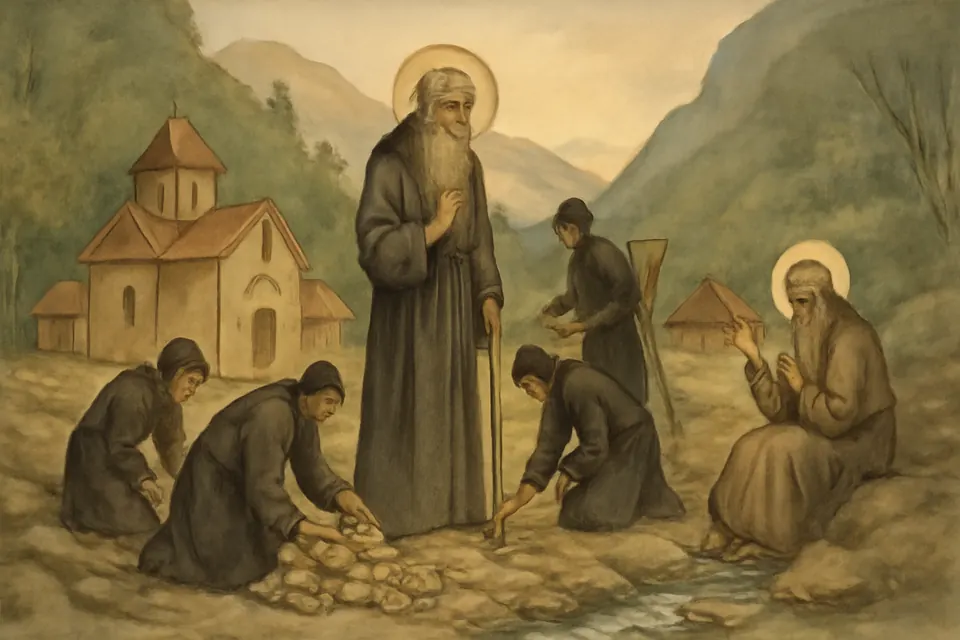
The rule was severe. Each cell had a short bed and a water jug, and nothing more. No fires were lit in the cells and no candles at night; the monks sang psalms through the night and read and prayed by day. In Lent, Gregory himself lived on a little dried cabbage.
Gregory and the prince
A nobleman, Gabriel Dapanchuli, helped the monks and told the Bagratid ruler Ashot Kuropalates about them. Ashot called Gregory to court, gave the monastery estates including Shatberdi, and his sons Adarnerse, Bagrat and Guaram added their own gifts. Gregory became archimandrite of twelve monasteries in Klarjeti, five of them built or restored by him and the rest by his disciples.
He was no courtier. When Ashot took a mistress into his castle at Artanuj, Gregory rebuked him. When the prince did not change, the monk went to the woman himself, led her to repentance, and brought her to the convent of the abbess Fevronia. Lang's translation tells how the ashamed prince came after her and went away chastened.
Later Gregory traveled to Constantinople to pray at its shrines. He had a friend copy the monastic rules of St. Sabbas in Jerusalem, and from these and what he had seen he drew up a rule for his own monasteries.
The miracles of St. Gregory of Khandzta
The wonders below come from the Life written ninety years after him and are traditional:
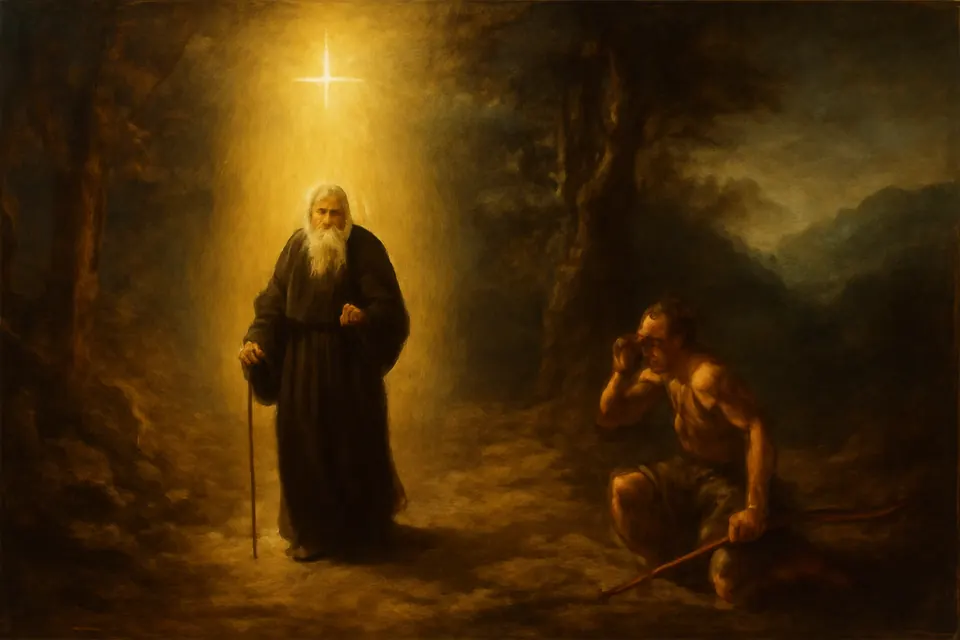
- The light in his cell. The bell-ringer once saw light streaming from the abbot's cell, though no fire or lamp was lit. Others said that when he prayed he shone, with rays in the form of a cross.
- The archer in the wood. A man named Tskir, who had seized the see of Anchi by force, hired an archer to kill Gregory. Waiting in the wood, the archer saw the saint wrapped in a pillar of light with a radiant cross over his head and fell to the ground in terror. Gregory named the price he had been paid, blessed him, and sent him home healed.
- The deliverance of Khandzta. Tskir then sent the men of Anchi to destroy the monastery, but word came that he had died suddenly on the road, and the attackers went home in peace.
His death
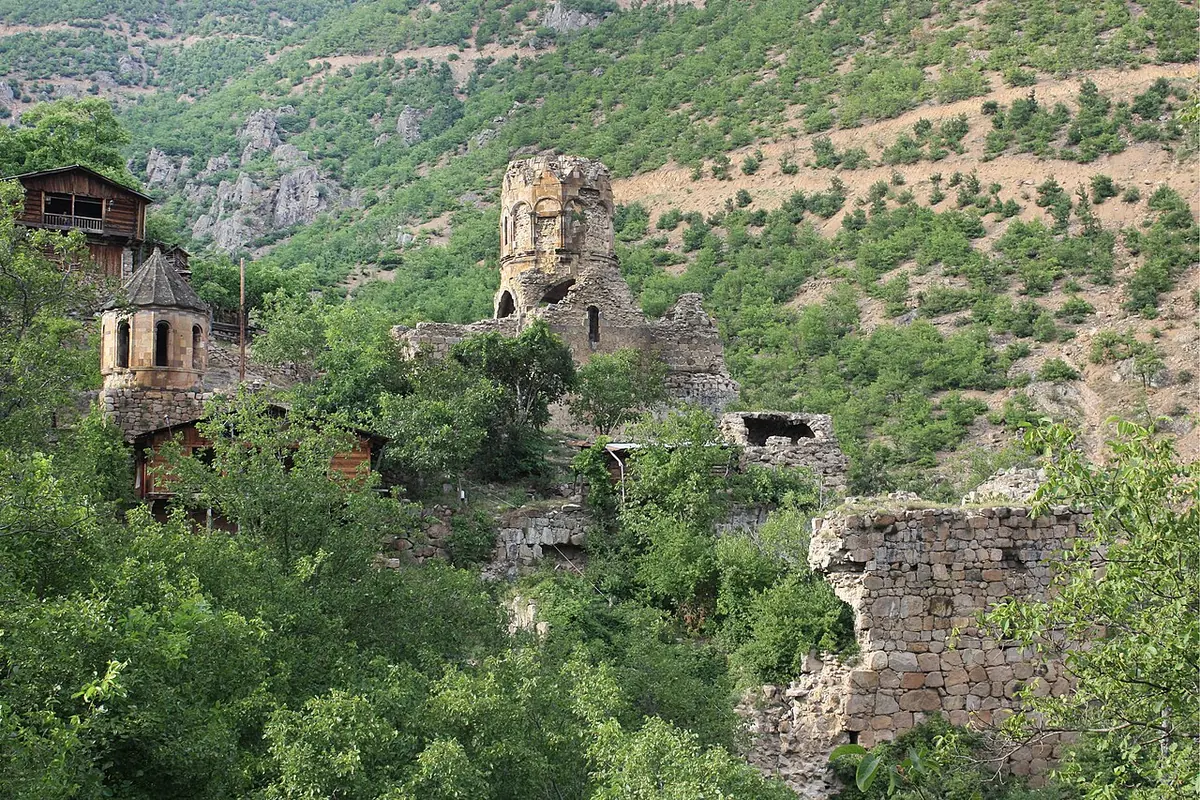
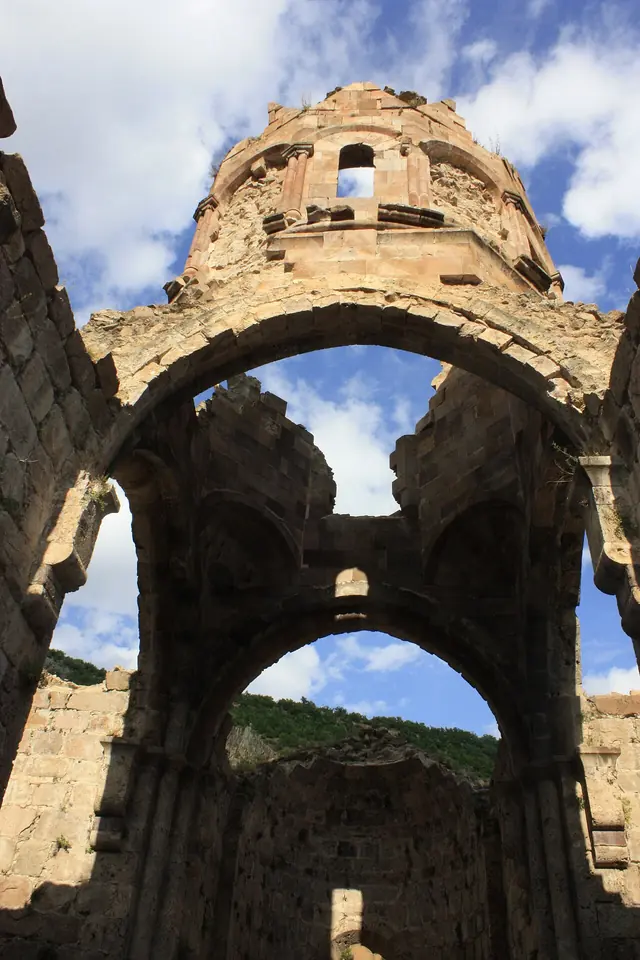
When he knew his death was near, Gregory had candles sent to all the hermitages around, to be lit on the day of his death. He asked his monks to keep his teaching and to remember him in their prayers. The OCA records that he died on October 5, 861, aged 102; Lang's translation of the Life gives October 6. He was buried among his brothers at Khandzta, as he had asked. The church still stands near the village of Pırnallı, in Artvin province in Turkey, but it is a ruin, open to the sky where the dome has fallen.
Symbols of St. Gregory of Khandzta in art
In Georgian icons and manuscript calendars, St. Gregory is shown as:
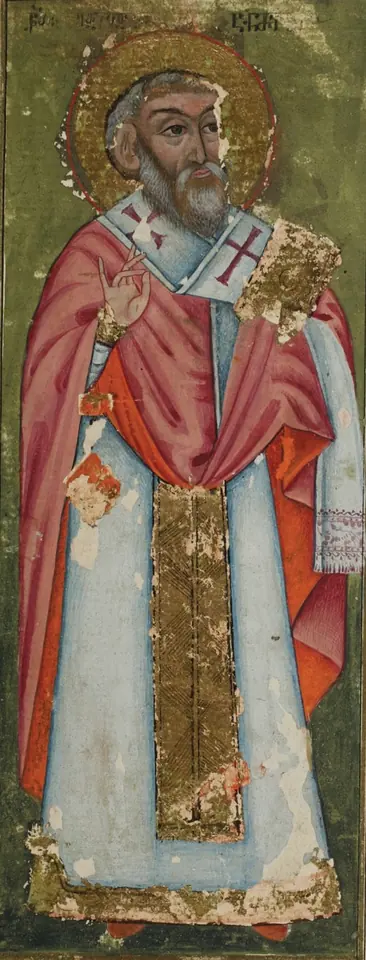
- A very old man with a long white beard: his 102 years.
- Monastic or priestly vestments, often with a stole marked with crosses: his priesthood and his life as an abbot.
- A hand raised in blessing, or a scroll or book: the rule he gave his monks.
- A small church: Khandzta, the monastery he founded.
You can recognize him in Georgian calendars by his name, Grigol Khandzteli, written beside the figure.
Feast day and prayer
The Georgian Orthodox Church and the Orthodox Church in America honor St. Gregory of Khandzta on October 5 (October 18 on the civil calendar in Georgia). See the feast day calendar for the other saints of October.
The OCA publishes a troparion and kontakion for his feast. We do not reprint a prayer here. Let us ask him to pray for monks and nuns, for the Church in Georgia, and for all who must speak the truth to the powerful: holy Father Gregory of Khandzta, pray for us.
Frequently asked questions
Who was St. Gregory of Khandzta?
A Georgian monk (759–861) raised at the court of Duke Nerses, who left home to escape being made a bishop, founded Khandzta monastery, and led the monastic revival of Tao-Klarjeti. His Life was written at Khandzta in 951 by Giorgi Merchule.
When is the feast of St. Gregory of Khandzta?
October 5. Because the Georgian Orthodox Church follows the Julian calendar, the feast falls on October 18 of the civil calendar in Georgia.
Where is Khandzta monastery?
In the mountains of historic Klarjeti, near the village of Pırnallı in Artvin province, northeastern Turkey. The church survives as a ruin, its dome largely fallen.
What was St. Gregory of Khandzta known for?
For building and governing the monasteries of Klarjeti, for the strict rule he gave his monks, for bringing the rules of St. Sabbas from Jerusalem, and for boldly correcting the ruler Ashot Kuropalates.
Keep exploring
Sources
- Orthodox Church in America: Saint Gregory of Chandzoe, Georgia (October 5). His life as the Georgian Church tells it, the miracles, his death on October 5, 861, and his burial at Khandzta
- David Marshall Lang, Lives and Legends of the Georgian Saints (1956), chapter 8: Gregory of Khandzta and the Georgian national revival. Translated episodes of Giorgi Merchule's Life of 951, the twelve monasteries, Ashot's mistress, Constantinople, Tskir and his last words