St. Gerald of Aurillac, the Holy Count

St. Gerald of Aurillac (about 855–909) was a count in the Auvergne who never became a monk or a priest, yet lived like one in secret: he prayed the Office, kept a vow of chastity, freed serfs and judged with mercy. He founded the abbey around which Aurillac grew. We keep his feast on October 13.
Who was St. Gerald of Aurillac?
St. Gerald of Aurillac was a count in the Auvergne, in south-central France, who lived from about 855 to 909. He governed wide lands, kept armed men and sat in judgment over his people, and he is honored as a saint for doing all of that as a man of prayer. He never took monastic vows or holy orders. In secret, though, he lived almost as a monk: he prayed the Divine Office every day, kept a vow of chastity and wore a hidden tonsure under his cap.
His fame rests on one book. Around 930, about twenty years after Gerald's death, St. Odo, the second abbot of Cluny, wrote The Life of St. Gerald of Aurillac. Odo had met people who knew the count well, and he wrote to show the warlike nobles of his day that a lord could follow Christ without laying down his duties. The Diocese of Saint-Flour describes Gerald as one of the first saints the Church recognized who was neither a martyr nor a monk or cleric.
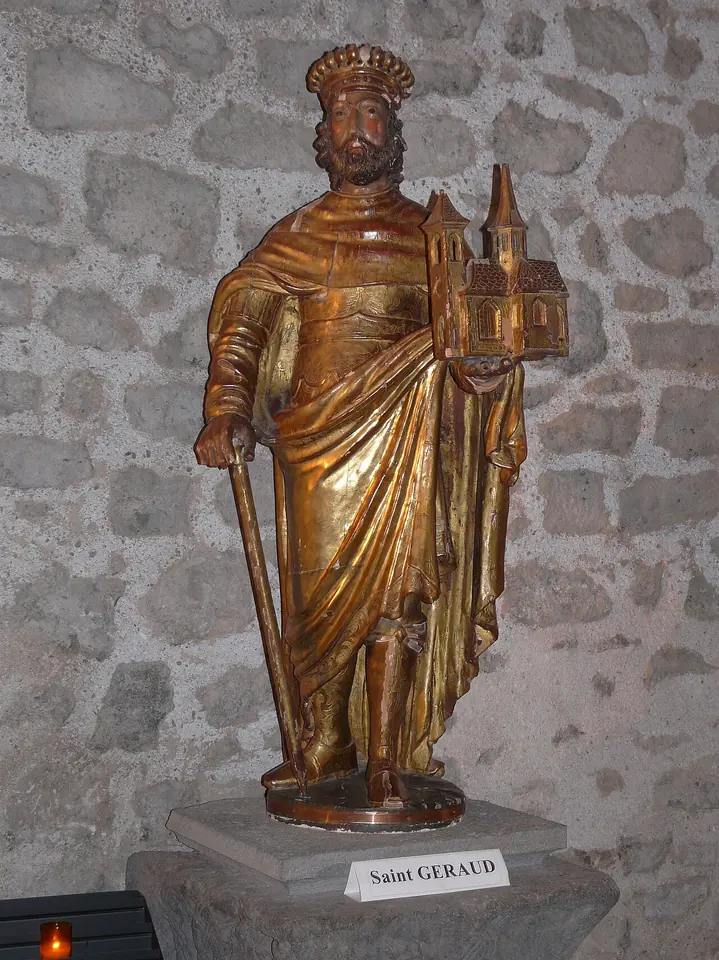
Let us ask St. Gerald to pray for all who hold authority, that they may use it with justice and mercy.
The life of St. Gerald
A sickly boy who learned to pray
Gerald was born into a noble family around 855. He was meant to train for war like any young lord, but, Odo says, a long illness in boyhood kept him at home, and he spent it in study. Butler, who follows Odo, says he took such delight in study and prayer that he was never again drawn into "the tumultuous scene" of a worldly life. When his parents died he inherited their lands and became the protector of everyone who lived on them.
The count who would not shed blood
Ninth-century France was violent, and Gerald could not avoid fighting. Odo tells a striking story: when he had to go into battle to protect the poor from raiders, Gerald "commanded his men in imperious tones, to fight with the backs of their swords and with their spears reversed." Odo adds that he himself "never wounded anybody, nor was wounded by anyone," and that his side still won.

Mercy at the judgment seat
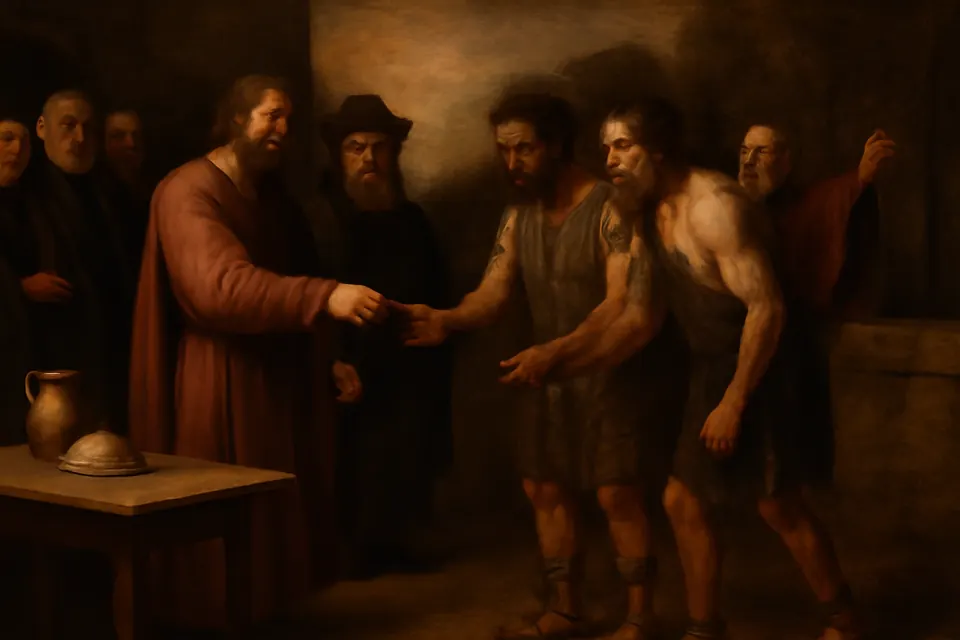
The poor had free access to him, and he judged their cases himself. Once, Odo writes, two men in chains were brought before him, and their accusers demanded that they be hanged at once. Gerald ordered a meal for them first. When they had eaten, he gave them his knife and said, "Go yourselves and bring the osier with which you must be hanged." A wood stood nearby. The men slipped into it and were never found, and no one dared search for them, understanding that the count meant them to go free.
A hidden monk in the world
Gerald wanted to leave everything and become a monk. He opened his heart to his friend Bishop Gausbert, who told him that, for the good of his people, he should keep his secular dress and his duties. Gerald obeyed. He gave his property to St. Peter, keeping its use, and Odo says he "was tonsured in such a way that it remained hidden from men," shaving a circle of his hair and covering it with his cap.
He went to Rome seven times as a pilgrim to pray at the tombs of Sts. Peter and Paul, and on his own land he founded a church and a Benedictine abbey at Aurillac. Butler dates the church to 884.
Blindness and death
Seven years before he died, Gerald lost his sight. He spent those years in prayer. He died at Cézerniac on October 13, 909, and his body was carried to Aurillac and buried in his abbey. Odo describes nobles, country people, the poor, monks and priests streaming in from every side to mourn him.
The miracles of St. Gerald
None of Gerald's miracles is approved in the modern sense; he died three centuries before popes took over canonizations.
- Reported: Odo of Cluny gathered many healings in Gerald's lifetime and at his tomb. One tells of a man blind for nine years who was told in a dream to find "Gerald, the pilgrim of St. Peter," and bathe his eyes in the water Gerald had washed his hands in. Butler says Gerald hid every cure he could.
- Traditional: the unbroken success of his men who fought with reversed weapons, which Odo credits to Christ being at his side.
Symbols of St. Gerald in art
You will mostly meet St. Gerald in the churches of the Auvergne, and he is easy to spot once you know the signs.
- A count's crown or circlet and noble robes: he was a layman and a lord to the end.
- A sword: the authority he used to defend the weak, and a reminder of the battles he fought without bloodshed.
- A model of a church: the abbey he founded at Aurillac, which became the heart of the town.
In France he is Saint Géraud. Old images sometimes show him with a beard and a pilgrim's air, for his many journeys to Rome.
Feast day and the town that grew around his abbey
We keep his feast on October 13. See the feast day calendar and all the patron saints by cause. The abbey he founded drew settlers, and the town of Aurillac grew up around it; Butler calls Gerald the patron of Upper Auvergne. The abbey later produced Gerbert of Aurillac, the monk who became Pope Sylvester II in 999.
His shrine did not escape the Wars of Religion. Butler writes that the Huguenots plundered his silver shrine in the 16th century and scattered his bones, "but some of them were recovered." The abbey church, rebuilt over the centuries, still bears his name.

Prayer to St. Gerald
There is no widely known traditional prayer to St. Gerald in English. Odo of Cluny closed his life of Gerald by asking that the saint "may hear the prayers of each" and meet "the necessities of all." With that same trust we bring him our intentions, especially for those who govern, judge and command: St. Gerald of Aurillac, pray for us.
Frequently asked questions
Who was St. Gerald of Aurillac?
A French nobleman of the late 800s who ruled his lands in the Auvergne as a Christian lord. He wanted to become a monk, but a holy bishop advised him to stay in the world and serve his people, so he took a secret tonsure, kept a vow of chastity, gave most of his income to the poor and founded a Benedictine abbey at Aurillac.
Why is St. Gerald of Aurillac important?
He is one of the first laymen honored as a saint who was neither a martyr nor a monk or cleric. St. Odo of Cluny wrote his life around 930 as a model for Christian nobles, showing how a man with power and a sword could still live the Gospel.
When is St. Gerald's feast day?
October 13, the anniversary of his death in 909. Aurillac and the Diocese of Saint-Flour honor him as their own saint.
Where is St. Gerald of Aurillac buried?
In the abbey church he founded at Aurillac, today the church of Saint-Géraud. His silver shrine was plundered in the 16th-century Wars of Religion, but according to Butler some of his bones were recovered.
Keep exploring
Sources
- St. Odo of Cluny: The Life of St. Gerald of Aurillac, trans. Gerard Sitwell (Sheed and Ward, 1958). The original life, written about 930; source of the stories of the reversed swords, the two prisoners, the hidden tonsure and the seven pilgrimages to Rome
- Alban Butler, The Lives of the Fathers, Martyrs and Other Principal Saints, vol. 10 (October 13): St. Gerald, Count of Aurillac. His blindness, death, burial and the plundering of his shrine
- Nominis (Conférence des évêques de France): Saint Géraud d'Aurillac