St. Paulinus of York, Apostle of Northumbria and First Bishop of York
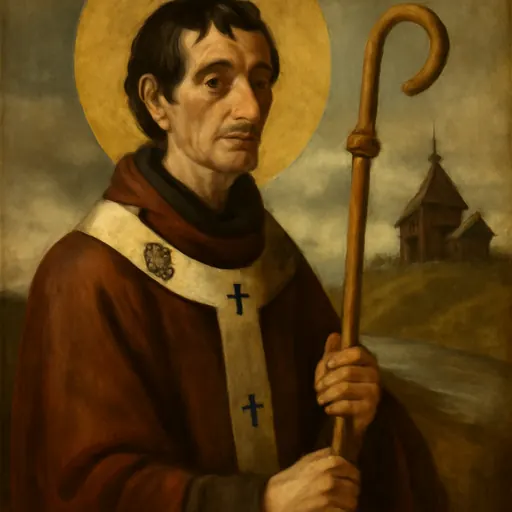
St. Paulinus of York (died 644) was a Roman monk sent to England by St. Gregory the Great who brought the faith to Northumbria, baptized King Edwin at York on Easter Day 627 and became the first bishop of York. He spent his last years as bishop of Rochester. His feast is October 10.
Who was St. Paulinus of York?
St. Paulinus of York was a Roman monk who carried the Gospel to the north of England in the seventh century. Sent by St. Gregory the Great to help St. Augustine of Canterbury, he went north with a Christian princess, baptized the pagan King Edwin of Northumbria on Easter Day 627 and became the first bishop of York. When Edwin fell in battle, Paulinus brought the royal family safely back to Kent and died there as bishop of Rochester.
We keep his feast on October 10. Almost everything we know of him comes from St. Bede's Ecclesiastical History, written about ninety years after his death.
The life of St. Paulinus
From Rome to Kent
Paulinus was a monk of St. Andrew's monastery in Rome, Gregory's own foundation. In 601 the pope sent him to England with St. Mellitus and others to strengthen the mission in Kent and to bring the pallium to Augustine. For more than twenty years he worked in Kent.
The mission to Northumbria
In 625 Edwin, the pagan king of Northumbria, asked to marry Æthelburh, sister of the Christian King Eadbald of Kent. Her family agreed only if she could practice her faith. Bede writes that "Paulinus, a man beloved of God, was ordained bishop, to go with her," consecrated by Archbishop Justus. The next Easter the queen gave birth to a daughter, Eanflæd, and Edwin let Paulinus baptize her; Bede calls her the first of the Northumbrians to be baptized.
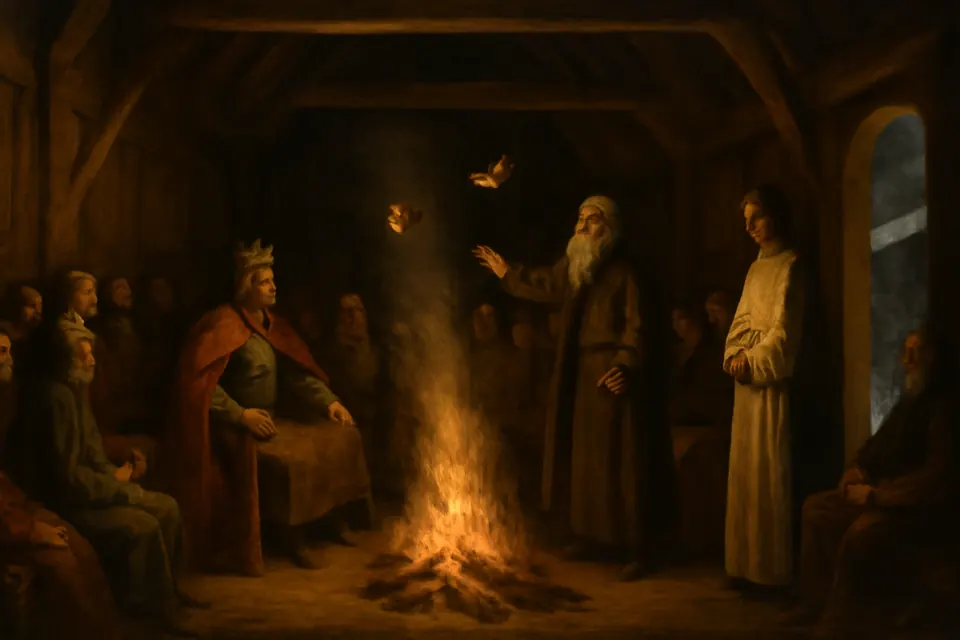
Edwin himself took time. Bede describes him sitting for hours alone, weighing the question. At last he called his counselors together. One of them compared the life of man to a sparrow flying through a lighted hall in winter: in from the storm, a moment of warmth, then out into the dark again. "If, therefore, this new doctrine contains something more certain, it seems justly to deserve to be followed." Coifi, the chief of the pagan priests, then rode out and desecrated his own temple.
Easter 627 at York
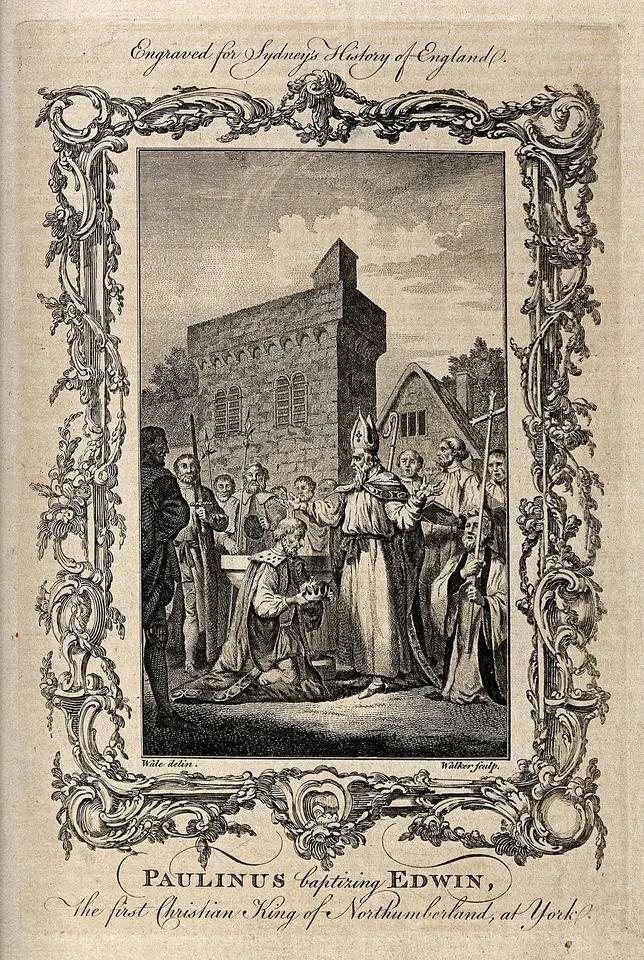
Edwin was baptized at York on Easter Day, April 12, 627, in a small wooden church of St. Peter the Apostle that he had built while preparing for baptism. Paulinus had him begin a larger church of stone around it. That church, finished by St. Oswald, stood where York Minster stands now. Bede adds that Edwin's great-niece, the future St. Hilda, was baptized at the same time.
What followed was a great harvest. Bede tells how Paulinus once spent thirty-six days at the royal estate of Yeavering, catechizing and baptizing from morning till night in the River Glen, because there were not yet churches or fonts. He baptized in the Swale near Catterick, built a stone church at Lincoln and baptized crowds in the Trent. Bede heard of him from an abbot who had spoken with an old man baptized by Paulinus in the Trent. The old man remembered a bishop "tall of stature, a little stooping, his hair black, his visage meagre, his nose slender and aquiline, his aspect both venerable and majestic."


Flight and Rochester
In 633 Edwin was killed at the Battle of Hatfield Chase, and pagan armies ravaged Northumbria. Paulinus took Queen Æthelburh and her children by sea to Kent. The pallium sent from Pope Honorius, which made him archbishop of York, reached him only after he had fled. The see of Rochester was vacant, and he governed it until he died on October 10, 644. He left his deacon, James, behind in the north, and James kept baptizing and teaching the chant of Rome in Northumbria for many years.
Why St. Paulinus is honored in York and Northumbria
He was the first bishop of York and the first to preach to the Northumbrians, and the church he and Edwin began is the ancestor of York Minster. The village of Pallinsburn in Northumberland is said to keep his name, and tradition links his preaching with Dewsbury, Southwell and other northern places. See more causes on our patron saints page.
Symbols of St. Paulinus in art
Paulinus appears as an archbishop in vestments with the pallium and a crozier. Artists who follow Bede give him a tall, slightly stooping figure, black hair and a hooked nose. He is often shown baptizing, either pouring water over the kneeling King Edwin or standing in a river among converts. In English churches he is found in stained glass and carved screens next to Edwin, Æthelburh and the other early English saints.
His shrine at Rochester
Paulinus was buried in his church at Rochester, and he left there the pallium he had received from the pope. After the Norman Conquest Archbishop Lanfranc rebuilt the cathedral and moved his relics to a silver shrine, where pilgrims honored them until the shrine was destroyed at the Reformation.
Prayer to St. Paulinus
No traditional prayer to St. Paulinus survives in the standard prayer books. Let us ask St. Paulinus, who brought a king and a whole people to the waters of baptism, to pray for all who are preparing to be baptized this Easter, and for the Church in the north of England. Find other saints of October on our feast days page.
Frequently asked questions
Who was St. Paulinus of York?
A Roman monk of St. Andrew's monastery in Rome, sent to England in 601. In 625 he went north with Princess Æthelburh of Kent when she married King Edwin of Northumbria, converted the king and many of his people, and founded the see of York.
When did Paulinus baptize King Edwin?
On Easter Day, April 12, 627, at York, in a wooden church of St. Peter the Apostle that Edwin had built while he was preparing for baptism. A stone church was then begun around it, on the site of today's York Minster.
What did St. Paulinus look like?
Bede passes on the memory of an old man Paulinus had baptized in the Trent: he was "tall of stature, a little stooping, his hair black, his visage meagre, his nose slender and aquiline, his aspect both venerable and majestic."
When is the feast of St. Paulinus of York?
October 10, the day he died at Rochester in 644.
Keep exploring
Sources
- Bede, Ecclesiastical History of the English Nation, Book II (Internet Medieval Sourcebook, Fordham University). Edwin's baptism on April 12, 627; the 36 days at Yeavering; the Swale and the Trent; Bede's description of Paulinus; his flight to Kent and Rochester
- Catholic Encyclopedia (1911): St. Paulinus, Archbishop of York. The pallium sent in 634, his death on October 10, 644, Lanfranc's silver shrine at Rochester