St. Mary Frances of the Five Wounds of Jesus
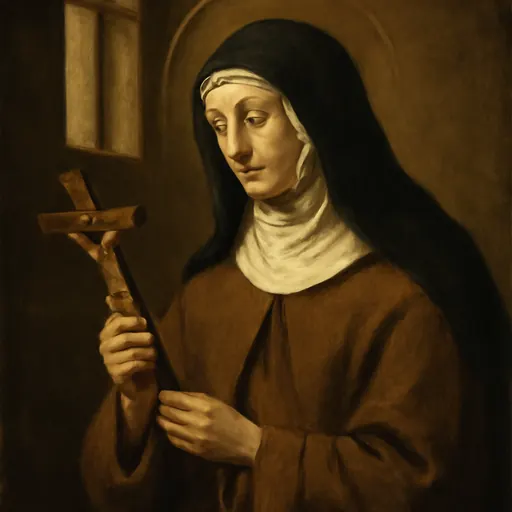
St. Mary Frances of the Five Wounds of Jesus (1715–1791), born Anna Maria Gallo, was a Franciscan tertiary of Naples who lived a hidden life of prayer and suffering and is said to have shared in the pains of Christ's Passion. Women hoping for a child still sit in her chair in her house in Naples to ask her prayers. Her feast is October 6.
Who was St. Mary Frances of the Five Wounds of Jesus?
St. Mary Frances of the Five Wounds of Jesus was a laywoman of Naples who wore the habit of the Franciscan Third Order and never entered a convent. Born Anna Maria Gallo, she lived nearly all her life in a few streets of the Quartieri Spagnoli, the crowded Spanish Quarter of the city, praying, fasting, caring for the poor and enduring a great deal of suffering. Her biographers call her the first woman of Naples to be canonized. Her house is now a sanctuary, and women hoping for a child come there to sit in her chair and ask her prayers. We keep her feast on October 6.
A hard home in Naples
She was born in Naples in March 1715, the daughter of Francesco Gallo and Barbara Basinsi. Tradition and the Dicastery for the Causes of Saints give her birth as March 25, the Annunciation; the parish register gives March 26, with baptism two days later. The family made a modest living from a small textile workshop at home, and the girl worked in it from childhood.
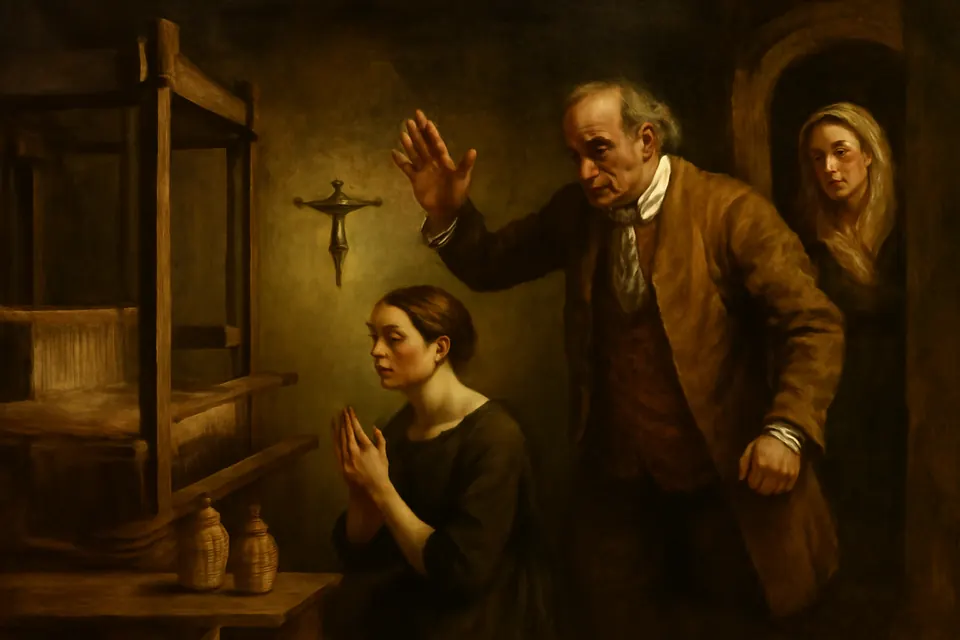
The Catholic Encyclopedia describes her father as severe, greedy and quick-tempered. He beat his family and kept Anna Maria at hard, constant labor. Her mother was gentle and patient. Two holy men of the city, the Jesuit St. Francis de Geronimo and the Alcantarine friar St. John Joseph of the Cross, are said to have foretold her holiness.
When she was sixteen, her father tried to marry her to a rich young man. She refused and asked to give herself to God. In the end he gave way, and on September 8, 1731, she received the habit of the Third Order of St. Francis in its Alcantarine reform, taking the name Maria Francesca delle Cinque Piaghe: Mary Frances of the Five Wounds.
A tertiary in the world
She did not enter a cloister. In Naples a woman like her was called a bizzoca, a devout laywoman who lived a consecrated life at home. She kept going to the Alcantarine church of Santa Lucia al Monte, prayed for long hours, fasted strictly and wore a hair shirt. Her family did not make it easier: her father and sisters persecuted her, and some of her confessors tested her with harsh direction.
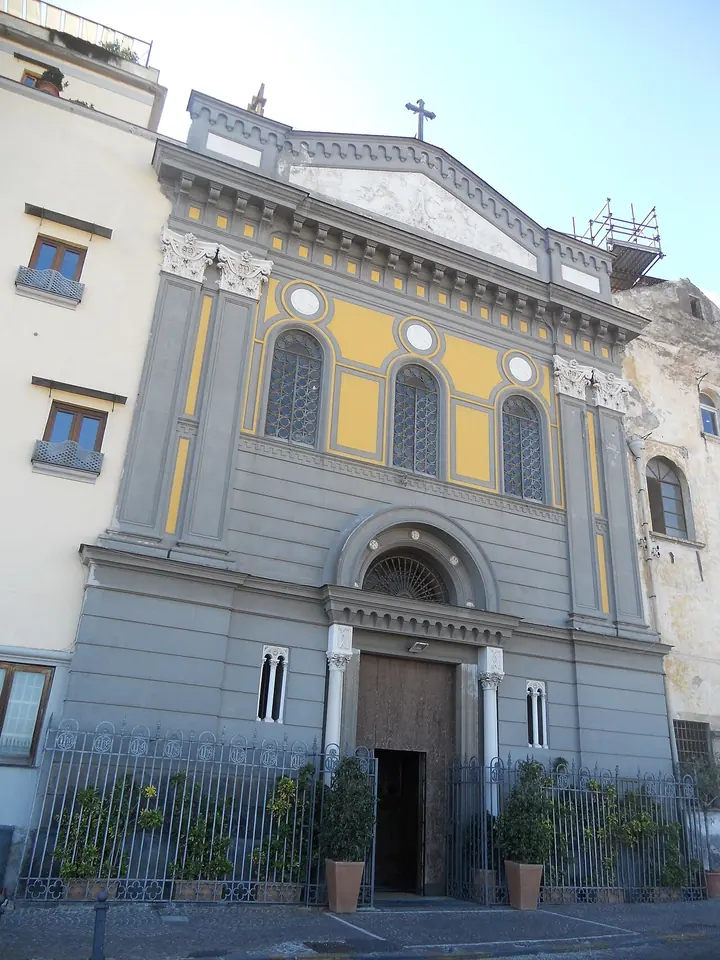
At about thirty-eight she moved, with another tertiary named Maria Felice, into the house of a devout priest, Don Giovanni Pessiri, and stayed there the last thirty-eight years of her life. Priests, religious and lay people came to ask her advice. The Barnabite St. Francis Xavier Bianchi, himself later canonized, was among those who most admired her.
The five wounds
Her religious name points to the center of her prayer: the five wounds of Christ crucified. The Catholic Encyclopedia reports that her body was "signed with the stigmata," but that at her own request they took no visible form. On Fridays, and above all in Lent, she felt in her body the pains of the Passion. We call this reported: it comes from those who knew her, and her canonization rests on her heroic virtues, not on these gifts. Read more on our page about the stigmata.
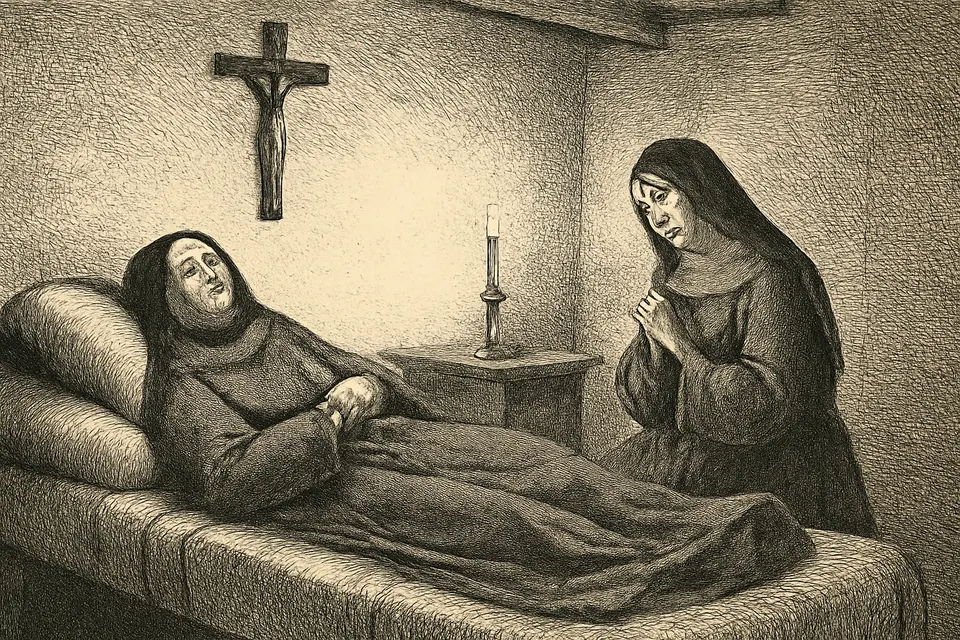
She offered her sufferings for sinners, and her charity toward the afflicted had no limit. She died in the Pessiri house on October 6, 1791, at seventy-six. Crowds came to her funeral, and mourners tried to carry off her belongings as relics.
Canonization
She was buried at Santa Lucia al Monte, the church that also holds the tomb of St. John Joseph of the Cross. Pius VII declared her venerable in 1803, Gregory XVI beatified her on November 12, 1843, and Pius IX canonized her on June 29, 1867, the eighteenth centenary of the martyrdom of Sts. Peter and Paul, together with St. Paul of the Cross and St. Leonard of Port Maurice.
Why St. Mary Frances is a patron of women hoping for a child
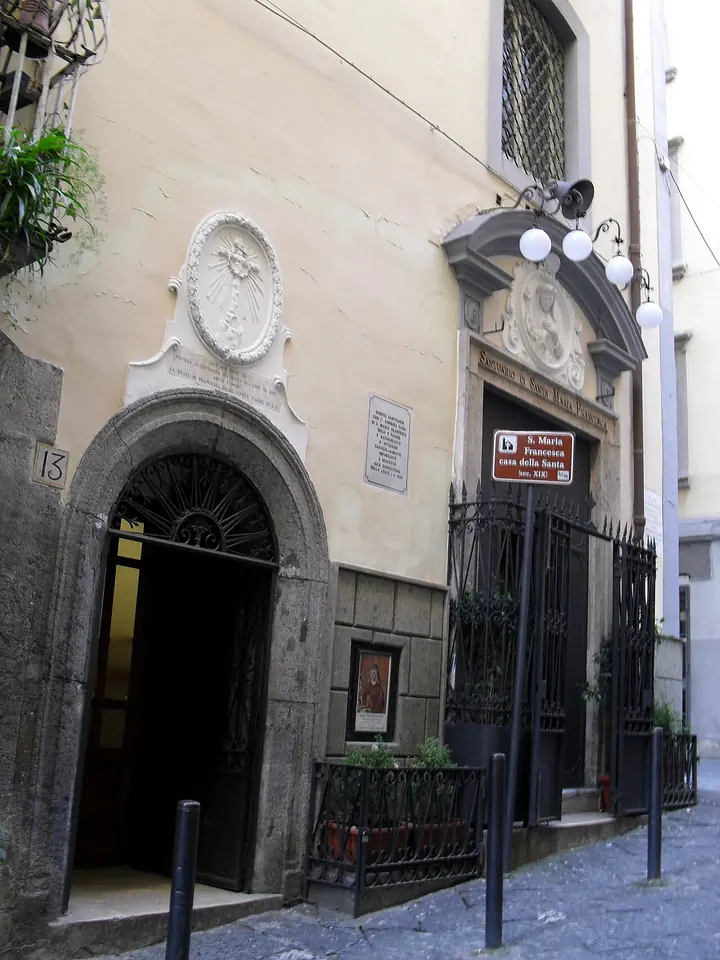
On October 6, 2001, her body was moved from Santa Lucia al Monte back to the house where she had lived, now a church and sanctuary. The rooms keep her "chair of suffering," where she rested in her illnesses. For generations women who long for a child have come to sit in it and ask her intercession, and expectant mothers come to be blessed with her relic. The custom is a devotion of the people of Naples, not a list of recorded miracles, and it continues today. See our pages on the patron saints of fertility and of pregnancy.
Symbols of St. Mary Frances in art
Look for:
- The Franciscan habit of a tertiary, brown with a knotted cord, and a dark veil.
- A crucifix held close or gazed upon.
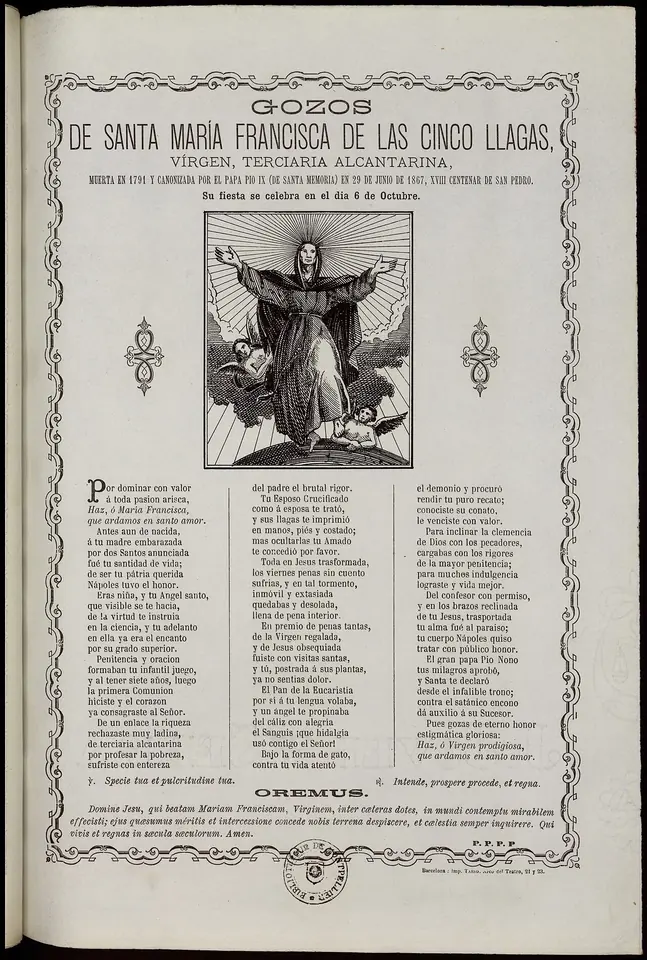
- The five wounds, sometimes shown as rays from the crucified Christ to her, and sometimes a crown of thorns: her share in the Passion.
Feast day and prayer
We keep her feast on October 6. See the feast day calendar for the other saints of October.
We know of no traditional prayer to her that we can cite in English. Let us ask her to pray for couples who long for a child, for mothers waiting to give birth, and for all who suffer in body or at home: St. Mary Frances of the Five Wounds of Jesus, pray for us.
Frequently asked questions
Who was St. Mary Frances of the Five Wounds of Jesus?
Anna Maria Gallo was born in Naples in 1715. At sixteen she refused the rich husband her father chose and took the habit of the Franciscan Third Order. She lived as a laywoman in the Quartieri Spagnoli, giving her days to prayer, penance and the poor, and died in 1791. Pope Pius IX canonized her in 1867.
Why is St. Mary Frances the patron of women hoping to have a child?
Her house in Naples keeps the chair she used in her sufferings, and for generations women hoping to conceive have come to sit in it and ask her intercession. Expectant mothers come to be blessed with her relic.
Did St. Mary Frances have the stigmata?
The Catholic Encyclopedia says her body is said to have been signed with the stigmata, but at her own prayer they left no visible mark. She felt the pains of the Passion, above all on Fridays and in Lent.
When is the feast of St. Mary Frances of the Five Wounds?
October 6, the day she died in Naples in 1791.
Keep exploring
- Patron saint pages
- FertilityPregnancy
- Feast-day calendar
- Saints remembered in OctoberSaint of the dayWhat saint is my birthday?
- Same name
- Other saints named Mary →
- Relics
- Where the relics are kept (map)
- More
- Saints A to ZPatron saints A to ZExplore every section
Sources
- Catholic Encyclopedia (1910): St. Mary Frances of the Five Wounds of Jesus. Her father, the stigmata, her penances, the house of Giovanni Pessiri, her burial and the dates of her cause
- Santi e Beati: Santa Maria Francesca delle Cinque Piaghe (Anna Maria Gallo). The baptismal register, her life as a tertiary, the house in the Quartieri Spagnoli, the 2001 translation of her body and the chair