St. Paraskeva of the Balkans (St. Petka, St. Parascheva of Iași)
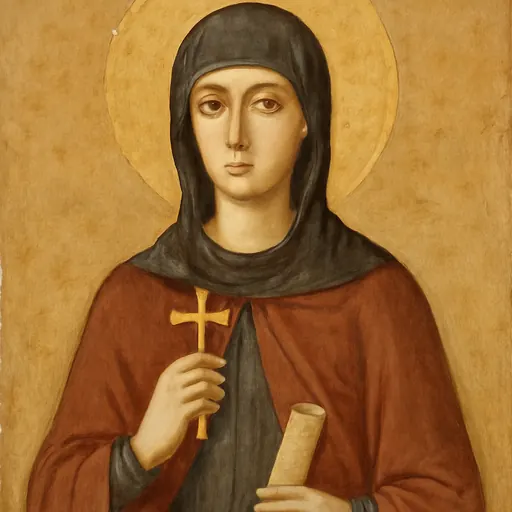
St. Paraskeva of the Balkans, called St. Petka by Serbs and Bulgarians and St. Parascheva by Romanians, was an eleventh-century nun from Epivatos near Constantinople who lived as a hermit in the desert near the Jordan, came home at an angel's word and died at about 27. Her incorrupt relics passed through Tarnovo, Belgrade and Constantinople and have rested in Iași, Romania, since 1641. Her feast is October 14.
Who was St. Paraskeva of the Balkans?
St. Paraskeva of the Balkans was a Byzantine nun of the eleventh century whose short, hidden life became, after her death, one of the most beloved cults in Eastern Europe. Serbs and Bulgarians call her St. Petka, Romanians call her Sfânta Cuvioasa Parascheva, and the Greeks St. Paraskevi the New. Her incorrupt relics have rested in Iași, Romania, since 1641, and every October pilgrims from across the country wait for hours in line to pray before them. We keep her feast on October 14.
Her name means "Friday," the day of the Lord's Passion, and it has caused centuries of confusion. She is not St. Paraskevi of Rome, the second-century martyr of the Greeks, nor the martyr Paraskevi of Iconium honored in Russia. She was not a martyr at all, but a hermit.
Her life
The Orthodox Church in America gives her life in the form the Church received it. She was born into a devout family in the village of Epivatos, on the Sea of Marmara between Silistra and Constantinople. Her older brother Euthymius became a monk and later bishop of Matidia, as the OCA gives the name. One day in church she heard the Lord's words, "If any man will come after Me, let him deny himself" (Matthew 16:24), and they went into her heart. She began giving her clothes to the poor, and her family was not pleased.
After her parents died she was tonsured a nun at fifteen and went to the desert near the Jordan, where she lived as an ascetic until about twenty-five.

Then, the life says, an angel of the Lord told her to go home. She returned to Epivatos, lived there two more years in prayer, and died at about twenty-seven. She was buried near the sea, like a stranger, and forgotten.
The uncovering of her relics
Miracles began at the unmarked grave, and her body was uncovered and found incorrupt. It was placed in the church of the Holy Apostles at Epivatos, where it stayed for about 175 years. Centuries later the Bulgarian Patriarch Euthymius of Tarnovo wrote the life that made her known among the Slavs.
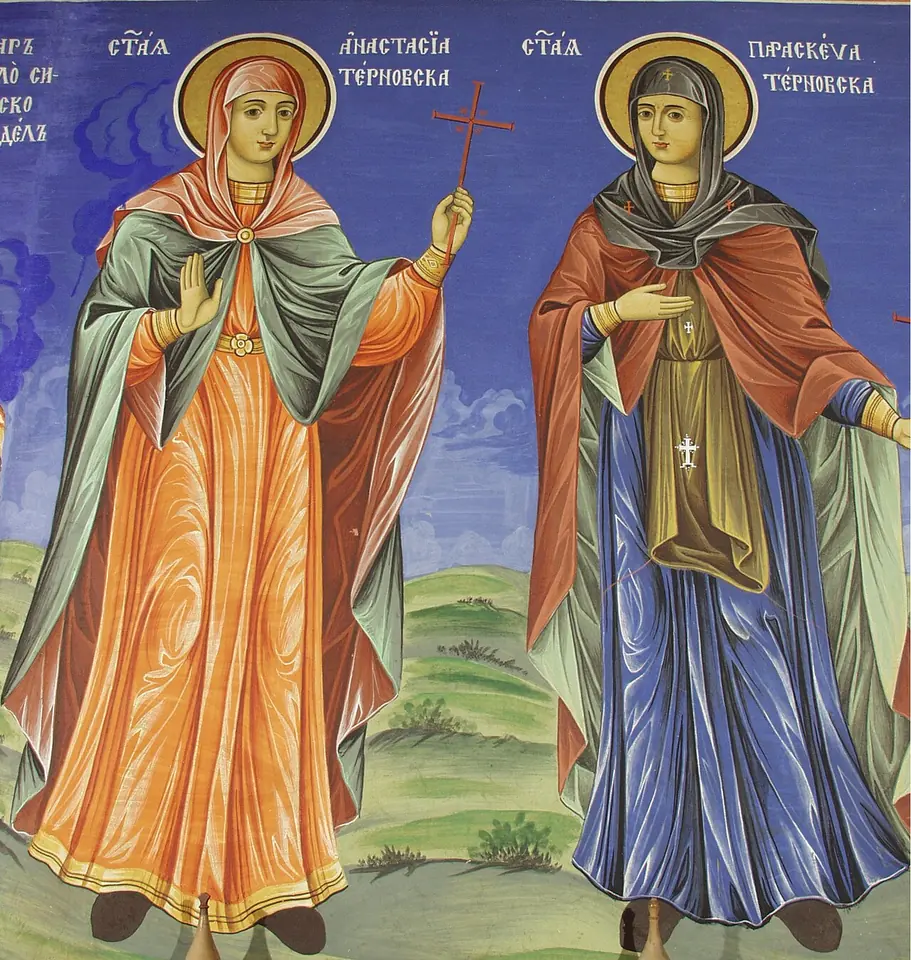
The long journey of her relics
Few saints have traveled as far after death. The OCA traces the route:
- 1223: her relics were moved to Tarnovo, the Bulgarian capital, and placed in the cathedral. There Patriarch Euthymius later fixed her feast on October 14.
- 1391: when the Turks occupied Bulgaria, the relics were given to Mircea the Elder, prince of Wallachia.
- 1394: they were given to Princess Angelina of Serbia, who brought them to Belgrade.
- Constantinople: for about 120 years they rested in the patriarchal cathedral of Constantinople.
- June 13, 1641: they came to the monastery of the Three Hierarchs at Iași in Moldavia, where many healings were reported.
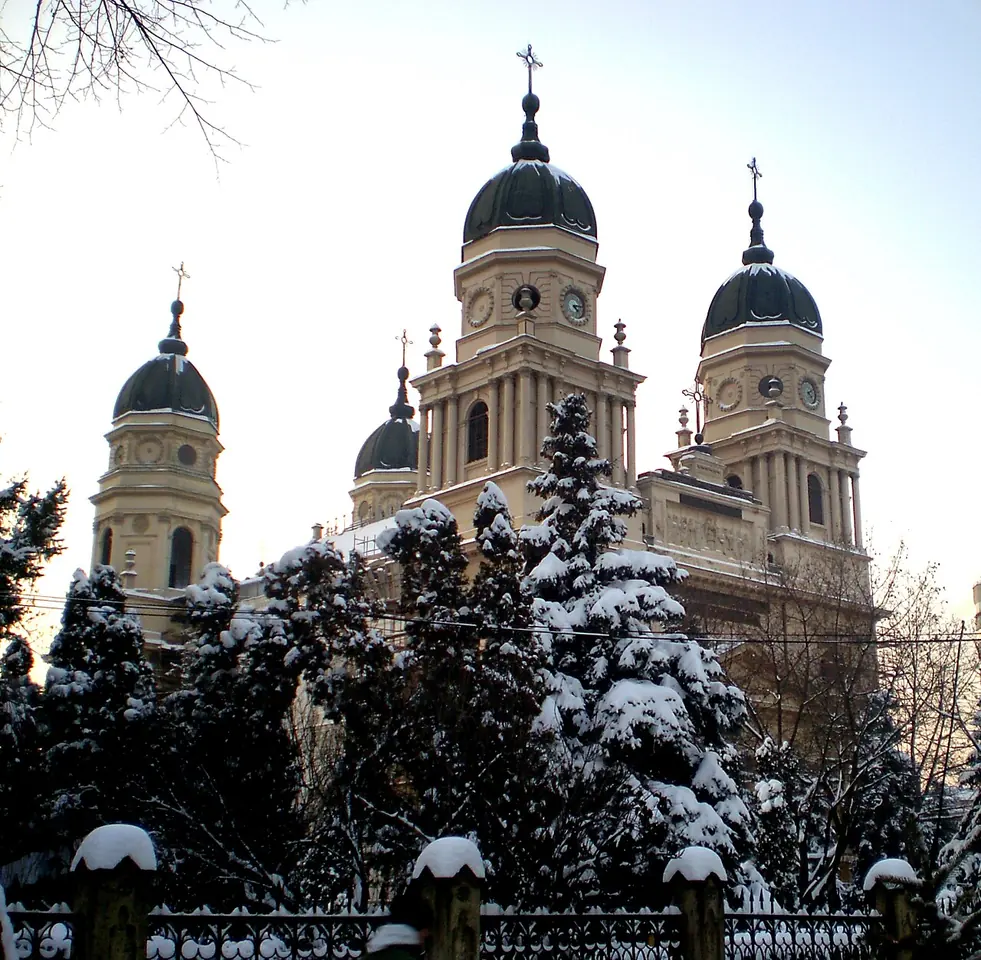
- December 26, 1888: rescued from a fire, they were moved into the new Metropolitan Cathedral of Iași, where they remain.
Other lives give some of these dates a few years differently; what is clear is that Bulgarians, Serbs and Romanians each received her as their own.
Miracles of St. Paraskeva
- Traditional: the angel who sent her home from the Jordan, and the incorruption of her body, found after miracles at her grave.
- Reported: many healings at Iași, as the OCA records, and countless graces told by pilgrims at her shrine. The Orthodox Church does not hold a formal process like the Catholic one, so these are not "approved" miracles in the Catholic sense.

Symbols of St. Paraskeva in art
Icons show her as a young nun:
- The dark monastic veil and mantle, often red over blue: her life as a nun and ascetic.
- A cross held before her: her love for the Crucified, and the cross with which, her troparion says, she fought the spiritual enemy.
- A scroll: sometimes with a prayer or her words; in some icons her hand is raised in blessing instead.
Because both saints are named Paraskevi and wear similar clothes, painters sometimes borrow from one for the other. If an icon shows a dish with two eyes, a cauldron or martyrdom scenes, it is the martyr of Rome or Iconium. A plain nun with a cross, labeled Petka or Parascheva, especially in Bulgarian, Serbian or Romanian churches, is our saint.
Feast day, pilgrimage and patronage
We keep her feast on October 14. In Iași the feast is the great pilgrimage of the Romanian year, and the city is under her protection. See the feast day calendar for the other saints of October.
Troparion of St. Paraskeva
The Orthodox Church sings this troparion (Tone 2) on her feast, in the translation used by the Orthodox Church in America:
You loved the solitary and hesychastic life, and then, with diligence, you hastened after Christ, your Bridegroom, and took up His easy yoke in your youth. Armed with the Sign of the Cross, you contended courageously against noetic enemies; through fasting, prayer, and by shedding tears, you extinguished the embers of the passions, O glorious Paraskevḗ. Now, standing in the heavenly Bridal Chamber of Christ, together with the wise virgins, intercede for us who honor your holy memory.
Let us ask her prayers for all who are sick and afflicted, for young people seeking God, and for the peoples of the Balkans who love her. Holy Mother Paraskeva, pray to God for us.
Frequently asked questions
Who was St. Paraskeva of the Balkans?
An eleventh-century Byzantine nun from Epivatos on the Sea of Marmara who lived for years as a hermit near the Jordan River, returned home, and died young. Miracles at her grave led to the uncovering of her incorrupt relics, and her cult spread through Bulgaria, Serbia and Romania.
Is St. Petka the same as St. Paraskeva?
Yes. Paraskevi is Greek for "Friday"; Petka (from petak) is the Slavic translation. St. Petka, St. Parascheva of Iași, St. Paraskevi the New and St. Paraskeva of Tarnovo are all the same saint.
Where are the relics of St. Paraskeva?
In the Metropolitan Cathedral of Iași, Romania. They came to Iași in 1641 and were moved into the new cathedral on December 26, 1888, after being saved from a fire.
When is the feast of St. Paraskeva of the Balkans?
October 14. On the Old Calendar this falls on October 27 of the civil calendar. Iași holds its great pilgrimage around the feast each October.
Keep exploring
Sources
- Orthodox Church in America: Venerable Paraskevi (Petka) of Serbia. Her life and the journeys of her relics from Epivatos to Iași
- Orthodox Church in America: Troparia and kontakia for October 14. Source of the troparion quoted on this page