St. Anna Schäffer
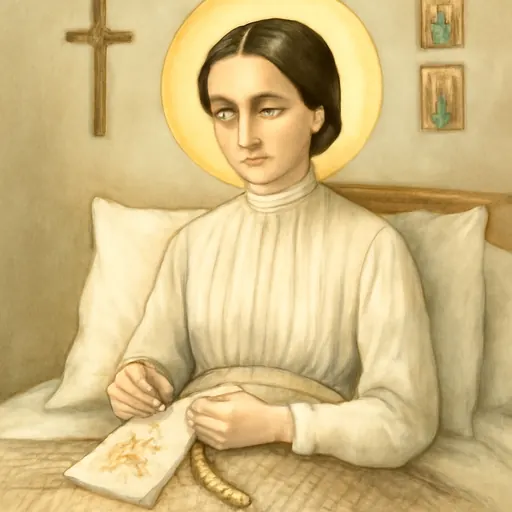
St. Anna Schäffer (1882 to 1925) was a Bavarian maid from Mindelstetten who fell into a kettle of boiling lye at nineteen and spent the rest of her life bedridden in pain. She offered that suffering for the Church, prayed and wrote for everyone who asked her help, and was canonized by Pope Benedict XVI in 2012. Her feast is October 5.
Who was St. Anna Schäffer?
St. Anna Schäffer was a young Bavarian maid who wanted to be a missionary sister and instead spent twenty-four years in bed with burns that would not heal. She was born on February 18, 1882, in Mindelstetten, a farming village about 20 kilometers northeast of Ingolstadt in the Diocese of Regensburg, the third of six children of a carpenter. Her father died in January 1896, and she went out to work as a household servant to help the family and save toward the dowry a convent would require.
At the canonization Mass on October 21, 2012, Pope Benedict XVI summed up her life in one line: "So her sick-bed became her cloister cell and her suffering a missionary service."
Let us learn from her, and ask her to pray for all who suffer.
The life of St. Anna Schäffer
A child who promised everything
On the day of her first Communion, April 12, 1893, the eleven-year-old Anna wrote a letter to Jesus. Her parish biography quotes it: "…do with me as you want… I want to atone and if you will it my Jesus, let me become an expiatory sacrifice to atone for all dishonour and all offenses which are committed against you." At sixteen she consecrated herself to the Blessed Virgin.
In June 1898 she had a vision that frightened her. She wrote that Christ appeared to her as the Good Shepherd, "held a rosary in His hands, spoke to me of praying the rosary and that I would not become 20 years old. That I would have to suffer a great deal." She left her job in Landshut the next day.
The accident
On February 4, 1901, Anna was working at the forester's lodge in Stammham. It was washing day. The stovepipe over the laundry boiler had come loose, and she climbed onto the rim of the kettle to fix it. She slipped and fell into the boiling lye, scalding both legs up to the knees.

The doctors could not heal her. In the end the hospital sent her home an invalid. Two long stays at the university clinic in Erlangen brought only more pain. Open wounds remained on her legs for the rest of her life, and she became bedridden in her mother's small house in Mindelstetten.
Saying yes
She later admitted that it took her about two years to accept what had happened. Then, in the fall of 1910, she had what she called "dreams": she saw first St. Francis, then Christ, who accepted her offering of reparation. Her parish biography records the words she wrote down from October 4, 1910: "I accepted you in atonement for my holy sacrament. And in future during holy communion you will feel the pains of my holy passion." From then on she bore the wounds of Christ, though very few people knew. She later asked the Lord to take away the visible marks, so that no one would make a sensation of them.
Her bed became a busy place. She embroidered altar cloths and vestments for churches, wrote letters of encouragement, and received visitors who brought her their troubles. In a letter of January 29, 1925, she wrote: "The most important thing for me is to pray and suffer for the holy Church and her Pastors."
Her death
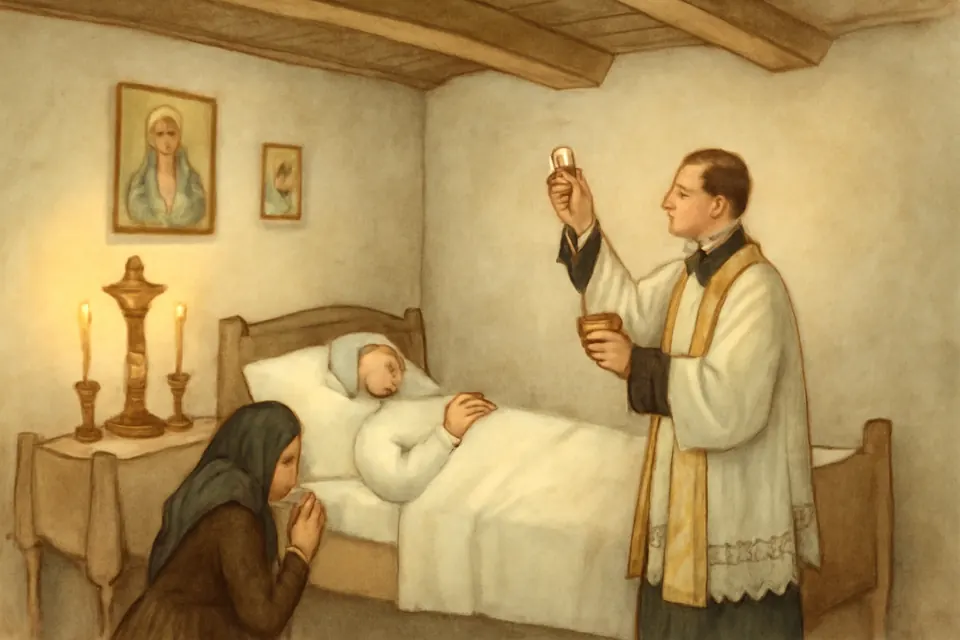
In her last years paralysis spread through her legs, and she developed cancer of the bowel. About five weeks before her death a fall injured her head and took away her speech. On the morning of October 5, 1925, she received Holy Communion for the last time, made the sign of the cross, and died with the words "Jesus, for you I live!"
The miracles of St. Anna Schäffer
Her parish has gathered thousands of reports of favors received through her prayers since her death. Most are reported, not examined. Two healings were investigated by doctors in Germany and in Rome and approved by the Church:
- For her beatification: a young man with severe head injuries and brain hemorrhages after a motorcycle accident survived surgery and left the hospital after eighteen days, fully healed. His parents and friends had prayed to Anna from the start.
- For her canonization: in the fall of 1999, a few months after the beatification, a woman with advanced liver cirrhosis and severe abdominal dropsy prayed novena after novena to Anna. She left the hospital, and within four weeks the fluid had gone. The cure lasted.
St. John Paul II beatified her in St. Peter's on March 7, 1999, and Pope Benedict XVI canonized her on October 21, 2012, together with St. Kateri Tekakwitha and St. Marianne Cope.
Why St. Anna Schäffer is honored
She has no formal patronage. The sick, the disabled, burn victims and caregivers turn to her as one of their own, and Pope Benedict prayed at her canonization that her intercession would "strengthen the Christian hospice movement in its beneficial activity." She once promised: "Should I ever be blessed and gain eternal bliss, to get to where Jesus is, I will be a good intercessor for all of you."
Symbols of St. Anna Schäffer in art
She is a modern saint, and her images come mostly from photographs. Look for:
- A sickbed: she is almost always shown sitting up in bed in a white blouse, as in the photographs taken of her.
- A rosary: she called it her "trusted companion" in her feverish hands at night.
- Embroidery or a needle: the church linens she sewed from her bed.
- A host or chalice: her love of daily Holy Communion, the center of her life.
- Letters: her apostolate of writing to people who asked her prayers.

Feast day and where she is honored
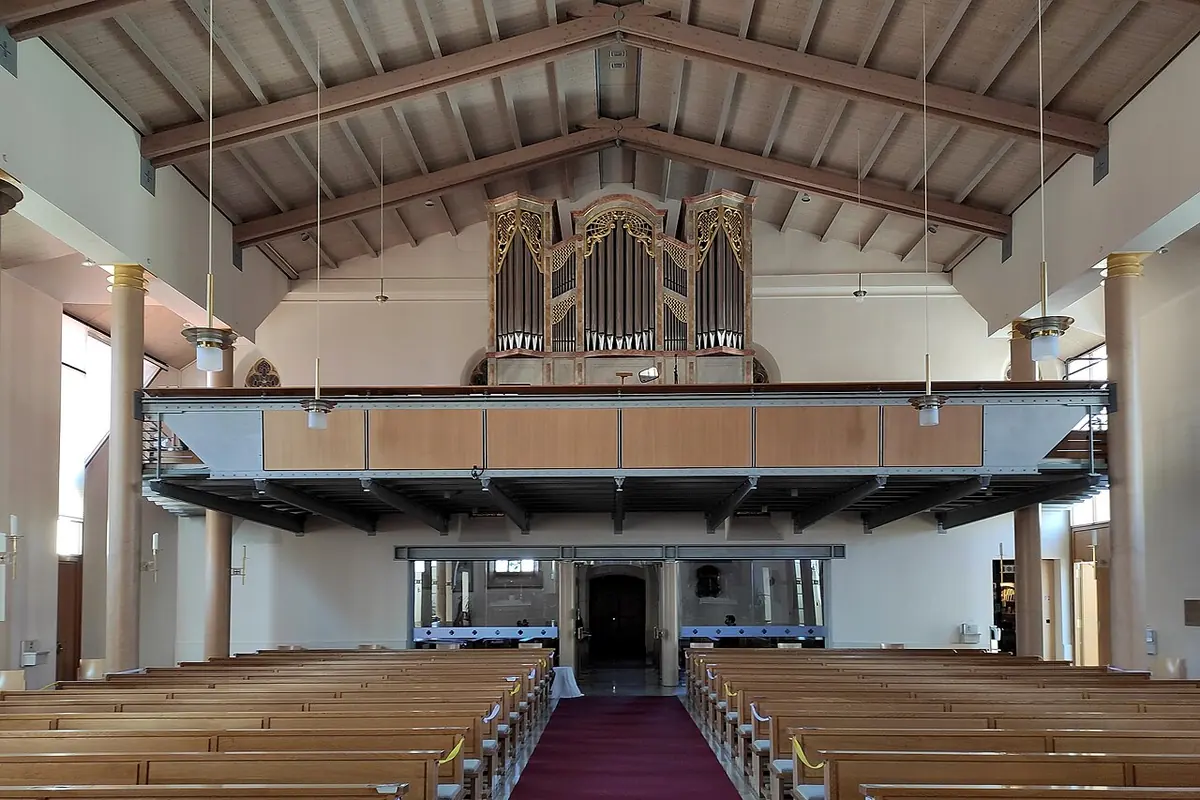
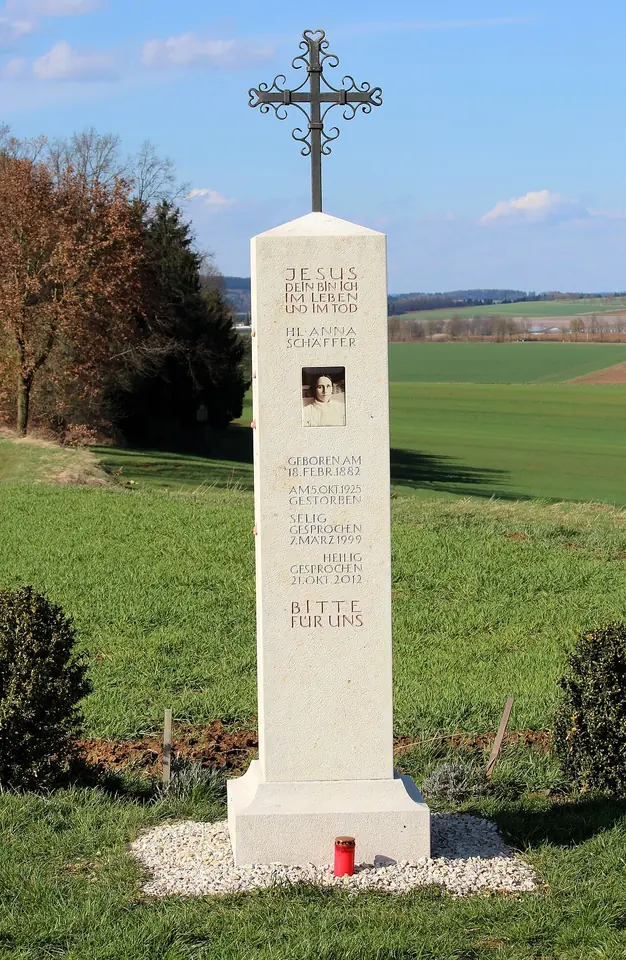
We keep her feast on October 5. Her tomb is in the parish church of St. Nicholas in Mindelstetten, redesigned before the canonization with a gilded reliquary casket that parishes can borrow for veneration. Pilgrims visit her house, and a memorial column stands at the edge of the village fields. Touch relics, small pieces of the cloth that touched her bones and chips of her old oak coffin, are available from the parish.
Praying with St. Anna Schäffer
We do not print a prayer to St. Anna here, but her own short sayings, kept by her parish, make good prayers: "Jesus alone is my comfort in suffering, my heaven on earth, my God and my everything." And: "What should I fear? Jesus' heart is with me!"
Let us ask St. Anna Schäffer to pray for everyone who lies awake in pain tonight, that each one may find, as she did, that Jesus is near.
Frequently asked questions
Who was St. Anna Schäffer?
A poor working girl from Mindelstetten in Bavaria who hoped to become a missionary sister. On February 4, 1901, while working as a maid, she slipped into a boiler of boiling lye and badly scalded both legs. The wounds never healed. She lived bedridden for twenty-four years, offering her pain to Christ, praying for others and writing letters of comfort, and died on October 5, 1925.
When is the feast of St. Anna Schäffer?
October 5, the day she died in 1925.
What miracles were approved for St. Anna Schäffer?
Two. For her beatification, a young man with severe head injuries from a motorcycle accident recovered fully after his family prayed to her. For her canonization, a woman with advanced liver cirrhosis and abdominal dropsy was healed in the fall of 1999 after praying novena after novena to her. Both were judged medically inexplicable.
What were St. Anna Schäffer's last words?
Her parish's biography gives them as "Jesus, for you I live!" The 1999 L'Osservatore Romano account renders them "Jesus, I live in you." She spoke them while making the sign of the cross, shortly after her last Holy Communion.
Keep exploring
Sources
- Pope Benedict XVI, Homily for the canonization of seven new saints (October 21, 2012). "Her sick-bed became her cloister cell and her suffering a missionary service"
- Apostolate of Suffering and Reparation Was Call Given to Bl. Anna Schaffer, German Laywoman (L'Osservatore Romano, March 10, 1999). The accident at Stammham, the visions of 1910, the hidden stigmata and her letter of January 29, 1925
- Saint Anna Schäffer, Mindelstetten: Biography. Her first Communion letter, the 1898 vision, the vision of October 4, 1910, and her last words
- Saint Anna Schäffer, Mindelstetten: Beatification and Canonisation. The two approved miracles
- Saint Anna Schäffer, Mindelstetten: Relics