Blessed Luigi Tezza, Camillian Founder and "Apostle of Lima"

Blessed Luigi Tezza (1841–1923) was an Italian priest of the Camillians, the Ministers of the Sick, who in 1892 founded the Daughters of St. Camillus with St. Giuseppina Vannini. In 1900 he was sent to reform the Camillian house in Lima, Peru, and stayed 23 years, until the people called him "the saint of Lima." Pope John Paul II beatified him in 2001. We keep his feast on September 26.
Who was Blessed Luigi Tezza?
Blessed Luigi Tezza was an Italian priest of the Order of the Ministers of the Sick, the Camillians, who gave his life to the care of the sick in body and soul. With St. Giuseppina Vannini he founded the Daughters of St. Camillus, a congregation of sisters who nurse the sick. At fifty-nine he was sent to Lima, Peru, for what was meant to be a short visit, and he stayed for twenty-three years, until his death. The people of Lima called him "the saint of Lima." We keep his feast on September 26.
His rule of life fits in one sentence, which Pope John Paul II quoted at his beatification: "The will of God! That is my only guide, the only aim of my longing, to which I want to sacrifice everything" (our translation from the Italian).
The life of Blessed Luigi Tezza
A doctor's son who chose the sick
Luigi was born on November 1, 1841, at Conegliano, near Treviso, the only child of a physician, Augusto Tezza, and Caterina Nedwiedt. His father died when he was nine, and his mother moved with him to Padua for his schooling. At fifteen he entered the Camillians, the order founded by St. Camillus de Lellis to care for the sick and dying. Once her son was settled in the Camillian novitiate in Verona, his mother entered the Visitation nuns herself.
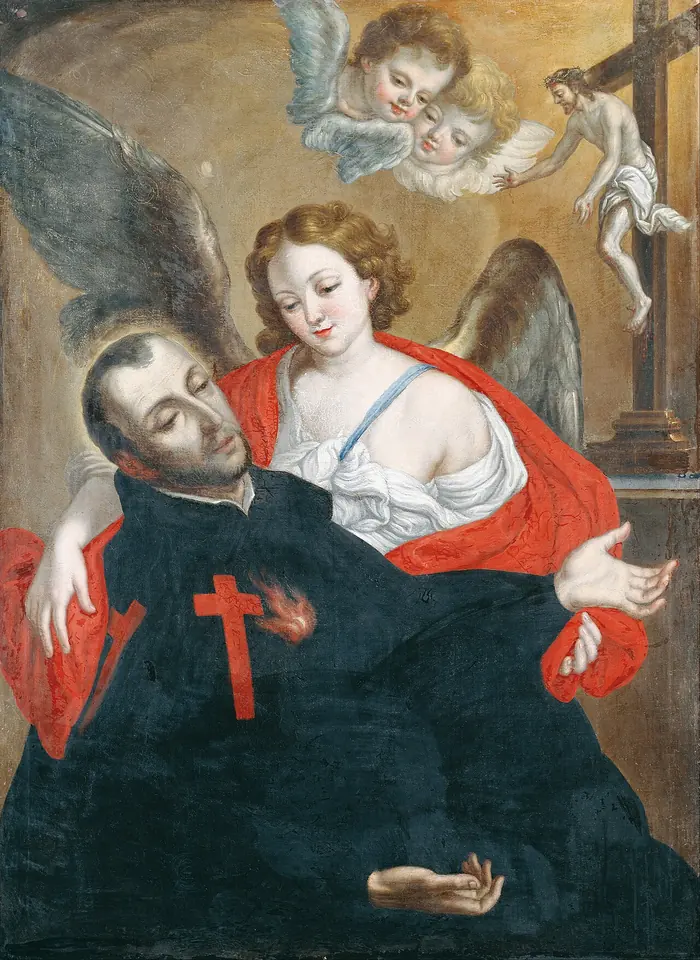
After his ordination he was put in charge of the young religious. He longed to go to the missions in Africa, but in obedience to his superiors he gave it up and went to Rome as assistant novice master.
France, expulsion and a secret return
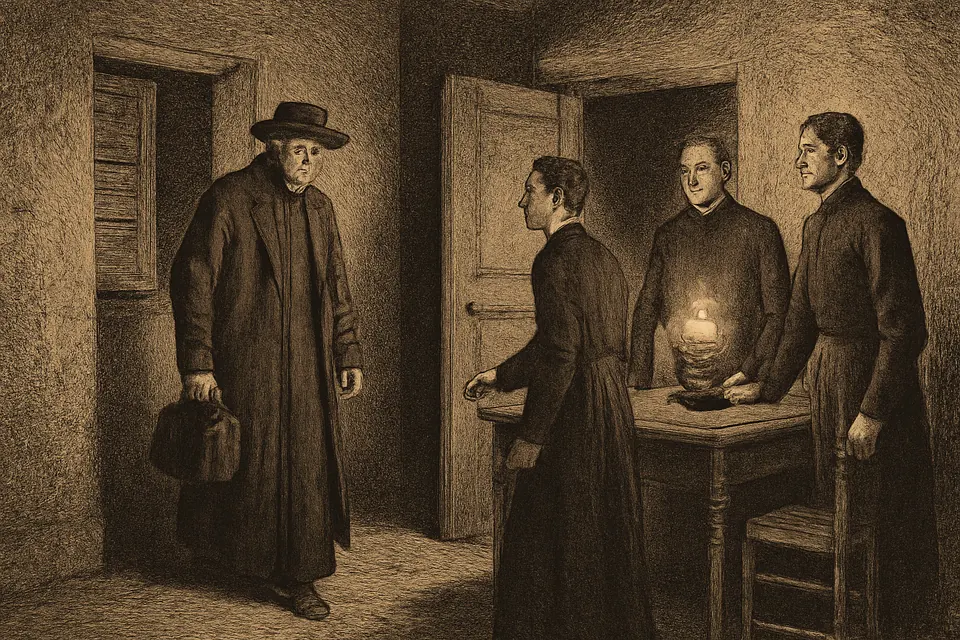
In 1871 he was sent to France as novice master for the new Camillian province there, and he became its first provincial superior. He brought the communities to a true common life and gave them their proper work, nursing the sick in body and spirit. When the French government suppressed the religious orders in 1880, he was expelled as a foreigner. A few months later he came back in secret and gathered the scattered religious, and the young province survived.
The Daughters of St. Camillus
Elected procurator and vicar general of the order, he returned to Rome. There, in December 1891, he met Giuditta Vannini at a retreat and shared with her a plan he had long carried: a community of women consecrated to God to serve the sick in the spirit of St. Camillus. On February 2, 1892, the Daughters of St. Camillus were born, with Vannini, now Mother Giuseppina, as their first superior. The Holy See approved the institute in 1931. Read her story on our page for St. Giuseppina Vannini.
Twenty-three years in Lima
In 1900, at fifty-nine, he was sent to Peru as visitor, to reform the Camillian community in Lima, which had been cut off from Rome for more than a century and was close to closing. It was supposed to be a short stay. The archbishop and the apostolic delegate, Msgr. Pietro Gasparri, later a cardinal and the Vatican's secretary of state, judged him indispensable and called him "a man inspired by God and providential for Lima." He never returned to Europe, and he guided the Daughters of St. Camillus from afar by letter.
In Lima he restored regular religious life in his community and spent himself on the sick poor, in their homes, in the hospitals and in the prisons. He heard confessions and gave spiritual direction at the archdiocesan seminary and to several religious congregations, and both the nunciature and the archdiocese asked his advice. He also helped another foundress, the Servant of God Teresa Candamo, whose young institute was in difficulty.

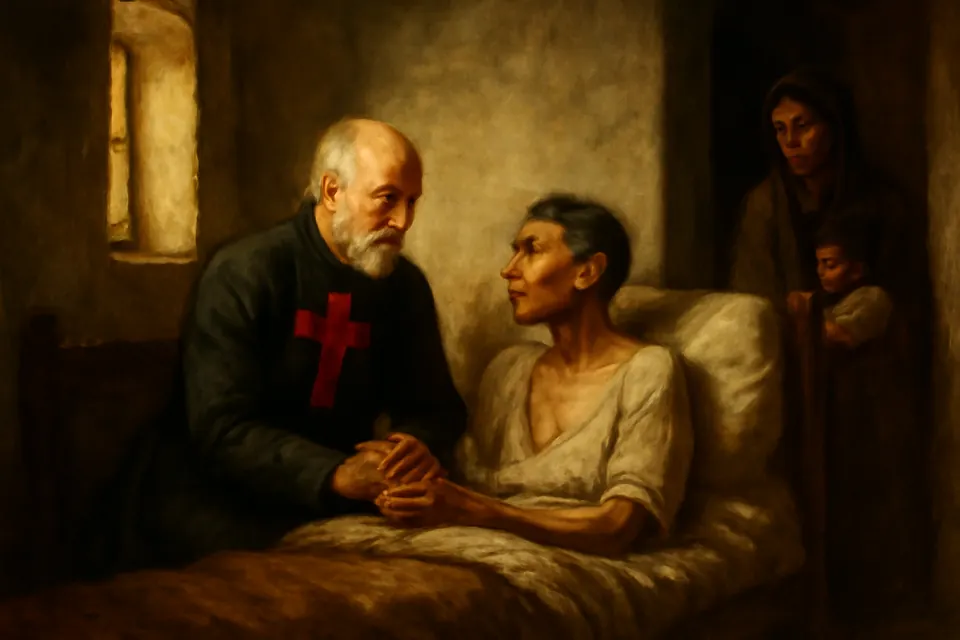
He died in Lima on September 26, 1923. Someone scratched the words "the apostle of Lima" into the cement behind his tombstone. Cardinal Lauri called him "the holiest priest of the diocese of Lima," and the memorial card handed out at his death said: "He was sought as a father and venerated as a saint" (our translations from the Italian).
Beatification and tomb
Pope John Paul II beatified him in St. Peter's Square on November 4, 2001, with seven others, among them Paolo Manna, Bartolomeu dos Mártires and the Slovak martyr-bishop Pavol Peter Gojdič. In his homily the pope called him a shining example "of a life entirely devoted to charity and mercy toward those who suffer in body and spirit" (our translation).
- Approved: a miracle attributed to his intercession was recognized for his beatification. We have not found a reliable published account of it, so we leave the details out.
His body now rests at the general house of the Daughters of St. Camillus on Via Anagnina in Grottaferrata, near Rome, beside the co-foundress, St. Giuseppina Vannini.
Symbols of Blessed Luigi Tezza in art
Father Tezza lived into the age of photography, and his images follow his portraits:
- The black cassock with a large red cross on the breast, the sign St. Camillus gave the Ministers of the Sick;
- White hair and a short beard, as he looked in his Lima years;
- A crucifix or breviary, for the priest and confessor;
- Often the sick, a patient in bed or a poor family, beside him.
Feast day and prayer
We keep the feast of Blessed Luigi Tezza on September 26, the day of his death in Lima. The Camillian family and the Daughters of St. Camillus honor him around the world. See more on our feast day calendar.
We know of no traditional prayer to him that we can quote. Let us ask him to pray for the sick and those who nurse them, for priests who hear confessions, and for everyone trying to accept the will of God when it takes them far from home. Blessed Luigi Tezza, pray for us.
Frequently asked questions
Who was Blessed Luigi Tezza?
A priest of the Order of the Ministers of the Sick (the Camillians), born at Conegliano near Treviso in 1841. He trained novices, built up the order's province in France, served as procurator and vicar general in Rome, co-founded the Daughters of St. Camillus in 1892, and spent his last 23 years in Lima, Peru, where he died in 1923.
Who founded the Daughters of St. Camillus?
Father Luigi Tezza and Giuseppina Vannini, on February 2, 1892, in Rome. The congregation serves the sick in the spirit of St. Camillus de Lellis. Vannini was canonized in 2019; Tezza was beatified in 2001.
When was Luigi Tezza beatified?
Pope John Paul II beatified him in St. Peter's Square on November 4, 2001, together with seven others, among them Paolo Manna and the Slovak Greek Catholic bishop Pavol Peter Gojdič.
Keep exploring
Sources
- Dicastery for the Causes of Saints: Luigi Tezza. His family, his entry into the Camillians, the novices, France and the 1880 expulsion, the founding of 1892, Lima, Gasparri's and Lauri's words, the memorial card, his death, his tomb at Grottaferrata, and the beatification homily of November 4, 2001