St. Cuthbert Mayne, First Seminary Priest Martyred in England
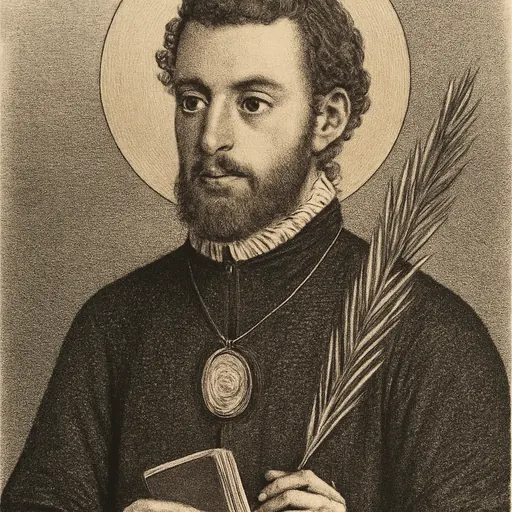
St. Cuthbert Mayne (1544–1577) was a Protestant minister who became a Catholic, was ordained at Douai, and came home as a missionary priest in Cornwall. Condemned largely for carrying an Agnus Dei, he was hanged, drawn and quartered at Launceston on November 29, 1577. He was the first priest of the new English seminaries to die for the faith.
Who was St. Cuthbert Mayne?
St. Cuthbert Mayne was the first of the young priests trained at the English College in Douai to give his life for the Catholic faith in England. A Devon man, baptized on March 20, 1544, he served for years as a Protestant minister at Oxford before his conscience brought him into the Church. Ordained abroad, he came home in 1576, worked quietly in Cornwall for barely a year, and was hanged, drawn and quartered in the market place at Launceston on November 29, 1577. Pope Paul VI canonized him on October 25, 1970, among the Forty Martyrs of England and Wales.
Bishop Richard Challoner, who gathered the lives of the English martyrs from older manuscripts, preserves a friend's memory of him: "of so mild a nature, and of such sweet behaviour, that the Protestants did greatly love him." We keep his memory on November 29.
The life of St. Cuthbert Mayne
A minister who did not know what he professed
His uncle, a beneficed clergyman who had conformed to the new religion, wanted the boy to inherit his living. He sent Cuthbert to Barnstaple Grammar School and had him made a minister at eighteen or nineteen. Mayne later told a friend, "with great Sorrow and deep Sighs," that at the time he "knew neither what Ministry nor Religion meant."
At Oxford he became chaplain of St. John's College and took his master's degree in 1570. There he made Catholic friends, among them St. Edmund Campion and the scholar Gregory Martin. Persuaded in heart, he still stayed on for some years. Then a letter from Gregory Martin, urging him to come to Douai, fell into the hands of the bishop of London, who sent a pursuivant to Oxford. Mayne was at home in the West Country. Warned by his friend Thomas Ford, later a martyr himself, he took ship from the Cornish coast and reached Douai in 1573.
Douai and the mission
At Douai he was received into the Church, studied theology, and was ordained in 1575. He took the bachelor's degree in divinity in February 1576, and on April 24, 1576, he left for England with John Payne, another future martyr. He went to Cornwall and lived at Golden, near Probus, the house of Francis Tregian, passing in the neighborhood for his steward.
The arrest at Golden
On June 8, 1577, the high sheriff, Grenville, came with a crowd of men, saying he was hunting a fugitive. He forced his way to Mayne's room. Mayne had been in the garden and could have slipped away, but he came and opened the door. The sheriff seized him by the front of his doublet and asked, "What art thou?" "I am a man," he answered. Under his doublet they found an Agnus Dei, a small wax disc blessed by the pope, in a case at his neck.

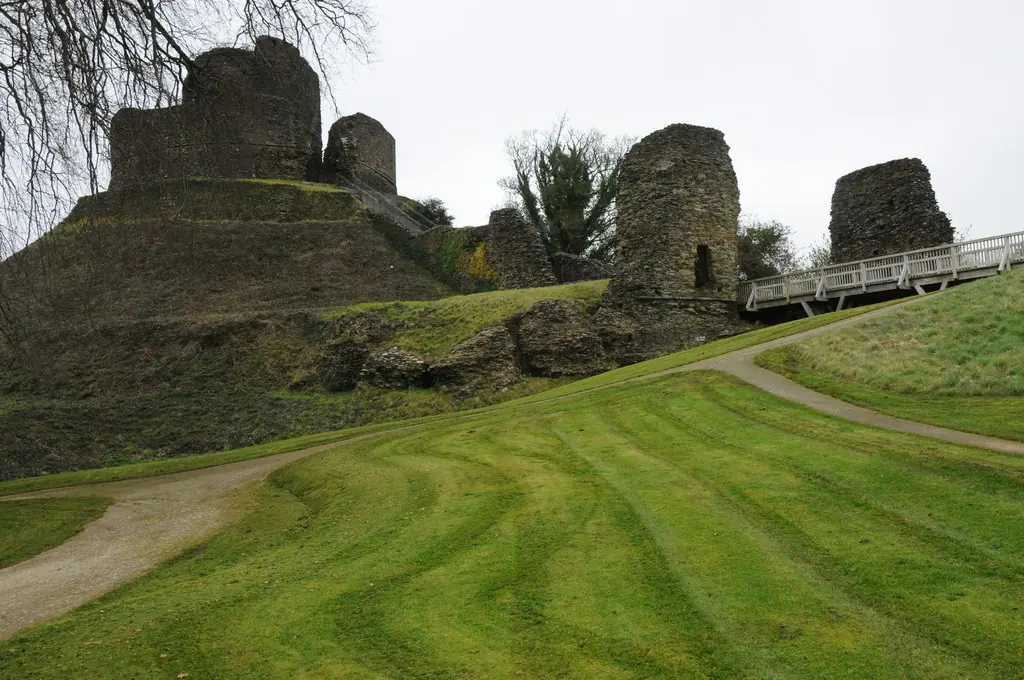
He was taken to Launceston and chained to his bed with heavy irons on his legs. At the Michaelmas assizes he faced five charges: that he had brought a papal "bull" into the country (it was a printed notice of the jubilee of 1575, already expired, which he had bought in Douai out of curiosity); that he had published it; that he upheld the pope's authority; that he had brought in an Agnus Dei; and that he had said Mass. The proofs were thin, but the judge told the jury that "strong presumptions" could stand in place of plain proof. When he heard the sentence he lifted his eyes and said, "Deo gratias."
One of the judges, Jeffries, was uneasy, and the case went before all the judges in London. The Catholic Encyclopedia says most of them leaned to Jeffries's view, but the Privy Council ordered the execution anyway.
Martyrdom at Launceston
On the morning of his death he was offered his life if he would swear on the Bible that the queen was supreme head of the Church. He took the Bible, made the sign of the cross on it, kissed it, and said, "The Queen neither ever was, nor is, nor ever shall be, the head of the Church of England." On the ladder the justices pressed him to name Francis Tregian and Sir John Arundell as accomplices. He answered that he knew nothing of them "but that they are good and godly gentlemen." He died saying "In manus tuas," the words of Christ on the cross. Tregian lost his estates and spent many years in prison for sheltering him.
Miracles and signs
As a martyr, St. Cuthbert Mayne was canonized without a miracle being required. One sign belongs to his story.
- Reported: two nights before his death, his fellow prisoners saw "a great light" in his cell between midnight and one o'clock, though he had neither fire nor candle. When they called out to ask what it was, he asked them to be quiet. Challoner's source was a witness of the time, and the Catholic Encyclopedia repeats it.
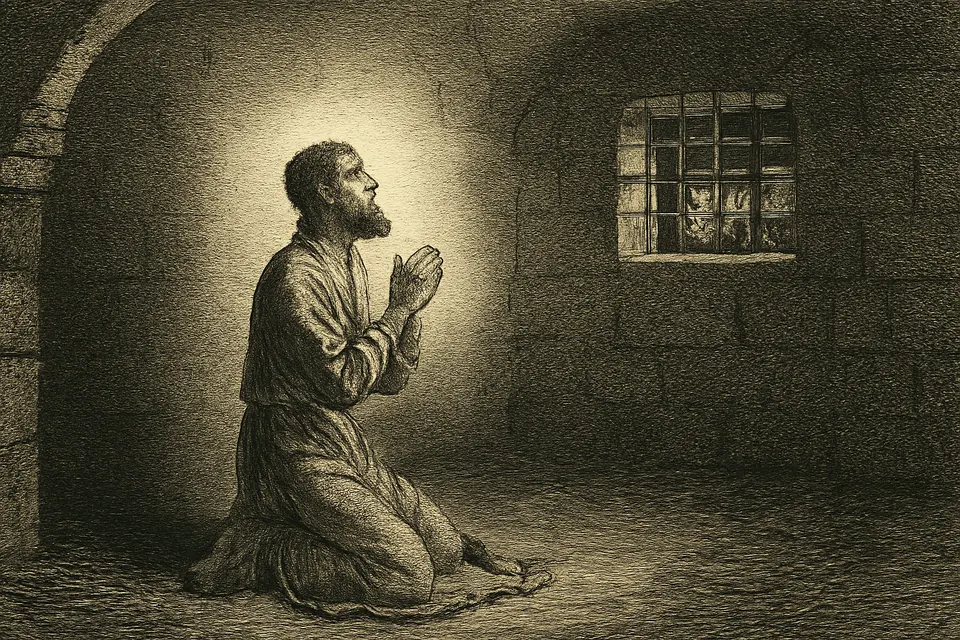
Symbols of St. Cuthbert Mayne in art
- Black cassock: his priesthood, received at Douai.
- Martyr's palm: his death for the faith.
- Rope or noose: the manner of his death at Launceston.
- Agnus Dei: the little wax medallion found on him at his arrest and named in his indictment.
- Bible: the book he kissed when he refused the oath of supremacy.
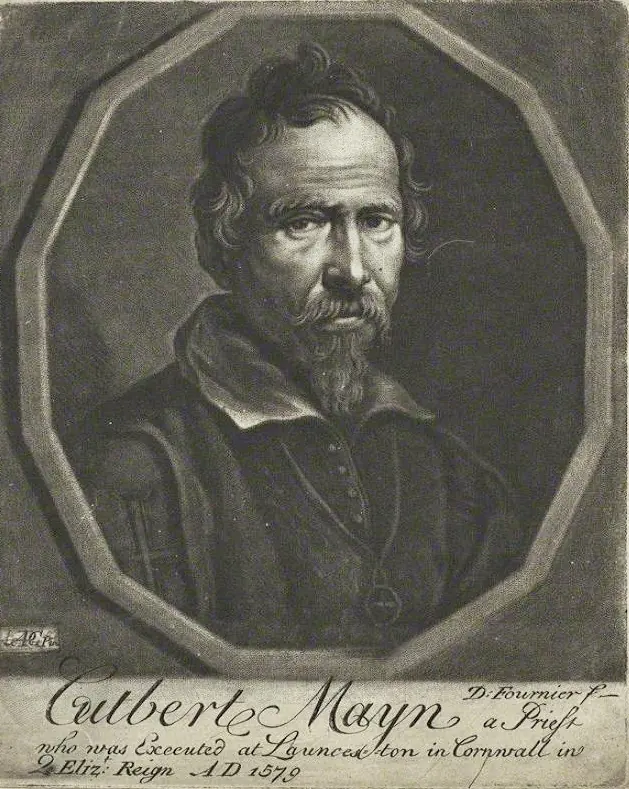
A rough early portrait of the martyr survives, and most later images, such as Fournier's engraving at the top of this page, follow it.
Feast day and places of honor
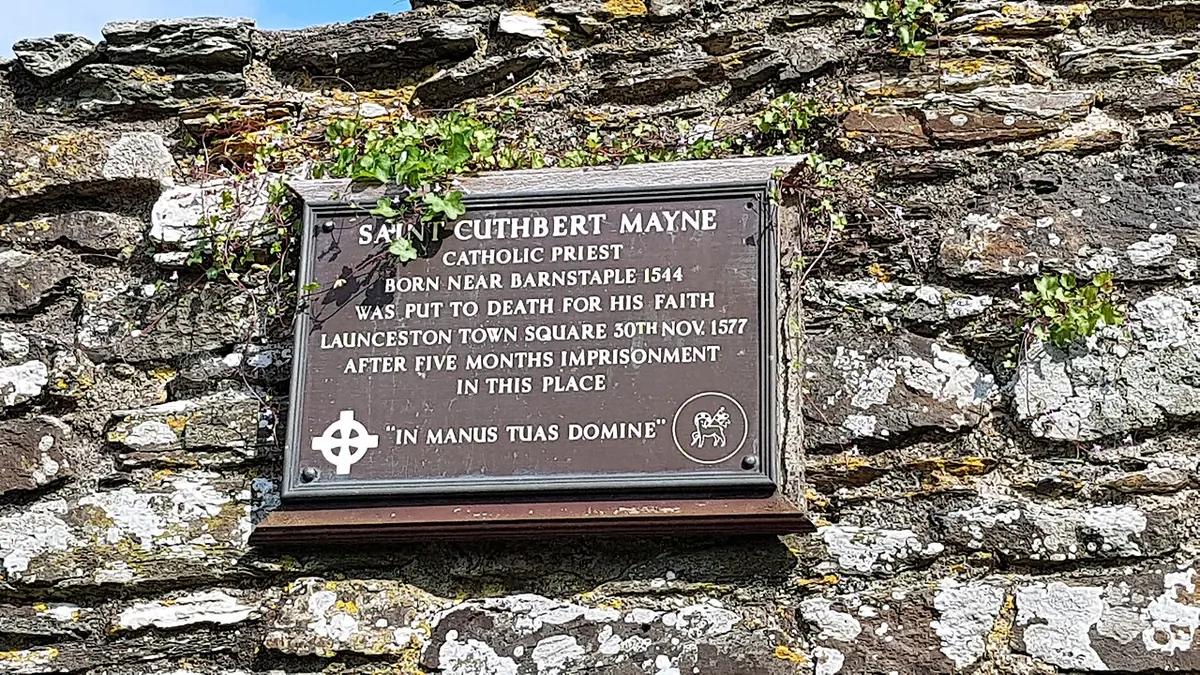
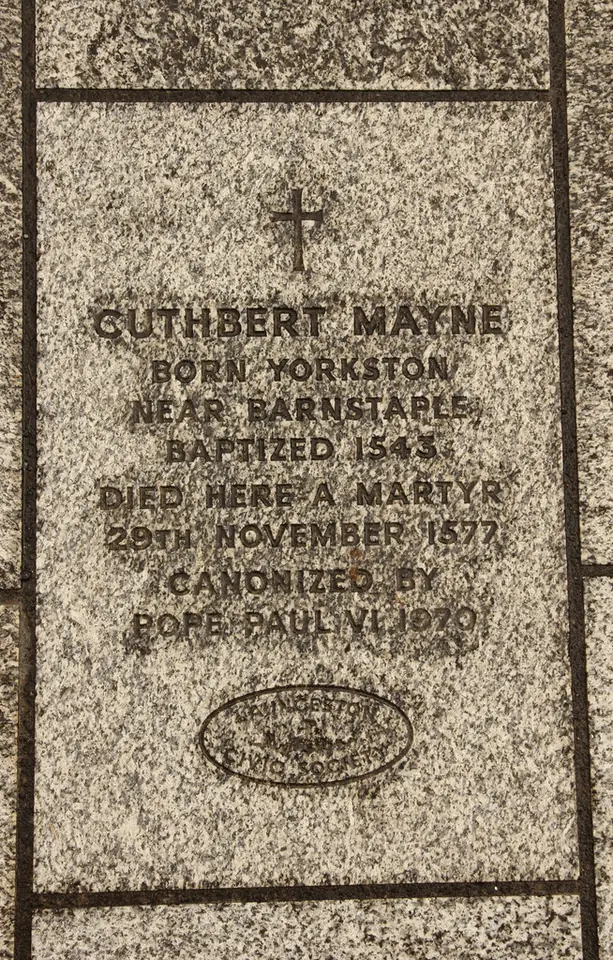
We remember him on November 29, and with all the martyrs of England and Wales on May 4. Launceston keeps his memory with a plaque near the old market square and a memorial stone. In 1911 the largest part of his skull was kept by the Carmelite nuns of Lanherne in Cornwall; other portions are in various places. See the other saints of November on our feast days page.
A prayer with St. Cuthbert Mayne
We know of no traditional prayer addressed to him, but we can pray with the words he spoke as he died, which are the words of Our Lord on the cross (Luke 23:46):
"In manus tuas, Domine, commendo spiritum meum."
Into your hands, O Lord, I commend my spirit.
St. Cuthbert Mayne, pray for priests, for Cornwall and Devon, and for all who are asked to deny what they believe.
Frequently asked questions
Who was St. Cuthbert Mayne?
An English priest, born near Barnstaple in Devon and baptized in 1544. He became a Catholic at Oxford, trained at the English College at Douai, and worked in Cornwall from 1576. He was executed at Launceston in 1577, the first of the Douai seminary priests to be martyred. Paul VI canonized him in 1970.
Why was Cuthbert Mayne executed?
He was convicted of high treason on five counts, including bringing a papal document into the realm (in fact a printed notice of the 1575 jubilee), carrying an Agnus Dei, and saying Mass. The Catholic Encyclopedia notes that one of the judges doubted the verdict and the case went to all the judges, but the Privy Council ordered the execution to go ahead.
When is the feast of St. Cuthbert Mayne?
November 29, the day he died in 1577 (some calendars give November 30). He is also honored with the Forty Martyrs of England and Wales, canonized together on October 25, 1970.
Is St. Cuthbert Mayne the same as St. Cuthbert of Lindisfarne?
No. St. Cuthbert of Lindisfarne was a seventh-century monk and bishop in Northumbria. Cuthbert Mayne was a sixteenth-century priest and martyr in Cornwall who bore the older saint's name.
Keep exploring
Sources
- Richard Challoner, Memoirs of Missionary Priests (1924 ed.), Cuthbert Maine, pp. 1–6, archive.org. His years at St. John's College, the arrest at Golden, the light seen in his cell, his words on the Bible, the date November 29, 1577, and the fate of those who sheltered him
- Blessed Cuthbert Mayne, Catholic Encyclopedia (1911), New Advent. Baptism March 20, 1543/44; the five counts; Judge Jeffries's doubts; his skull at Lanherne
- 25 ottobre 1970: Canonizzazione di quaranta martiri dell'Inghilterra e del Galles, homily of Paul VI, vatican.va. The canonization of the Forty Martyrs