St. Ralph Sherwin

St. Ralph Sherwin (1550–1581) was a Derbyshire-born Oxford scholar who became a Catholic, was ordained at Douai, and studied at the English College in Rome, where he answered the missionary oath with the words Potius hodie quam cras, "rather today than tomorrow." Arrested in London in 1580 and racked in the Tower, he was hanged, drawn and quartered at Tyburn with St. Edmund Campion on December 1, 1581. He is the first martyr of the Venerable English College and one of the Forty Martyrs of England and Wales.
Who was St. Ralph Sherwin?
St. Ralph Sherwin was an English priest, a brilliant Oxford scholar who gave up a secure career to become a Catholic, and the first student of the English College in Rome to die for the faith. He was hanged, drawn and quartered at Tyburn on December 1, 1581, the same morning as St. Edmund Campion and St. Alexander Briant. The Church beatified him in 1886 and canonized him in 1970 as one of the Forty Martyrs of England and Wales. We keep his feast on December 1.
From Derbyshire to Oxford
Ralph was born in 1550 at Rodsley, a hamlet near Longford in Derbyshire. Bishop Richard Challoner's Memoirs of Missionary Priests, which gathered the accounts of eyewitnesses, tells us he was brought up at Exeter College, Oxford, where he became a fellow in 1568. In 1574 he was senior of the act, "accounted an acute philosopher, and an excellent Grecian and Hebrician." An uncle, John Woodward, a priest, helped pay for his studies.
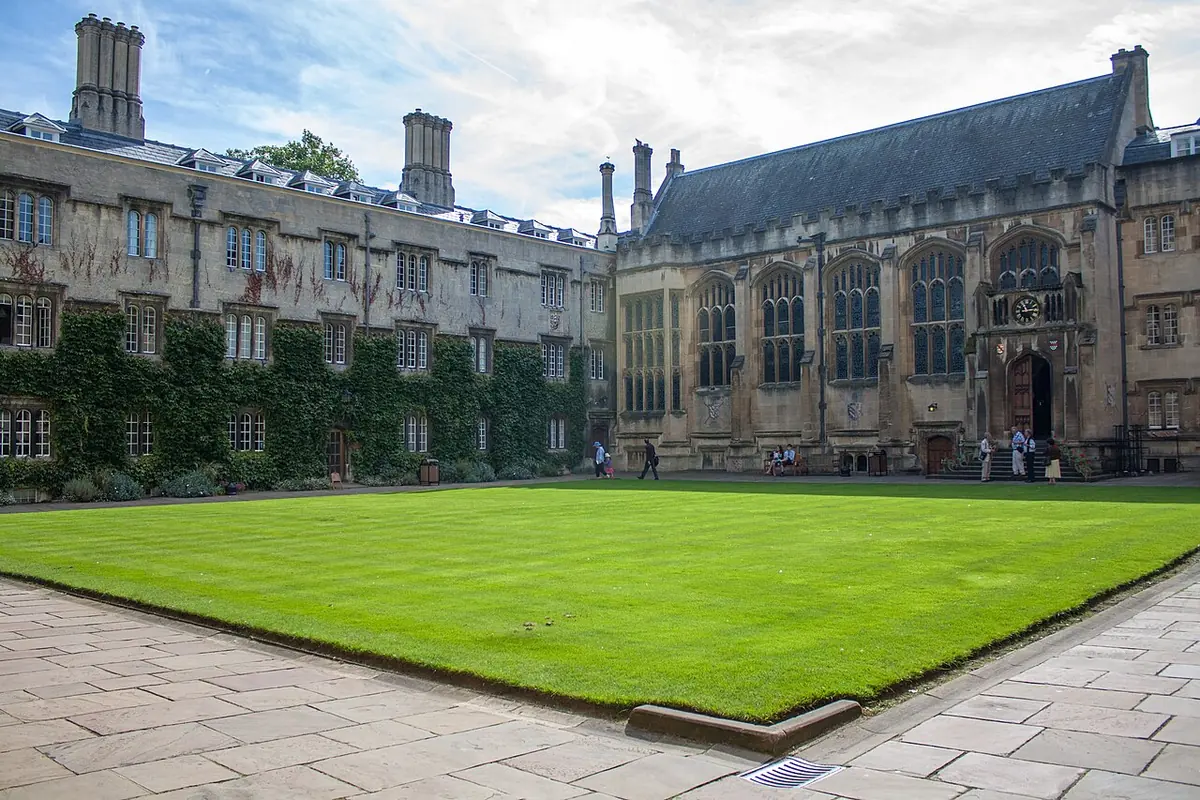
In 1575 he left the university and the Protestant religion together. He crossed to the English seminary at Douai, and on March 23, 1577, he was ordained a priest by the bishop of Cambrai. That August he was sent on to Rome.
"Rather today than tomorrow"
In Rome the old English Hospice had just become the English College, a seminary to train priests for the dangerous mission to England. Its students were asked to take an oath that they would go home when their superiors sent them. When Sherwin was asked, he answered, Potius hodie quam cras, "rather today than tomorrow." Pope Benedict XVI, speaking to the College in 2012, said these words "aptly convey his burning desire to keep the flame of faith alive in England, at whatever personal cost."
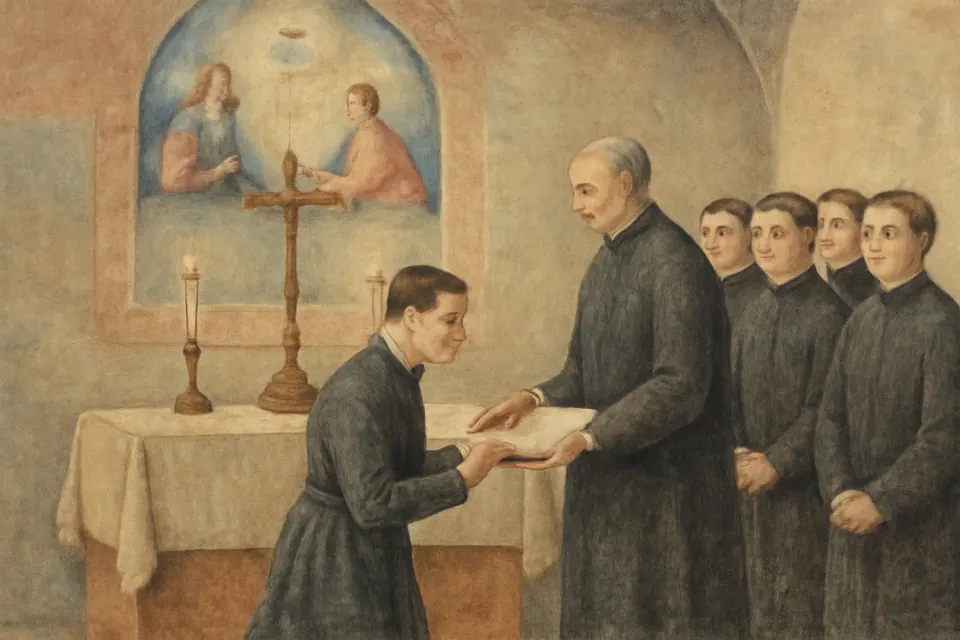
In the spring of 1580 he set out for England with the Jesuits Campion and Robert Persons, stopping at Reims on the way. Once home he worked as a priest with "great zeal and charity," but within months he was taken in Mr. Roscarrock's rooms in London and sent to the Marshalsea prison, where he lay for a month in heavy shackles.
The Tower and the rack
He was moved to the Tower of London and racked to make him say where Campion and Persons were and where he had said Mass. One account says that after a first racking he was laid out on the rack again in a great snow. His brother John later told a priest that Ralph had been racked twice, and the second time lay five days and nights without food, "as he thought, in a sleep before our Saviour on the cross," and afterwards felt no lasting harm in his joints. The bishops of Canterbury and London offered him, the same account says, "the second bishopric of England" if he would only go to St. Paul's. He refused. His keeper called him "a Man of God, and the best and devoutest priest that ever he saw in his life."
In November 1581 he was tried with Campion for a plot that never existed. Waiting for death, he wrote to friends: "I have no boldness but in his blood; his bitter passion is my only consolation."
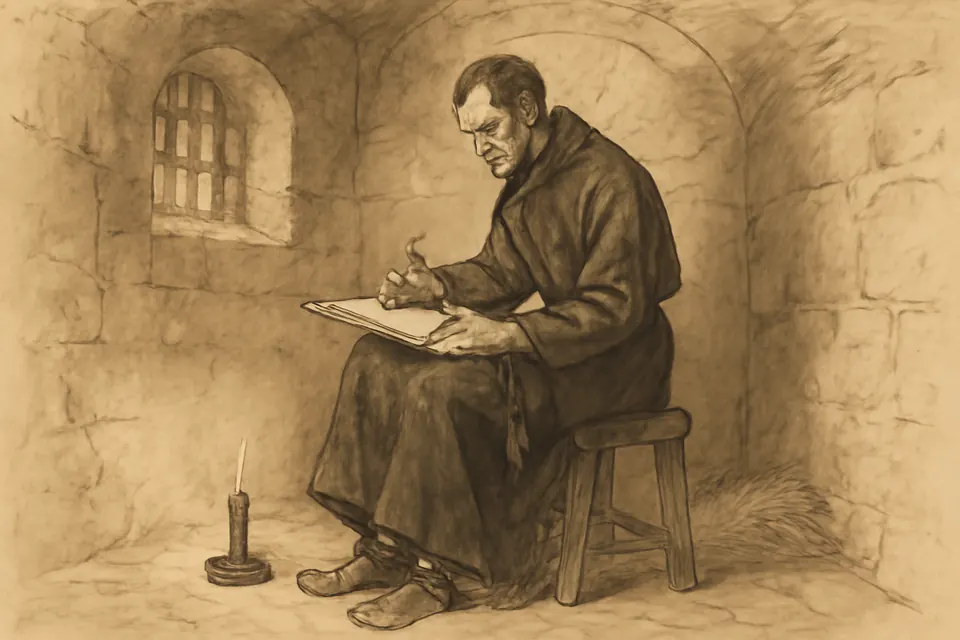
On November 30, the feast of St. Andrew, he wrote to his uncle that he hoped to die "to the imitation of this noble apostle," and added: "Innocency is my only comfort against all the forged villainy which is fathered on my fellow priests and me."
Martyrdom at Tyburn
On December 1 he was dragged on a hurdle to Tyburn. Campion died first. When the hangman, his hands still stained, turned to him and said, "Come, Sherwine, take thou also thy wages," Sherwin embraced him and kissed his hands, and the crowd was deeply moved. From the cart he thanked each Person of the Trinity for the mercies given him, said again that he was innocent of treason, and told Sir Francis Knollys: "if to be a catholic only, if to be a perfect catholic, be to be a traitor, then am I a traitor." Asked to pray for the queen, he said he prayed God to make Elizabeth "his servant in this life, and after this life, coheir with Jesus Christ." He died, the eyewitness wrote, "patiently, constantly and mildly, crying, Jesu, Jesu, Jesu, be to me a Jesus."
Miracles
- Reported: his brother's testimony that on the rack Ralph felt himself lying "in a sleep before our Saviour on the cross," and afterwards found no harm in his joints. It is a family account recorded decades later and was never formally examined.
Symbols of St. Ralph Sherwin in art
He is shown as a young priest in a black cassock, holding the martyr's palm. Engravings of the English martyrs often add a rope around the neck and a knife in the breast, the marks of hanging, drawing and quartering. Sometimes he holds a book, for the Oxford scholar. In the English College in Rome he appears among the College martyrs, and in English churches he is usually found in groups of the Forty Martyrs, beside Campion and Briant.
Feast day and where he is honored
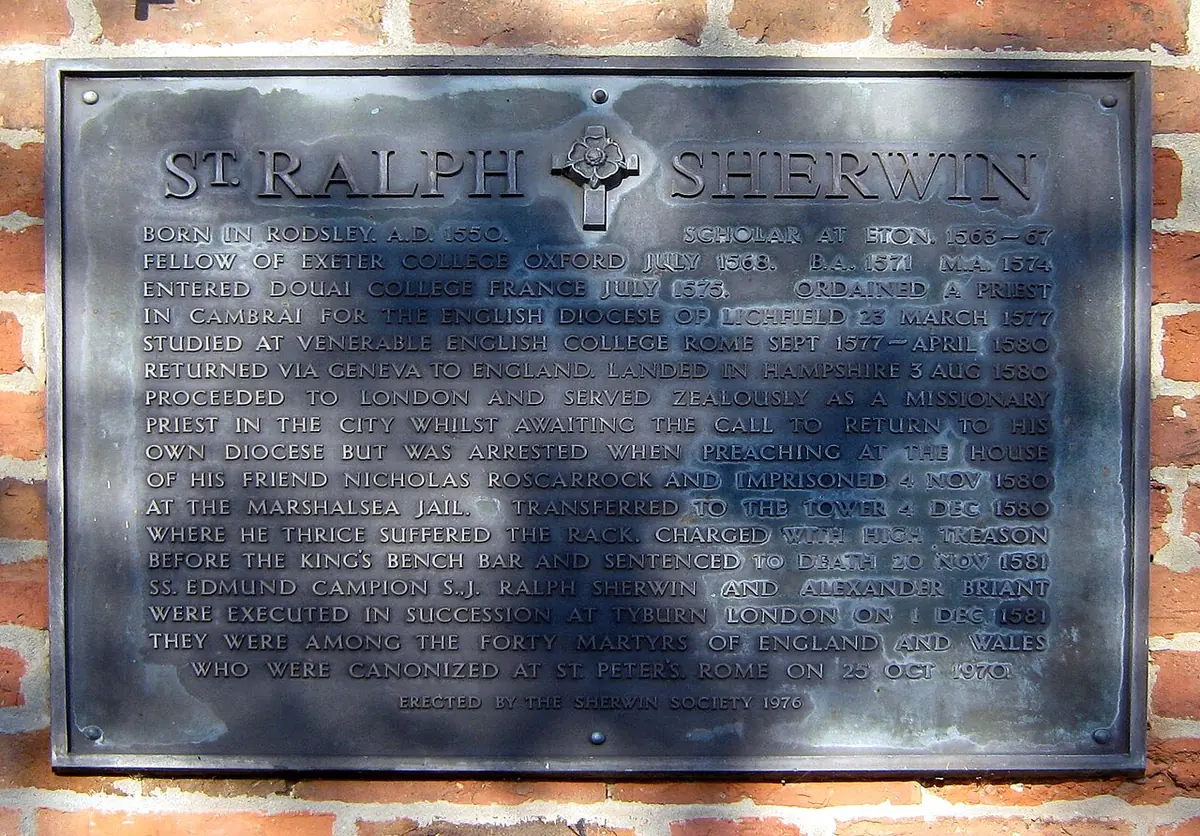
We keep his feast on December 1, the day he died. See the feast day calendar. Each year on that date the Venerable English College in Rome celebrates its Martyrs' Day for the forty-four alumni who gave their lives. At Rodsley a plaque marks his birthplace.
There is no traditional prayer to St. Ralph Sherwin in common use. Let us ask him, who answered "rather today than tomorrow," to pray for seminarians and priests, for scholars who seek the truth at a cost, and for all who are imprisoned for their faith.
Frequently asked questions
Who was St. Ralph Sherwin?
An English Catholic priest from Rodsley in Derbyshire, a fellow of Exeter College, Oxford, who became a Catholic, was ordained at Douai in 1577 and trained at the English College in Rome. He returned to England in 1580, was arrested within months, and was executed at Tyburn on December 1, 1581.
What does "Potius hodie quam cras" mean?
It means "rather today than tomorrow." Pope Benedict XVI recalled that St. Ralph Sherwin said this when he was asked to take the English College's missionary oath, promising to go to England when sent. The College still treasures the words.
When is St. Ralph Sherwin's feast day?
December 1, the day of his martyrdom. He is also honored with the Forty Martyrs of England and Wales, and the English College in Rome keeps December 1 as its Martyrs' Day.
What were St. Ralph Sherwin's last words?
After praying for Queen Elizabeth from the cart at Tyburn, he died, as the eyewitness account preserved by Bishop Challoner says, "crying, Jesu, Jesu, Jesu, be to me a Jesus."
Keep exploring
Sources
- Richard Challoner, Memoirs of Missionary Priests, vol. 1 (1803 edition), pp. 31–35. His birth at Rodsley, his Oxford fellowship, ordination at Douai on March 23, 1577, arrest, the Marshalsea and the rack, the bishopric offered him, his letters, and the eyewitness account of his death and last words
- Pope Benedict XVI, address to the Venerable English College, December 3, 2012. Potius hodie quam cras and the forty-four martyrs of the College
- Catholic Bishops' Conference of England and Wales: Martyrs' Day in Rome (December 1, 2012). The English College keeps December 1 each year as Martyrs' Day in memory of its protomartyr
- Pope Paul VI, homily at the canonization of the Forty Martyrs of England and Wales, October 25, 1970. The canonization of the forty martyrs