Blessed Juan Duarte Martín
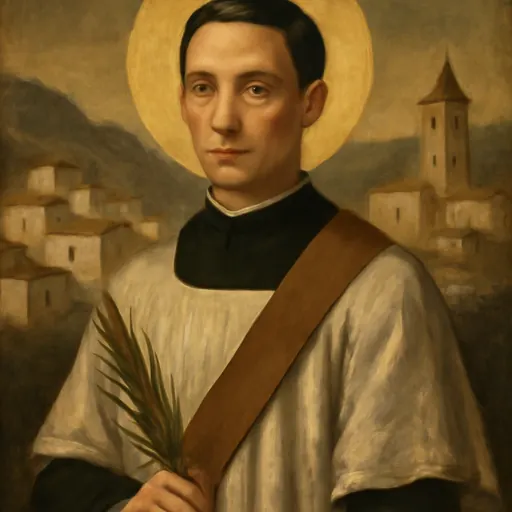
Blessed Juan Duarte Martín (1912–1936) was a deacon of Málaga, Spain, arrested in his village of Yunquera during the Spanish Civil War and tortured for a week to make him blaspheme. Killed near Álora on November 15, 1936, he forgave his killers, crying "Viva Cristo Rey!" He was beatified in 2007, and Spain remembers him on November 6.
Who was Blessed Juan Duarte?
Blessed Juan Duarte Martín was a deacon of the Diocese of Málaga, in Andalusia, who was martyred at twenty-four during the religious persecution of the Spanish Civil War. He was only months from the priesthood. Held for a week in Álora and tortured to make him blaspheme, he answered every time with "Viva el Corazón de Jesús!" or "Viva Cristo Rey!", and he died forgiving the men who killed him. He was beatified in Rome on October 28, 2007, with 497 other martyrs of Spain. The Church in Spain keeps his memory on November 6.
He was born on March 17, 1912, in Yunquera, a mountain village in the Sierra de las Nieves, the fourth of six surviving children of Juan Duarte Doña, a farmer who worked his own land, and Dolores Martín de la Torre. His father was a longtime member of the Nocturnal Adoration and was especially close to Juan. He was baptized and confirmed in the parish of the Encarnación, though no record survives: in 1936 the parish archive was destroyed and its pages used to wrap goods sold in the church, which had been turned into a store.

The seminarian
The diocesan biography says that as a small boy he liked building little altars at home more than playing in the street. He entered the seminary of Málaga at thirteen. When his father wondered aloud how the family could pay for his studies, Juan answered, "Don't worry, the Lord is going to help you."
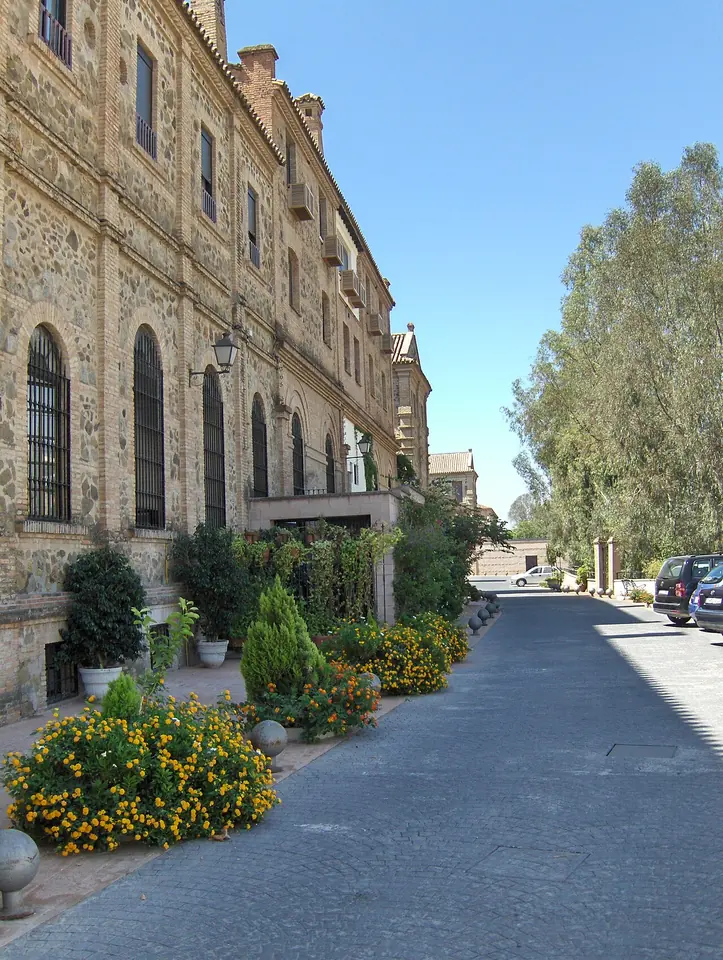
He loved the seminary. His spiritual director, Father Soto, called him "an exemplary seminarian." He earned top marks, was put in charge of the younger boys, and taught catechism to children in Málaga and in Yunquera. After the burning of churches and convents in Málaga in May 1931, his father asked him to wait at home until things calmed down. Juan went back anyway, with the few who were willing, to a seminary that had lost its bishop, St. Manuel González García, to exile.

He was ordained subdeacon on July 1, 1935. The night before, as he told his bishop in a letter, he prayed:
¡Con qué ganas me pongo en brazos de la Iglesia y con qué ganas le pido al Señor que me quite la vida si no he de servirla con la alegría que inunda mi alma el día que a ella me entrego!
"How gladly I place myself in the arms of the Church, and how gladly I ask the Lord to take my life if I am not to serve her with the joy that floods my soul on the day I give myself to her." He was ordained a deacon in the cathedral of Málaga on March 6, 1936.
Arrest and martyrdom
When the war began in July 1936 he came home to Yunquera. He was brave, even a little rash: he kept wearing his cassock in the street, and he refused for a long time to hide in the space his father had prepared. Yet he confided to a friend that he doubted he would have the strength for martyrdom "if the moment comes." When people warned him that things were getting worse, he would answer, "The Lord will triumph!"
On November 7, 1936, after a search of the house had failed, a neighbor saw him at a small window, where he had come up for air after hours in the dark hiding place, and reported him. Only Juan and his mother were home. His youngest sister, Carmen, was out learning embroidery so that she could make the ribbon his parents would use to bind his hands at his priestly ordination.
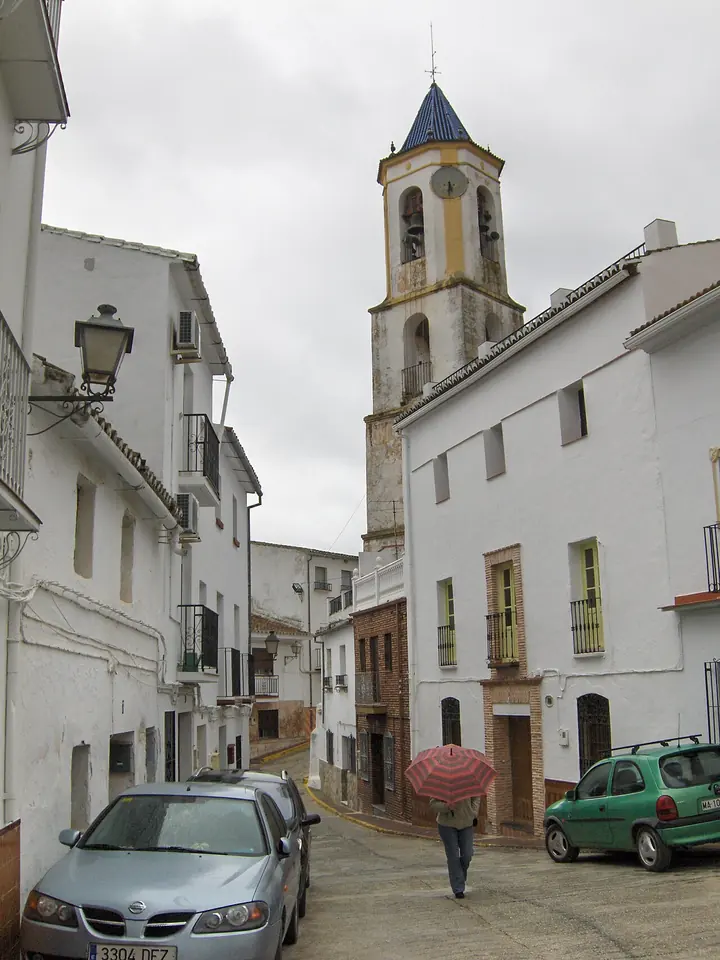
He was taken with two other seminarians of Yunquera, José Merino and Miguel Díaz, to El Burgo, where those two were killed that night. Juan was taken on to Álora. For about a week he was beaten, mocked in the streets and tortured to make him blaspheme, and he answered with the names of Christ. The diocese says many people in Álora suffered with him as if he were their own son or brother. On the night of November 15 he was taken to the Arroyo Bujía, about a mile from the station, and put to death with great cruelty. During his last torment he said only:
Yo os perdono y pido que Dios os perdone... ¡Viva Cristo Rey!
"I forgive you, and I ask God to forgive you... Long live Christ the King!" His last words, his eyes wide open and lifted to heaven, were "Ya lo estoy viendo... ya lo estoy viendo!" ("I can see it now... I can see it now!").

In May 1937 his father and brothers came to Álora and recovered his body from the shallow grave where neighbors had buried him. It rested in the cemetery of Yunquera until it was moved to the parish church.
Beatification
He was beatified in St. Peter's Square on October 28, 2007, among 498 martyrs killed in Spain in the 1930s. That day Pope Benedict XVI said that so many martyrs show "that the supreme witness of blood is not an exception reserved for only a few individuals, but a realistic possibility for the entire Christian People." As in every cause of martyrdom, no miracle was required for his beatification.
Symbols of Blessed Juan Duarte in art
Juan Duarte is a recent martyr, and his images come from his photographs: a slight young man in a cassock. Look for:
- A deacon's stole or dalmatic: the order he received eight months before he died.
- A palm branch: the sign of a martyr.
- A seminarian's cassock: the habit he refused to take off when it became dangerous.
Feast day, places and prayer
The Church in Spain remembers him with its other twentieth-century martyrs on November 6, and he is much loved in Yunquera and in Álora, where he died. His remains are in the parish church of Yunquera, and his family home in the village is now a small museum, kept as he knew it, with the hiding place where he was found. See also the feast day calendar.
We have not found a widely used English prayer to Blessed Juan Duarte. Let us ask him, as a deacon who served the Church with joy and forgave to the end, to pray for seminarians and deacons, for persecuted Christians, and for the grace to forgive those who wrong us. Blessed Juan Duarte, pray for us.
Frequently asked questions
Who was Blessed Juan Duarte?
A seminarian of Málaga, born in Yunquera in 1912, who was ordained a deacon on March 6, 1936. When the Civil War broke out he hid in his family's house; he was betrayed, arrested on November 7, 1936, tortured in Álora and killed on the night of November 15. The Church beatified him as a martyr in 2007.
What were Juan Duarte's last words?
According to the Diocese of Málaga, during his final torment he said only, "I forgive you, and I ask God to forgive you... Viva Cristo Rey!" His last words, with his eyes lifted to heaven, were "I can see it now... I can see it now!"
When is the feast of Blessed Juan Duarte?
November 6, the memorial of the martyrs of the twentieth century in Spain. He died on November 15, 1936.
Where is Blessed Juan Duarte buried?
In the parish church of his home town, Yunquera, in the province of Málaga. His body was recovered in 1937 and rested first in the town cemetery.
Keep exploring
Sources
- Diocese of Málaga: Beato Juan Duarte. His family, seminary years, ordinations, his letter to Bishop Manuel González, his arrest, torments, death and last words
- Seminary of Málaga: Mártires del Seminario. The burial in the Yunquera cemetery and translation to the parish church; the beatification of October 28, 2007
- Benedict XVI, Angelus, October 28, 2007. The beatification of 498 martyrs of Spain that morning in St. Peter's Square
- Ayuntamiento de Yunquera: Casa-Museo del seminarista Duarte. His family home, now a museum with the hiding place