St. John III Doukas Vatatzes, the Merciful Emperor of Nicaea
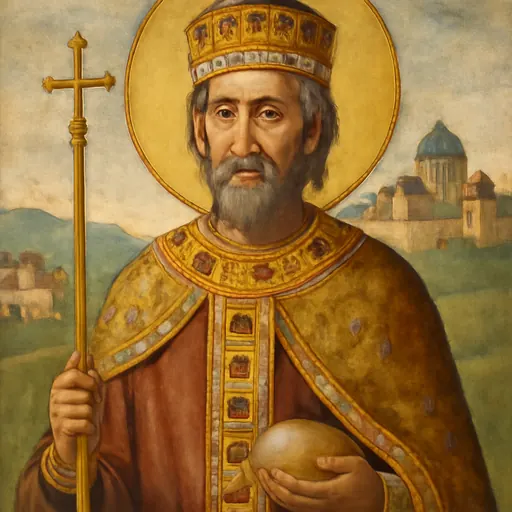
St. John III Doukas Vatatzes (about 1192–1254) was the Byzantine emperor of Nicaea from 1221 to 1254, who rebuilt the Greek empire after the Fourth Crusade and was loved for his care for the poor. Soon after his death, the people honored him as St. John the Merciful, and the Greek Orthodox Church keeps his memory on November 4.
Who was St. John III Doukas Vatatzes?
St. John III Doukas Vatatzes was the emperor of Nicaea, the Greek state in Asia Minor that carried on the Byzantine Empire after the crusaders of the Fourth Crusade sacked Constantinople in 1204. He reigned for thirty-three years, from 1221 to 1254, won back most of the lost lands, and ran his own farms so well that he could fund hospitals and charities without crushing his people with taxes. The people loved him for it. Within about fifty years of his death they were calling him St. John the Merciful.
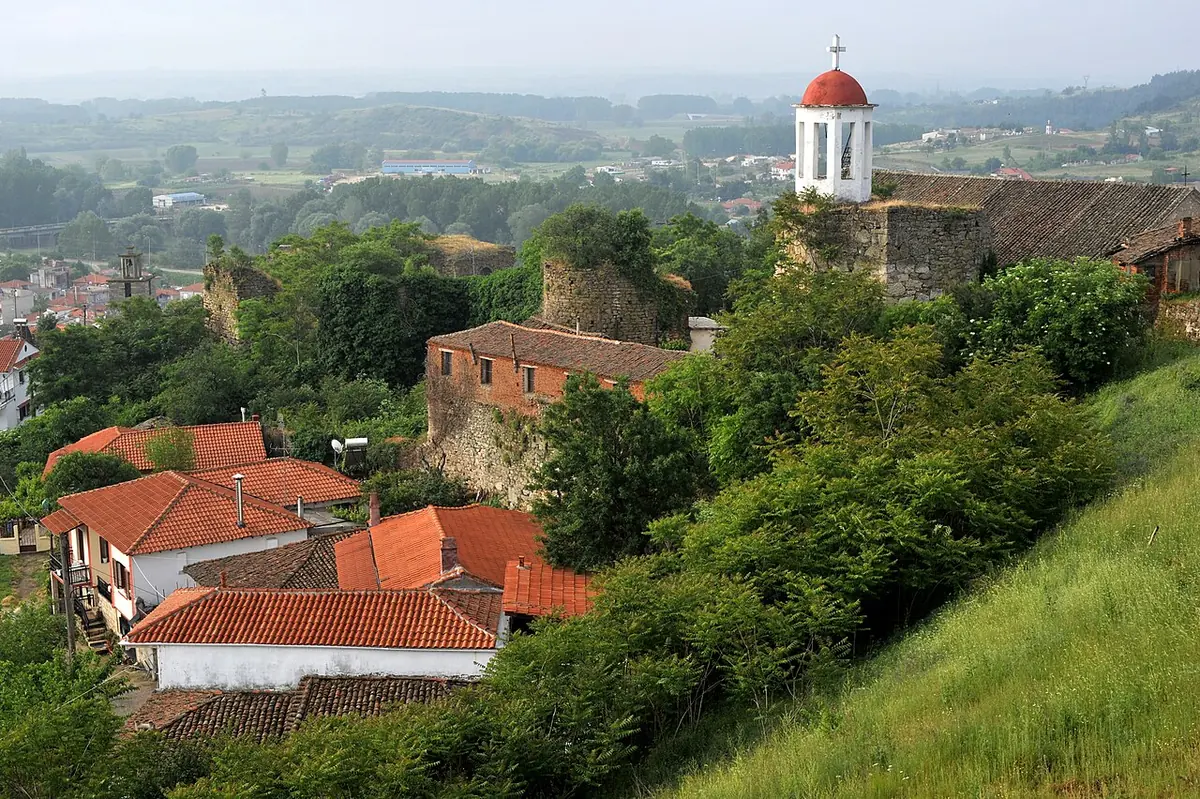
The Greek Orthodox Church keeps his memory on November 4. He was never formally canonized by a synod. His cult grew from below, from the clergy and people of Magnesia, where he was buried, and it lives today above all in his birthplace, Didymoteicho in Greek Thrace.
The life of John Vatatzes
Soldier and son-in-law
He was born about 1192, a son of a noble family; the Greek synaxarion places his birth at Didymoteicho. After the fall of Constantinople he came to Nicaea and served the emperor Theodore I Laskaris, who gave him high rank and the hand of his daughter Irene. When Theodore died, John succeeded him.
Restorer of the empire
The historian Edward Gibbon wrote that it "would not be an easy task" to find two rulers to equal Theodore Laskaris and John Vatatzes in all the long Byzantine annals. John took city after city from the Latins in Asia Minor and then crossed into Europe, taking Adrianople and Thessalonica. When he died, Constantinople itself was nearly surrounded. Michael VIII Palaiologos, who seized the throne a few years later, recovered it in 1261.

The farmer-emperor
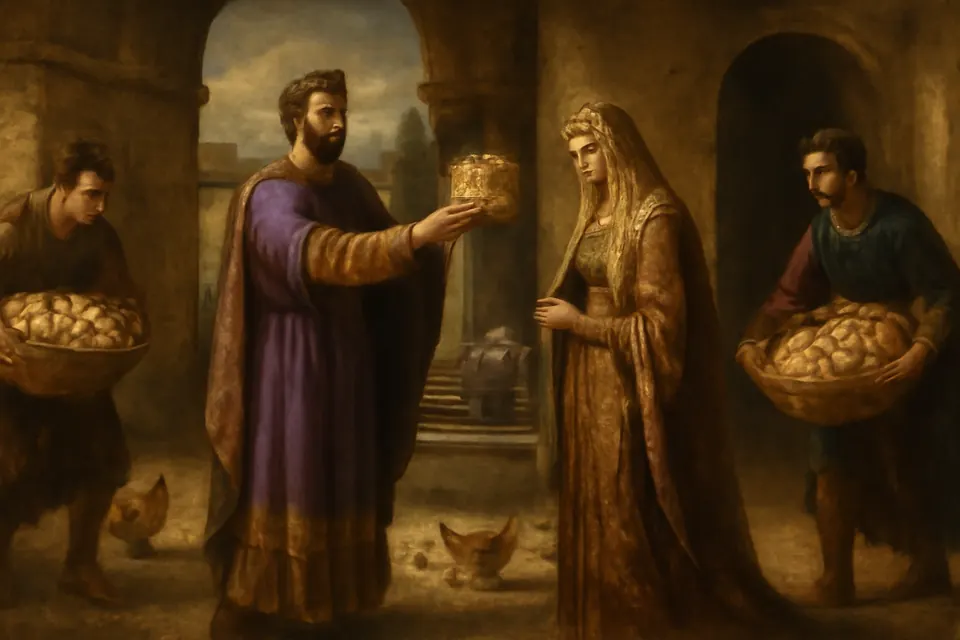
What made him a saint in the people's eyes was the way he governed at home. War had emptied the countryside. John took vacant land and farmed it himself: grain, vines, horses, oxen, sheep, pigs and poultry. The profits paid for his household and his hospitals, so the poor were cared for without new burdens. Gibbon, following the fourteenth-century historian Nicephorus Gregoras, tells the best-known story about him. When he gave the empress a crown "of diamonds and pearls," he told her with a smile that it had been paid for by "the sale of the eggs of his innumerable poultry."
He lived simply and asked his nobles to do the same. "The demands of nature and necessity are indispensable," he liked to say, "but the influence of fashion may rise and sink at the breath of a monarch."
He was not without sin. After Irene died he took a mistress, and the monks condemned him for it. Gibbon notes that their rebukes only showed "the patience of the royal lover." He died at Nymphaion on November 3, 1254, at about sixty-two.
How John Vatatzes came to be honored as a saint
The historian A. A. Vasiliev wrote that the people's love for him was so great that "some time after his death, he became a saint in popular tradition; miracles began to be connected with his memory and The Life of St. John the Merciful was composed, a sort of popular canonization." He added that in his own day the clergy and people of Magnesia still gathered every November 4 to honor "the late Emperor John the Merciful."
Later, in the eighteenth century, St. Nicodemus the Hagiorite composed a liturgical service for him at the request of the Metropolitan of Ephesus. On November 4, 2010, the first church in the world dedicated to St. John Vatatzes was consecrated in Didymoteicho.
The miracles of St. John the Merciful
- The incorrupt body: traditional. Greek tradition says that when his tomb was opened seven years after his death, the body was found whole and fragrant, and even his clothes looked new.
- The candle on the walls of Magnesia: reported. An account from the reign of Andronikos II (1282–1328) tells that when the Turks threatened Magnesia, a guard saw a lit candle moving along the city walls. His deaf-mute brother, sent to look, came back healed and said he had met a man of royal bearing urging the Christians to hold the city. Later he recognized the man in the image at the emperor's shrine.
- Healings at his tomb: reported in his medieval Life, which says the sick were healed and demons cast out there.

Symbols of St. John Vatatzes in art
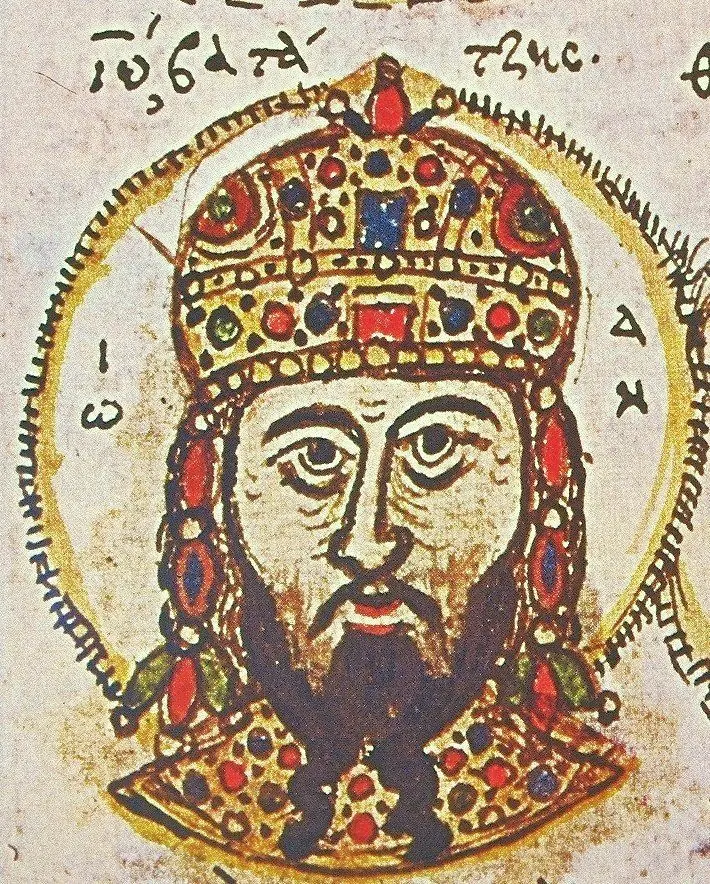
Icons show him as a Byzantine emperor: a domed imperial crown with hanging strings of pearls, the stiff jeweled loros of state, and a cross or scepter in his hand, with a halo. Medieval manuscripts and his coins give the same crowned figure, bearded and standing straight. On the gold coins of Magnesia he stands beside Christ or a saint, as Byzantine emperors always did. Because he looks like other holy emperors, check the Greek inscription, which names him Ioannis Vatatzis or Ioannis o Eleimon, "John the Merciful." See more holy rulers on our patron saints page.
Prayer to St. John Vatatzes
There is no Catholic prayer to St. John Vatatzes. In the Greek Orthodox Church he is honored with the hymns of the service written by St. Nicodemus, sung on November 4. Let us ask the merciful emperor to pray for all who hold power, that they may serve the poor as he did. Find other saints of November on our feast days page.
Frequently asked questions
Why is John Vatatzes called a saint?
His justice, simple life and charity made the people revere him. By about 1300 miracles were told at his tomb in Magnesia and a Life of "St. John the Merciful" was written. The historian A. A. Vasiliev called it "a sort of popular canonization." Greek Orthodox calendars keep his memory on November 4, and St. Nicodemus the Hagiorite composed a service for him.
When is the feast of St. John Vatatzes?
November 4 in the Greek Orthodox calendar. He died on November 3, 1254, at Nymphaion near Smyrna.
Is St. John Vatatzes the same as St. John the Merciful of Alexandria?
No. St. John the Merciful (also called John the Almsgiver) was patriarch of Alexandria in the seventh century and is kept on November 12. The emperor John Vatatzes received the same title, "the Merciful," six centuries later.
Where are the relics of St. John Vatatzes?
Their location is unknown. Greek tradition says his body was found incorrupt seven years after burial and was later taken to Constantinople, where it was lost when the city fell in 1453.
Keep exploring
Sources
- A. A. Vasiliev, History of the Byzantine Empire: The Empire of Nicaea (ellopos.net). The Life of St. John the Merciful, "a sort of popular canonization," and the November 4 gathering at Magnesia
- Edward Gibbon, The History of the Decline and Fall of the Roman Empire, chapter 62 (Project Gutenberg). His farms, hospitals, the crown bought with egg money, and his saying about fashion
- Orthodox Christianity Then and Now: The Relics of Holy Emperor John Vatatzes the Merciful (John Sanidopoulos). The incorrupt body, the candle on the walls of Magnesia, the service by St. Nicodemus and the Didymoteicho church of 2010
- Poimin.gr: Agios Ioannis Vatatzis, o eleimon Vyzantinos Aftokratoras (Lampros Skontzos). Greek Orthodox synaxarion reading; his birth at Didymoteicho and his gifts to the poor