St. Gabriel Urgebadze
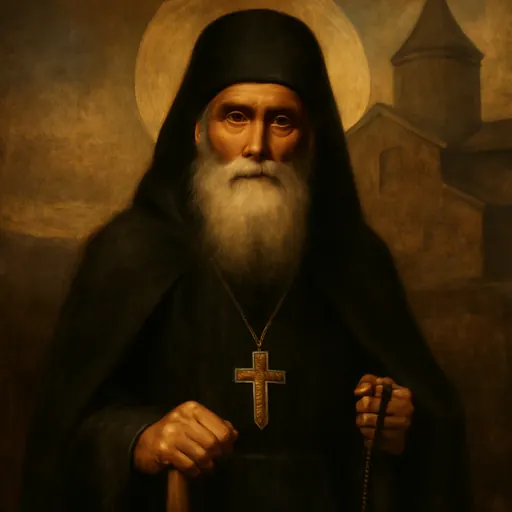
St. Gabriel Urgebadze (1929–1995) was a Georgian Orthodox monk who publicly burned a giant portrait of Lenin at the May Day parade in Tbilisi in 1965, was beaten, jailed and committed to a psychiatric hospital, and spent his later life as a fool for Christ at the Samtavro Convent in Mtskheta. The Georgian Church glorified him in 2012. His feast is November 2.
Who was St. Gabriel Urgebadze?
St. Gabriel Urgebadze was a monk and priest of the Georgian Orthodox Church who confessed Christ openly under Soviet rule and ended his life as a holy fool at the ancient Samtavro Convent in Mtskheta. Georgians call him simply Mama Gabrieli, Father Gabriel, and his photograph hangs in homes, offices and taxis across the country. The Holy Synod of the Georgian Church, under Catholicos-Patriarch Ilia II, numbered him among the saints on December 20, 2012, with the title "Holy Father Gabriel, Confessor and Fool for Christ."
He is a saint of the Christian East, honored as the Orthodox Church keeps him, and not on the Roman Catholic calendar. His story belongs to every Christian who has had to choose between the honor the world demands and the glory that belongs to God alone.
The life of St. Gabriel
A boy with a Gospel
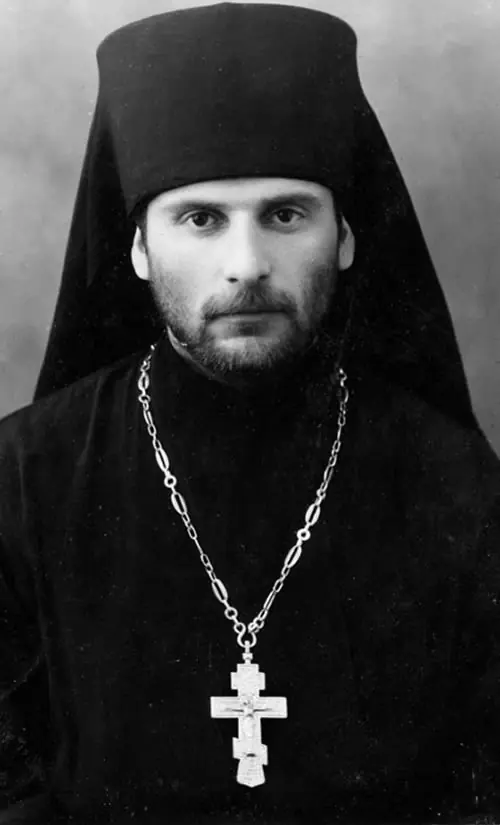
He was born Goderdzi Urgebadze in Tbilisi on August 26, 1929, and baptized as an infant in the Church of the Great Martyr Barbara in the Navtlughi district. His father, Vasili, was killed in unclear circumstances when the boy was about two, and the family called the child Vasiko after him.
These were the worst years of the Soviet campaign against religion. His official life says he first heard the name of God at the age of seven and saved his money to buy a Gospel, which he read instead of playing. He built little churches out of pebbles and lit matches inside them. As a boy he went around to neighbors who kept icons hidden in their attics and asked them to treat the icons with reverence or give them to him for safekeeping; many did, and those icons now cover the walls of the church he later built.
His mother, Barbara, was not without faith, but she wanted an ordinary life for her son. When he was about twelve she threw his Gospel away in anger. He took it back, held it to his chest, and left home at midnight. He walked to Mtskheta and was passed from monastery to monastery, Samtavro, Svetitskhoveli, Shio-Mgvime and Zedazeni, since the authorities would not let a minor stay long in any of them. At last he reached the Betania Monastery, where two old monks, Fr. George (Mkheidze) and Fr. John (Maisuradze), took him in. Both are now saints themselves, and they were his confessors for the rest of their lives.
Soldier, psalm-reader, monk
He was drafted into the Soviet army in 1949 and served at Batumi, where he fasted in secret and slipped away to services at the Church of St. Nicholas. After his discharge he lived in a little hut he built in his mother's yard, served as a watchman and then psalm-reader at Sioni Cathedral with the blessing of Catholicos-Patriarch Melchizedek III, and in 1955 was tonsured a monk at the Motsameta Monastery near Kutaisi, taking the name Gabriel. He had been ordained a deacon that January, and three days after his tonsure Bishop Gabriel (Chachanidze) ordained him a priest-monk.
When the authorities closed Betania in 1962, after his elders died, he came home to Tbilisi and built a church with seven small domes in the family courtyard with his own hands, out of materials from dumps and demolished churches.

May Day, 1965
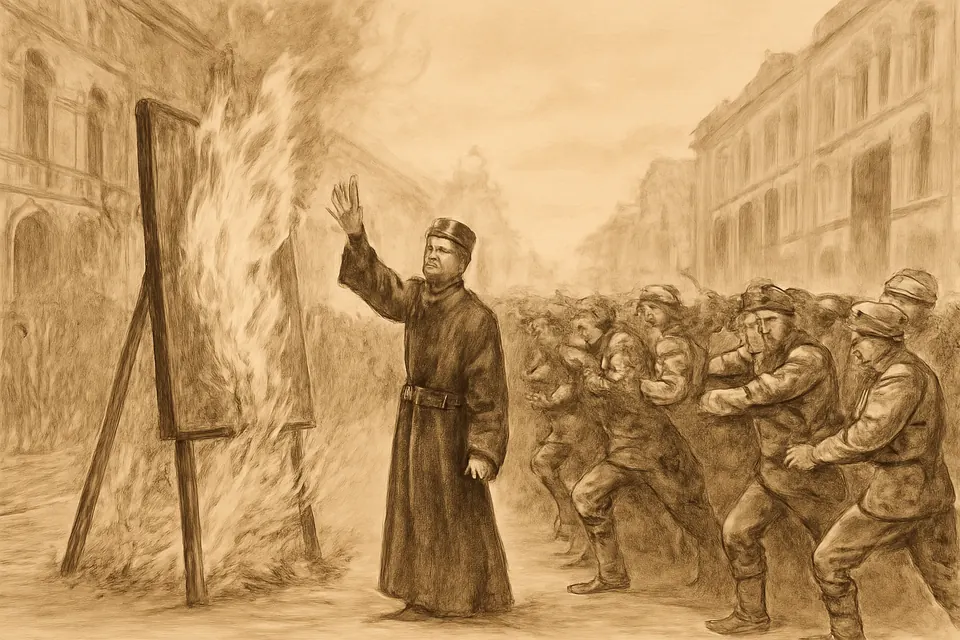
On May 1, 1965, the young priest walked into the May Day demonstration in Tbilisi. In front of the Council of Ministers hung an enormous portrait of Lenin, and he set it on fire. According to his official life, he cried out to the crowd:
No glory should be given to this deceased man, but glory to Christ, who conquered death and bestowed upon us eternal life.
The crowd stoned him and would have killed him if soldiers had not pulled him out. He was taken, with seventeen fractures to his skull and body, to the isolation ward of the security service's hospital. His interrogators wanted him to confess that the Georgian Church had put him up to it, and promised to spare him if he did. He refused, called Lenin a beast again, and was beaten again. Word of the case reached newspapers in Europe and America. Instead of executing him, the authorities declared him mentally ill. The hospital record printed in his official life shows that he was brought from prison to the Tbilisi psycho-neurological hospital for compulsory treatment on August 18, 1965, and discharged on November 19. The doctors' diagnosis rested on his visions, his fasting and his talk of God, angels and icons. The Georgian academician Avlipi Zurabashvili helped win his release.
A fool for Christ
He came out of the hospital still a priest, but suspended from his priestly duties, so he stood among the parishioners and received Communion as a layman. He was summoned again and again by the security service and often came home beaten. From then on he took up the hard and hidden path of holy foolishness. The man who had been silent now preached in the streets. He had never touched wine, and now he let people see him acting drunk, so that no one would think him holy. His official life quotes St. Paul: "the foolishness of God is wiser than men."
About four years after his release the authorities tore down his seven-domed church. He rebuilt it more than once, at last with a single large dome, and it still stands.
Samtavro
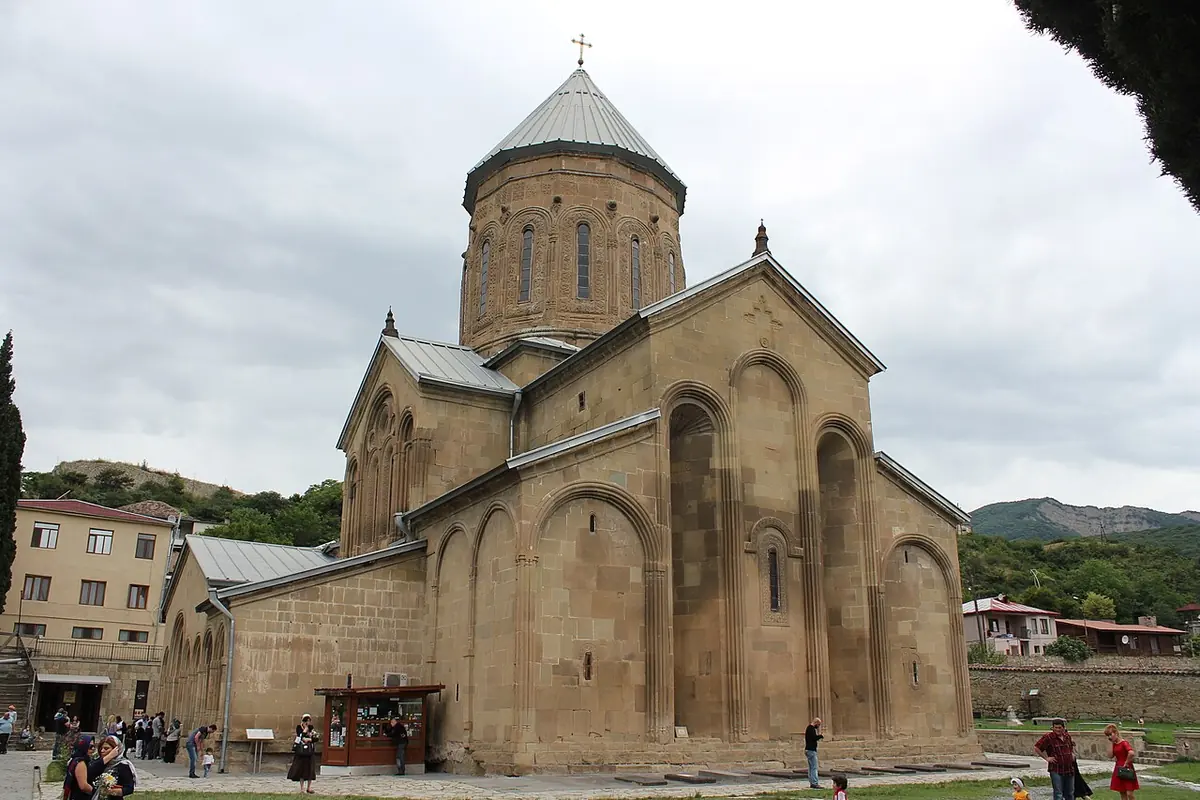
In 1971, with the blessing of Catholicos-Patriarch Ephrem II and of Metropolitan Ilia (the future Patriarch Ilia II), Fr. Gabriel was sent to the Samtavro Convent in Mtskheta, the place where St. Nino, the enlightener of Georgia, prayed in the 4th century. He was given a cell in the old tower of King Mirian. For years he traveled to ruined and abandoned monasteries across Georgia.
In his last years he moved into a tiny shed in the walnut grove of the convent courtyard, an old henhouse so low that he could hardly stand and so drafty that the winter came through the gaps in the boards. People came to him for confession and counsel from all over Georgia. He fed them with his own hands, and when he could no longer cook he asked the nuns to do it for him.

His official life says he told those who wanted him to move to Mount Athos, "My Athos is here. I would not trade my beloved Georgia for Athos." Hieromonk Gerasim of the St. Herman of Alaska Brotherhood in Platina, California, came to see him, and the brotherhood published an account of him in The Orthodox Word.

His death
He suffered from dropsy and, after breaking his leg, lay bedridden for the last year and a half of his life. On the day before he died he said, "I have followed you, Christ, since the age of 12. I am prepared; take me!" He died peacefully at Samtavro on November 2, 1995, looking at an icon of St. Nicholas.
At his request he was buried in the convent courtyard wrapped in sackcloth, without a coffin, by ancient monastic custom. The words he chose for his grave were: "Truth is in the immortality of the spirit."
The sayings of St. Gabriel
His teaching in his last years came down to love. His official life records these words, which pilgrims repeat today:
Always remember, God is love. Perform acts of kindness to the best of your ability, as through such acts, you shall save yourself. Embrace modesty, for God showers His mercy upon His humble servants. Repent for your sins and do not delay for 'tomorrow,' as this delay is a snare set by the Devil. Love one another, for a person devoid of love cannot inherit the Kingdom of Heaven.
And also: "Your life is my life. If you don't sacrifice yourself for people, nothing will be accomplished."
Miracles of St. Gabriel
The Georgian Church glorified him as a confessor and holy fool; the Orthodox Church does not run a Roman-style process of approving individual miracles, so the labels below follow this encyclopedia's usage.
- The first miracle at his grave: reported. His cell attendant, Nun Paraskeva (Rostiashvili), told OrthoChristian that three days after his death a mother whose son had been missing for a month prayed at the grave, and three days later the son came home. She then began writing down the stories pilgrims told her and set a lamp on the grave whose oil people still take away.
- Healings at his tomb: reported. His official life speaks of many healings at the grave, collected in Georgian books about him.
- His clairvoyance and wonders in life, including the angel who showed him where a fragment of the Svetitskhoveli cross relic was hidden: traditional, told by those who knew him.
- His relics: reported. When the grave was opened in February 2014, the faithful reported his body incorrupt.
The Church has also had to correct false claims made in his name. In January 2014 a rumor spread that he had promised, through a vision to a nun, to grant two wishes to everyone who visited his tomb before Orthodox Christmas, and thousands came. The Georgian Patriarchate answered that only "those requests which are pleasing to God and which are in line with the will of the Lord are fulfilled, not just any desire," and the nun later said there had been no such vision. We ask the saints to pray for us; they are not genies.
Symbols of St. Gabriel Urgebadze in art
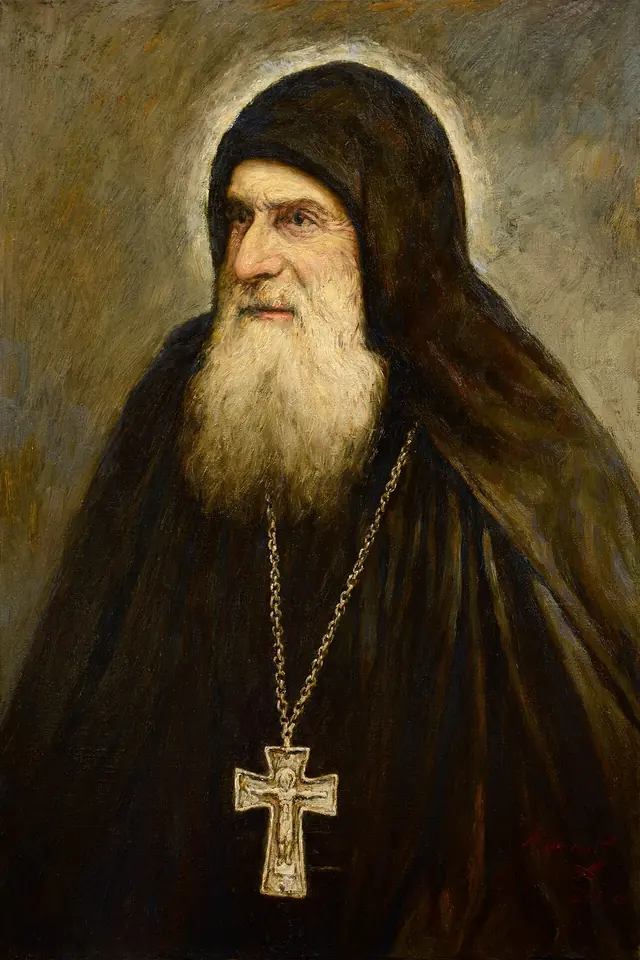
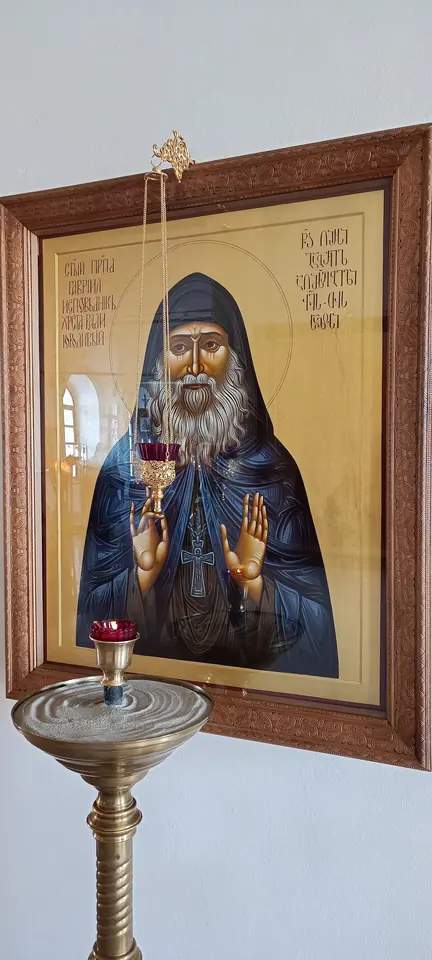
Gabriel is a new saint, so his iconography is still forming, and painters work from the many photographs of him. To recognize him, look for:
- An elderly monk with a long white beard, small and thin, with large dark eyes.
- The black monastic habit and soft black hood of a Georgian monk.
- A pectoral cross, the sign of his rank as an archimandrite.
- A walking cane, which he used in his last years.
- A prayer rope or a Gospel book, for his lifelong love of the Gospel he bought as a child.
- A lamp or chalice, in some icons, recalling the lamp of oil on his grave.
Icons give him a gold halo and a hand raised in blessing. Russian painters, among them Andrey Mironov, have painted him in the tradition of realistic portraits of holy elders.
Feast day, relics and pilgrimage
His feast is November 2, the day of his repose. Because the Georgian Orthodox Church follows the Julian calendar, the date is printed as October 20 in Georgian Church calendars. See our feast days page for the saints of the season.
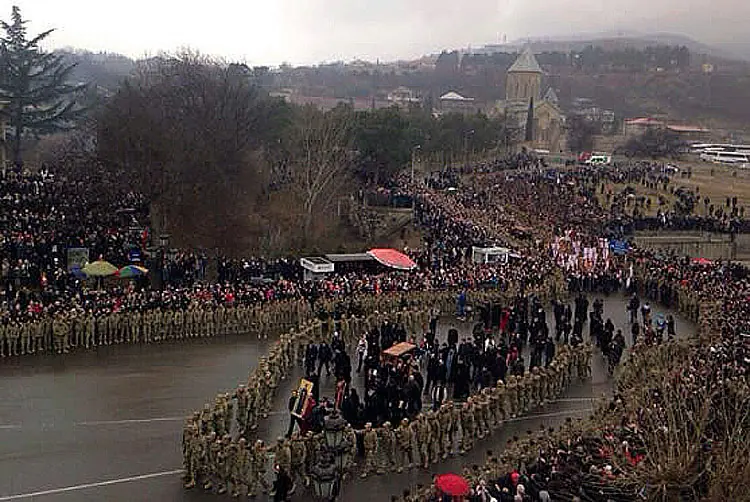
On February 20, 2014, his grave was opened. Under tight security, his relics were carried first to the Church of the Transfiguration at Samtavro, then to Svetitskhoveli Cathedral and to the Holy Trinity Cathedral in Tbilisi, where crowds of pilgrims came to venerate them, before they were enshrined at Samtavro.
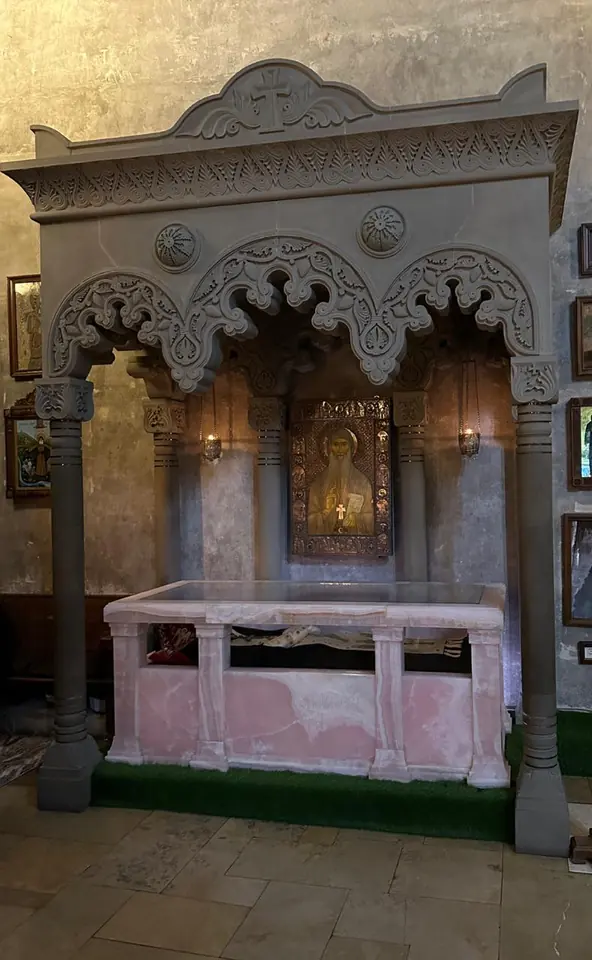
Churches in his honor have since been built in Georgia and beyond. Pilgrims to Mtskheta usually visit Svetitskhoveli and Samtavro together, and many stop at his shrine to light a candle and leave their petitions.
Prayer to St. Gabriel
The Georgian Church has hymns and an akathist for his feast, but we know of no traditional English prayer to him whose text we can print here. Orthodox and Catholic Christians alike ask his intercession simply, in their own words, the way pilgrims do at Samtavro.
Let us ask St. Gabriel to pray for those who are mocked for their faith, for prisoners of conscience and for anyone confined to a hospital against their will, for the people of Georgia, and for us, that we may learn his simple rule: God is love. Holy Father Gabriel, pray to God for us.
Frequently asked questions
When is the feast of St. Gabriel Urgebadze?
November 2, the day he died in 1995. The Georgian Orthodox Church keeps the Julian calendar, on which that date is October 20, so Georgian calendars sometimes list it that way. December 20, the anniversary of his canonization, is also remembered.
Why did St. Gabriel burn the portrait of Lenin?
At the May Day parade of 1965 in Tbilisi he set fire to a huge portrait of Lenin hung on the government building and cried out, "No glory should be given to this deceased man, but glory to Christ, who conquered death and bestowed upon us eternal life." He was protesting the honor given to a dead man in a country where Christ could not be preached.
What is a fool for Christ?
A holy fool is a Christian who hides holiness behind odd, even scandalous behavior, after St. Paul's words that "the foolishness of God is wiser than men." The Orthodox Church honors many, such as St. Xenia of Petersburg. After his release from the psychiatric hospital, Gabriel preached in the streets and sometimes pretended to be drunk so that no one would praise him.
Where is St. Gabriel buried?
At the Samtavro Convent in Mtskheta, near Tbilisi. He was buried in the convent courtyard in 1995; his relics were uncovered in February 2014, carried to the great cathedrals of Georgia and then enshrined at Samtavro, where pilgrims venerate them today.
Is St. Gabriel Urgebadze a Catholic saint?
He was a monk and priest of the Georgian Orthodox Church, and it was that Church's Holy Synod that glorified him in 2012. He is not on the Roman Catholic calendar, but we can honor his witness and ask his prayers, as we do for other holy men and women of the Christian East.
Keep exploring
Sources
- Life and works of St. Gabriel, Confessor and Fool for Christ (official site, monkgabriel.ge). Adapted from Archimandrite Kyrion (Oniani), "Truth Is in the Immortality of the Spirit" (Tbilisi, 2010); source of the quotations
- Pravmir: Canonisation of Saint Gabriel, Confessor and Fool-for-Christ
- OrthoChristian: Today the Sun Is Shining Over Georgia (tenth anniversary of the canonization of Elder Gabriel). The first miracle reported at his grave and the oil lamp
- Agenda.ge: Pilgrims seek miracles at opening of saint's tomb (February 22, 2014)
- BBC News: Georgia, pilgrims seek wish fulfilment at monk's tomb (January 7, 2014)