St. Julian the Hospitaller
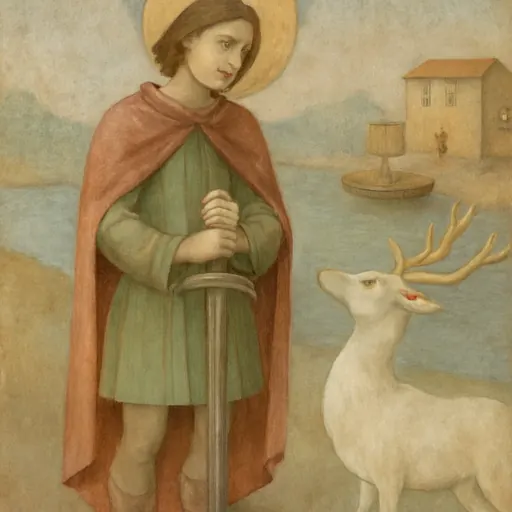
St. Julian the Hospitaller is the saint of a medieval legend: a nobleman warned by a stag that he would kill his parents, who did so by mistake and spent his life in penance, running a hostel and ferrying travelers across a river. His feast is February 12, and he is patron of hospitality, innkeepers, ferrymen and travelers.
Who was St. Julian the Hospitaller?
St. Julian the Hospitaller is the patron saint of hospitality, the saint medieval travelers called on when night came and they needed a bed. His story is one of the darkest in the whole calendar of saints, and one of the most hopeful: a young man who did a terrible thing without meaning to, and spent the rest of his life making a home for strangers.
We should be honest at the start. No historical record of Julian survives. Everything we know comes from medieval legend, above all the Golden Legend of Jacobus de Voragine, written about 1275. Even Jacobus wasn't certain who this Julian was. He wondered whether the travelers' patron might be Julian, bishop of Le Mans, then decided "it seemeth better that it is he that slew his father and mother ignorantly." We keep his feast on February 12.
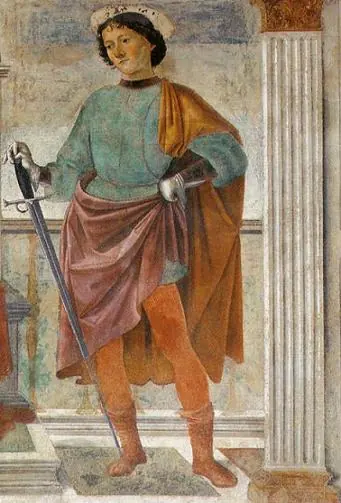
The legend of St. Julian
The stag's warning
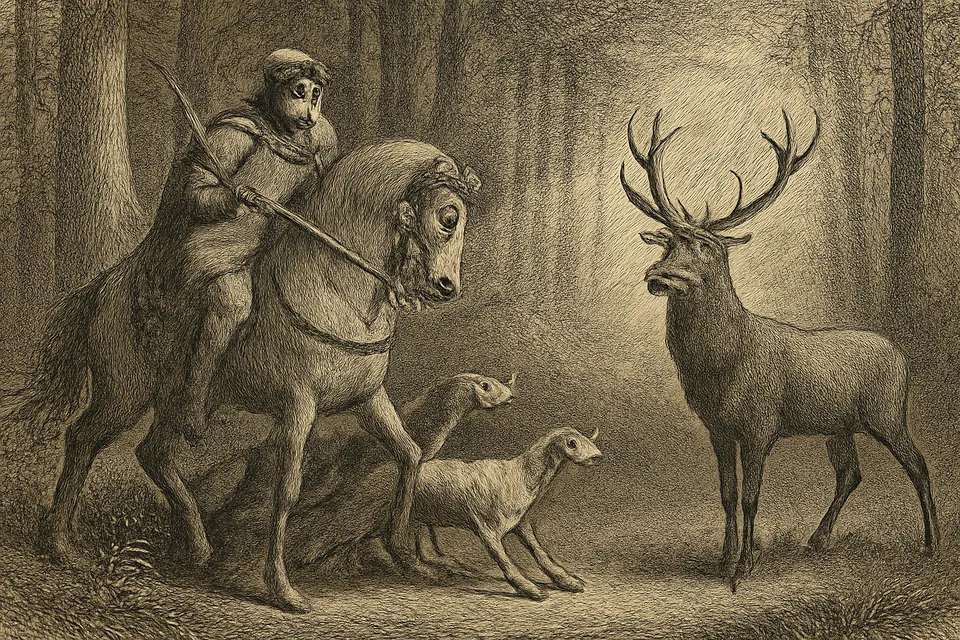
Julian was "noble and young," says the Golden Legend, and he loved to hunt. One day a stag he was chasing turned and spoke to him: "Thou huntest me that shall slay thy father and mother."
Horrified, Julian ran. He left home secretly, so that no one knew where he had gone, and took service with a great prince far away. He fought well, the prince knighted him, and he married a rich widow who brought him a castle.
The terrible mistake
Meanwhile his parents, heartbroken, set out to find him. They searched for years and at last arrived at his castle while he was away. His wife welcomed them, heard their story, and knew they were her husband's parents. She gave them her own bed and slept elsewhere.
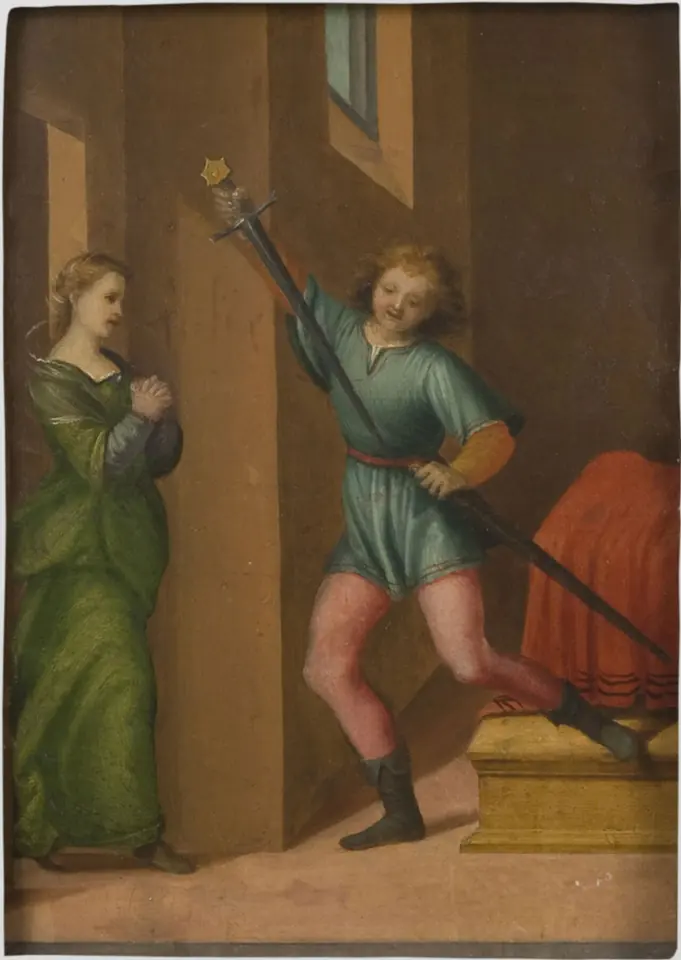
In the morning she went to church. Julian came home, went to the bedroom to wake his wife, and saw two people in his bed. Thinking she had taken a lover, he killed them both with his sword. Then he walked out and met his wife coming home from Mass.
The Golden Legend gives his cry when he learned the truth: "Alas! caitiff that I am, what shall I do that have slain my father and my mother?" He told his wife he would never rest until he knew whether God would forgive him. She refused to let him go alone: "like as I have had joy with you, so will I have pain and heaviness."
The hostel by the river
The two of them went to a great river that many people needed to cross. There they built a large hostel to shelter the poor, and Julian did his penance by carrying travelers over the water.
Years passed. One freezing night, about midnight, Julian heard a voice crying from across the river, "Julian, come and help us over." He found a man almost dead of cold, who looked like a leper. Julian carried him back, laid him by the fire and, when that failed to warm him, put him in his own bed and covered him.
Then the stranger rose up "all shining" toward heaven and said: "Julian, our Lord hath sent me to thee, and sendeth thee word that he hath accepted thy penance." A little later, the legend ends, Julian and his wife "rendered unto God their souls." We count this vision as traditional: part of a beloved legend, not a documented event.

Why St. Julian is the patron saint of hospitality
The patronage comes straight from his penance. Julian and his wife turned their lives into a work of welcome: a hostel for the poor, a ferry for anyone who needed to cross, a warm bed for a stranger no one else would touch. Medieval innkeepers and ferrymen took him for their own, and travelers asked him for good lodging. In Boccaccio's Decameron (about 1350), a merchant named Rinaldo explains his travel custom: each morning, as he leaves the inn, he says "a Pater and an Ave for the soul of St. Julian's father and mother," then asks God and the saint for a good lodging that night.
By Chaucer's day his name meant open-handed welcome. In the General Prologue to the Canterbury Tales, the Franklin keeps a generous table:
An householder, and that a great, was he;
Saint Julian he was in his country.
Hunters claim him because his story begins with a hunt, and pilgrims because he spent his life helping travelers on their way.
Symbols of St. Julian the Hospitaller in art
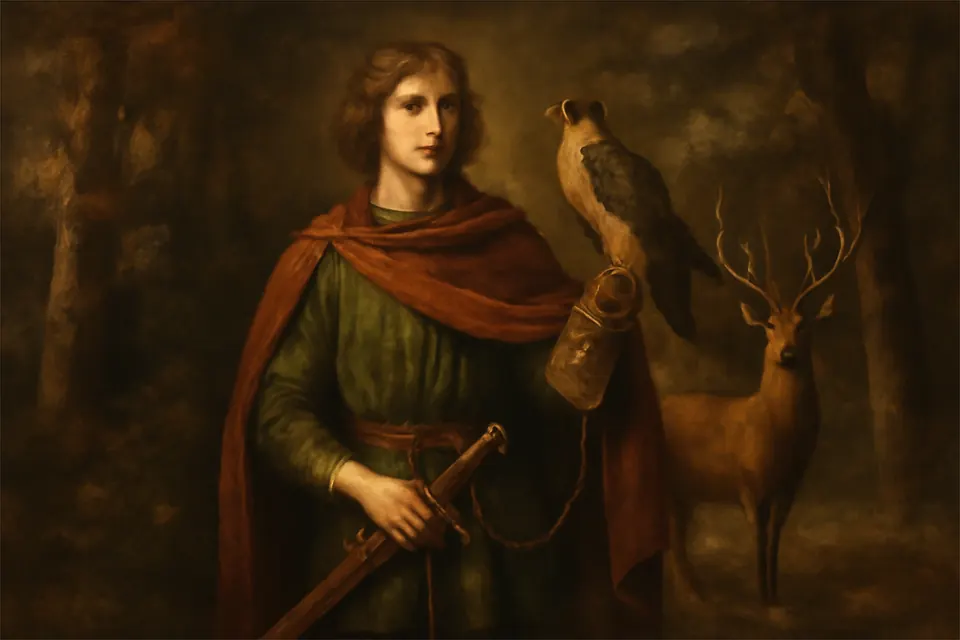
Artists painted Julian often in France and Italy, and his attributes come straight from the legend:
- Sword: the weapon of his tragedy. Richard Stracke notes that his particular sign is a wrapped sword, sheathed with its belt wound around it, as in Taddeo Gaddi's panel, a sword that will never be drawn again.
- Young nobleman's clothes: he is usually shown young and well dressed, as the legend first describes him.
- Falcon or hawk: a hunting bird, the sign of the young lord who loved the chase.
- Stag: the animal that spoke the warning.
- Oar, boat or river: his penance as a ferryman.
- A leper on his back or in a boat: the stranger who brought him God's forgiveness.
Watch for one confusion. Andrea Mantegna gave Julian a martyr's palm, mixing him up with St. Julian of Auvergne, a real martyr of the early Church.
Where St. Julian is honored
Many churches carry his name, from small French villages to Wellow in England and the Flemish church of San Giuliano dei Fiamminghi in Rome. The most famous telling of his story in glass is the thirteenth-century window in the north ambulatory of Rouen Cathedral. Gustave Flaubert grew up in Rouen, and that window inspired his 1877 tale La Légende de saint Julien l'Hospitalier, which brought the old legend to a new century of readers.

Prayer to St. Julian the Hospitaller
No formal ancient prayer to St. Julian survives, so we won't invent one in his name. But the oldest custom tied to him is a lovely one, and we can keep it today: the travelers' practice Boccaccio describes, an Our Father and a Hail Mary each morning on a journey for the souls of St. Julian's father and mother, with a request for safe lodging that night. St. Julian, who carried strangers through the cold and found that God had forgiven you, pray for all who welcome guests and all who are far from home, and for every one of us who carries a sorrow we cannot undo. See the feast day calendar and our page of patron saints for others to ask.
Frequently asked questions
What is St. Julian the Hospitaller the patron saint of?
Hospitality above all, and so innkeepers, hotel keepers and anyone who takes in guests; also ferrymen and boatmen, travelers and pilgrims looking for a bed for the night, and, by tradition, hunters, because his story begins on a hunt.
Was St. Julian the Hospitaller a real person?
No historical record of him survives. His story comes to us from medieval legend, most famously the Golden Legend of Jacobus de Voragine (about 1275). Even that book wasn't sure which Julian the travelers' patron was. He belongs to popular devotion rather than to history, which is why he is not in the Roman Martyrology.
When is the feast of St. Julian the Hospitaller?
February 12 is the date most widely kept, though some churches and towns named for him celebrate on other days.
Why do travelers pray to St. Julian?
Because he spent his penance sheltering and ferrying strangers. In the Middle Ages travelers asked his help in finding good lodging; Chaucer's well-fed Franklin, who kept open house, is called "Saint Julian in his country."
Keep exploring
- Patron saint pages
- SailorsTravelers
- Feast-day calendar
- Saints remembered in FebruarySaint of the dayWhat saint is my birthday?
- More
- Saints A to ZPatron saints A to ZExplore every section
Sources
- Jacobus de Voragine, The Golden Legend (1275), Caxton translation of 1483, chapter 30: The Life of St. Julian (reader's version). The full medieval legend; source of the quoted lines
- Richard Stracke, Saint Julian the Hospitaller: The Iconography (Christian Iconography, Augusta University). Attributes (wrapped sword, falcon), the Acta Sanctorum version, and the Mantegna confusion with Julian of Auvergne
- Geoffrey Chaucer, The Canterbury Tales, General Prologue (Project Gutenberg edition). The Franklin as "Saint Julian in his country"
- Giovanni Boccaccio, The Decameron, Second Day, Second Story, John Payne translation (Project Gutenberg). Rinaldo's morning prayer for St. Julian's parents