Blessed Vicente Vilar David, Catholic Engineer and Martyr of Manises
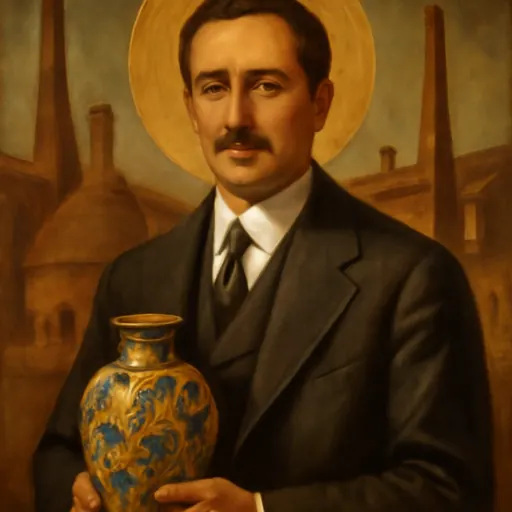
Blessed Vicente Vilar David (1889–1937) was a Spanish industrial engineer who ran his family's ceramics firm in Manises and sheltered priests and religious during the Spanish Civil War. On February 14, 1937, he told a tribunal that being a Catholic was his greatest title, and he was shot, forgiving his killers. We keep his feast on February 14.
Who was Blessed Vicente Vilar David?
Blessed Vicente Vilar David was a Catholic engineer and businessman from Manises, the pottery town outside Valencia, who died a martyr in the Spanish Civil War. He ran his family's ceramics factory as a Christian employer, served his parish as a catechist, and, when the persecution of 1936 began, hid priests and religious in his own house. In February 1937 a tribunal gave him the chance to deny his faith. He would not, and he was shot that night, forgiving the men who killed him. We keep his feast on February 14.
When John Paul II beatified him in 1995, he spoke of him as a layman whose prayer and love for the Eucharist marked all his work: "The married state, the practice of a profession, the activities proper to lay people are ways that lead to holiness if they are lived with sincerity and Gospel self-giving, as demands of baptism" (our translation of the Pope's Spanish).
The life of Vicente Vilar David
A son of Manises
Vicente was born in Manises on June 28, 1889, the youngest of eight children of Justo Vilar Arenes and Carmen David Gimeno. He was baptized the next day in the parish church of San Juan Bautista. He went to the village school, then to the Piarist fathers' school in Valencia, and studied industrial engineering in Barcelona.
Manises has made pottery for more than six hundred years. Its blue and gold lusterware was prized across Europe in the late Middle Ages, and in Vicente's time the town's kilns still fed its whole economy. His family owned one of the firms.

The Catholic employer
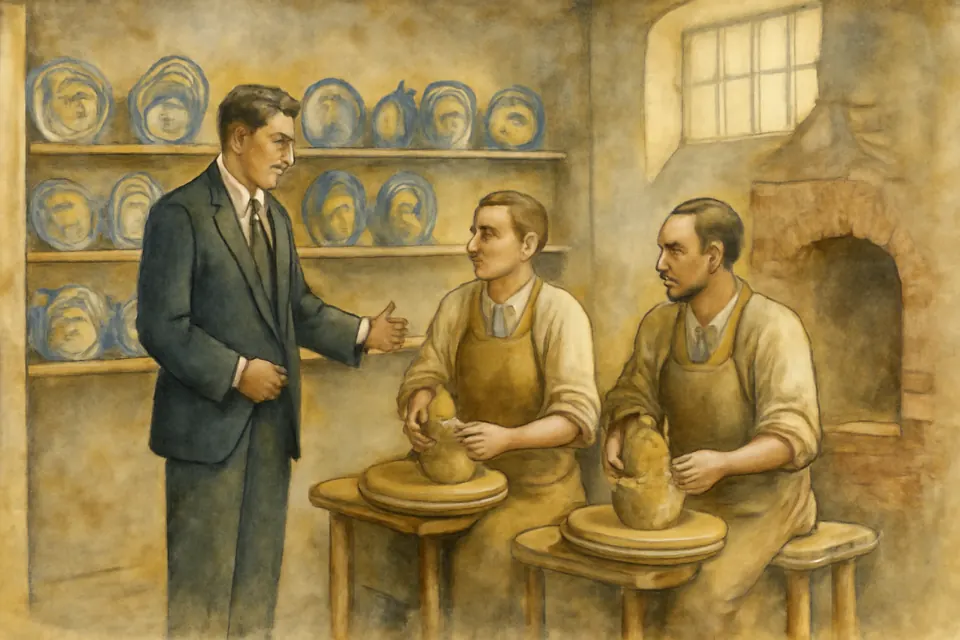
When his father died and his studies were done, Vicente took charge of the family company, Hijos de Justo Vilar, with three of his brothers. The Dicastery for the Causes of Saints says he ran it in his own way. Justice and solidarity governed the factory, he treated his workers as real friends, helped them when he could, and visited them when they were sick. When disputes came, he worked for agreement.
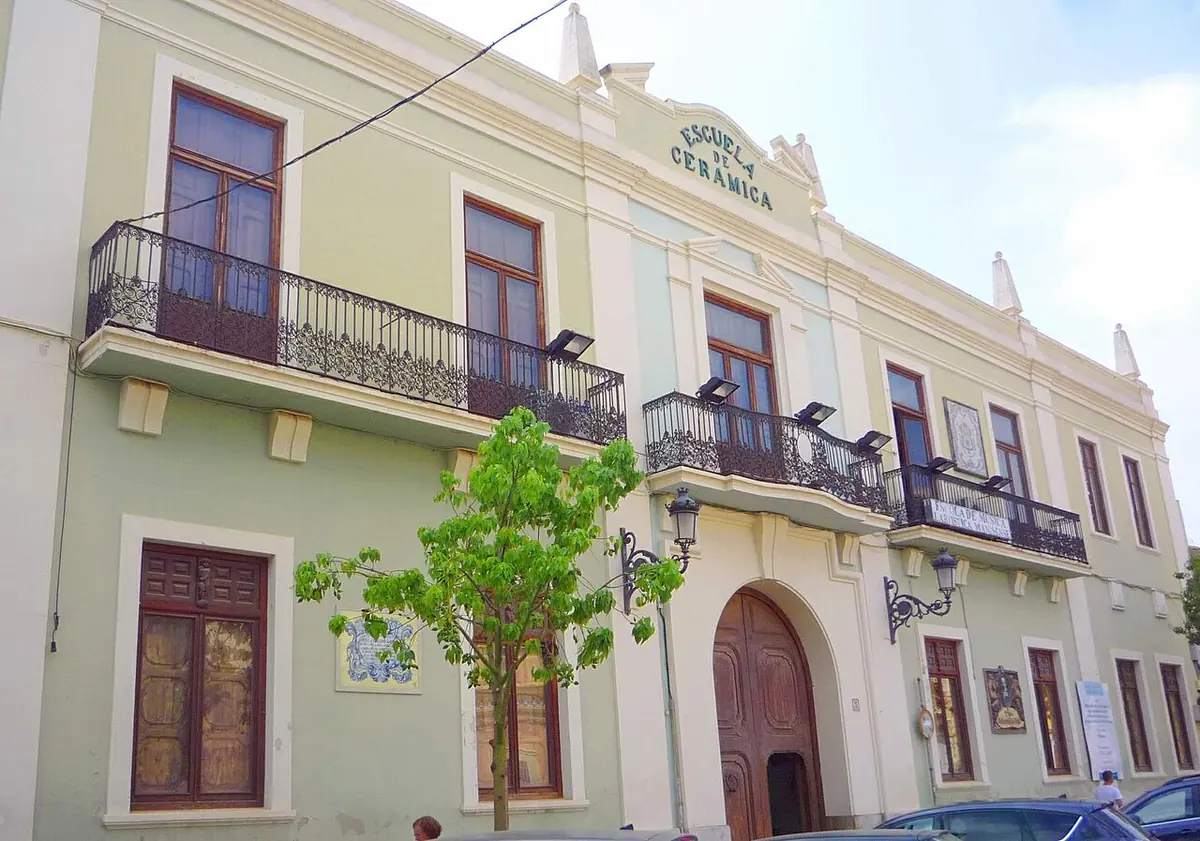
He brought new ideas from Barcelona and helped found the ceramics school of Manises, which trained the town's craftsmen to compete abroad. For seven years he was vice-president of the town council, where people knew him as a man of complete integrity. In his parish he was a catechist, a member of the Eucharistic associations and the parish priest's constant helper.
On November 30, 1922, he married Isabel Rodes Reig, who shared his ideals and became his partner in all his parish and charitable work.
The martyrdom of Vicente Vilar David
After the Republic was proclaimed in 1931 and the government moved against the Church, Vicente helped the priests keep religious teaching alive and founded the Patronato de Acción Social, a parish body for the Catholic education of young people. In August 1936, as the persecution reached its height, he was removed as secretary and teacher of the ceramics school for being a Catholic.
He did not hide. He stayed close to his parish priest to help and protect him until the priest was killed. He took priests and religious into his house to save their lives. His own workers protected him for a time.
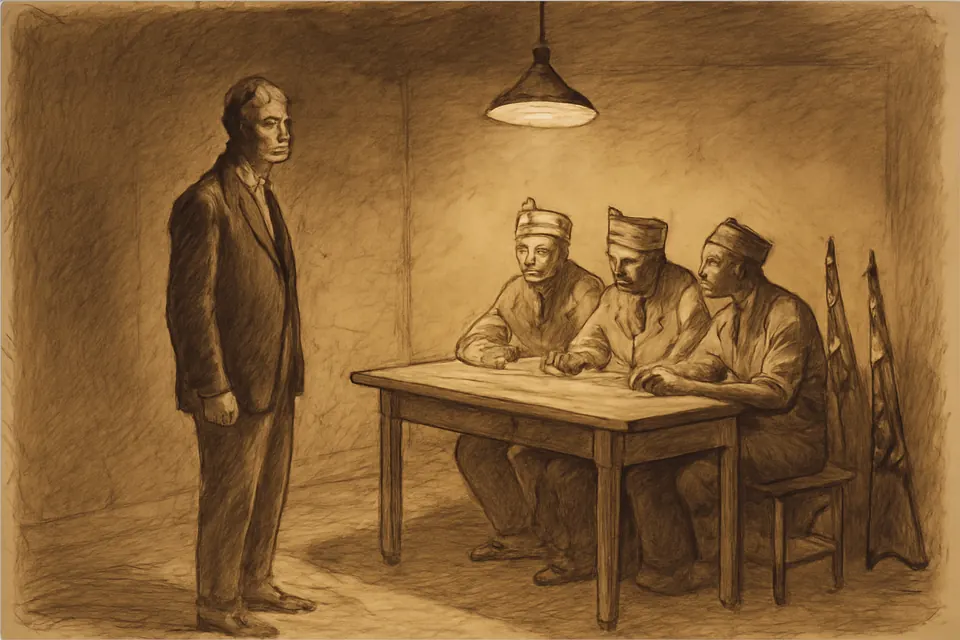
On the night of February 14, 1937, he stood before a tribunal. He could have saved his life by renouncing his faith. Instead he said that being a Catholic was the greatest title he had. He was shot immediately, forgiving everyone, and above all the men who killed him. He had never belonged to any political party.
His workers closed the factory for three days of mourning and refused the authorities' orders to reopen, because, they said, he had been a father to each of them. Pope John Paul II beatified him in Rome on October 1, 1995, in the same Mass as Blessed Anselmo Polanco and many other martyrs of Spain and France.
- Approved: his martyrdom. As a martyr he was beatified without a miracle; a miracle is still needed for canonization.
A holy businessman
The Dicastery for the Causes of Saints calls him an impresario santo, a holy businessman, and suggests he might have deserved the honor of the altars even without martyrdom. His death crowned a life already spent on justice, charity and courage. He never preached to his workers about the Church's social teaching so much as he practiced it: a visit when someone was sick, a hand in a quarrel, and a school so the next generation of potters could keep their trade alive.
That is why he speaks so directly to Catholics in business today. He did not leave his faith at the factory gate, and he did not use it as a slogan either. He did the ordinary work of an owner and an engineer as a Christian, and when the time came to choose between his life and his faith, he had long since chosen.
Symbols of Blessed Vicente Vilar David in art
Vicente lived in the age of photography, and no old artwork of him exists. Devotional images show him as a layman of his time:
- A dark suit, the dress of an engineer and businessman, not a cleric;
- A piece of Manises ceramics, for his work and his town;
- The martyr's palm, for his death;
- Sometimes the Eucharist, for the devotion John Paul II named as the source of his life.
Feast day and prayer
We keep the feast of Blessed Vicente Vilar David on February 14, the day of his martyrdom, in the Archdiocese of Valencia. His remains rest in the parish church of San Juan Bautista in Manises. See the feast day calendar.
We know of no traditional prayer to him in English that we can quote. Let us ask Blessed Vicente to pray for Catholic business owners and engineers, for workers and those who employ them, and for married couples who serve their parish together. Blessed Vicente Vilar David, pray for us.
Frequently asked questions
Who was Blessed Vicente Vilar David?
A layman, born in Manises in 1889, the youngest of eight children. He studied industrial engineering in Barcelona, took over the family ceramics firm, Hijos de Justo Vilar, helped found the ceramics school of Manises, married Isabel Rodes Reig in 1922, and was a catechist and parish leader. He was killed for his faith in 1937 and beatified in 1995.
How did Vicente Vilar David die?
On the night of February 14, 1937, he was brought before a tribunal and had the chance to save his life by denying his faith. He said instead that being a Catholic was the greatest title he had. He was shot at once, forgiving those who killed him.
Where is Vicente Vilar David buried?
His remains are venerated in the parish church of San Juan Bautista in Manises, the same church where he was baptized the day after he was born.
Keep exploring
Sources
- Dicastery for the Causes of Saints: Vicente Vilar David. His family's ceramics firm, his treatment of his workers, seven years on the town council, the Patronato, sheltering priests and religious, forgiving his killers, and his workers closing the factory for three days of mourning
- Catholic.net: Vicente Vilar David, Beato. Roman Martyrology entry; his parents, baptism, schooling and studies; marriage on November 30, 1922; the ceramics school; his dismissal in August 1936; the tribunal of February 14, 1937; and his tomb in San Juan Bautista
- John Paul II, Homily at the Beatification of 1 October 1995. The Pope's words on Vicente Vilar David and the holiness of lay work