St. Colman of Lindisfarne

St. Colman of Lindisfarne (about 605–675) was an Irish monk of Iona who became the third bishop of Lindisfarne in 661. At the Synod of Whitby in 664 he defended the Irish way of dating Easter; when King Oswiu chose the Roman custom, Colman resigned and led his monks home to Ireland, where he founded monasteries on Inishbofin and at Mayo. His feast day is February 18, and in Ireland August 8.
Who was St. Colman of Lindisfarne?
St. Colman of Lindisfarne was an Irish monk of Iona who served as the third bishop of Lindisfarne, in the kingdom of Northumbria, from 661 to 664. He is remembered above all for one day: the Synod of Whitby, where he spoke for the Irish way of keeping Easter and lost. What he did next is the measure of the man. He did not sulk or rebel. He gave up his see, gathered the monks who wished to follow him, and went home to found new monasteries on the far western edge of Ireland.
The Catholic Encyclopedia gives his birth in Connacht about 605. Nearly all we know of him comes from St. Bede the Venerable, who disagreed with Colman about Easter and still wrote of him with respect.
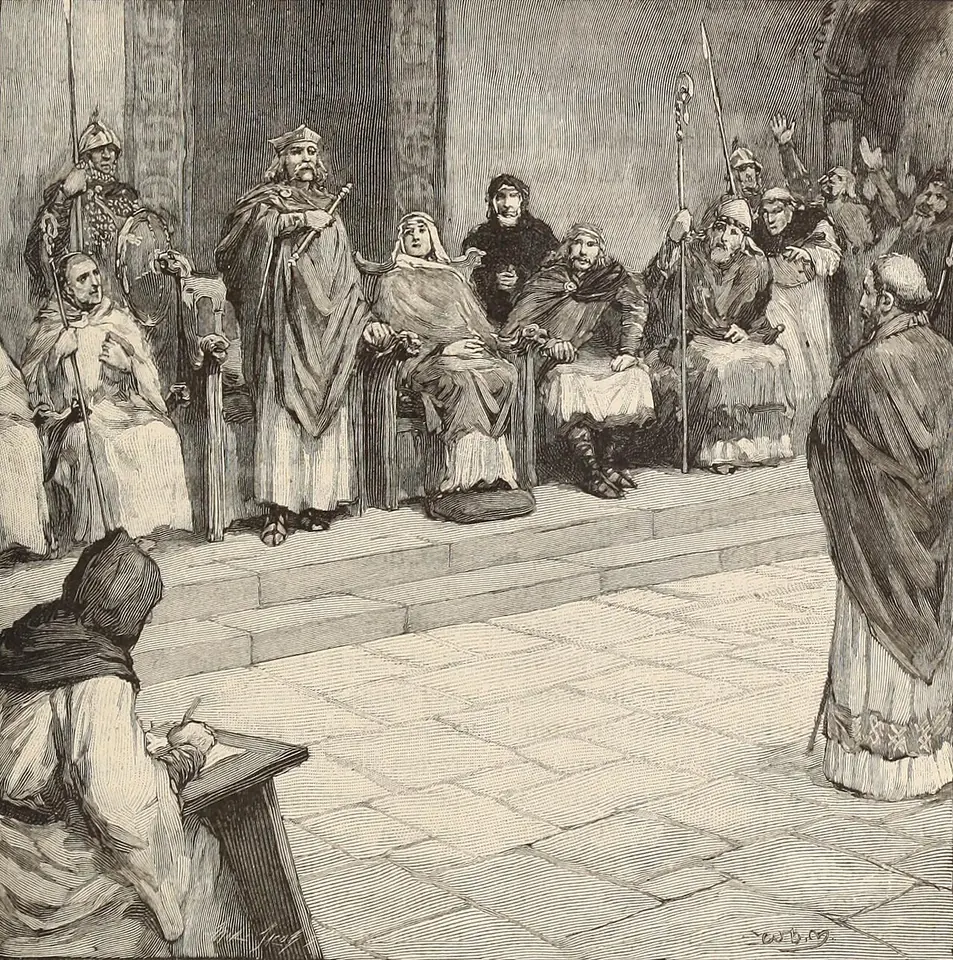
Bishop of Lindisfarne
Lindisfarne, the tidal island off the Northumbrian coast, had been founded in 635 by St. Aidan, another monk of Iona, at the invitation of King St. Oswald. Aidan ruled as bishop for seventeen years and Finan for ten. When Finan died in 661, Iona sent Colman.
Bede's picture of the community under these Irish bishops is one of the warmest passages in his history. There were "very few houses besides the church." The monks had no money, only cattle, and whatever the rich gave them they gave at once to the poor. When King Oswiu came, he came with five or six servants, prayed, ate the brothers' plain food, and left. "For the whole care of those teachers was to serve God, not the world—to feed the soul, and not the belly."
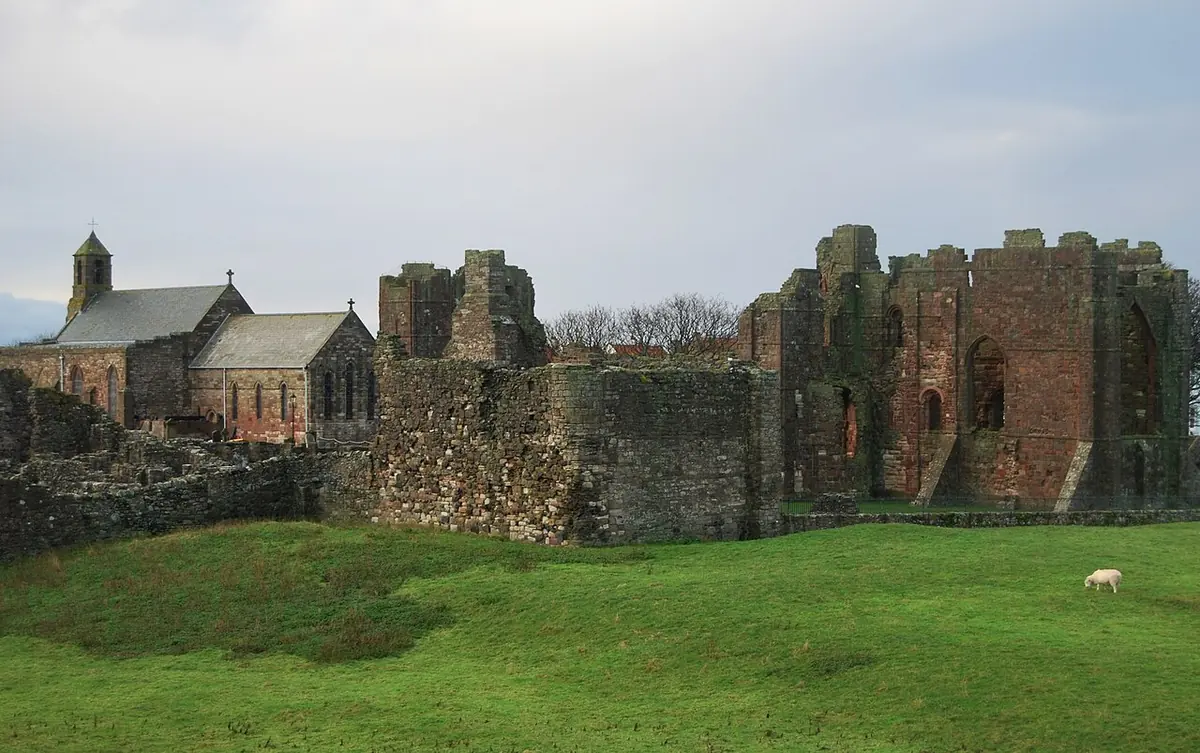
The Synod of Whitby, 664
The Irish monks reckoned the date of Easter by an older table than the one used in Rome and most of the Church, so in Northumbria the king might be celebrating Easter while the queen was still keeping Lent. In 664 Oswiu called a meeting at the abbey of St. Hilda at Whitby to settle it. St. Cedd served as interpreter.
The king asked Colman to speak first. Bede gives his words:
The Easter which I keep, I received from my elders, who sent me hither as bishop; all our forefathers, men beloved of God, are known to have celebrated it after the same manner; and that it may not seem to any contemptible and worthy to be rejected, it is the same which the blessed John the Evangelist, the disciple specially beloved of our Lord, with all the churches over which he presided, is recorded to have celebrated.
The priest Wilfrid answered for the Roman custom and finally appealed to the words of Christ to Peter: "I will give unto thee the keys of the kingdom of Heaven." The king asked Colman whether those words were truly spoken to Peter. "It is true, O king!" Colman said. Could he show any such power given to Columba? "None," Colman answered honestly. Oswiu decided for Peter, "lest haply when I come to the gates of the kingdom of Heaven, there should be none to open them."
Back to Ireland
Colman could not in conscience give up the custom of his fathers, so he resigned. Bede says he took with him those who would not accept the Roman Easter and tonsure. Before leaving, he asked the king to make Eata, one of Aidan's first English pupils, abbot of the monks who stayed, "for the king greatly loved Bishop Colman on account of his innate discretion." Colman also divided the relics of Aidan, carrying part of the bones home and leaving the rest to be buried in the church at Lindisfarne.
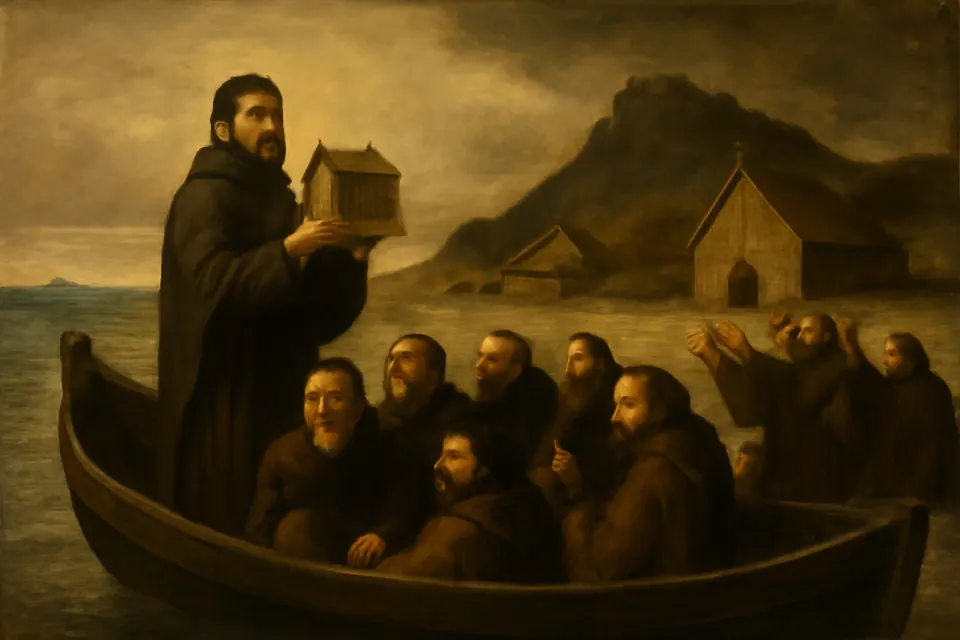
He went first to Iona, then to Inishbofin, "the Island of the White Heifer," off the coast of Connemara, where about 668 he built a monastery for his Irish and English monks together. It did not go smoothly. Bede, with a dry smile, tells how the Irish monks wandered off visiting friends every summer at harvest time and came back in winter expecting to share what the English had gathered. Colman made peace the practical way. He bought land on the mainland at Mayo and built a second house for the English, which grew into the great monastery called "Mayo of the Saxons." In Bede's own day it was still full of English monks living by their own labor.

Colman died on Inishbofin about 675. The annals disagree on the year, from 672 to 676.
The miracles of St. Colman
No miracles, approved, reported or traditional, are recorded for St. Colman, by Bede or in the later Irish calendars. His holiness shows in other ways: a poor and generous community, an honest answer before a king, and the humility to step aside rather than divide the Church.
Symbols of St. Colman of Lindisfarne in art
He is rarely shown alone. When he appears, look for:
- Bishop's crozier: he was bishop of Lindisfarne and, in Irish tradition, of Inishbofin.
- The Irish tonsure: the front of the head shaved from ear to ear, the style debated at Whitby.
- An island monastery and the sea: Lindisfarne and Inishbofin.
Victorian history books often picture him at Whitby, standing before King Oswiu with Wilfrid opposite, as in Margetson's illustration above.
Feast day and prayer
The Bollandists' Acta Sanctorum treated St. Colman on February 18, and many lists of the saints keep that day. The Irish martyrologies honor him on August 8. See the feast day calendar and our page on the Irish saints.
There is no traditional prayer to St. Colman of Lindisfarne. Let us ask his intercession simply: St. Colman, who loved the customs of your fathers and loved the unity of the Church still more, pray for us, that we may speak the truth honestly, accept correction humbly, and serve God, not the world.
Frequently asked questions
Who was St. Colman of Lindisfarne?
An Irish monk sent from Iona to be bishop of the Northumbrians at Lindisfarne after St. Finan died in 661. He led the Irish party at the Synod of Whitby in 664, resigned when the king chose the Roman Easter, and spent his last years founding monasteries in the west of Ireland. Bede praises the frugal, generous life of his community.
What did St. Colman say at the Synod of Whitby?
According to Bede, he said the Easter he kept was the one he had received from his elders, the same that "the blessed John the Evangelist, the disciple specially beloved of our Lord," had kept. St. Wilfrid answered for the Roman side, appealing to St. Peter, and King Oswiu decided for Peter, who holds the keys of heaven.
When is the feast of St. Colman of Lindisfarne?
February 18 in the Acta Sanctorum and many lists of the saints; August 8 in the Irish calendars and the Catholic Encyclopedia.
Where did St. Colman of Lindisfarne die?
On Inishbofin, the "Island of the White Heifer," off the coast of Connemara, where he had founded a monastery about 668. The annals put his death between 672 and 676.
Keep exploring
Sources
- Bede, Ecclesiastical History of England, book 3, chapters 25–26, and book 4, chapter 4 (trans. A. M. Sellar, 1907). Colman's words at Whitby, his resignation, the bones of Aidan, the frugal life at Lindisfarne, Inishbofin and Mayo of the English
- Catholic Encyclopedia (1908): St. Colman of Mayo. Birth about 605, bishop in 661, Inishbofin in 668, Mayo, death and feast on August 8
- John O'Hanlon, Lives of the Irish Saints, vol. 8 (August 8): St. Colman, Bishop of Lindisfarne. The Bollandists' February 18 date, the August 8 feast in the Irish martyrologies, and the conflicting death years in the annals