Blessed George Haydock, Lancashire Priest and Martyr of Tyburn
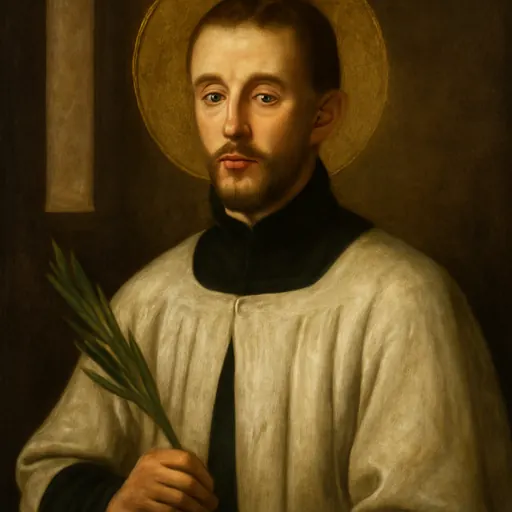
Blessed George Haydock (1556–1584) was a Lancashire priest, trained at Douai, who was arrested almost as soon as he landed, held two years in the Tower, and hanged, drawn and quartered at Tyburn on February 12, 1584, his feast day. In 1987 John Paul II beatified 85 martyrs of England and Wales as George Haydock and 84 companions.
Who was Blessed George Haydock?
Blessed George Haydock was a young priest from Lancashire who died for the Catholic faith at Tyburn on February 12, 1584, at the age of twenty-eight. He had been a priest for barely two months when he was arrested, and he spent the rest of his short priesthood in the Tower of London. When Pope John Paul II beatified eighty-five martyrs of England and Wales on the feast of Christ the King, November 22, 1987, he spoke of "George Haydock and 84 English martyrs," and the whole group still bears his name.
He was born in 1556, the youngest son of Evan Haydock of Cottam Hall, near Preston, and of Helen, daughter of William Westby of Mowbreck Hall.
Douai, Rome and ordination
George went abroad to study for the priesthood at the English College at Douai, which had moved to Reims, and then at the English College in Rome. In the early summer of 1581, while making the pilgrimage to the seven churches of Rome, he caught a severe malarial fever that returned again and again for the rest of his life. He was ordained, apparently at Reims, on December 21, 1581, and set out for England.
The Tower of London
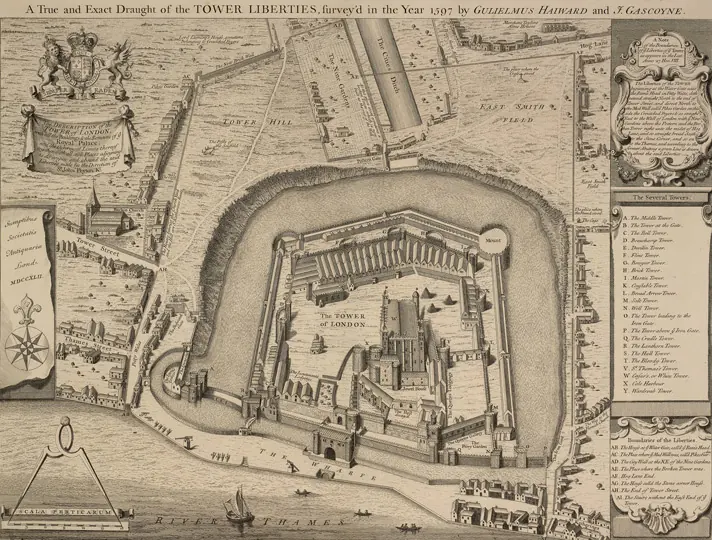
He was arrested in London almost as soon as he landed, early in February 1582, and committed to the Tower. For fifteen months he was kept in the strictest confinement, sick with recurring fever. About May 1583 his imprisonment was relaxed to "free custody," and although he stayed in the Tower he could now bring the sacraments to his fellow prisoners.
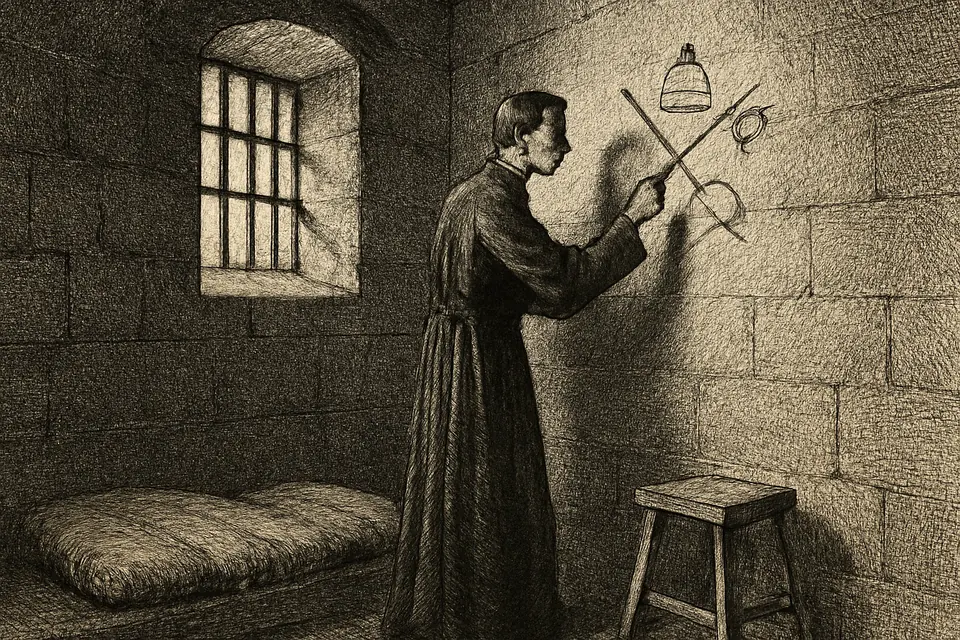
The Catholic Encyclopedia, drawing on the old accounts, records a touching detail. His devotion to the papacy "amounted to a passion," and in the first months of his captivity he decorated his cell with the name and arms of the pope, scratched or drawn in charcoal on the door and walls.
Trial on St. Dorothy's Day
It gave him particular joy that on January 16, 1584, then the feast of St. Peter's Chair at Rome, he and other priests in the Tower were taken to the Guildhall and questioned about their beliefs. There, he admitted later, he reluctantly declared that the queen was a heretic, and that sealed his fate.
On February 5 he was indicted with James Fenn and other priests for having conspired against the queen at Reims on September 23, 1581, though he had not arrived in Reims until November 1. The next day, February 6, the feast of St. Dorothy, he and four others pleaded not guilty. He had long had a great devotion to St. Dorothy and commended himself to her every day. On Friday, February 7, all five were condemned.
Martyrdom at Tyburn
Early on Wednesday, February 12, 1584, George Haydock said Mass. Then he and four other priests, James Fenn, Thomas Hemerford, John Nutter and John Munden, were dragged to Tyburn on hurdles. Being the youngest, and certainly the weakest, he was the first to die.
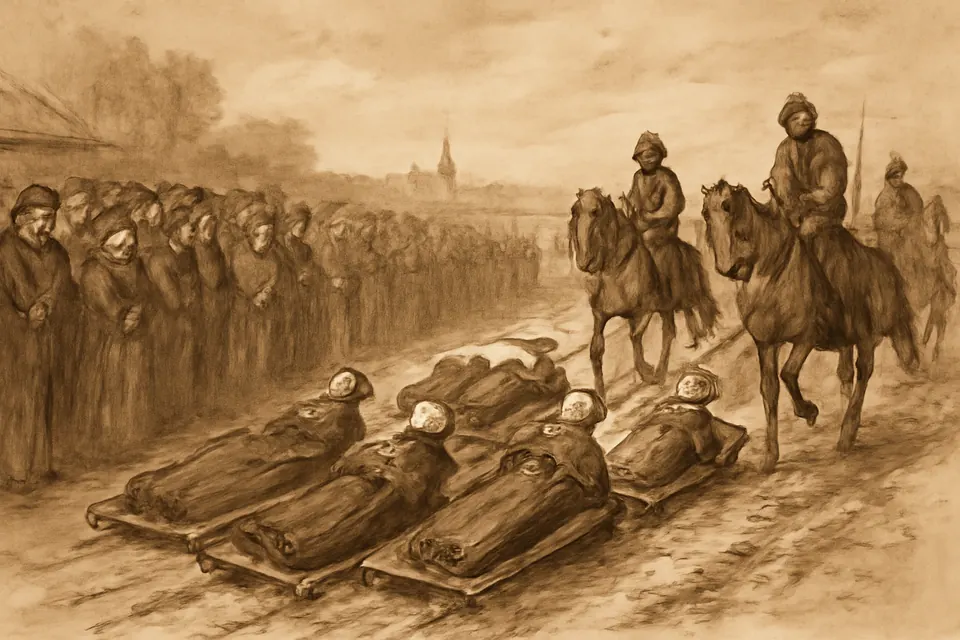
An eyewitness, whose account Father John Hungerford Pollen later printed, described him as "a man of complexion fayre, of countenance milde, and in professing of his faith passing stoute." He prayed all the way, and as he mounted the cart he said aloud the last verse of the evening hymn Te lucis ante terminum. He acknowledged Elizabeth as his rightful queen but did not take back what he had said, and he asked all Catholics to pray for him and for his country. When someone in the crowd shouted that there were no Catholics there and another cried that they were all Catholics, he answered: "I meane Catholicks of the Catholick Roman Church, and I pray God that my bloud may encrease the Catholick faith in England." He was then hanged and cut down while still alive.
No miracles, approved or reported, are recorded for him. The Church honors him as a martyr, one who gave his life for Christ and for unity with the See of Peter.
Symbols of Blessed George Haydock in art
No old portrait of George Haydock is known. Like the other Elizabethan martyrs, he is shown as a young priest with the martyr's palm, sometimes with the rope of Tyburn. Artists who know his story may add the papal keys and tiara, the arms he drew in charcoal on his prison wall.
Feast day and where he is honored
We keep his feast on February 12, with his four companions, as the Roman Martyrology does. In his home village of Cottam, near Preston, the Catholic church honors him with a memorial plaque, and his name stands at the head of the eighty-five martyrs beatified in 1987.
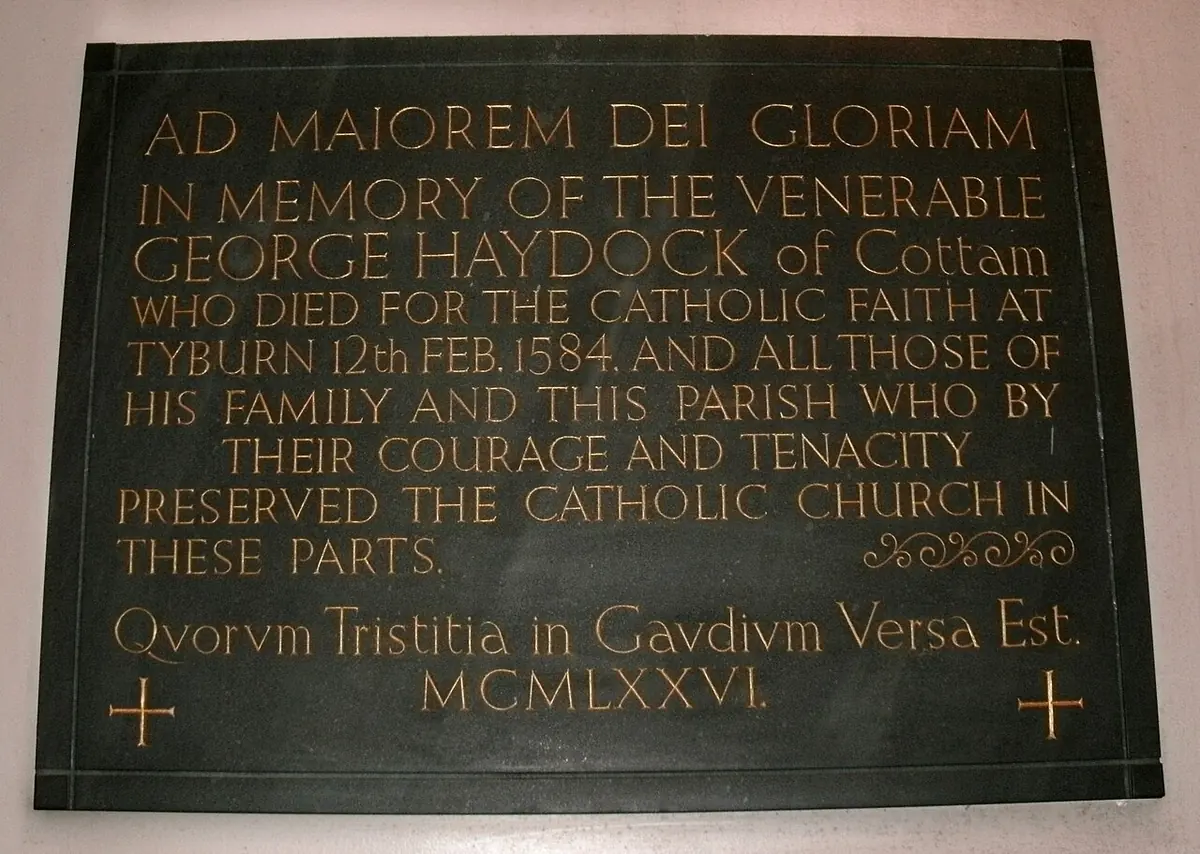
We have no traditional prayer to Blessed George Haydock that we can cite here. Let us ask him to pray for priests, for prisoners of conscience, for the sick who carry long illnesses, and for the unity of all Christians with the successor of Peter.
Blessed George Haydock and companions, pray for us.
Frequently asked questions
Who was Blessed George Haydock?
The youngest son of Evan Haydock of Cottam Hall, near Preston in Lancashire. He studied for the priesthood at Douai and Rome, was ordained in December 1581, was arrested in London in February 1582, and was executed at Tyburn with four other priests on February 12, 1584, at the age of twenty-eight.
When is the feast day of Blessed George Haydock?
February 12, the day of his martyrdom, in the Roman Martyrology, together with the four priests who died with him.
Why is he first among the 85 Martyrs of England and Wales?
The 1987 beatification was celebrated as that of George Haydock and 84 English martyrs, so his name stands at the head of the group in the Pope's homily.
Who died with George Haydock?
Four other priests: James Fenn, Thomas Hemerford, John Nutter and John Munden. All five were drawn to Tyburn together, and George Haydock, the youngest and weakest, died first.
Keep exploring
Sources
- John Wainewright, "Ven. George Haydock," The Catholic Encyclopedia, vol. 7 (1910). Family, studies, fever caught in Rome, the Tower and the charcoal papal arms, the Guildhall examination, the indictment, his devotion to St. Dorothy and the eyewitness account of February 12, 1584
- John Paul II, homily for the beatification of 85 English martyrs, November 22, 1987. "George Haydock and 84 English martyrs"
- John Hungerford Pollen, "English Confessors and Martyrs (1534–1729)," The Catholic Encyclopedia, vol. 5 (1909). The five priests executed at Tyburn on February 12, 1584
- Roman Martyrology 2004, February (GCatholic). February 12 entry