St. Odilo of Cluny, the Abbot Who Gave Us All Souls' Day
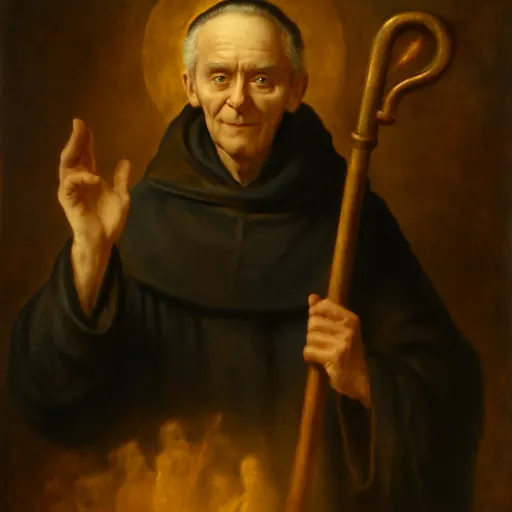
St. Odilo of Cluny (about 962–1049) was abbot of Cluny for more than fifty years. He began the yearly commemoration of all the faithful departed on November 2, which spread to the whole Church as All Souls' Day. We remember him on January 1, the day he died, and he is the patron of the souls in purgatory.
Who was St. Odilo of Cluny?
St. Odilo of Cluny was the abbot who gave the Church All Souls' Day. For more than fifty years, from 994 to 1049, he governed the Benedictine abbey of Cluny in Burgundy, the most influential monastery of its age. He was small and thin and gentle in manner, and he was tireless. He ordered his monks to pray for all the faithful departed every November 2, worked to tame the private wars of his time through the Truce of God, and stripped his abbey of its gold to feed the starving.
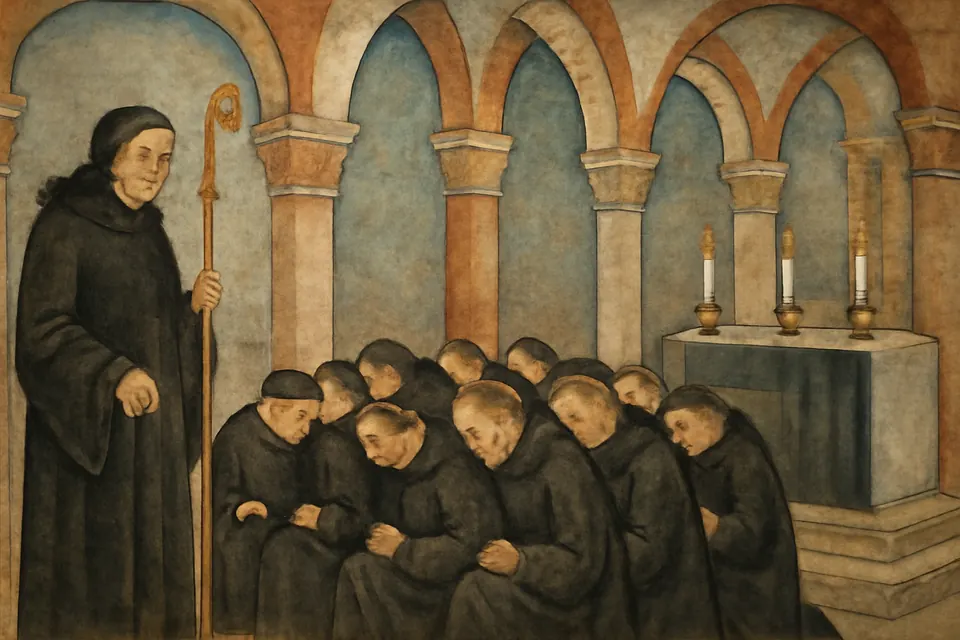
He died at the priory of Souvigny on the first night of 1049, at about eighty-seven.
The life of St. Odilo
A healed child of Auvergne
Odilo was born about 962 into the family of the lords of Mercoeur, one of the great houses of Auvergne. According to the French bishops' Nominis biography, he was paralyzed as a child and was healed through the intercession of the Virgin Mary; he kept a deep love for her all his life. This healing is traditional: it comes from his early biographers and was never examined. He became a canon of the church of Saint-Julien at Brioude, where he met Majolus, abbot of Cluny.
Abbot of Cluny
In 991, at about twenty-nine, Odilo entered Cluny. Before his year of probation ended, Majolus made him his coadjutor, and when Majolus died in 994 Odilo became abbot and was ordained a priest. (Butler counts him the sixth abbot; the Catholic Encyclopedia, the fifth.)
He was hard on himself and soft with everyone else. Butler says he wore a hair shirt and studded iron chains under his habit, yet "it was usual with him to say, that of two extremes, he chose rather to offend by tenderness, than a too rigid severity." Under his rule the houses joined to Cluny grew from thirty-seven to sixty-five. He traveled to Italy nine times, refused the archbishopric of Lyon when two popes offered it, and was a friend and counselor to emperors. Fulbert of Chartres called him the "Archangel of the Monks."

Bread for the hungry
In the great famine of 1006, Butler writes, Odilo's generosity to the poor was criticized as wasteful: he melted down the abbey's sacred vessels and ornaments and sold the gold crown that the emperor St. Henry II had given to Cluny. The Catholic Encyclopedia adds that in the famines of 1028 to 1033 he saved thousands from death.

The Truce of God
The eleventh century was a time of endless private wars, when every petty lord avenged his own quarrels with fire and sword. Odilo, with Richard, abbot of Saint-Vanne, preached the Truce of God: churches were to be sanctuaries, and from Wednesday evening to Monday morning no one was to use violence against anyone. It met resistance, but most provinces of France came to accept it.
St. Odilo and All Souls' Day
Butler writes that Odilo, "moved by several visions," instituted the yearly commemoration of all the faithful departed, to be kept by his monks "with alms, prayers, and sacrifices, for the relief of the suffering souls in purgatory." He fixed it on November 2, the day after All Saints. The date of the decree is often given as 998, but the Catholic Encyclopedia judges it was "probably not in 998 but after 1030." From Cluny and its dependent houses, the custom spread through the Western Church and became All Souls' Day.
Miracles of St. Odilo
Tradition credits Odilo with wonders, among them healings and water turned into wine. These are traditional: they come from the lives written by his disciples and were never formally examined. His tomb at Souvigny drew pilgrims at once, and about 1063 St. Peter Damian took up his cause and wrote a short life drawn from the work of Jotsald, a monk who had traveled with Odilo.
His death
In his last years he suffered painful illnesses. While visiting his monasteries he was taken ill at the priory of Souvigny. Butler writes that he had himself carried to the church for the Office even in his agony, received Viaticum and the anointing, and "expired on sack-cloth strewed with ashes on the ground." He died during the Christmas octave, which fit a man whose favorite subject in his sermons was the Incarnation.
Symbols of St. Odilo in art
- Black habit and abbot's staff: a Benedictine abbot of Cluny.
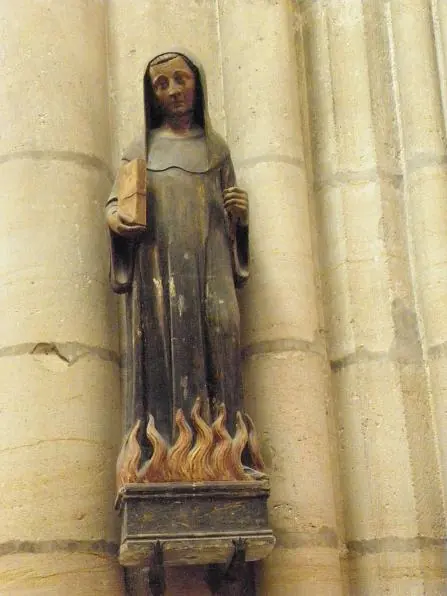
- Souls in flames at his feet: the souls in purgatory, for whom he founded All Souls' Day.
- Skull: prayer for the dead.
- Book: his writings and his rule over a learned community.
Statues in French churches often show him above carved flames, like the one at Troyes below.
Feast day and where he is honored
We remember him on January 1, the day he died. He was buried at Souvigny beside Majolus. In 1793 revolutionaries burned the relics of both abbots "on the altar of the fatherland," as the Catholic Encyclopedia records; the tomb has since been restored with their effigies. His successor at Cluny was St. Hugh. See other saints of these days on our feast days page.

Praying with St. Odilo
We have not found a traditional prayer addressed to St. Odilo in the standard prayer books. The best way to honor him is to do what he asked of his monks: pray for the dead. Our prayer for the souls in purgatory is a good place to begin, and we can read more on what purgatory is.
Let us ask St. Odilo to pray for all the faithful departed, especially those who have no one to remember them, and to make us as generous to the poor as he was in the years of famine.
Frequently asked questions
Who was St. Odilo of Cluny?
A nobleman of Auvergne who became a monk of Cluny in 991 and its abbot in 994, ruling until his death in 1049. Under him Cluny became the leading monastery of the West, the number of its houses grew from thirty-seven to sixty-five, and Fulbert of Chartres called him the 'Archangel of the Monks.'
Did St. Odilo start All Souls' Day?
Yes. He ordered the monasteries of Cluny to pray for all the faithful departed on November 2, the day after All Saints, with alms, prayers and Masses. The Catholic Encyclopedia dates the decree after 1030 rather than the often-quoted 998. The custom spread from Cluny to the whole Western Church.
When is the feast of St. Odilo?
He died on the night of December 31, 1048, to January 1, 1049, and is usually remembered on January 1. Some calendars keep December 31, January 2, January 3, January 19 or February 6, and French Benedictines honor him with St. Majolus on May 11.
Why is St. Odilo the patron of the souls in purgatory?
Because he founded the commemoration of all the faithful departed and spent his life praying for the dead.
Keep exploring
Sources
- St. Odilo, The Catholic Encyclopedia (1911). Coadjutor in 991, abbot in 994; thirty-seven to sixty-five houses; All Souls 'probably not in 998 but after 1030'; Peter Damian and the canonization; the relics burned in 1793; feast dates
- Alban Butler, The Lives of the Fathers, Martyrs, and Other Principal Saints, vol. 1 (January), 1842: St. Odilo, or Olon. His saying about tenderness and severity, the famine of 1006 and Henry II's crown, his ecstasy at the Te Deum, his death on sackcloth and ashes
- Saint Odilon de Cluny, Nominis (French bishops' conference). His healing from childhood paralysis through Our Lady, and French feast dates
- Den hellige Odilo av Cluny (~962–1048), Den katolske kirke (Norway). His depiction with a skull and souls in purgatory, and the widely scattered feast dates