Blessed Thomas Pickering, Benedictine Lay Brother and Martyr
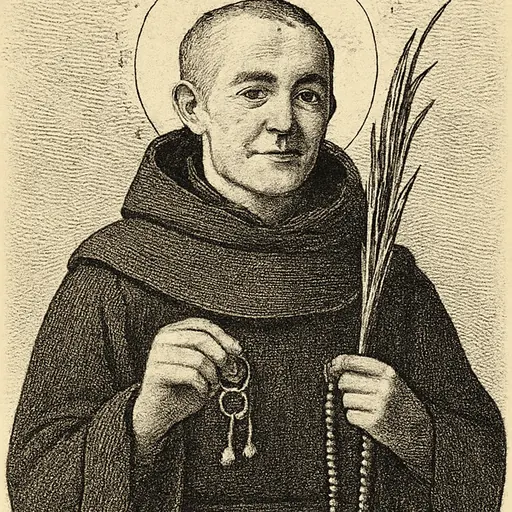
Blessed Thomas Pickering (about 1621–1679) was an English Benedictine lay brother, steward to the monks who served Queen Catherine of Braganza's chapel in London. Falsely accused by Titus Oates of plotting to shoot King Charles II, he was hanged, drawn and quartered at Tyburn on May 9, 1679, protesting his innocence with a smile. Pope Pius XI beatified him in 1929, and we keep his feast on May 9.
Who was Blessed Thomas Pickering?
Blessed Thomas Pickering was a Benedictine lay brother who died at Tyburn for a crime that never happened. He was a quiet, kindly man who kept house and accounts for the monks serving the Catholic queen's chapel in London. When Titus Oates invented the "Popish Plot" in 1678, Pickering was named as the man who was to shoot King Charles II. On Oates's word alone he was condemned, and on May 9, 1679, he was hanged, drawn and quartered.
Pope Pius XI beatified him in 1929 with other martyrs of England and Wales. We keep his feast on May 9.

A lay brother at the queen's chapel
He came from an old Westmorland family; Challoner notes that his father lost his life fighting for the King in the Civil War. He went abroad to the English Benedictine monastery of St. Gregory at Douai, in Flanders, and took vows there as a lay brother in 1660. A lay brother is a monk who is not a priest. He shares the monastery's prayer and does its practical work.
In 1665 he was sent to London as steward, or procurator, to the small community of Benedictines who served the chapel royal of Queen Catherine of Braganza, the Portuguese wife of Charles II. There he came to be known personally by both the Queen and the King. In 1675, under pressure from Parliament, Charles ordered the Benedictines to leave England. Pickering was allowed to stay, the Catholic Encyclopedia thinks because he was not a priest.
Accused by Titus Oates
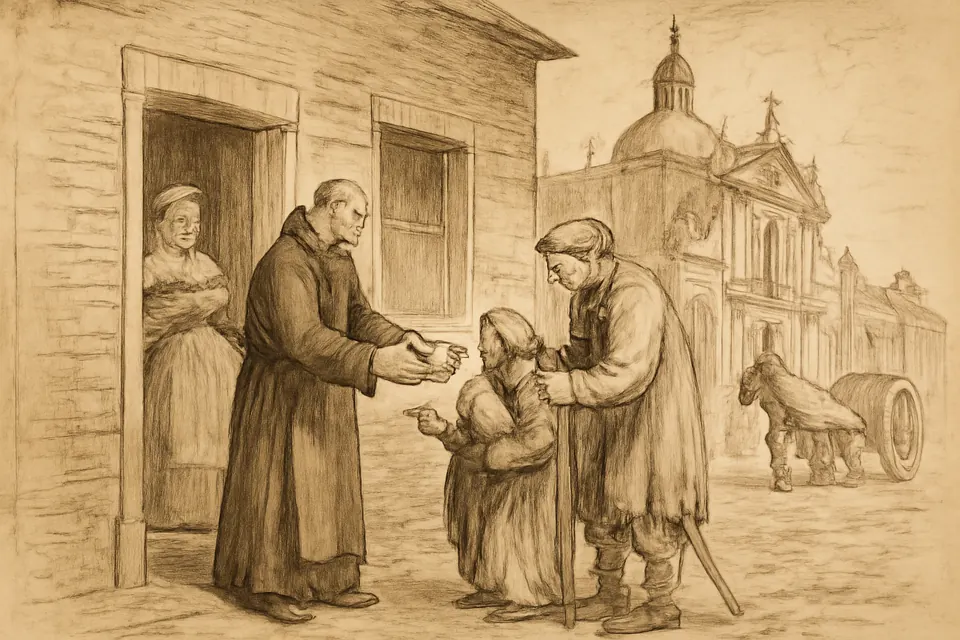
In the autumn of 1678 Titus Oates began to "reveal" a Jesuit plot to murder the King. London fell into a panic, and dozens of innocent Catholics were arrested. Pickering was tried on December 17, 1678, with the Jesuit Father William Ireland and a layman, John Grove.
Challoner gives the charge. Oates and his partner William Bedloe swore that Pickering and Grove had been engaged to shoot the King as he walked in St. James's Park; Grove was to be paid £1,500, and Pickering 30,000 Masses. They claimed he had once had the King in his sights, but the flint of his pistol was loose; another time there was no powder in the pan; a third time the gun held only bullets. Pickering answered that he had never fired a pistol in his life.
No evidence was offered except Oates's word. The Queen herself declared publicly that she believed him innocent. The jury found all three guilty.
Reprieved and then given up
Charles II did not believe the plot. The Catholic Encyclopedia describes a king torn between the wish to save innocent men and fear of the mob. Twice within a month the three prisoners were ordered for execution and then reprieved. In the end Ireland and Grove were executed on January 24, 1679, and the King hoped that would be enough to spare Pickering. It was not. On April 26, 1679, the House of Commons petitioned for his death, and Charles gave way.
His death at Tyburn
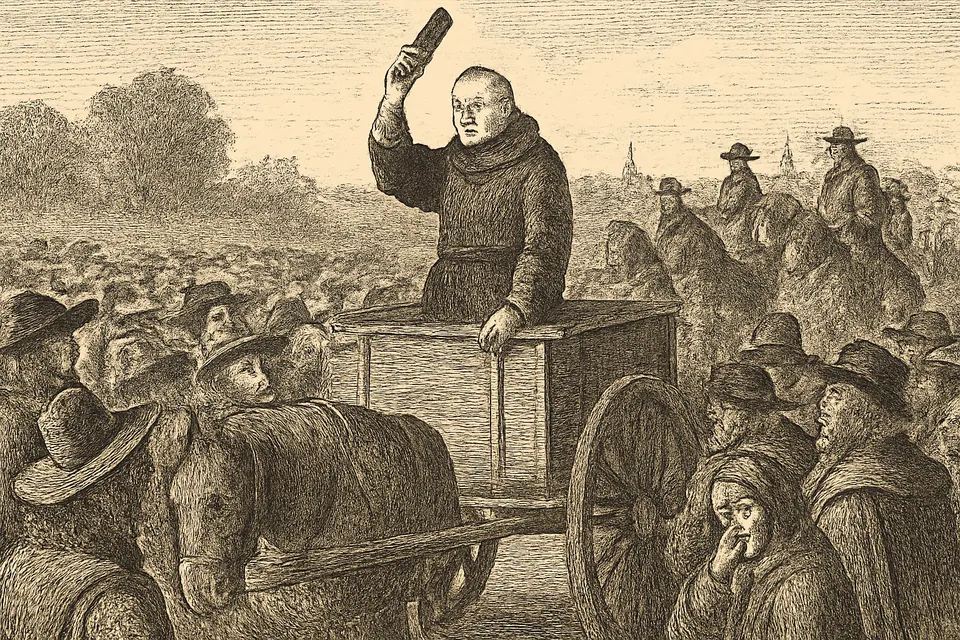
He was drawn to Tyburn on May 9, 1679. Challoner, writing from the accounts of those who were there, says he showed "very great joy" that he could give his life where his religion was his only guilt. When someone called him a priest, he smiled and said, "No, I am but a lay-brother." He prayed for his accusers. At the very end, when men in the crowd shouted at him to confess, he pushed up his cap and turned a smiling face toward them:
Is this, said he, the countenance of a man that dies under so gross a guilt?
Challoner says he "went smiling off the stage," fifty-eight years old, mourned by many who thought him "a very harmless man, and of all men living the most unlikely" to plan a murder.
Relics and memory
- Relic: The Catholic Encyclopedia records that a small piece of cloth stained with his blood was kept among the relics of Downside Abbey in Somerset, the community that grew from St. Gregory's at Douai, his own monastery.
No miracles are attached to his name. His witness was his innocence and his good humor before death. The English Benedictines count him among their martyrs, and he was beatified in 1929 with the monks whose lives Bede Camm gathered in Nine Martyr Monks.

Symbols of Blessed Thomas Pickering in art
- The black Benedictine habit with its wide hood, the dress of a monk of the English Congregation;
- The martyr's palm;
- The rope or halter of a man hanged at Tyburn;
- Keys, a fitting sign for the monastery steward who kept the house.
The engraving on this page shows him in the hooded habit. In group pictures of the martyrs of 1679 he is the brother in black, without priestly vestments.
Feast day and prayer
We keep the feast of Blessed Thomas Pickering on May 9. See the feast day calendar.
We know of no traditional prayer to him. Let us ask Blessed Thomas to pray for all who are falsely accused, for prisoners waiting on unjust sentences, and for the lay brothers and sisters whose hidden work keeps religious houses alive.
Frequently asked questions
Who was Blessed Thomas Pickering?
A lay brother of the English Benedictine monastery of St. Gregory at Douai, from an old Westmorland family. From 1665 he was steward to the Benedictines serving the Catholic queen's chapel in London. Titus Oates accused him of a plot to murder Charles II, and he was executed at Tyburn in 1679.
What was Thomas Pickering accused of?
Oates and William Bedloe swore that he and John Grove had been hired to shoot the King in St. James's Park, and that his pistol had failed three times. No evidence but their word was produced. Pickering answered that he had never fired a pistol in his life. The jury still found him guilty.
When was Thomas Pickering beatified?
Pope Pius XI beatified him in 1929, together with other English martyrs, among them nine Benedictine monks. Before that, older books such as the Catholic Encyclopedia call him "Venerable."
When is the feast of Blessed Thomas Pickering?
May 9, the anniversary of his death at Tyburn in 1679.
Keep exploring
Sources
- Catholic Encyclopedia (1911): Ven. Thomas Pickering. His family, profession at Douai in 1660, work for the queen's chapel, the 1675 proclamation, the queen's belief in his innocence, the Commons petition of April 26, 1679, and the blood-stained cloth at Downside
- Richard Challoner, Memoirs of Missionary Priests (ed. J. H. Pollen, 1924). The trial of December 17, 1678, the charge of the three misfiring pistols, and his words at Tyburn, quoted here
- Nine Martyr Monks: The Lives of the English Benedictine Martyrs Beatified in 1929 (Bede Camm, 1931), catalog record. Confirms his beatification in 1929