St. Richard Gwyn

St. Richard Gwyn (about 1537–1584), also called Richard White, was a Welsh schoolmaster and poet who returned to the Catholic faith, spent four years in prison for refusing to attend Protestant services, and was hanged, drawn and quartered at Wrexham. Pope Paul VI canonized him in 1970 among the Forty Martyrs of England and Wales. His feast is October 17.
Who was St. Richard Gwyn?
St. Richard Gwyn was a Welsh schoolmaster and poet, a husband and father, who spent four years in Welsh jails for the Catholic faith and was executed at Wrexham in October 1584. English records call him Richard White, since gwyn means "white" in Welsh. He is honored as the first martyr of Wales under Queen Elizabeth I, and Pope Paul VI canonized him on October 25, 1970, with the Forty Martyrs of England and Wales, among them St. Edmund Campion and St. Margaret Clitherow.
What stands out in the contemporary account of his death is his good humor. He joked with the court, with the jury and even with the hangman, and his fellow prisoners said they never knew him more cheerful than after he was condemned.
The life of St. Richard Gwyn
A Welsh scholar and teacher
He was born at Llanidloes in Montgomeryshire around 1537. After a short time at Oxford he studied at St. John's College, Cambridge, until about 1562, then came home and kept school in the Wrexham district, at Overton in Flintshire and other villages. The Catholic Encyclopedia says he gained a reputation as a Welsh scholar. He married Catherine, and they had six children, three of whom outlived him.
For a time he conformed to the new Church of England. When the first priests trained at Douai came into Wales, he was reconciled to the Catholic Church, and his absence from Protestant services was soon noticed.
Prisoner for the faith
The Dictionary of Welsh Biography says he was arrested at Wrexham in 1579 and escaped, then was taken again in July 1580. At Ruthin he lay three months in double chains, Challoner writes, and at the assizes he was offered a pardon if he would go to church just once. He refused.
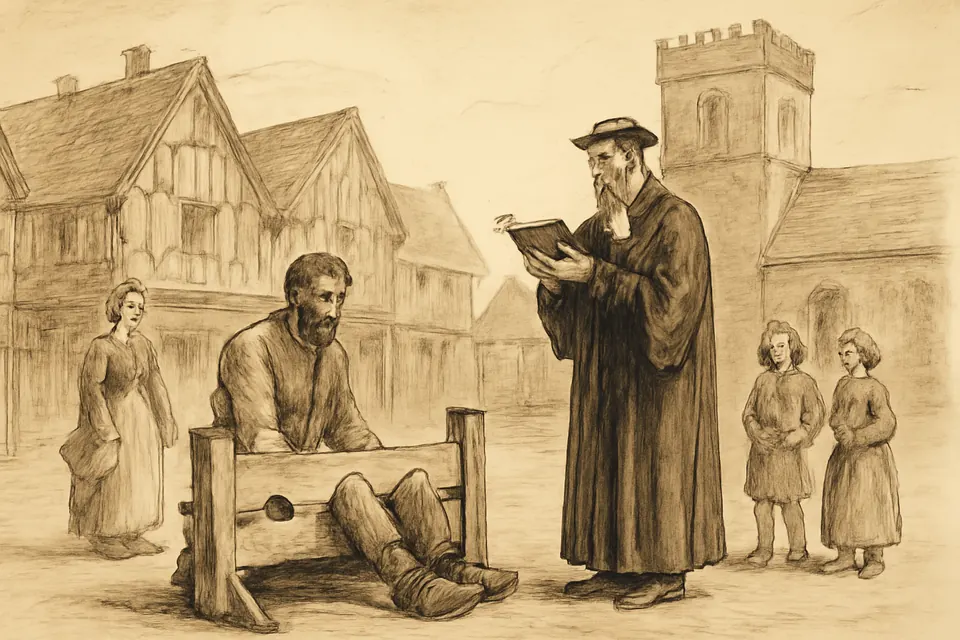
At the Wrexham assizes of May 1581 the judge, Sir George Bromley, had him carried into church by force. He protested all the way, and in church he made so much noise that no one could hear the minister. The judge had him set in the stocks in the market place. When he was later charged for disturbing the service, Challoner records that the clerk reading the indictment suddenly could not see the letters. "Take care lest the Papists make a miracle of this," the judge sneered.
In 1583 he and his fellow prisoners John Hughes and Robert Morris were sent to the Council of the Marches and tortured at Bewdley and Bridgnorth to make them name who had reconciled them. They were then returned to Wrexham.
Trial and death
He was tried on October 9, 1584, on the evidence of witnesses the contemporary account calls perjured, and condemned for treason. Even then his wit did not leave him. When a jury of nobodies replaced the gentlemen who refused to serve, he called it, in Latin and Welsh wordplay, "a tales, quales non est in Wales." His wife Catherine told the court, "If you lack blood, you may take my life as well as my husband's."
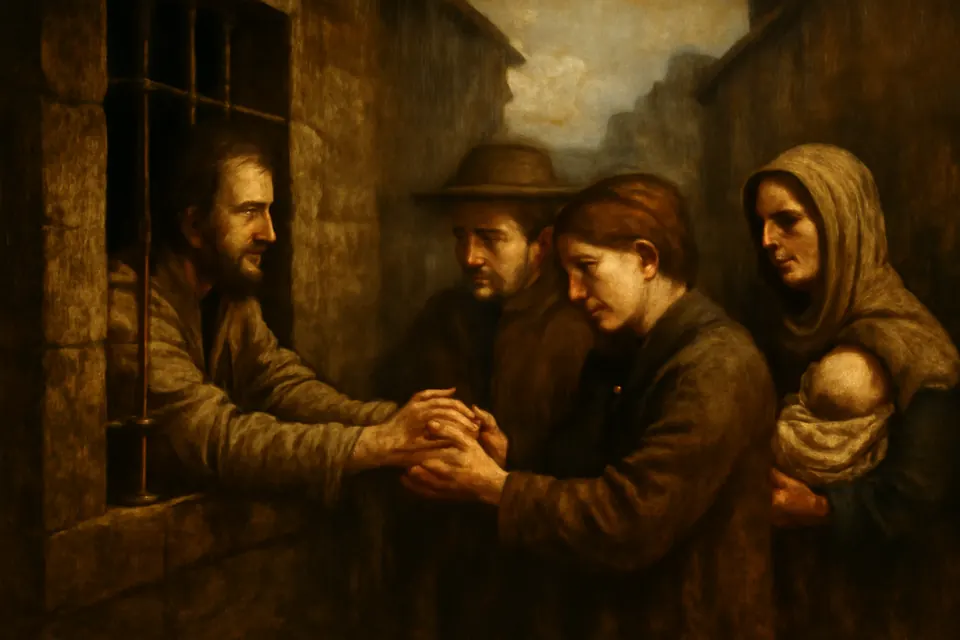
On the morning of his death he forbade her to curse the man who had hounded him, telling her that "if they did not forgive now freely all their labours would be lost." He blessed the children in the jail and reached through the window to take the hands of those outside. To a former pupil in tears he said, "Weep not for me, for I do but pay the rent before the rent-day." He gave his wife eleven shillings and his rosary, "all the wealth he left her."
He was drawn to the gallows saying the rosary on the end of the string that held up his irons. Rain fell all the way. At the gallows he said, "God is merciful unto us; behold the elements shed tears for our sins." He forgave the hangman, and he told the vicar he acknowledged Elizabeth as lawful Queen of England. Challoner records that he twice spoke the name of Jesus during his butchery. His head and one quarter were set on Denbigh Castle.
Miracles and signs
No miracle is required for a martyr's canonization, and none was approved for him. The old accounts record two signs as reported by witnesses: the clerk's sudden blindness at the 1581 assizes, and the rain that began when he was laid on the hurdle and stopped at the moment of his death.
His poems
The Catholic Encyclopedia notes five carols and a funeral ode he wrote in Welsh. The Dictionary of Welsh Biography describes the carols as poems defending the Catholic faith and attacking Protestantism.
Symbols of St. Richard Gwyn in art
Modern images show him as a layman in Elizabethan dress, not as a priest:
- A ruff and doublet: the clothes of a schoolmaster and gentleman of his day.
- A rosary: he prayed it on the way to his death and left his beads to his wife.
- Chains or shackles: for his four years in prison.
- A martyr's palm: the sign of all martyrs.
No portrait of him from his own lifetime is known.
Feast day and places
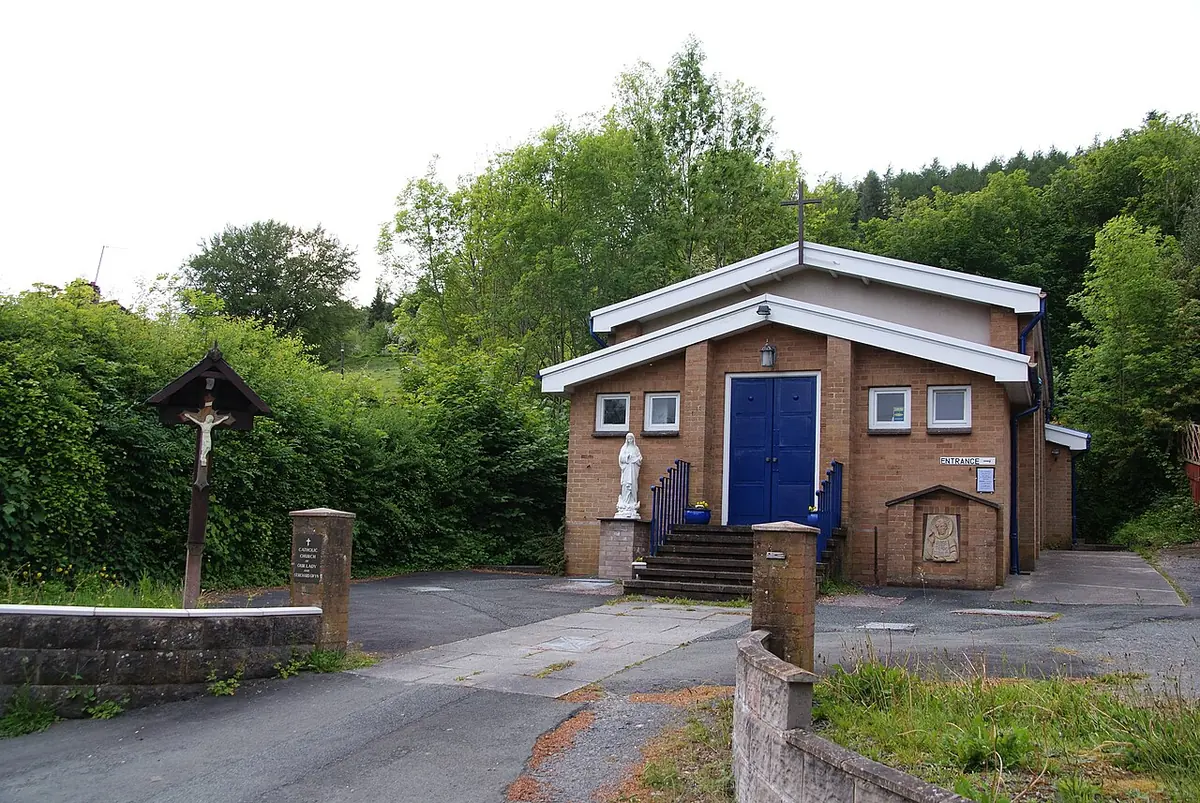
We keep his feast on October 17, and he is honored with the Forty Martyrs of England and Wales. He was executed in the Beast Market of Wrexham, where the Catholic cathedral of Our Lady of Sorrows now stands in the town where he suffered. See our feast days page for other saints of October.

Prayer to St. Richard Gwyn
No traditional prayer to him has come down to us. Let us pray with his own words, "In the name of Jesus," which he spoke as he left the prison, and ask him to obtain for us his gift of forgiving freely. St. Richard Gwyn, pray for teachers, for the people of Wales, and for all who suffer for their faith.
Frequently asked questions
When is the feast day of St. Richard Gwyn?
October 17, the date Bishop Challoner gives for his death. The contemporary account says he died on Thursday, October 15, 1584. He is also honored with the Forty Martyrs of England and Wales.
Why was St. Richard Gwyn executed?
He refused to attend Protestant services and would not acknowledge Queen Elizabeth I as supreme head of the Church. In October 1584 he was convicted of high treason on the evidence of witnesses whom the contemporary account calls perjured, and he was hanged, drawn and quartered at Wrexham.
Why is he also called Richard White?
Gwyn is Welsh for "white." English records, the Catholic Encyclopedia and Bishop Challoner all call him Richard White.
Was St. Richard Gwyn a priest?
No. He was a layman, a married schoolmaster with children. He is one of the lay martyrs among the Forty Martyrs of England and Wales, with St. Margaret Clitherow and others.
Keep exploring
Sources
- Catholic Encyclopedia (1912): Ven. Richard White (Edwin Burton). Birth at Llanidloes, Cambridge, his six children, Ruthin gaol in 1579, torture at Bewdley and Bridgnorth, trial on October 9, and the five carols and funeral ode
- The Rambler, new series vol. 3 (September 1860): The Life and Martyrdom of Mr. Richard White, Schoolmaster. The contemporary account of his trial and death; the quotations at the jail, on the way and at the gallows, and the rain
- Richard Challoner, Memoirs of Missionary Priests (1924 edition), on archive.org. Being carried into church in May and set in the stocks, the clerk's sudden blindness, the date of October 17, and the disposal of his quarters
- Dictionary of Welsh Biography: Gwyn, Richard (c. 1537–1584). His arrest in 1579 and escape, rearrest in July 1580, and his carols
- Paul VI, Homily for the canonization of the Forty Martyrs of England and Wales, October 25, 1970 (Italian)