St. Antoine Daniel, First Jesuit Martyr of the Huron Mission

St. Antoine Daniel (1601–1648) was a French Jesuit who spent fourteen years among the Huron in present-day Ontario. When the Iroquois attacked his mission on July 4, 1648, he baptized all who asked, sent his people to flee and walked out to meet the attackers, who killed him. He is one of the North American Martyrs, honored on October 19.
Who was St. Antoine Daniel?
St. Antoine Daniel was a French Jesuit who gave fourteen years of his life to the Huron people, the Wendat, in what is now Ontario, and died for them. He was the first of the Jesuit missionaries to the Hurons to be killed, and the second Jesuit martyr of New France after St. Isaac Jogues. On a summer morning in 1648, when Iroquois warriors broke into his mission, he did not run. He baptized everyone who asked, told his people to flee, and walked out alone to meet the attackers.
The Church honors him as one of the eight North American Martyrs, canonized together in 1930 with St. John de Brébeuf, St. Isaac Jogues, St. Gabriel Lalemant, St. Noël Chabanel, St. Charles Garnier, St. René Goupil and St. John de Lalande.
The life of St. Antoine Daniel
From Dieppe to the Jesuits
He was born at Dieppe, the Norman port, on May 27, 1601. He studied philosophy and had begun the study of law when he entered the Jesuit noviciate at Rouen on October 1, 1621. For four years he taught younger boys at the Jesuit college in Rouen, then studied theology at the Collège de Clermont in Paris and taught at Eu.
While he was at Rouen, a young Huron named Amantacha was baptized there. The Dictionary of Canadian Biography thinks the young man's presence may have stirred Daniel's call to the missions, though it is not proved that Daniel prepared him for baptism.
The journey to Huronia
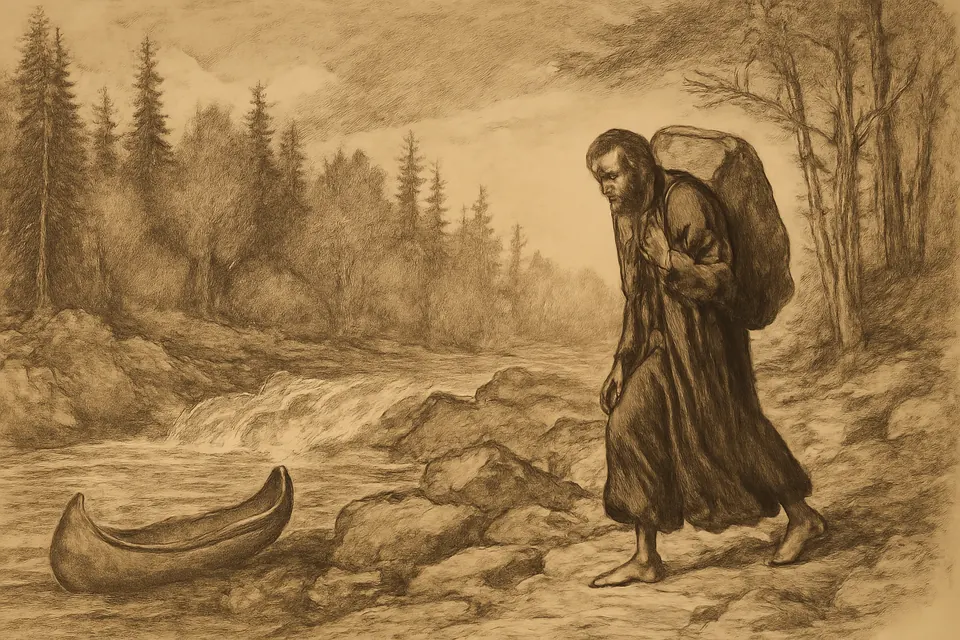
He sailed in 1632 to Cape Breton, where his brother, Captain Charles Daniel, commanded the French post. In 1633 he reached Quebec and was assigned with John de Brébeuf to the Huron mission, and the next year they set out up the rivers. The journey by canoe and portage was brutal. In 1634, and again in 1638, his guides abandoned him on the way, alone and sick; he credited God's protection for bringing him through.
Teaching in the Huron tongue
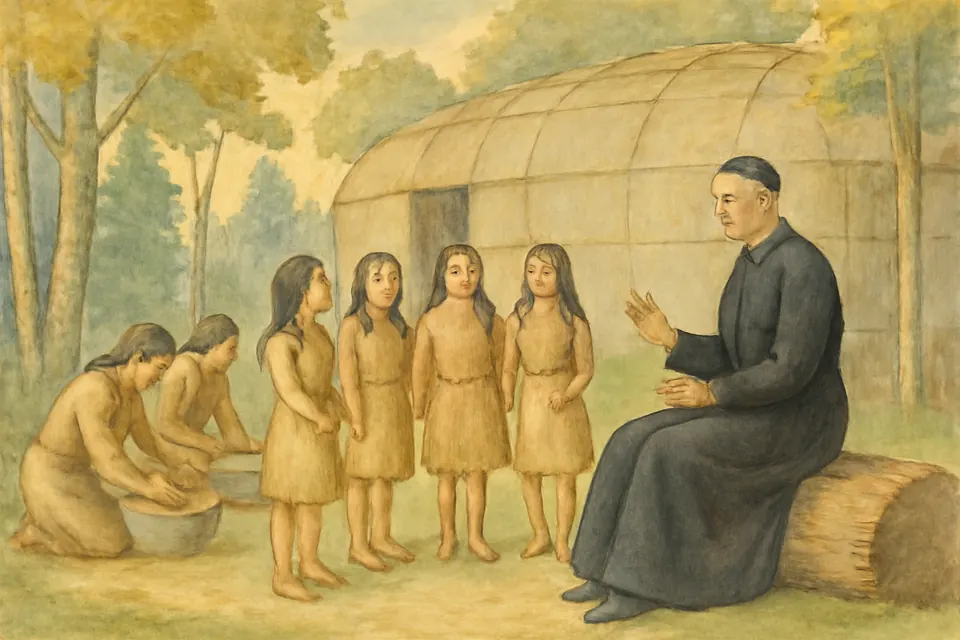
Daniel learned the Huron language quickly. He soon had the village children singing the Our Father and the Creed in their own tongue. The Hurons called him Anwennen. His gentleness and gift for teaching led his superiors to send him to Quebec around 1636 to run a small seminary for Huron boys. After two years the plan was given up, and he went back to the villages, where he worked for about ten more years.

The martyrdom of St. Antoine Daniel
In 1648 Daniel was in charge of the mission of Saint-Joseph at Teanaostaiaë, near present-day Hillsdale in Simcoe County. On the morning of July 4, while most of the Huron men were away, an Iroquois war party struck the town just as he was finishing Mass.
He did everything he could for his people. The Catholic Encyclopedia tells how he hurried to the chapel, where the women, children and old men had gathered, gave them general absolution and baptized the catechumens. Many who had held back from baptism now begged for it. As the attackers broke into the town, he told his flock, in the words the Dictionary of Canadian Biography gives, to "Flee," and to "keep the faith to your dying breath."

Then he went out toward the enemy alone. The warriors stopped for a moment, astonished, and then shot him with arrows; a bullet passed through his chest, and he fell with the name of Jesus on his lips. They threw his body into the burning chapel. Nothing of it was ever recovered.
His superior, Father Paul Ragueneau, wrote of him to the Jesuit general as "a truly remarkable man, humble, obedient, united with God, of never failing patience and indomitable courage in adversity" (as the Catholic Encyclopedia quotes the Jesuit Relations).
After his death
The Relation of 1649 records two occasions when Daniel was seen after his death encouraging his fellow missionaries; these are reported accounts from the Jesuits who worked beside him. Within two years the Huron mission was destroyed: Brébeuf, Lalemant, Garnier and Chabanel were killed in 1649. Pope Pius XI beatified the eight martyrs on June 21, 1925, and canonized them on June 29, 1930.
Symbols of St. Antoine Daniel in art
He appears with the other North American Martyrs in the black cassock of a Jesuit, holding a crucifix and the martyr's palm. Images of his death show him walking out of a burning chapel toward the attackers, sometimes pierced by arrows, often in a white surplice and stole, since he was killed just after Mass. In group pictures of the eight martyrs he is hard to tell apart; look for the burning chapel or the arrows.
Feast day and where he is honored
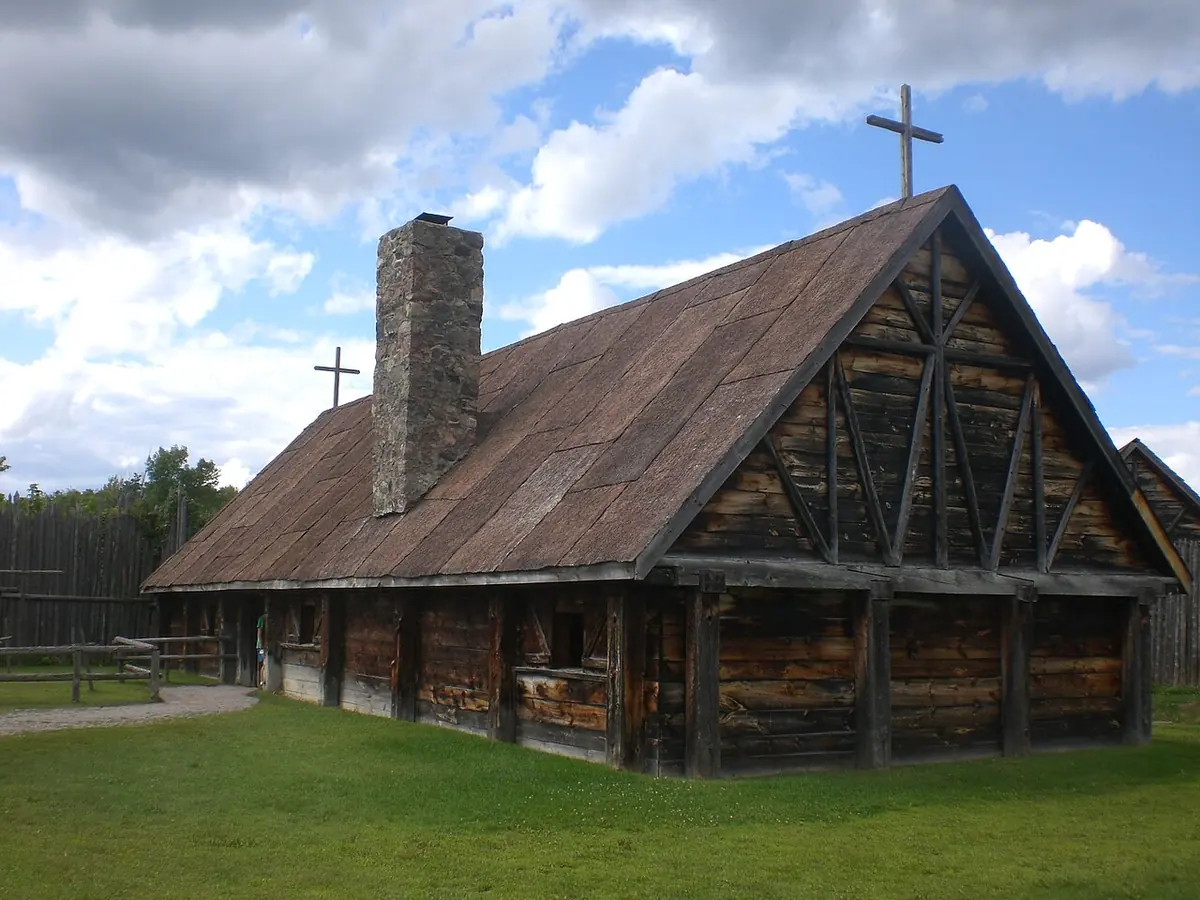
We keep his feast with his companions on October 19 in the General Roman Calendar and in the United States; Canada celebrates the Canadian Martyrs on September 26. Because his body burned with his chapel, there are no relics. The Martyrs' Shrine at Midland, Ontario, beside the reconstructed mission of Sainte-Marie among the Hurons, is the center of devotion to the eight. See more saints of October on our feast days page.

Praying with St. Antoine Daniel
The Church prays for the martyrs together in the collect of October 19, asking that through their intercession the faith may grow. We know of no separate traditional prayer to St. Antoine Daniel, so let us ask his help in our own words: St. Antoine Daniel, you would not leave your people when danger came; pray for missionaries, for teachers of children, and for all who are called to stay at their post for love of Christ.
Frequently asked questions
Who was St. Antoine Daniel?
A Jesuit priest from Dieppe in Normandy, missionary to the Huron people from 1634, and the first of the Jesuit martyrs of Huronia. He was killed at the mission of Saint-Joseph (Teanaostaiaë) on July 4, 1648.
When is the feast of St. Antoine Daniel?
October 19, with Sts. John de Brébeuf, Isaac Jogues and their companions, in the General Roman Calendar and in the United States. Canada keeps the Canadian Martyrs on September 26.
How did St. Antoine Daniel die?
During an Iroquois attack on his mission he gave general absolution, baptized the catechumens, urged his people to flee and keep the faith, and walked out alone toward the attackers. He was struck by arrows and a bullet, and his body was thrown into the burning chapel.
Was St. Antoine Daniel canonized?
Yes. Pope Pius XI beatified the eight North American Martyrs in 1925 and canonized them together on June 29, 1930.
Keep exploring
Sources
- Léon Pouliot, DANIEL, ANTOINE, Dictionary of Canadian Biography, vol. 1. His studies, the noviciate at Rouen in 1621, the journeys of 1634 and 1638, the Quebec seminary for Huron boys, his Huron name, his words at the end and the Relation of 1649
- Catholic Encyclopedia (1908): Anthony Daniel. His birth and death dates, his brother Captain Charles Daniel at Cape Breton, his death, and Father Ragueneau's words about him