St. Hedwig of Silesia
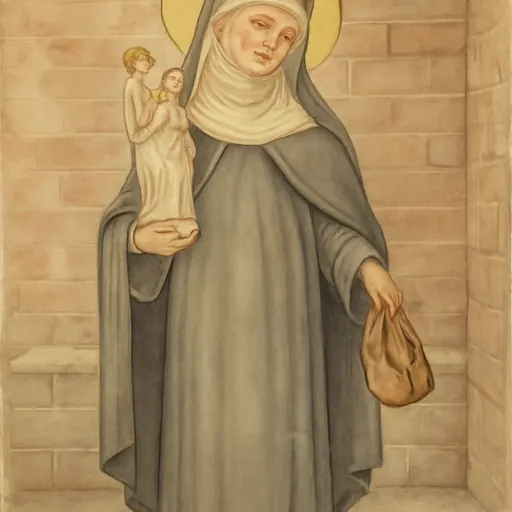
St. Hedwig of Silesia (about 1174 to 1243) was a German-born duchess who married Henry the Bearded, duke of Silesia, founded the Cistercian convent of Trzebnica (Trebnitz) and spent her widowhood there in prayer and service of the poor. She is the patron saint of Silesia, and her feast day is October 16. She is a different saint from St. Jadwiga, the 14th-century queen of Poland.
Who was St. Hedwig?
Hedwig was a Bavarian noblewoman who became duchess of Silesia, in what is now southwestern Poland, and one of the most loved saints of Central Europe. She was born about 1174 at the castle of Andechs, the daughter of Count Berthold IV of Andechs, and married at twelve to Henry, heir to the duchy of Silesia. For more than fifty years she worked beside him, founding monasteries and hospitals. After his death in 1238 she lived as a penitent at the Cistercian convent of Trzebnica, which she had persuaded him to found. She died there on October 15, 1243.

Her family was remarkable. One sister, Gertrude, married King Andrew II of Hungary and was the mother of St. Elizabeth of Hungary, so Hedwig was Elizabeth's aunt. Another sister, Agnes, became the queen of King Philip II of France in a marriage the pope refused to recognize. Two of her brothers became bishops.
Hedwig or Jadwiga?
People searching for "St. Hedwig" often find two different women, because Jadwiga is simply the Polish form of the name. Our Hedwig, the duchess of Silesia, is called Jadwiga Śląska in Polish. The other is St. Jadwiga of Poland, born about 1374, daughter of King Louis of Hungary, who was crowned ruler of Poland in 1384, married the Lithuanian grand duke Jogaila (Władysław Jagiełło) and so opened the way for the baptism of Lithuania. St. John Paul II canonized the queen in Kraków on June 8, 1997, and Poland keeps her memorial on that date. Butler's Lives of the Saints, written long before, already added a note to Hedwig's life to separate the two.
The life of St. Hedwig
Wife, mother and duchess
Henry succeeded his father as duke in 1202. The Catholic Encyclopedia describes him as an energetic prince who extended his lands and invited settlers and religious orders into Silesia. Hedwig shared in his government, and her prudence and piety gave her real influence. The couple endowed the Cistercians of Leubus and other houses, and Hedwig brought Dominicans and Franciscans to Silesian towns. Henry founded the Hospital of the Holy Spirit in Breslau (Wrocław), and Hedwig herself nursed leper women at the hospital in Neumarkt.
At her urging Henry founded, in 1202, the convent of Cistercian nuns at Trebnitz, now Trzebnica, the first house of religious women in Silesia. Butler says she gave her whole dowry toward it. Their daughter Gertrude later became its abbess.
Hedwig bore seven children. After the last one, in 1209, she and Henry made a vow of continence before the bishop of Breslau. Henry stopped shaving, like the Cistercian lay brothers, and was known ever after as Henry the Bearded.
Penance and charity
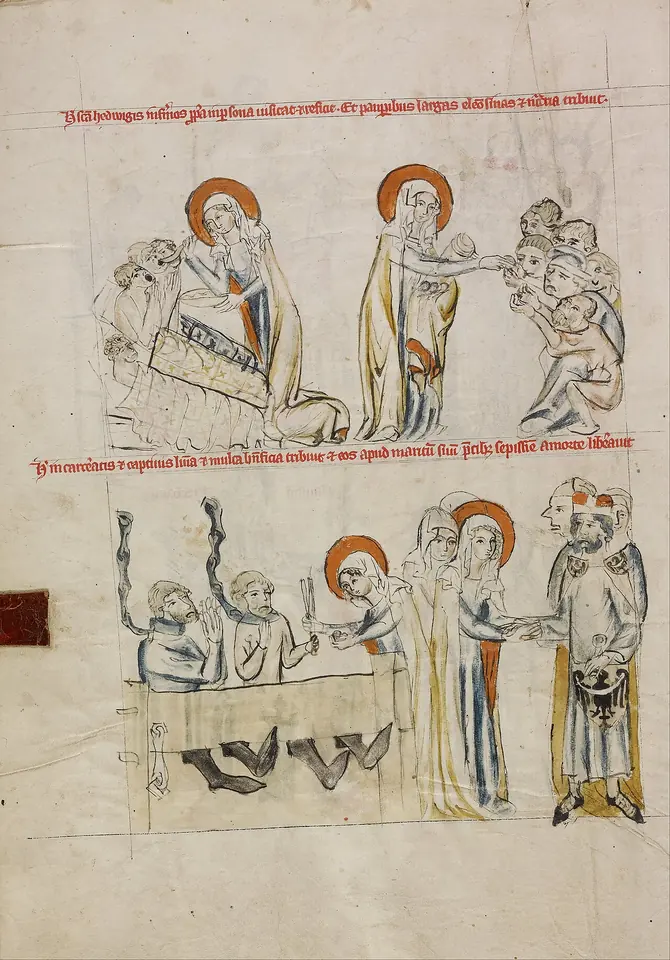
Butler, drawing on her medieval life, describes a duchess who lived in her own palace more strictly than most monks. She fasted every day except Sundays and great feasts, ate no meat for forty years, and slept on the floor beside a bed she never used. She went barefoot to church through ice and snow until her feet bled, carrying her shoes so she could slip them on if she met anyone. Wherever she traveled, thirteen poor people came with her, in honor of Christ and the apostles, and she served them on her knees before she ate.
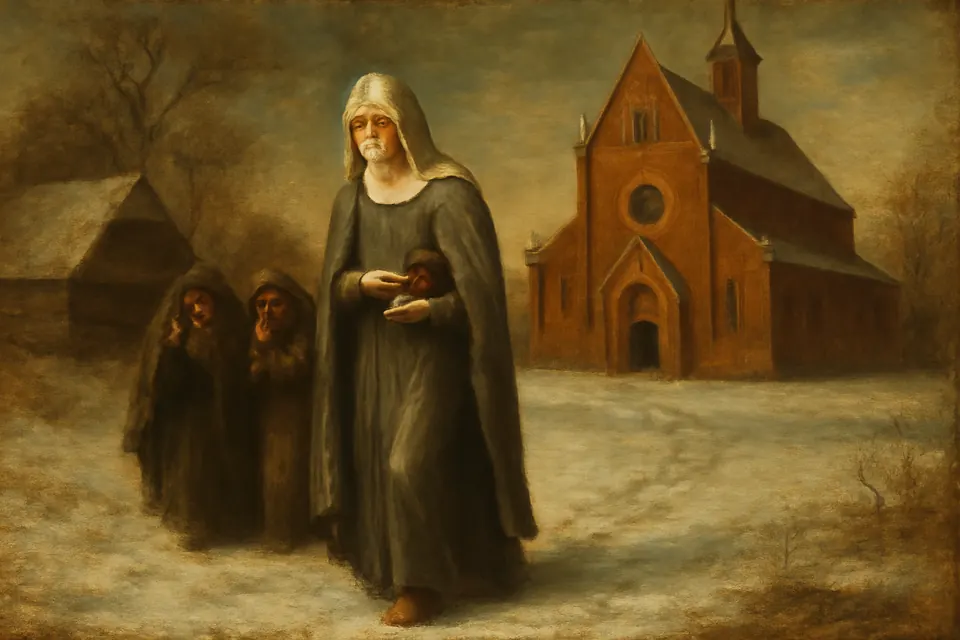
She could be gentle and firm at once. Once a nun told her that her threadbare habit should be given to the poor; Hedwig answered, in Butler's translation, "If this habit gives any offence, I am ready to correct my fault," and changed it at once.
Peacemaker
Her life was full of trials. In 1227 Henry was ambushed and badly wounded. Two years later Duke Conrad of Masovia seized him during Mass and carried him off as a prisoner. When their son prepared to free his father by force, Hedwig went to Conrad herself. The Catholic Encyclopedia says her very appearance so impressed Conrad that he released the duke. She also tried, without success, to reconcile her sons Henry and Conrad when they took up arms against each other.
Widowhood and the Battle of Legnica
Henry died in 1238. Hedwig put on the gray habit of the Cistercians at Trzebnica and lived under the obedience of her daughter, the abbess. She never took vows, so that she could keep control of her income and go on giving it away.
In 1241 the Mongol armies broke into Poland. Her son, Duke Henry II the Pious, met them at Legnica on April 9 and was killed in battle. Butler records the prayer Hedwig made when the news came:
I thank thee, my God, for having given me such a son who always loved and honored me, and never gave me the least occasion of displeasure. To see him alive was my great joy; yet I feel a still greater pleasure in seeing him, by such a death, deserve to be for ever united to thee in the kingdom of thy glory. O my God! with my whole heart I commend to thee his dear soul.
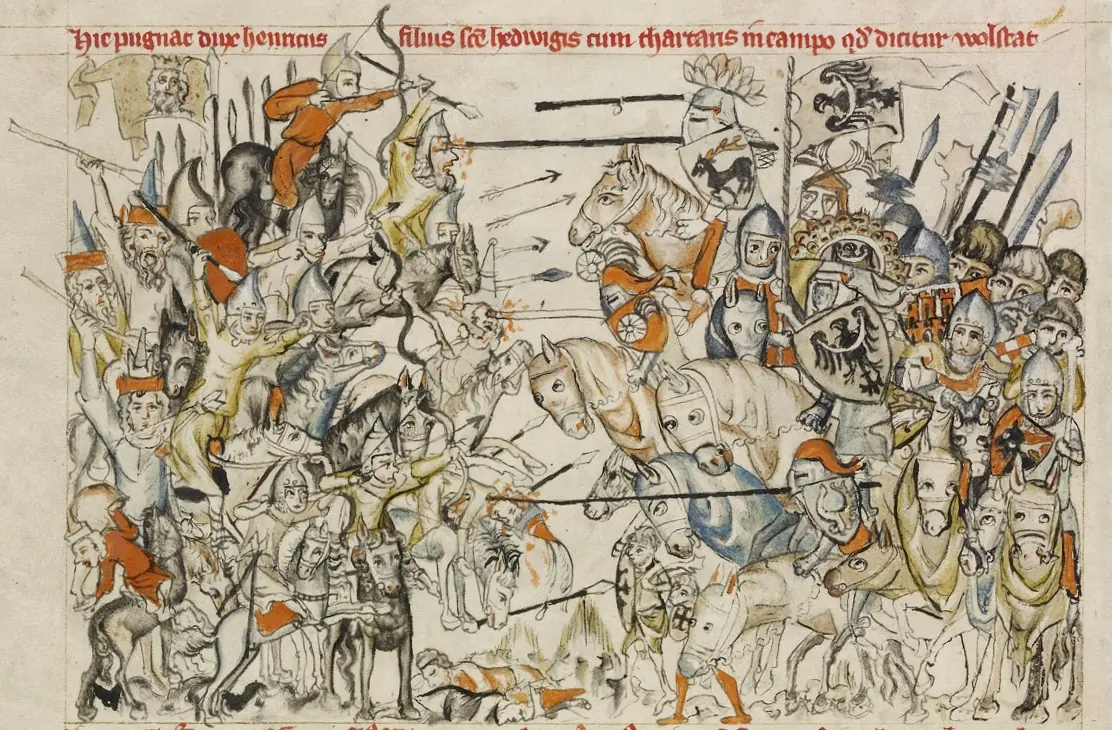
She died two years later, on October 15, 1243, and was buried in the convent church.
The miracles of St. Hedwig
Her medieval life, written for her canonization, credits her with healings and prophecies. Butler mentions a blind nun of Trebnitz who received her sight when Hedwig blessed her with the sign of the cross, other cures, and her foreknowledge of her own death. Her canonization by Clement IV followed an inquiry into her life and wonders, but the sources we could check don't say which miracles were examined, so this encyclopedia labels these stories traditional. The Catholic Encyclopedia gives the date of the canonization as March 26, 1267, and says her remains were raised to the altar on August 25 of that year.
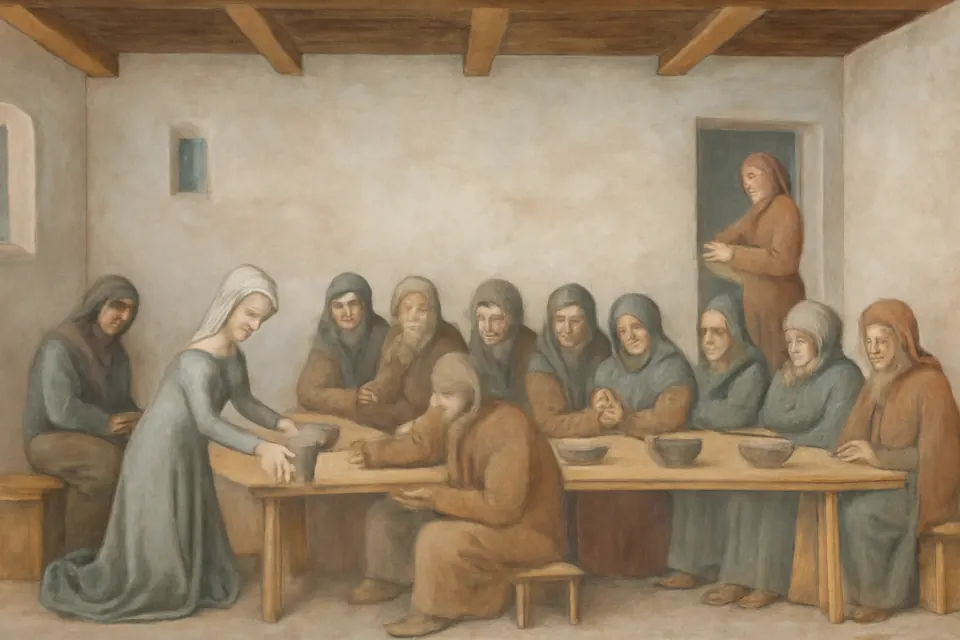
Why St. Hedwig is the patron saint of Silesia
Hedwig spent her adult life in Silesia, founded and endowed its first convent of women, nursed its sick and buried her husband and son there. The Catholic Encyclopedia calls her the patroness of Silesia. Germans and Poles, who have both lived in Silesia and both fought over it, honor her equally. She is also a patron of widows, since she spent her last years as one, and of duchesses. Find more on our patron saints page.
In 1848 a priest of Breslau, Robert Spiske, founded an association of women under her patronage that grew into the Sisters of St. Hedwig, who cared for orphaned and abandoned children.
Symbols of St. Hedwig in art
Hedwig's images go back to the century after her death, and they are easy to recognize:
- Shoes in her hand: the sign of her barefoot penance, and the most distinctive attribute.
- A small statue of the Virgin Mary: the Hedwig Codex shows her holding one, a sign of her love for the Mother of God.
- The gray habit and white veil of a widow: often with a ducal crown or hat on top, because she was both duchess and penitent.
- A model of a church: for Trzebnica and the monasteries she founded.
- Bare feet.
The great source is the Hedwig Codex, an illustrated life made in 1353 for Duke Ludwig I of Liegnitz and Brieg, one of her descendants, and now in the J. Paul Getty Museum. Its full-page portrait, near the top of this page, set the pattern for later art. Late medieval altarpieces told her story in many small panels.
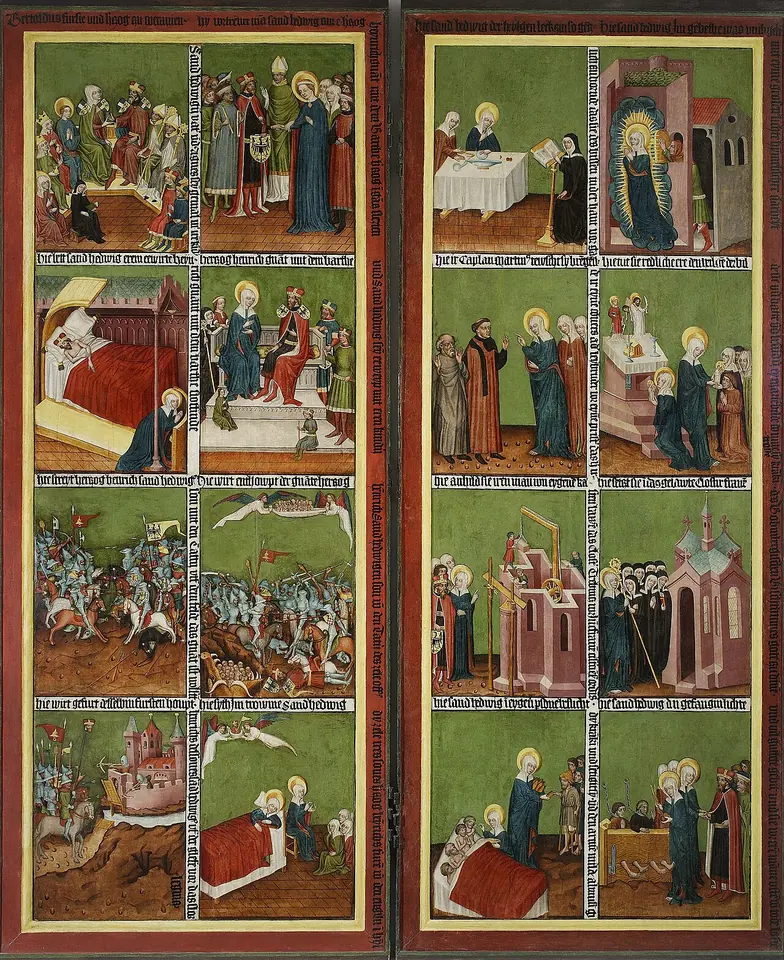
Baroque painters liked to show her in prayer before the crucifix, recalling Butler's note that the Passion of Christ was always the center of her devotion.

St. Hedwig's feast day and Trzebnica
We keep St. Hedwig's feast on October 16, an optional memorial on the General Roman Calendar. The day of her death, October 15, belongs to St. Teresa of Ávila, and her older feast on October 17 now belongs to St. Ignatius of Antioch. Her neighbors on the calendar are on our feast days page.
Her tomb is at Trzebnica, about 15 miles north of Wrocław, in the abbey church that is now the Basilica of St. Bartholomew and St. Hedwig. The church was refitted in Baroque style, though a Romanesque carved doorway from her century survives, and her tomb in its own chapel draws pilgrims from Poland and Germany.

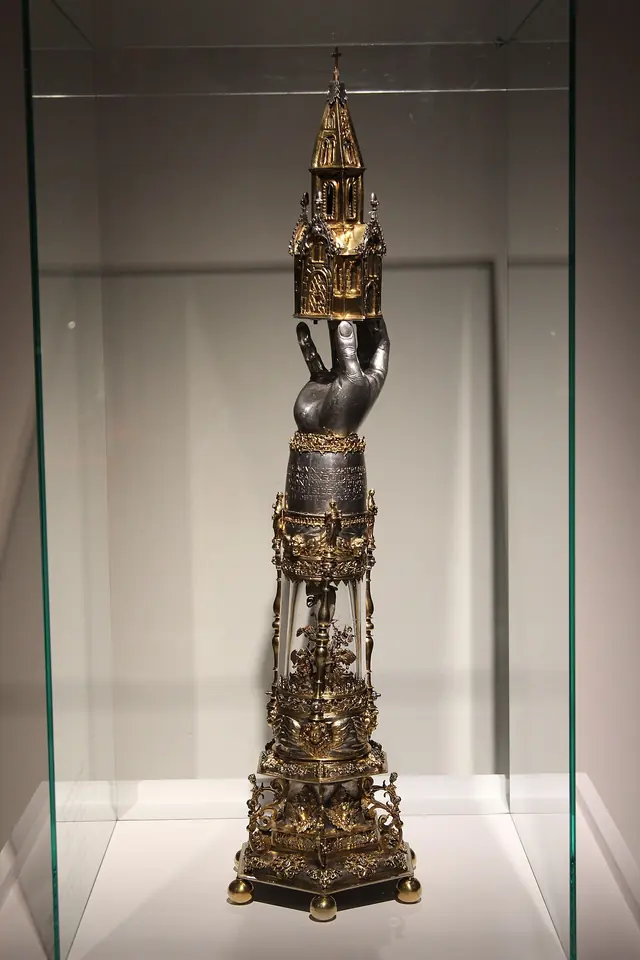
Wrocław Cathedral keeps a gilded arm reliquary made in her honor by the goldsmith Fabian Nitsch in 1607. Far away, in Berlin, the Catholic cathedral built under Frederick the Great in the 18th century is dedicated to her: St. Hedwig's Cathedral.
Prayer to St. Hedwig
The Church's own prayer for her feast is the collect of the Mass in the Roman Missal:
Grant, we pray, almighty God, that the revered intercession of Saint Hedwig may bring us heavenly aid, just as her wonderful life is an example of humility for all. Through our Lord Jesus Christ, your Son, who lives and reigns with you in the unity of the Holy Spirit, God, for ever and ever.
Let us ask St. Hedwig to pray for widows and for grieving parents, for families divided by quarrels, and for all who govern, that they may serve the poor as she did. St. Hedwig, pray for us.
Frequently asked questions
What is the difference between St. Hedwig and St. Jadwiga?
They share a name, since Jadwiga is the Polish form of Hedwig. St. Hedwig of Silesia (died 1243) was a duchess, wife of Henry the Bearded, buried at Trzebnica; her feast is October 16. St. Jadwiga of Poland (about 1374 to 1399) was the queen who married Władysław Jagiełło and helped bring Lithuania to baptism; St. John Paul II canonized her in Kraków on June 8, 1997, and she rests in Wawel Cathedral. Poland keeps her memorial on June 8.
When is St. Hedwig's feast day?
October 16, an optional memorial on the General Roman Calendar. She died on October 15, 1243, and her feast was kept on October 17 before the 1969 reform. In Canada it is kept on October 20.
What is St. Hedwig the patron saint of?
Silesia above all, the region of southwestern Poland and the old German borderlands where she lived. She is also honored as a patron of widows and of duchesses, since she was both.
Why does St. Hedwig carry shoes?
She went to church barefoot even in ice and snow, as a penance. Butler's Lives of the Saints says she carried shoes under her arm to put on if she met anyone. Catholic Culture tells it as a story about her husband, who sent her shoes and found she carried them instead of wearing them. Artists show her holding the shoes in her hand.
Where is St. Hedwig buried?
At Trzebnica, about 15 miles north of Wrocław in Poland, in the church of the convent she founded. Her tomb is in the chapel of St. Hedwig in the Basilica of St. Bartholomew and St. Hedwig, a place of pilgrimage. The cathedral treasury in Wrocław keeps a 1607 silver arm reliquary in her honor.
Sources
- Catholic Encyclopedia (1910): St. Hedwig
- Alban Butler, Lives of the Fathers, Martyrs and Other Principal Saints, vol. 4 (Baltimore, 1866): St. Hedwiges, Oct. 17
- Catholic Culture: Optional Memorial of St. Hedwig, Religious (collect and life)
- John Paul II, Homily at the canonization of Blessed Queen Hedwig, Kraków, June 8, 1997