St. Proclus of Constantinople
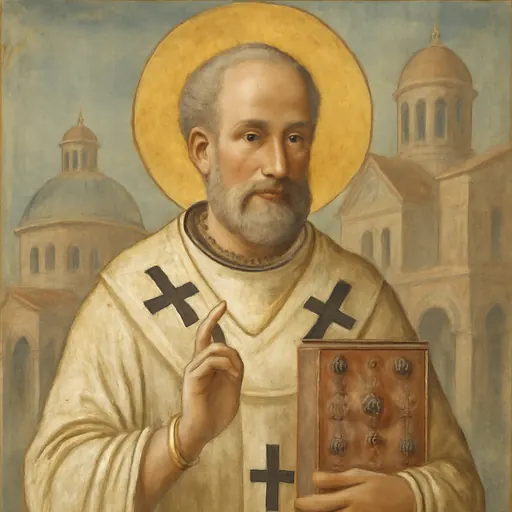
St. Proclus of Constantinople was patriarch of Constantinople from 434 until his death in 446 or 447. As a young priest he preached a famous sermon honoring Mary as Theotokos, Mother of God, before Nestorius, who denied the title. He brought St. John Chrysostom's relics home. The Roman Martyrology keeps his feast on October 24; the Orthodox on November 20.
Who was St. Proclus of Constantinople?
St. Proclus of Constantinople was patriarch of the imperial capital from 434 until his death in 446 or 447, one of the great preachers of the Greek Church and a bishop remembered above all for his gentleness. Before he was a bishop, he stood up in the pulpit in front of the patriarch Nestorius and preached Mary as Theotokos, the Mother of God, at the very moment Nestorius was teaching that she should not be called so. A few years later the Council of Ephesus (431) agreed with Proclus. The Roman Martyrology keeps his feast on October 24, and the Byzantine churches on November 20.
Reader, secretary, preacher
The church historian Socrates, who lived in Constantinople at the same time, gives us the best picture of his early life. "Proclus was a reader at a very early age," he writes, "and assiduously frequenting the schools, became devoted to the study of rhetoric." As a young man he became secretary to Atticus, patriarch from 406, who ordained him deacon and then priest. The Orthodox life of the saint holds that he was first a disciple of St. John Chrysostom and was ordained by him. The two accounts differ, and both agree that Proclus loved Chrysostom's memory.
When Atticus died in 425, a strong party wanted Proclus as patriarch, but the people chose Sisinnius. Sisinnius made Proclus bishop of Cyzicus, but the people of Cyzicus elected their own man before he could arrive. So Proclus stayed in the capital without a see and, in Socrates' words, "acquired celebrity for his discourses in the churches of Constantinople."
The sermon on the Mother of God
In 428 the emperor brought Nestorius from Antioch to be patriarch. Soon a sermon from his circle denied that Mary could be called Mother of God; at most, Nestorius said, she was mother of Christ. It was Proclus who answered him, preaching in Nestorius's presence a homily in praise of the Virgin as Theotokos. The Orthodox Church in America's life remembers that "he fearlessly defended the title 'Theotokos.'" His Marian homilies were read and copied for centuries, and the Council of Ephesus confirmed the faith he had preached.
After Nestorius was deposed in 431, the people again wanted Proclus, but some objected that a bishop named to one see could not be moved to another, and the aged priest Maximian was chosen instead. When Maximian died on April 12, 434, Emperor Theodosius II had the bishops in the city enthrone Proclus at once, before Maximian was even buried, because he already held letters from Pope Celestine approving the choice.
A gentle patriarch
Socrates admired him more than any bishop of his day. Proclus "was gentle towards everybody, being convinced that kindness is far more effective than violence in advancing the cause of truth." He resolved not to harass anyone, even those who held other beliefs.
That gentleness did not mean vagueness. In 435 or 436 bishops of Armenia asked him about teachings being spread in the name of Theodore of Mopsuestia. His reply, known as the Tome of St. Proclus, set out the faith in one Christ, true God and true man, and required the propositions to be condemned, while he took care not to condemn the dead Theodore by name. He also baptized Volusianus, the uncle of St. Melania the Younger.
Bringing St. John Chrysostom home
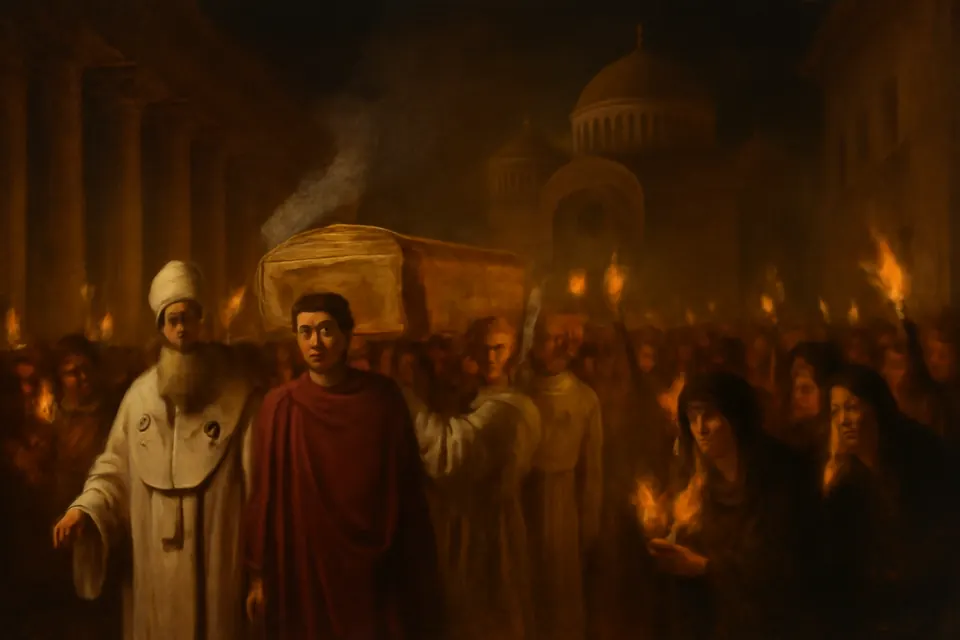
St. John Chrysostom had died in exile in 407, and many of his faithful followers had stayed apart from the patriarchs who had replaced him. Proclus healed the wound. With the emperor's permission he had Chrysostom's body brought from Comana, and on January 27, 438, it was carried in procession through the city and laid in the Church of the Holy Apostles. By this, Socrates says, "the admirers of that prelate were conciliated, and again associated in communion with the Church."
The Trisagion: tradition
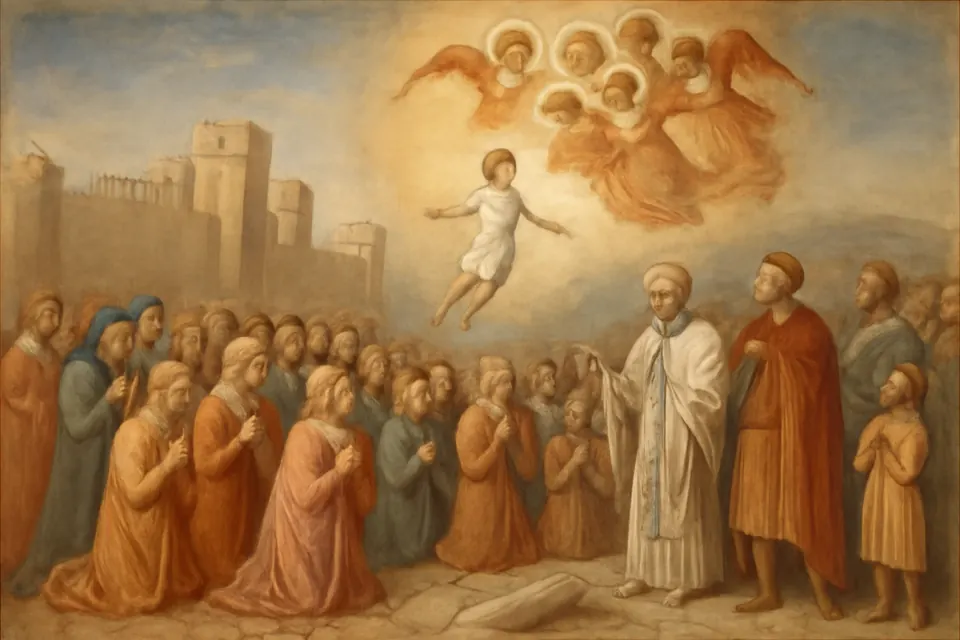
The best-loved story about Proclus comes from St. John of Damascus, three centuries later. During his time as archbishop, the people of Constantinople were praying to turn away a threatened calamity, which the Orthodox life describes as months of earthquakes. A boy was caught up from among the crowd and "taught by angelic teachers the Thrice Holy Hymn, Thou Holy God, Holy and Mighty One, Holy and Immortal One, have mercy upon us." When he came back to earth and told what he had heard, all the people sang it, and the danger passed.
- Traditional: the revelation of the Trisagion. It is a pious account, not a documented event, but the hymn itself is certainly ancient; St. John of Damascus notes that it was sung at the Council of Chalcedon in 451, a few years after Proclus died.
Symbols of St. Proclus in art
In Byzantine art Proclus is shown as a bishop with a gray beard, wearing the white omophorion marked with crosses and holding a Gospel book, standing among the holy patriarchs of Constantinople. The great Menologion of Basil II, painted about 985, shows his funeral, with his body laid on a bier before the domes of the city. Icons of the Trisagion story sometimes show the boy lifted into the air above the praying crowd. There is no widespread Western type, so in a Western church he is usually recognized only by a written name.

Feast day and prayer
We keep his feast on October 24, as the Roman Martyrology does, while Byzantine Catholics and the Orthodox honor him on November 20. See the feast day calendar.
There is no traditional prayer to St. Proclus in common use in the West. The prayer most bound up with his name is the Trisagion itself, which the Byzantine churches sing at every Divine Liturgy and which Latin Catholics pray in the Good Friday Reproaches. In the words St. John of Damascus records:
Thou Holy God, Holy and Mighty One, Holy and Immortal One, have mercy upon us.
Let us ask St. Proclus, who defended the honor of the Mother of God and won back the divided by kindness, to pray for preachers, for the unity of the Church, and for all who hold to the truth without bitterness.
Frequently asked questions
Who was St. Proclus of Constantinople?
A fifth-century patriarch of Constantinople (434–446/447), trained as secretary to Patriarch Atticus, celebrated as a preacher, and remembered for defending Mary's title Mother of God, for his letter to the Armenian bishops, and for bringing St. John Chrysostom's body back to the capital.
What is St. Proclus known for?
His sermon on the Theotokos preached before Nestorius, his gentleness as a bishop (the historian Socrates says he was "gentle towards everybody"), the return of St. John Chrysostom's relics in 438, and the tradition that the Trisagion, "Holy God, Holy Mighty, Holy Immortal," was revealed during his time as patriarch.
When is the feast of St. Proclus?
October 24 in the Roman Martyrology, and November 20 in the Orthodox and Byzantine Catholic calendars.
What is the story of St. Proclus and the Trisagion?
St. John of Damascus tells that while Proclus was archbishop, the people of Constantinople were praying to avert a calamity when a boy was caught up from the crowd and taught by angels the hymn "Holy God, Holy and Mighty, Holy and Immortal, have mercy upon us." When the people sang it, the danger passed. This is tradition, not documented history.
Keep exploring
Sources
- Catholic Encyclopedia (1911): St. Proclus. His career under Atticus, Sissinius and Nestorius, his election in 434, the Tome to the Armenians of 436, the baptism of Volusianus and his death in 446 or 447
- Socrates Scholasticus, Ecclesiastical History, Book VII (Nicene and Post-Nicene Fathers). Chapters 28, 35, 40, 41 and 45: Cyzicus, his election before Maximian's burial, the quotations on his gentleness, and the return of Chrysostom's body on January 27, 438
- St. John of Damascus, An Exact Exposition of the Orthodox Faith, Book III, chapter 10. The account of the boy taught the Trisagion by angels in Proclus's time
- Orthodox Church in America: Saint Proclus, Archbishop of Constantinople. The Byzantine feast of November 20, the sermon before Nestorius, and the Orthodox tradition that he was a disciple of St. John Chrysostom