St. Jonah of Hankou, Bishop of Manchuria and Friend of Orphans
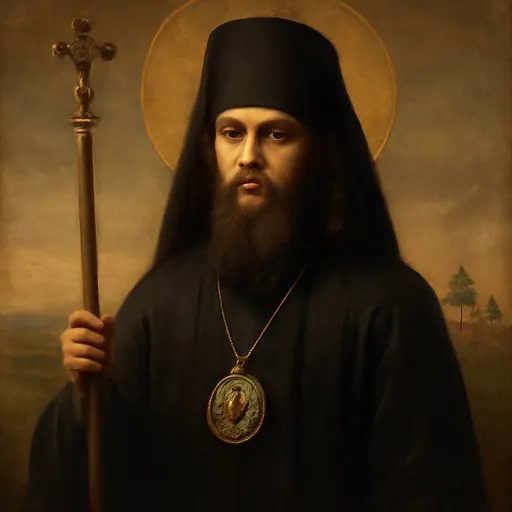
St. Jonah of Hankou (1888–1925), born Vladimir Pokrovsky, was a Russian Orthodox monk of the Optina tradition who fled the Revolution to China and became bishop at Manzhouli on the Manchurian border, where in three years he opened an orphanage, free schools, a soup kitchen and a clinic. He died at thirty-seven, and his last will told his flock, "Love one another, and do not forget the children." We keep his feast on October 20 (October 7 on the old calendar).
Who was St. Jonah of Hankou?
St. Jonah of Hankou was a young Russian Orthodox bishop who spent the last three years of his short life in Manzhouli, a dusty railroad town on the border between China and Russia, feeding the hungry, schooling the poor and raising orphans. He was born Vladimir Pokrovsky in 1888 and died on October 7, 1925, by the old Julian calendar, which is October 20 on the civil calendar. He was thirty-seven. The Russian Orthodox Church Outside of Russia glorified him in 1996, and the Moscow Patriarchate extended his veneration to the whole Russian Church in 2016. He is not on the Roman calendar.
His official title was bishop of Hankou, the river city on the Yangtze, but he never served there. He belonged to Manzhouli, and the people of Manchuria called him their own.
From an orphan's childhood to Optina
He was born on April 17, 1888, to a peasant family in the Kozelsk district of Kaluga province, not far from the famous monastery of Optina. He lost his parents early and was taken in by a village deacon named Pokrovsky, whose name he carried. He went through the church school and the Kaluga seminary and in 1909 entered the Kazan Theological Academy.
In his third year at the academy he became a monk with the name Jonah and went to Optina, where he learned from the elders Anatoly and Joseph. Deacon Serafim Gan's biography quotes a saying of Elder Joseph that the young monk took to heart: "If you did not grow a tree, from where do you expect to find fruits?" He returned to Kazan as a hieromonk, a monk-priest, finished the academy in 1914 and stayed on to teach Scripture.

Chaplain, prisoner and exile
During the First World War he volunteered as a military chaplain and by 1916 was senior chaplain of the 11th Army. In 1918, in the chaos of the Revolution, he was beaten and arrested by the Bolsheviks in Perm and sent for trial to Tyumen; White troops freed him on the way, in the Tobolsk district. In Omsk he was made a hegumen and chief chaplain of the Southern Army. When that army was defeated he went with it into exile, across Turkestan and the Gobi Desert into western China. He reached Shanghai and then the Russian Spiritual Mission in Beijing, where he was made an archimandrite.
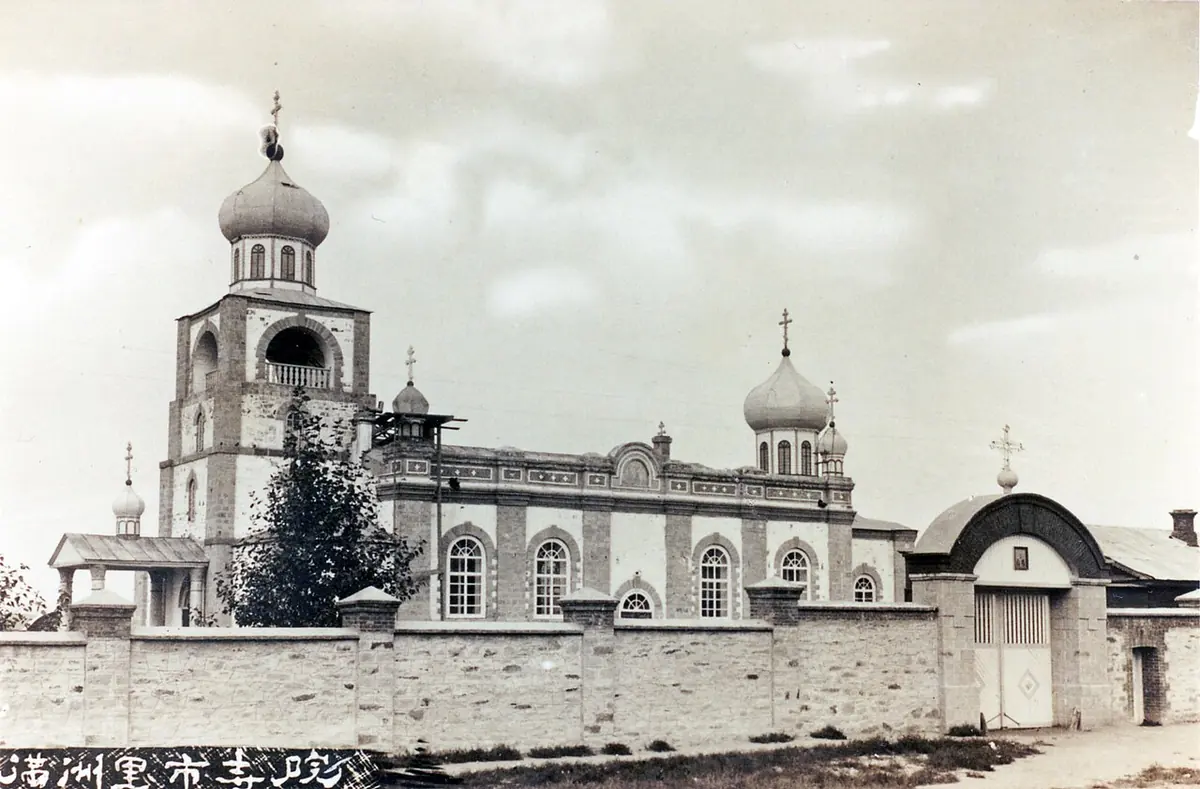
In September 1922, in Beijing, he was consecrated a bishop as a vicar of the Beijing Mission by Archbishop Innocent of Beijing, Bishop Meletius of Transbaikalia and Bishop Simon of Shanghai, and assigned to the St. Innocent church in Manzhouli. He arrived on October 19, 1922.
Three years in Manzhouli
Manzhouli was full of refugees from Russia, many of them destitute. Bishop Meletius later wrote that the big mission church was nearly empty when Jonah arrived. He set the services in order, built up a fine choir and preached constantly, and soon the church was too small for the crowds. The city council asked him to teach religion at the local secondary school.
Then he turned to the poor. In three years he opened:
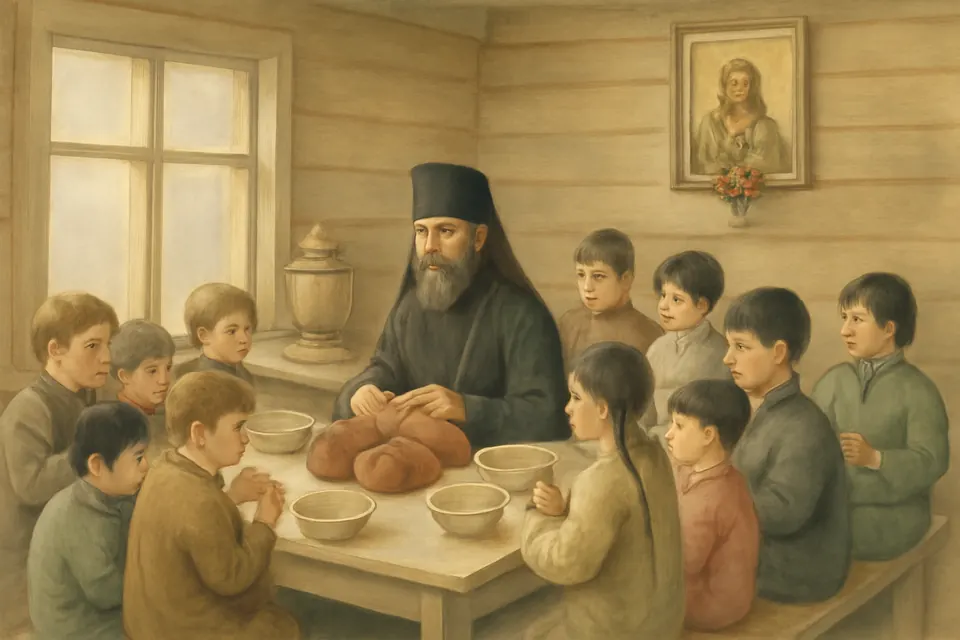
- an orphanage for up to forty children aged five to fourteen;
- free primary and upper schools for up to five hundred pupils;
- a dining hall that fed two hundred people a day without charge;
- a clinic that gave the poorest free medical care and medicine;
- a library and reading room.
He kept no cook and no kitchen of his own, and his favorite meal was fried potatoes and black rye bread. His clothes and shoes were patched until, as one admirer wrote, the tailor and the shoemaker refused to mend them again. He received visitors from seven in the morning until eleven at night and then sat down to his letters. When he needed rest, he went to the orphanage "among the kids," as he liked to say.
His death
In the fall of 1925 he fell ill with a throat infection and treated it by gargling with kerosene, a remedy that seemed quick and harmless. The infection spread into his blood. Knowing he was dying, he made his confession, received Holy Communion and typed his last testament. He read the canon for the departure of the soul himself, blessed everyone present, lay down holding a cross and a candle, and said, "Forgive me, pray for me." He died on October 7 (20), 1925. Archbishop Methodius of Harbin, who was with him, read the prayers at his death.
Thousands of copies of his testament were handed out at his funeral. It ends, "Love one another, and do not forget the children." About eight thousand people came to bury him, in a town of some ten thousand. He was laid to rest beside the St. Innocent church.

The church was later blown up and the graves leveled. A search for his relics on the site in 1994 found nothing, and they are still lost.
The healing of the boy Nikolai
- Reported: in the night of the bishop's death, a ten-year-old boy named Nikolai, whose knees were so inflamed that he walked on crutches and the doctors could do nothing for him, saw Bishop Jonah in a dream. The bishop told him, "Here... Take my legs, they are not needed by me any more, and yours give to me." The boy woke up, got out of bed, threw away his crutches and began to walk around the room. Archpriest Nikolai Kiklovich published the account in 1944, after hearing it from Nikolai himself, by then a married man of twenty-seven. The Orthodox Church Abroad cites this healing in its decree of glorification.

Symbols of St. Jonah of Hankou in art
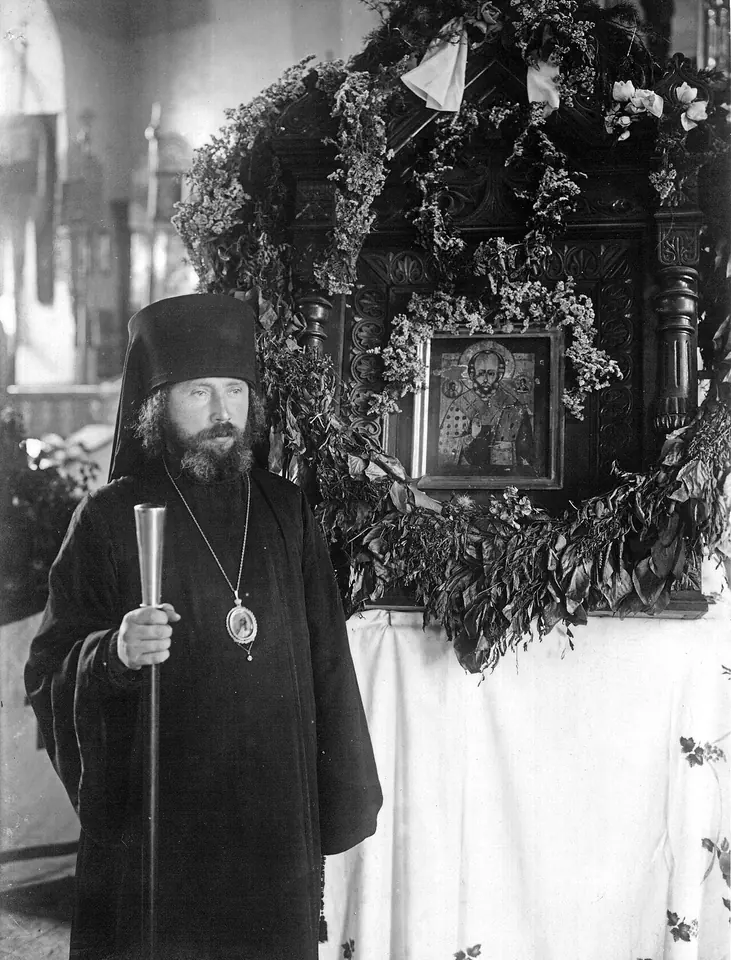
Icons of St. Jonah are recent, since he was glorified only in 1996, and they are drawn from his photographs. Look for:
- A young bishop with a dark beard: he died at thirty-seven.
- A black monastic klobuk: the tall veiled hat of a monk-bishop, which he wears in his photographs.
- A panagia and a staff: the medallion and crozier of a bishop.
- Children beside him: some images show the orphans of Manzhouli, the people he loved most.
Feast day and prayer
The Orthodox keep his feast on October 7 (20), the day of his repose. His glorification was first celebrated in October 1996 in San Francisco, Chicago and Geelong, Australia. See the feast day calendar for other saints of October.
The Russian Church Abroad has a service and hymns in his honor, but the English translation we found is under copyright, so we do not print it here. Let us ask St. Jonah, who fed the hungry and gathered the orphans of a refugee town, to pray for children without parents and for all who have lost their homeland. Holy Hierarch Jonah, pray to God for us.
Frequently asked questions
Who was St. Jonah of Hankou?
Vladimir Pokrovsky, born in 1888 near Kozelsk and raised by a village deacon, became a monk at the Kazan Theological Academy, served as an army chaplain, and fled Russia with the White army. Consecrated a bishop in Beijing in 1922, he served the border town of Manzhouli for three years, caring for refugees, orphans and the poor, and died there in 1925.
Why is he called "of Hankou" and also "of Manchuria"?
His official title was bishop of Hankou, a city on the Yangtze, but he was sent to Manzhouli on the Manchurian border with Russia and served there until his death. The Orthodox Church Abroad glorified him as "Bishop Jonah of Manchuria"; the Moscow Patriarchate calls him St. Jonah of Hankou.
When is the feast of St. Jonah of Hankou?
October 7 on the Julian calendar, the day of his repose in 1925, which is October 20 on the civil calendar.
Where are the relics of St. Jonah of Hankou?
They have not been found. He was buried beside the St. Innocent church in Manzhouli; the church was later destroyed and the graves leveled, and a search on the site in 1994 found nothing.
Keep exploring
Sources
- Deacon Serafim Gan, "Short biography of St. Jonah of Hankou" (2006), English translation by Katherine Ilachinski, at orthodox.cn. His birth, Kazan and Optina, his flight, his consecration in 1922, his works in Manzhouli with numbers, his death, his funeral, the healing of the boy Nikolai, as reported by Fr. Nikolai Kiklovich in 1944
- "Bishop Jonah of Manchuria: A New Saint Is Proclaimed," Orthodox America (Russian Orthodox Church Outside of Russia). The words of his testament, the fate of his grave, his glorification in 1996
- Decree for the Glorification of Bishop Jonah of Manchuria (August 31/September 13, 1996), at orthodox.cn. The cause of his death and the boy healed after seeing him in a dream
- St. Jonah (Pokrovsky) of Hankou and Manzhouli (Orthodox Christianity in China). His title and appointment to Manzhouli, the 1996 glorification and the Moscow Patriarchate's decision of 2016