St. Oran of Iona (Odhrán), Companion of St. Columba

St. Oran of Iona (Odhrán) was an Irish monk, a kinsman of St. Columba, who sailed with him to Iona in 563 and was the first of the community to die and be buried on the island. The ancient graveyard of Iona, the Reilig Odhráin, where kings of Scotland were laid to rest, bears his name. We keep his feast on October 27.
Who was St. Oran of Iona?
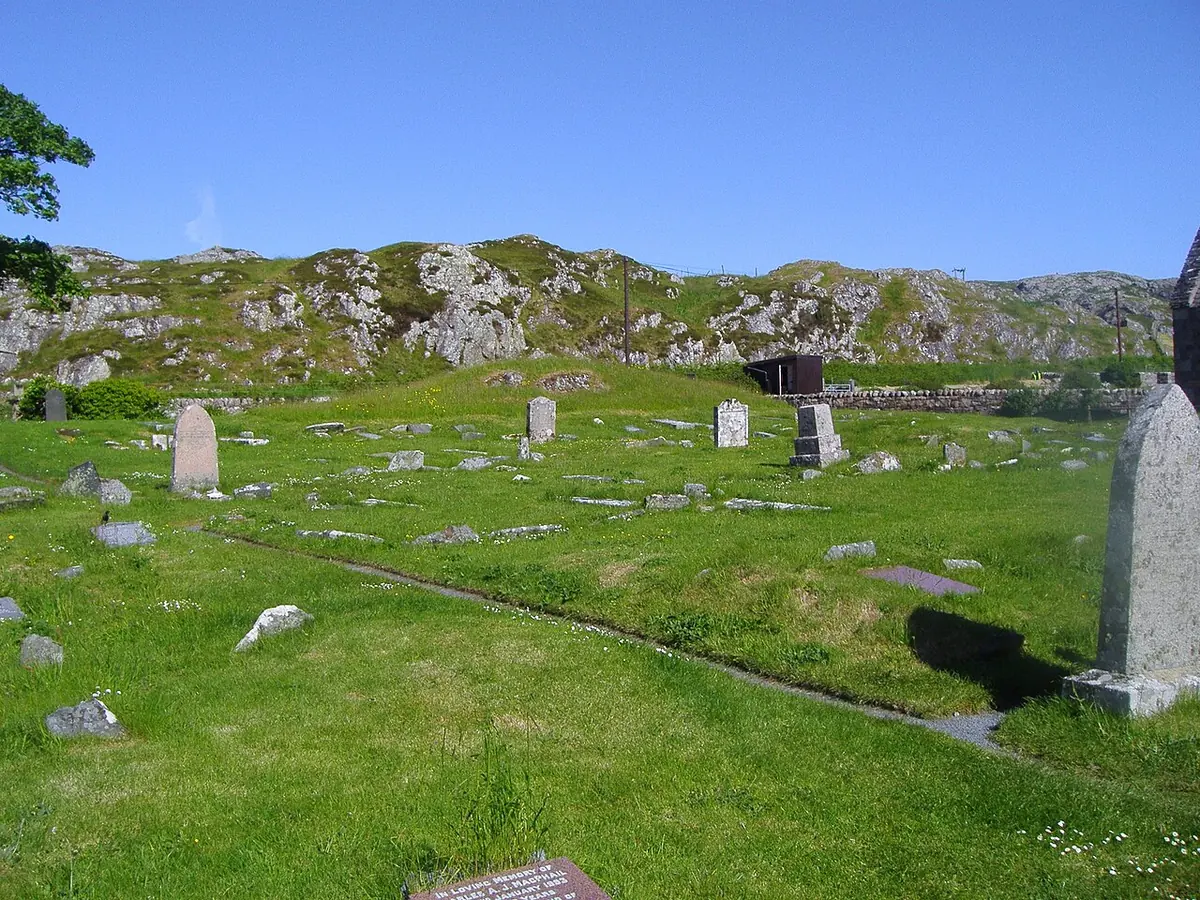
St. Oran of Iona, Odhrán in Irish, was one of the twelve monks who sailed from Ireland with St. Columba in 563 to found the monastery of Iona, off the west coast of Scotland. He was Columba's kinsman, of the line of Conall Gulban, and the Irish lives of Columba remember him for one act: he offered his life so that the new monastery might put down roots in its island, and he was the first of the community to be laid in its earth. The old cemetery of Iona, where the Catholic Encyclopedia says kings, chieftains and prelates rest, still carries his name: the Reilig Odhráin, Oran's burial ground.
We know very little else for certain. What we have are the Irish lives of Columba, the Irish martyrologies and the place names of Iona.
The life of St. Oran
With Columba in the boat
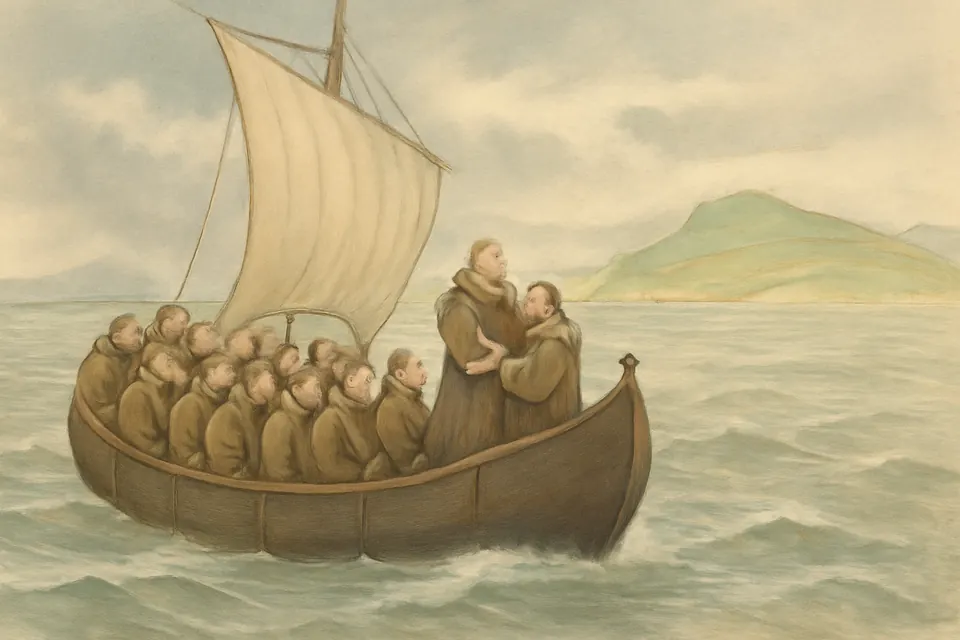
Columba landed on Iona at Pentecost in 563. Manus O'Donnell's great Life of Columcille, compiled in 1532 from older material, places Odhran in the boat on the crossing. When Columba grieved for the Ireland he was leaving, Odhran said to him: "Be silent, and heed them not, and set thy mind on Him for whose sake thou hast given them up, to wit, Almighty God." Columba agreed, but answered that parting from one's kin and homeland is like the parting of body from soul.
The offering on Iona
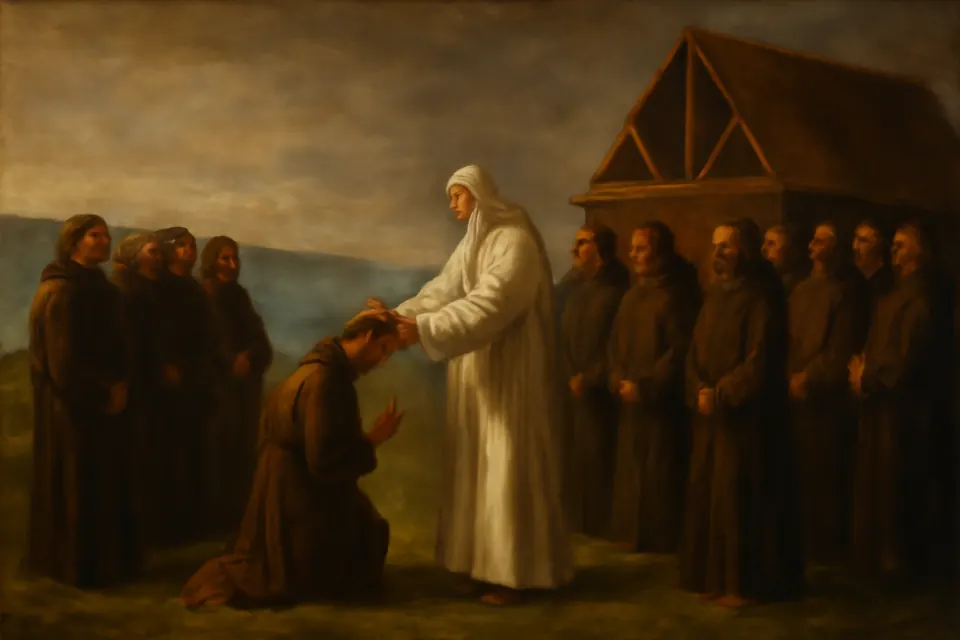
The oldest form of the story is in the Irish life of Columba preserved in the Lebar Brecc and the Book of Lismore. Columba said to his monks: "It is well for us that our roots should go under the ground here," and that one of them might go under the earth of the island to consecrate it. "Odran rose up readily," and said, "If I should be taken, I am ready for that." Columba answered with a promise: "No prayer shall be granted to any one at my grave, unless it is first asked of thee." Then, the life says simply, "Odran went to heaven," and Columba founded a church beside his grave.
O'Donnell tells it the same way: Odhran "received death then by the will of God and Columcille," was laid beneath the clay of the island, and "the Grave of Odhran in Iona is the name of that place today."
The Latteragh tradition
Ireland remembers an Odhran too. The Martyrology of Donegal lists Odhran of Latteragh in Tipperary on October 26 and, the next day, "Odhran, Abbot of I," of the race of Conall Gulban; its editors add that the Iona Odhran was Columba's kinsman and follower and was buried on Iona during Columba's lifetime. Later Irish tradition merged the two, giving Oran a church at Latteragh and a death year of 548 or 549, which cannot be squared with a voyage in 563. Whether they were one man or two, we cannot now say.
The miracles and legends of St. Oran
St. Adomnán's seventh-century Life of Columba, our best early source for Iona, does not mention Oran's offering; Whitley Stokes noted the silence in 1890. The story first appears in the later Irish life. It is traditional, and its meaning for the monks was a holy one: a brother who gave himself freely so that the community might take root.
Much later, Highland folklore turned it into something darker, telling of a monk buried alive beneath a chapel whose walls kept falling, who rose to say disturbing things about the next world before Columba had him covered over again. Nothing in the medieval lives supports this, and we pass it by.
Symbols of St. Oran in art
No old image of St. Oran survives, and modern ones are few. He is shown as an Irish monk in a plain habit with the old Celtic tonsure, sometimes with a hand bell like those Irish monks carried, and most often simply through the places that bear his name: St. Oran's Chapel and the graveyard of Iona.
St. Oran's Chapel and Iona today
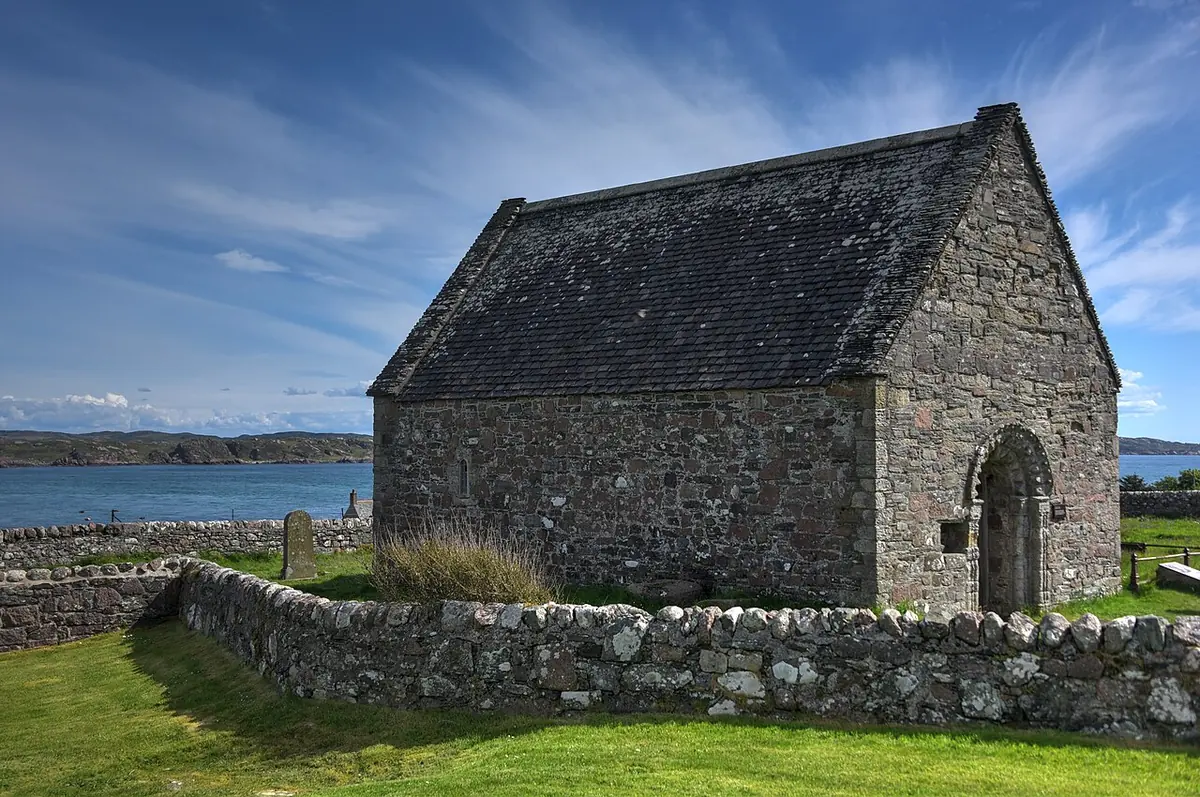
St. Oran's Chapel is the oldest building still standing on Iona. William Reeves dated it to the end of the eleventh century and thought it might be the gift of St. Margaret of Scotland. Its round-arched west door carries a row of carved "beak-head" ornaments. Iona also has a spring called Tobhar Odhrain, Oran's Well.

Feast day
We keep the feast of St. Oran on October 27. See more saints of late October on our feast days page and the other saints of Ireland on our Irish saints page.
Praying with St. Oran
We know of no traditional prayer to St. Oran that we can cite. Columba's own promise points the way: the Irish life says that whoever prays at Columba's grave should first ask Oran's help. Let us do so: holy Oran, you gave yourself freely so that the faith might take root on Iona; pray for us, that we may hold nothing back from God.
Frequently asked questions
Who was St. Oran of Iona?
An Irish monk of the sixth century, of the same royal kin as St. Columba, who went with Columba to found the monastery of Iona. The Irish lives of Columba say he offered his life to consecrate the island and was the first monk buried there.
When is the feast of St. Oran of Iona?
October 27. The Martyrology of Donegal lists 'Odhran, Abbot of I' on that day, and an Odhran of Latteragh in Tipperary on October 26.
Was St. Oran buried alive?
No early source says so. The medieval Irish life of Columba says only that Oran volunteered to die and 'went to heaven' with Columba's promise of reward. The tale of a monk buried alive under the chapel walls belongs to much later Highland folklore.
What is the Reilig Odhráin?
The ancient cemetery of Iona, named for St. Oran. Tradition says many early kings of Scotland were buried there, and St. Oran's Chapel, the oldest building standing on the island, stands in it.
Keep exploring
Sources
- Whitley Stokes, Lives of Saints from the Book of Lismore (1890), Life of Colomb Cille. The earliest Irish account of Odran's offering and Columba's promise, with Stokes's note that Adomnán does not tell the story
- Betha Colaim Chille: Life of Columcille, compiled by Manus O'Donnell in 1532 (ed. O'Kelleher and Schoepperle, 1918). Odhran in Columba's boat, the covenant of Iona and the naming of the Grave of Odhran (chapters 190, 205–206)
- The Martyrology of Donegal, trans. John O'Donovan, ed. J. H. Todd and William Reeves (1864), October 26 and 27. Odhran of Latteragh and Odhran, abbot of Iona, as two entries, with the note that Odhran died and was buried on Iona in Columba's lifetime
- William Reeves, ed., The Life of Saint Columba, Founder of Hy, by Adamnan (1874). The Reilig Odhráin, the age and ornament of St. Oran's Chapel, and Oran's Well
- Iona, School of (Catholic Encyclopedia, 1910). The landing of Columba and his twelve companions in 563 and the Reilig Odhráin as the holiest ground in Scotland