St. Peter of Alcantara, Franciscan Reformer and Friend of St. Teresa

St. Peter of Alcantara (1499–1562) was a Spanish Franciscan friar who led a strict, barefoot reform of his order, wrote a famous little treatise on prayer, and was the confessor and champion of St. Teresa of Avila. He is the patron of Brazil and of his native Extremadura, and night watchmen claim him because he hardly slept. His feast is October 19.
Who was St. Peter of Alcantara?
Peter of Alcantara was a Spanish Franciscan friar of the 16th century, a reformer, preacher and mystic, and one of the great penitents in the history of the Church. He was born at Alcántara, in Extremadura, in 1499 and died at Arenas de San Pedro, in the province of Ávila, on October 18, 1562. Much of what we know about him comes from someone who knew him well: St. Teresa of Avila, who called him "that blessed friar" and gave him several pages of her Life.
His baptismal name was Juan. His father, Pedro Garavito, was the governor of Alcántara, and his mother came from the noble Sanabria family.

The life of St. Peter of Alcantara
Student, friar, reformer
At fourteen he went to the University of Salamanca. Soon after he came home he joined the Franciscans of the Stricter Observance, taking the name Peter. He was ordained a priest in 1524 and quickly became a sought-after preacher. The Catholic Encyclopedia says he preferred to preach to the poor, and that his sermons, drawn largely from the Prophets and the Wisdom books, "breathe the tenderest human sympathy."
Elected provincial in 1538, he wrote strict constitutions for his friars and met so much opposition that he resigned and went to live as a hermit in the Arrábida hills of Portugal. Later, with permission from Pope Julius III, he founded small, very poor friaries in Spain that grew into the Province of St. Joseph in 1561. His followers came to be called Alcantarines.
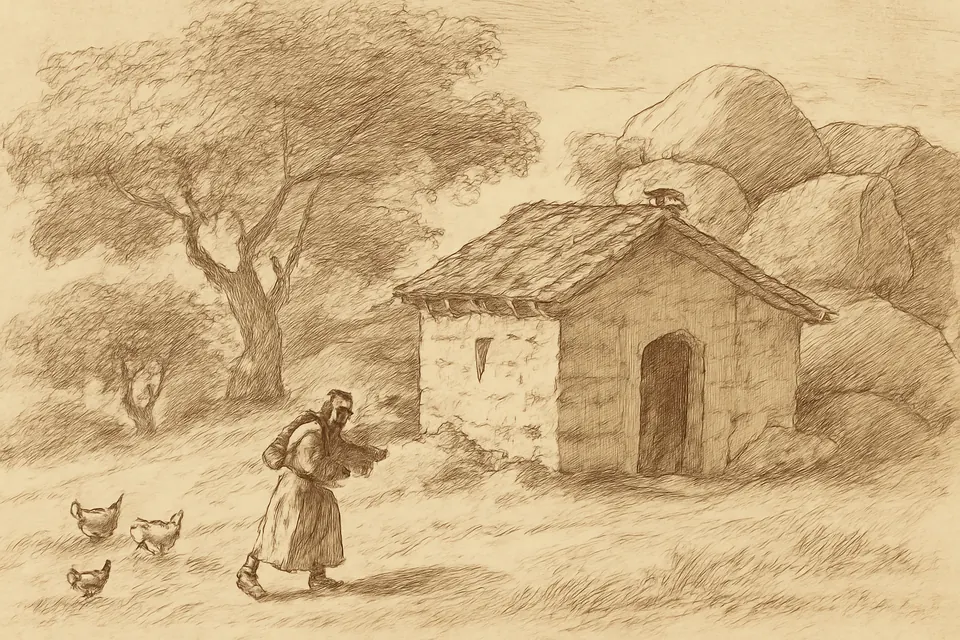
The smallest of his foundations still stands. Alfa y Omega, the weekly of the Archdiocese of Madrid, writes that the friary of El Palancar, in the hills of Extremadura, measures only 72 square meters, and the friar who lives there explains that "the size is the physical expression of a search for poverty and Gospel simplicity."
The penitent who barely slept
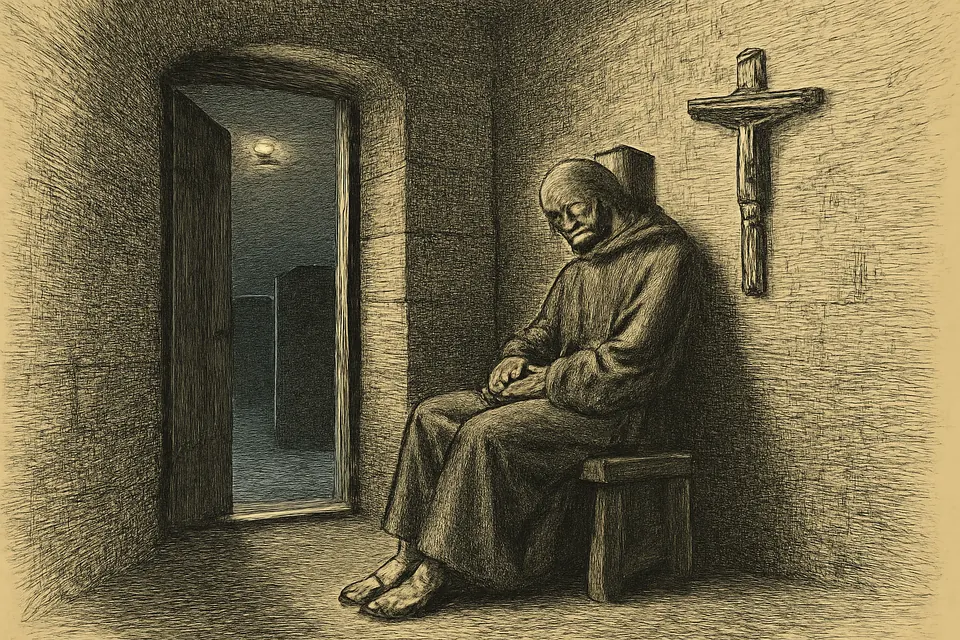
St. Teresa tells what he told her himself. For forty years he slept only an hour and a half a day, sitting up, "his head resting against a piece of wood driven into the wall," because his cell was only four and a half feet long and he could not lie down. He went barefoot, never covered his head in sun or rain, wore a single habit of sackcloth, and usually ate once every three days. When she showed surprise he said: "Why are you astonished at it? it is very possible for any one who is used to it."
By the time she met him he was old, and she wrote that "his weakness was so great, that he seemed like nothing else but the roots of trees." Yet she adds: "With all his sanctity, he was very agreeable; though his words were few, unless when he was asked questions; he was very pleasant to speak to, for he had a most clear understanding."
The friend of St. Teresa
When Teresa was doubted and criticized for her visions, Peter examined her and assured her that they came from God. The Catholic Encyclopedia says her success in reforming the Carmelites was "in great measure due to his counsel, encouragement, and defence." A letter of his dated April 14, 1562, encouraged her to found her first reformed convent, St. Joseph's in Ávila, which opened that August 24. He wrote to her that she should never accept an endowment, and she held to it.
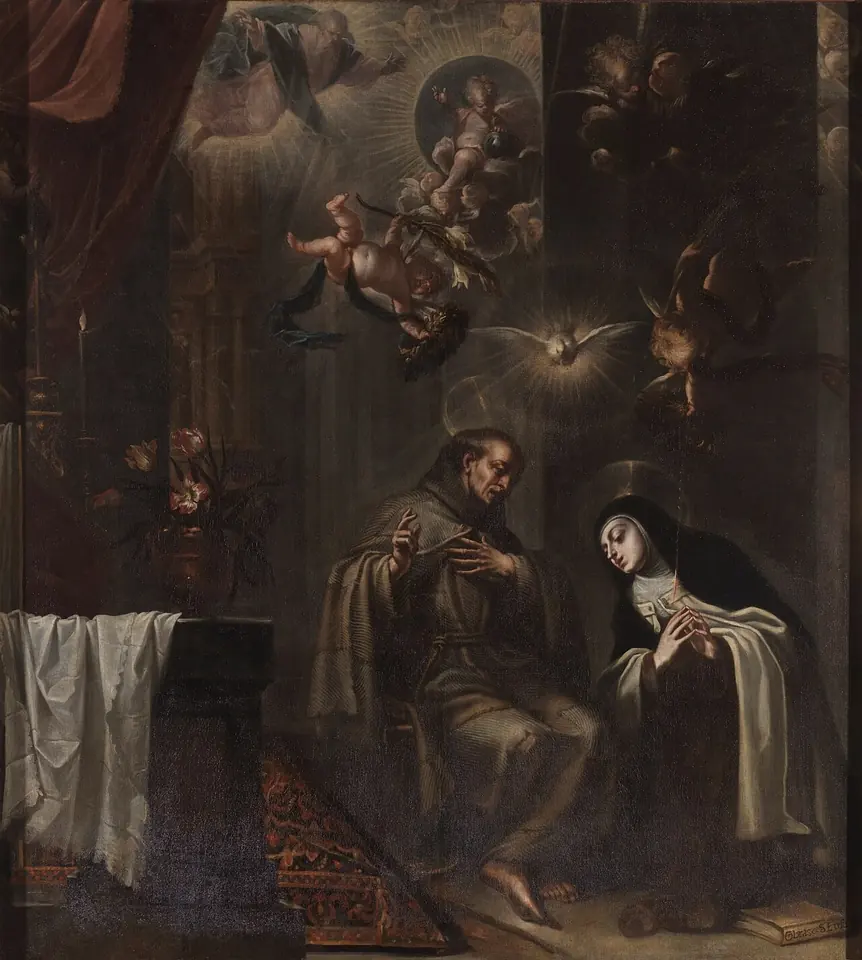
He died that same October at the friary of Arenas. Teresa writes that "his last end was like his life," preaching to his brothers, and that when he saw the end coming he recited the psalm "Lætatus sum in his quæ dicta sunt mihi" ("I rejoiced at the things that were said to me") and died on his knees.
Miracles of St. Peter of Alcantara
Gregory XV beatified him in 1622, and Clement IX canonized him in 1669, with St. Mary Magdalene de' Pazzi, after the miracles required by the Church were approved. The Catholic Encyclopedia says God worked "numerous miracles through his intercession and by his very presence," and that Teresa's Life is a chief source for his gifts of miracles and prophecy.
- Ecstasies (reported). Teresa says she once witnessed one of his raptures herself.
- Foretelling and announcing his death (reported). Teresa writes that a year before his death he appeared to her though far away, and that at the hour he died he appeared to say he was going to his rest; eight days later the news came.
- Appearances after death (reported). She saw him "in great glory" several times. The first time he told her, "O blessed penance, which has merited so great a reward!"
Why St. Peter of Alcantara is the patron of Brazil
The Catholic Encyclopedia's editors note that he was named Patron of Brazil in 1826 and of his home region of Extremadura in 1962, the fourth centenary of his death. Brazil's first emperor was Dom Pedro de Alcântara, and the cathedral of Petrópolis, where the imperial family is buried, is dedicated to the saint. He is also the patron of the Diocese of Coria-Cáceres.
In Spain, Alfa y Omega adds, he is the patron of night watchmen, because he spent whole nights awake in prayer. More patronages are on our patron saints page.
Symbols of St. Peter of Alcantara in art
Spanish and Latin American painters of the 17th and 18th centuries made his gaunt figure familiar. Look for:
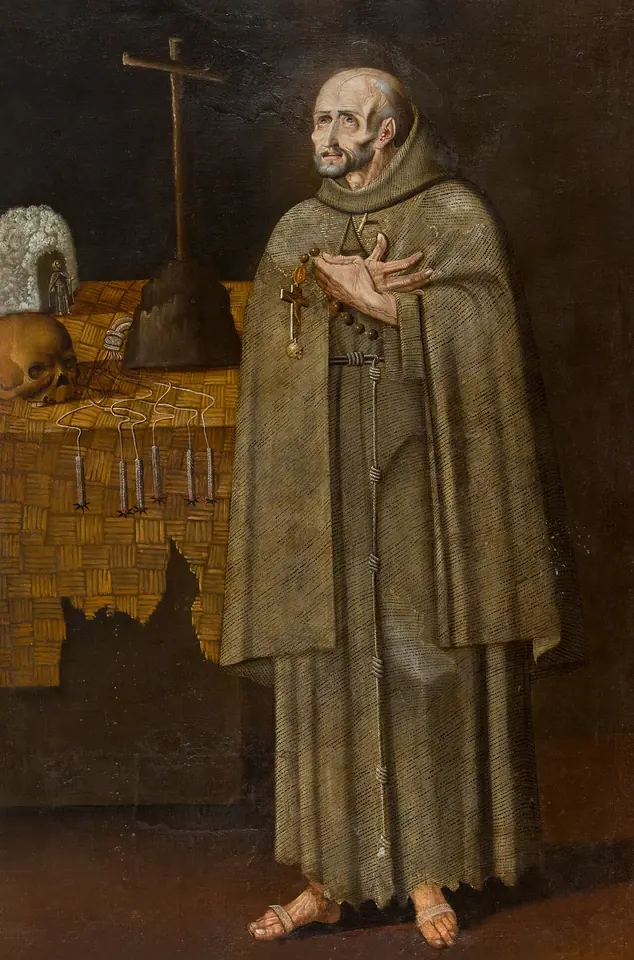
- A rough brown Franciscan habit and bare feet: often short and patched, with the knotted cord.
- A very thin, old face: Teresa's "roots of trees."
- A cross: sometimes a heavy wooden one, as in Tiepolo's painting.
- A dove at his ear, a pen and a book: the Holy Spirit inspiring his treatise on prayer.
- Skull, discipline and hair shirt: his penance, often laid out on a table, as in Holguín's painting from Potosí.
- St. Teresa beside him: listening to her, or appearing to her in glory.
St. Peter of Alcantara's feast day and shrine
His traditional feast is October 19, still kept by the Franciscans and in Spain and Brazil, though it left the General Roman Calendar in 1969. The Roman Martyrology names him on October 18, the day he died. See October's other saints on our feast days page.
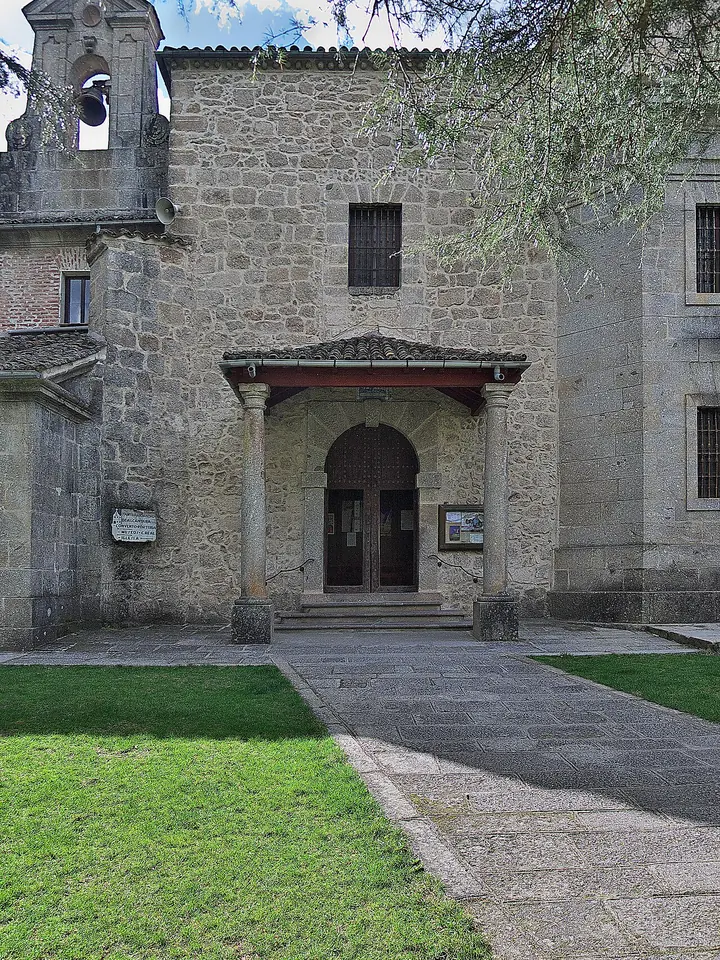
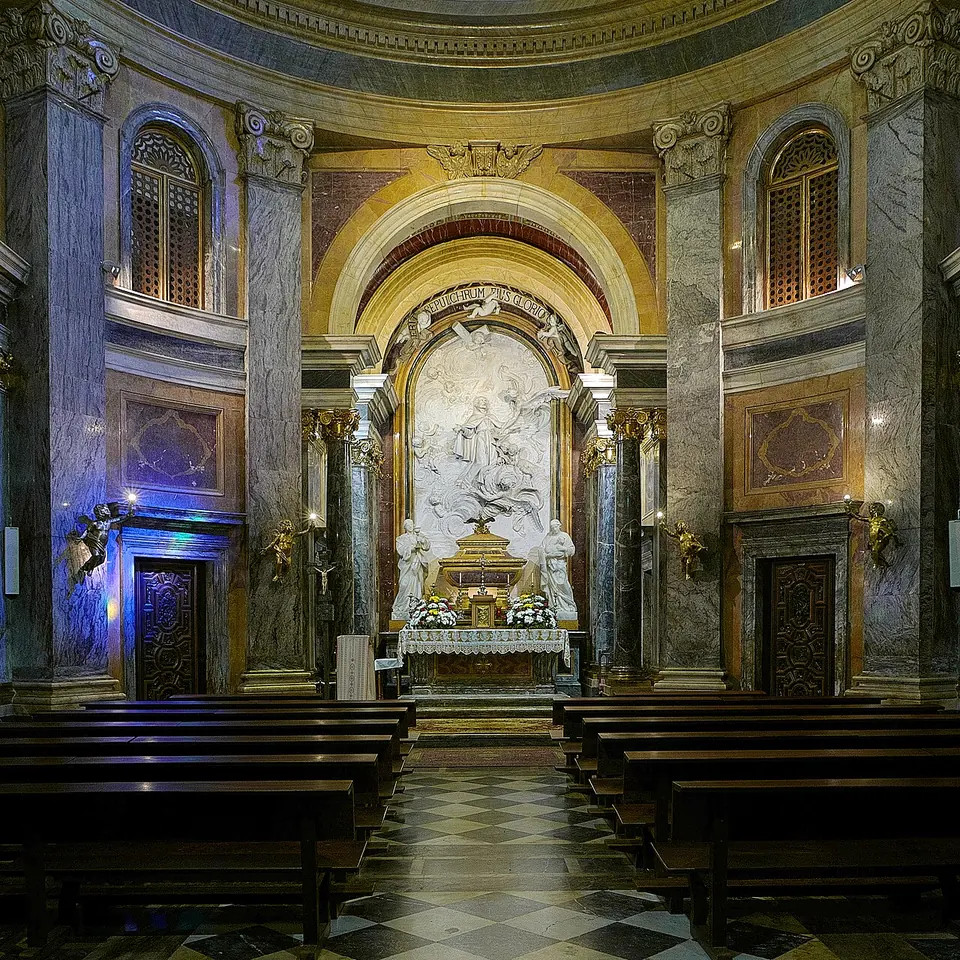
He was buried at his friary outside Arenas de San Pedro. In the 18th century Charles III paid for the shrine there to be rebuilt, and Ventura Rodríguez designed its octagonal Royal Chapel. The town's description of the shrine says that his remains lie at the altar in an urn of porphyry, guarded by alabaster figures of Faith and Hope, under a great marble relief of his ascent into heaven carved by Francisco Gutiérrez in 1773.
Prayer to St. Peter of Alcantara
The best prayer book St. Peter left us is his own Treatise on Prayer and Meditation, which the Catholic Encyclopedia says was "translated into all the languages of Europe." We have not found a traditional prayer to him in the standard English prayer books, and we won't invent one under his name. We can ask him simply: St. Peter of Alcantara, pray for us.
Let us ask him to pray for all who are learning to pray, for those who keep watch through the night, for religious who want to live poverty for real, and for the people of Brazil.
Frequently asked questions
Who was St. Peter of Alcantara?
A Franciscan friar born at Alcántara in Spain in 1499, who founded a reform of the Franciscans living in extreme poverty and penance, the Alcantarines. He was a famous preacher, the author of a Treatise on Prayer and Meditation, and the friend and adviser who encouraged St. Teresa of Avila to found her first reformed Carmel. He died in 1562 and was canonized in 1669.
What is St. Peter of Alcantara the patron saint of?
Brazil (named in 1826), his native region of Extremadura (1962) and the Diocese of Coria-Cáceres. In Spain night watchmen and wardens take him as their patron because he spent whole nights in prayer and slept only about an hour and a half a day.
When is the feast of St. Peter of Alcantara?
October 19, his traditional feast, kept by Franciscans and in Spain and Brazil. The Roman Martyrology lists him on October 18, the day of his death.
What did St. Teresa say about St. Peter of Alcantara?
In her Life she wrote that "he seemed like nothing else but the roots of trees," so thin had his penances made him, yet "with all his sanctity, he was very agreeable." She also wrote that after his death he appeared to her and said, "O blessed penance, which has merited so great a reward!"
Keep exploring
Sources
- Nicholas Reagan, St. Peter of Alcántara (Catholic Encyclopedia, 1911). His reforms and provinces; his letter to Teresa of April 14, 1562; beatified 1622, canonized 1669; patron of Brazil (1826) and Extremadura (1962); feast moved to local calendars in 1969
- St. Teresa of Jesus, The Life of St. Teresa of Jesus, tr. David Lewis (Project Gutenberg). Ch. 27 and 36: his sleep of an hour and a half, his cell four and a half feet long, eating once in three days, "the roots of trees," his death on his knees, his appearances to her after death
- José Calderero de Aldecoa, 19 de octubre: san Pedro de Alcántara, fundó el convento más pequeño del mundo (Alfa y Omega, 2024). El Palancar, 72 square meters; patron of the Diocese of Coria-Cáceres; why night watchmen took him as patron
- Ayuntamiento de Arenas de San Pedro: Santuario de San Pedro de Alcántara (archived 2018). The Royal Chapel by Ventura Rodríguez for Charles III, the porphyry urn with his remains, the relief by Francisco Gutiérrez (1773)