Blessed Josephine Leroux
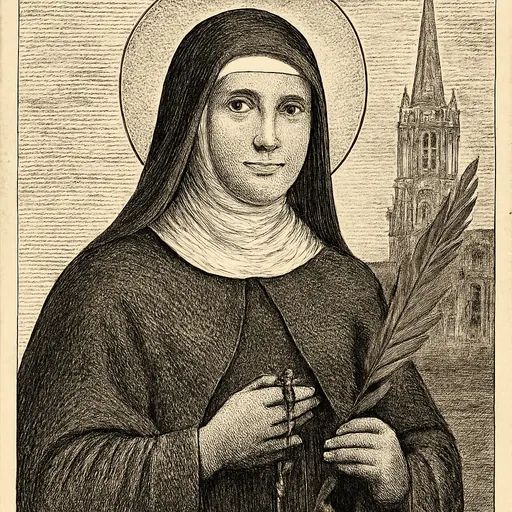
Blessed Josephine Leroux (1747–1794) was a Poor Clare nun of Valenciennes, in northern France, who was guillotined on October 23, 1794, with five Ursuline sisters she had joined after the Revolution closed her convent. Born Anne-Josèphe Leroux at Cambrai, she was condemned as an "émigrée" for a short visit to her sister in Mons. Pope Benedict XV beatified her with the Ursuline Martyrs of Valenciennes on June 13, 1920. Her feast is October 23.
Who was Blessed Josephine Leroux?
Blessed Josephine Leroux was a Poor Clare nun who gave her life for the faith in the French Revolution. Born at Cambrai in 1747, she spent more than twenty years in the Poor Clare convent of Valenciennes, near the Belgian border. When the Revolution closed it, she found a new home among the Ursulines of the same town, where her younger sister was a nun. On October 23, 1794, the two Leroux sisters and four other religious women were guillotined in the great square of Valenciennes. Pope Benedict XV beatified her with the eleven Ursuline Martyrs of Valenciennes on June 13, 1920. We keep her feast on October 23.
She was baptized Anne-Josèphe on the day she was born, January 23, 1747, in the parish of Saint-Martin at Cambrai, the daughter of Charles-Joseph Leroux and Marie-Joseph Picavez. Her baptism record is printed in Jules Loridan's 1901 history of the Valenciennes Ursulines, along with her later convent records.
A Poor Clare at Valenciennes
On May 10, 1769, she received the habit of St. Clare in the convent of the Clarisses Urbanistes at Valenciennes, a community following the milder rule approved by Pope Urban IV. She made her profession on May 12, 1770, and kept her baptismal name as Sister Anne-Joseph. Her younger sister, Marie-Marguerite, became an Ursuline in the same town and took the name Mother Marie-Scholastique.
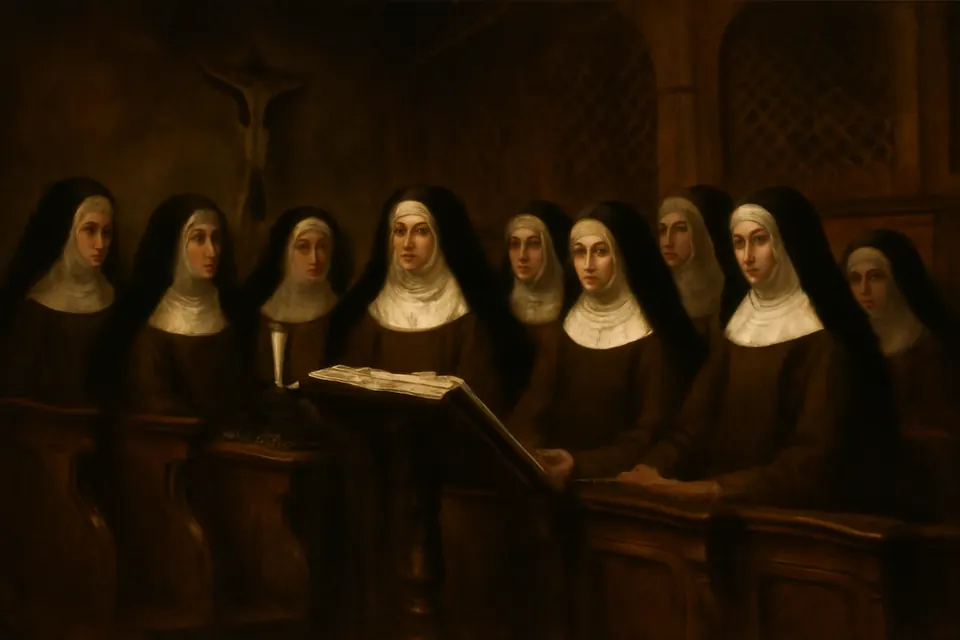
When revolutionary officials questioned each nun in September 1790, Sister Anne-Joseph said she wished "to live and die in this house" where she had made her vows. In a second visit she said she was content with the life of the convent, though the small state pension made it hard to live. In September 1792 the community was forced out, and she went home to her family at Cambrai.

Mother Marie-Josephine among the Ursulines
From Cambrai she made a short visit across the border to Mons, in the Austrian Netherlands, where the Ursulines of Valenciennes had taken refuge. Loridan notes that this one visit, made out of love for her sister, would later be treated as a crime worthy of death.
In 1793 Austrian troops took Valenciennes, and the Ursulines came home. Anne-Joseph asked to be received among them, and in November 1793 she was admitted. She took a new name, Mother Marie-Joséphine, and served the house as portress. Two former Bridgettine nuns from Pont-sur-Sambre joined the community the same way.
Arrest and martyrdom
French troops retook Valenciennes in late August 1794. On the night of August 31 to September 1 a patrol of soldiers came for the two Leroux sisters at the house on the rue Saint-Géry where they were staying. Loridan's account, drawn from the convent's manuscript history, says Josephine kept a deep calm. She told the soldiers it hardly took so many men to arrest one poor woman, had them given something to drink, and since the streets were dark and still broken from the siege, she took the arm of one of the soldiers to walk to prison.

Five Ursulines of the house were condemned and guillotined on October 17. On October 23 (2 Brumaire, Year III) the military commission tried the rest: the superior, Mother Clotilde Paillot, the two Leroux sisters, the two former Bridgettines, Anne-Marie Erraux and Françoise Lacroix, and Sister Jeanne-Louise Barré. When someone pointed out that Josephine had only visited Mons, the judge answered, "I am very sorry to tell you, but you emigrated like the others." Mother Clotilde told the court she was dying for the Catholic faith she had taught.
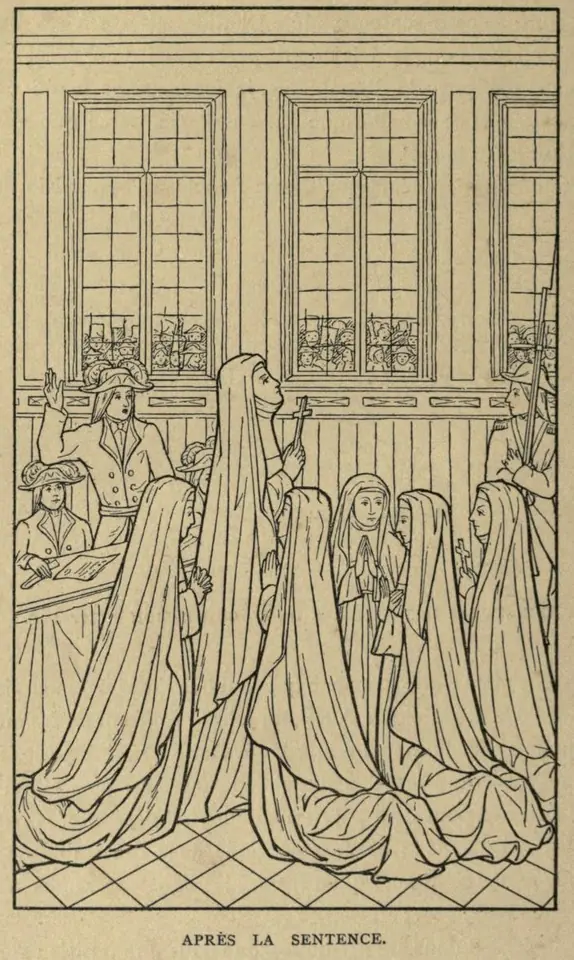
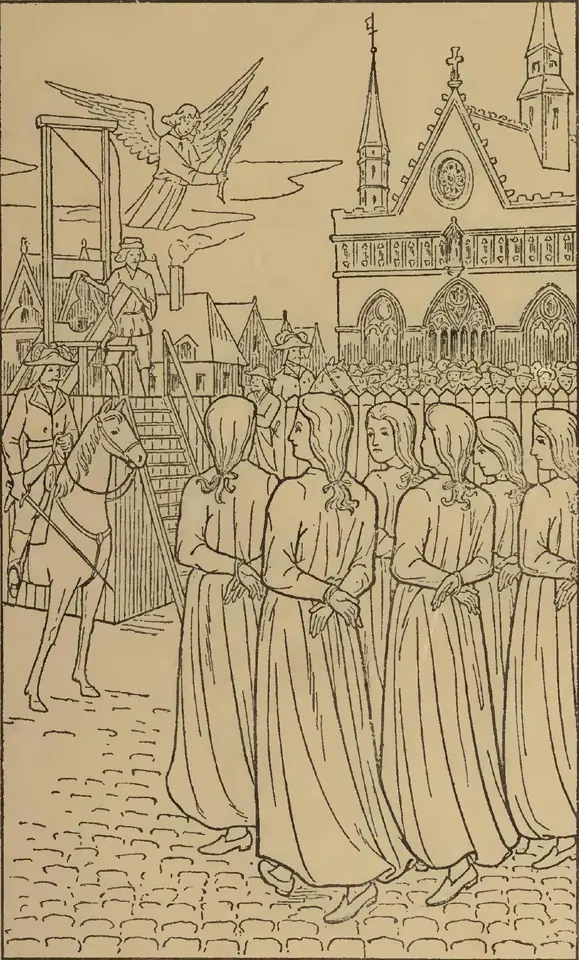
Before they left the prison, Mother Scholastique, Josephine's sister, said: "We forgive the judges who have condemned us, the executioner who will put us to death, and all our enemies." Each sister let her hands be tied and thanked the executioner by kissing his hand. Loridan writes that they walked to the scaffold singing the Te Deum, the Veni Creator and the Litany of the Blessed Virgin, and that the crowd fell silent as they passed. They were buried in the common cemetery, and none of the graves has ever been found.
Beatification
The Church honors the eleven Ursuline Martyrs of Valenciennes together, counting Josephine Leroux and the two Bridgettines who had joined the community. Loridan's second book, written for the occasion, describes the joy at Valenciennes when Pope Benedict XV beatified them on June 13, 1920. As in every cause of martyrdom, no miracle was required, and we know of no approved or reported miracle tied to her name.
Symbols of Blessed Josephine Leroux in art
There is no portrait of Josephine Leroux, and her images come from the illustrated histories of the Ursuline martyrs. Look for:
- A martyr's palm: the sign of a martyr, often held by an angel above the group.
- The religious habit: in the 1901 drawings she wears the Ursuline habit in which she died, though she was first a Poor Clare.
- A line of sisters with bound hands: the walk to the scaffold, shown with the Gothic church of Valenciennes behind.
Feast day and prayer
We keep her feast on October 23. The Ökumenisches Heiligenlexikon notes that the Franciscan Poor Clares keep an optional memorial of her on October 22. See also the feast day calendar and the Carmelite Martyrs of Compiègne, who died in Paris that same summer of 1794.
We know of no traditional prayer written for Blessed Josephine. The prayers she and her sisters sang on their way to death are the best ones to pray with her: the Te Deum, the Veni Creator Spiritus and the Litany of Loreto. Let us ask her to pray for religious women driven from their homes, for families divided by distance and danger, and for all who must forgive those who wrong them. Blessed Josephine Leroux, pray for us.
Frequently asked questions
Who was Blessed Josephine Leroux?
A Poor Clare nun from Cambrai, professed at Valenciennes in 1770. When the Revolution emptied her convent in 1792, she joined her younger sister's Ursuline community, and both sisters were guillotined at Valenciennes on October 23, 1794.
Why was Josephine Leroux executed?
The military commission at Valenciennes condemned her as an emigrant because she had briefly crossed the border to Mons to visit her sister. Her companions told the judges they had returned to teach the Catholic faith, and the Church recognized their deaths as martyrdom.
When is the feast of Blessed Josephine Leroux?
October 23, the day she died in 1794.
Was Josephine Leroux an Ursuline or a Poor Clare?
Both, in a sense. She was professed as a Poor Clare (an Urbanist Clarisse) in 1770 and lived that life for over twenty years. After the Revolution dispersed her community she was received among the Ursulines in November 1793, taking the name Mother Marie-Joséphine, and she died with them.
Keep exploring
Sources
- J. Loridan, Les Ursulines de Valenciennes avant et pendant la Terreur (1901). Her baptism record, clothing (May 10, 1769) and profession, her statements of 1790 and 1791, her move to the Ursulines, the night arrest, the judge's words, the sentence of 2 Brumaire Year III and the walk to the scaffold
- J. Loridan, Les bienheureuses Ursulines de Valenciennes (1920). Her biographical summary, entry among the Ursulines in November 1793, the arrest on the night of August 31, 1794, the lost graves and the beatification of June 13, 1920
- Ökumenisches Heiligenlexikon: Josephine Leroux. The Poor Clare memorial on October 22