St. Cedd, Bishop of the East Saxons
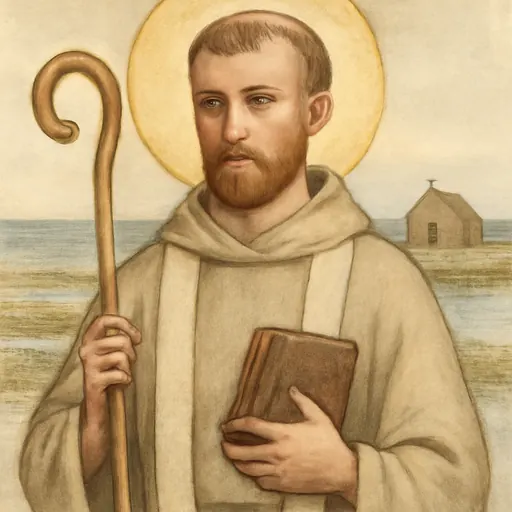
St. Cedd (died 664) was a Northumbrian monk, trained in the Irish tradition of Lindisfarne, who brought the Christian faith back to the East Saxons of Essex and became their bishop. He built the church of St. Peter-on-the-Wall at Bradwell-on-Sea, which still stands, and founded the monastery of Lastingham in Yorkshire, where he died of the plague. His feast is October 26, and he is honored as an apostle of Essex.
Who was St. Cedd?
St. Cedd was a seventh-century Anglo-Saxon monk and bishop who carried the Gospel from the far north of England to the people of Essex. Trained among the Irish monks of Lindisfarne, he became bishop of the East Saxons, built the little stone church of St. Peter-on-the-Wall at Bradwell-on-Sea, which still stands on the edge of the North Sea, and founded the monastery of Lastingham in the Yorkshire moors. He died there of the plague in 664. We keep his feast on October 26.
Almost everything we know about him comes from St. Bede, who wrote his Ecclesiastical History about seventy years later and had his information from the monks of Lastingham themselves.
Four brothers, all priests
Cedd was the eldest of four brothers from an Angle family settled in Northumbria. Bede names them: Cedd, Cynebil, Caelin and Ceadda, the St. Chad whom Lichfield honors. "All celebrated priests of our Lord," Bede writes, "and two of them also came to be bishops," which he calls "a rare thing to be met with." Cedd and Chad were brought up at Lindisfarne in the school of St. Aidan, and they kept its spirit of poverty, prayer and preaching all their lives.
Apostle of the East Saxons
In 653 King Oswy of Northumbria sent Cedd and three other priests to preach to the Middle Angles. He was soon called back for a harder task. The East Saxons had driven out their first bishop, Mellitus, a generation earlier and returned to the old gods. Their king, Sigebert, had now been baptized in Northumbria and asked Oswy for teachers. Oswy sent Cedd with one companion.
Their preaching bore fruit so quickly that Bishop Finan of Lindisfarne consecrated Cedd as bishop of the East Saxons. Back in Essex, Bede says, he "built churches in several places, ordaining priests and deacons," above all at Ythancestir and at Tilbury, where he gathered communities and taught them the monastic life.
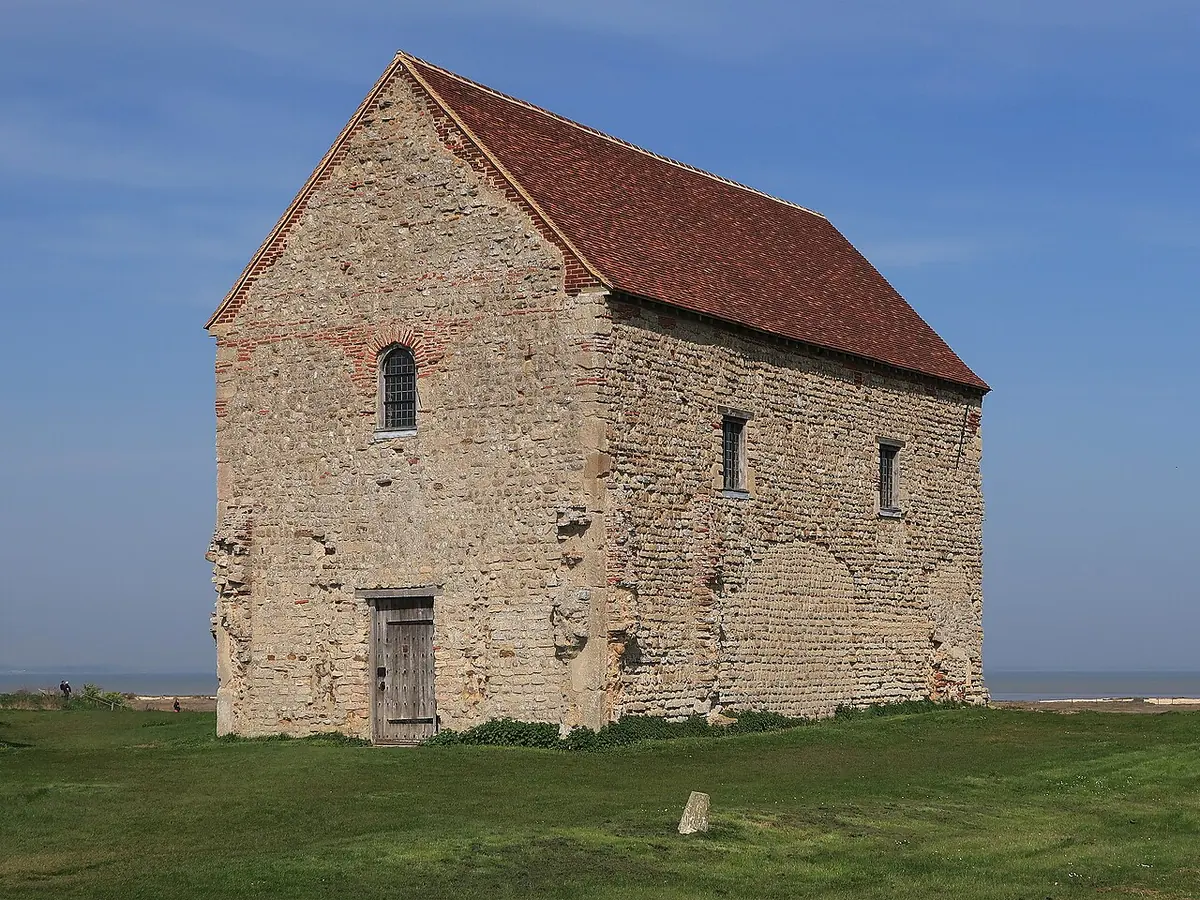
Ythancestir was the old Roman shore fort of Othona at Bradwell. Cedd built his church right across its ruined wall, using the Roman stones. That church, St. Peter-on-the-Wall, has stood for more than thirteen centuries. For many decades it served as a barn, the Society for the Protection of Ancient Buildings recalls, before it was brought back to Christian use in the twentieth century.
A bishop who would not look away
Bede tells one hard story. One of King Sigebert's earls lived in an unlawful marriage, and Cedd excommunicated him and forbade anyone to eat at his house. The king went anyway. On the way out he met the bishop on the road, leapt from his horse and fell at his feet asking pardon. Cedd touched him with his staff and said: "I say to you, forasmuch as you would not refrain from the house of that wicked and condemned person, you shall die in that very house." Some time later Sigebert was murdered by that same earl and his brother, who complained that the king was too ready to forgive his enemies. Bede believed that such a death blotted out the king's fault and added to his merit.

Lastingham: a place made holy by fasting
On his visits home, Cedd was asked by Ethelwald, king of Deira, to found a monastery where the king could pray and one day be buried. Cedd chose a spot "among craggy and distant mountains, which looked more like lurking-places for robbers and retreats for wild beasts, than habitations for men."
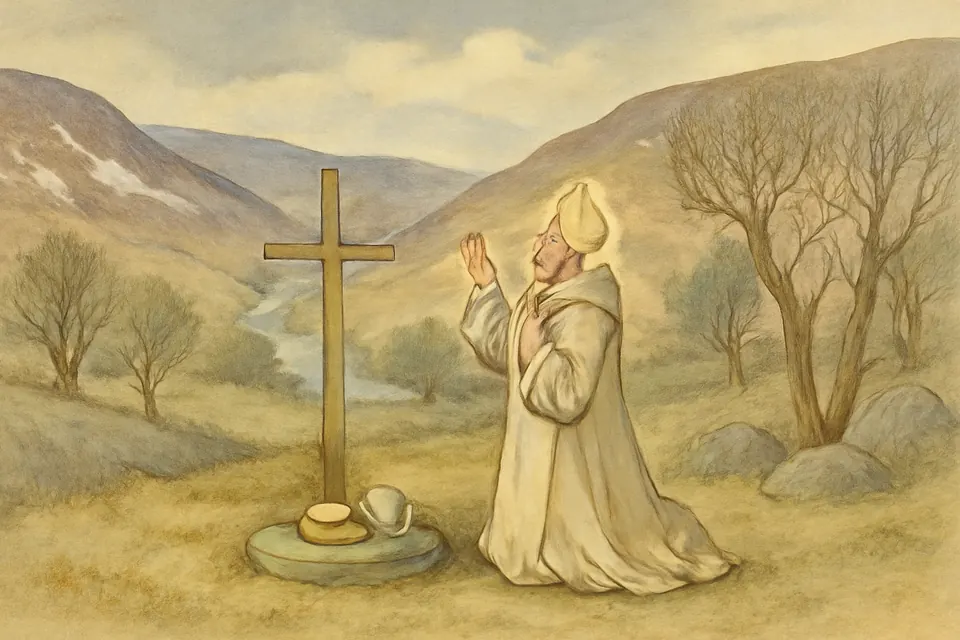
Before building, he wanted to cleanse the place by prayer. He spent Lent there, fasting each day except Sundays until evening and then taking only "a little bread, one hen's egg, and a little milk mixed with water." This, he said, was the custom of those who had taught him: to consecrate a new monastery to the Lord by prayer and fasting. When the king called him away with ten days of Lent left, his brother Cynebil finished the fast. The monastery of Lastingham was built and given the customs of Lindisfarne.
Whitby and his death
At the Synod of Whitby in 664, held at the abbey of St. Hilda, Cedd was "a most careful interpreter for both parties," since he spoke the languages of both the Irish-trained and the Roman-trained clergy. When King Oswy decided for the Roman date of Easter, Cedd accepted it and returned to his diocese.
That same year a plague swept England. Cedd came to Lastingham, fell sick and died there. He was buried first in the open air and later beside the altar of the new stone church of St. Mary. His brother Chad succeeded him as abbot.
Bede adds a moving last chapter. When about thirty monks of Cedd's community in Essex heard that their father had died, they walked the length of England to Lastingham, wishing "either to live near the body of their father... or to die there and be buried." All of them died of the plague there, except one little boy, saved, Bede says, by his father's prayers.
Bede tells the fulfilled warning to King Sigebert and the boy's rescue as he heard them from the monks of Lastingham. They are reported wonders, handed down by a careful historian but never formally examined by the Church.
Symbols of St. Cedd in art
St. Cedd has no ancient attributes of his own, and most images of him are modern, made for churches in Essex and Yorkshire:
- Crozier and miter or plain habit: he is shown as a bishop, sometimes in later Western vestments and sometimes, more truthfully, in the plain dress of a Lindisfarne monk.
- Book of the Gospels: the missionary's book.
- The chapel at Bradwell: some images put a small model of St. Peter-on-the-Wall in his hands, as founders are often shown holding their church.
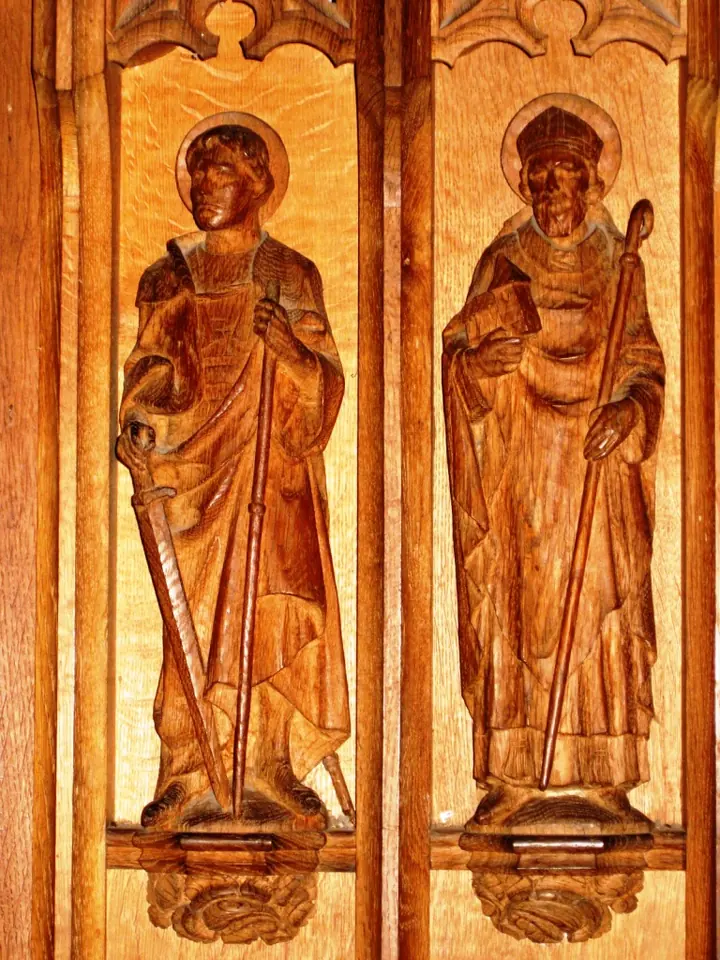
In Essex he often appears beside other local saints, as in the carved reredos at Great Braxted, where he stands next to St. Alban.
Feast day, pilgrimage and prayer
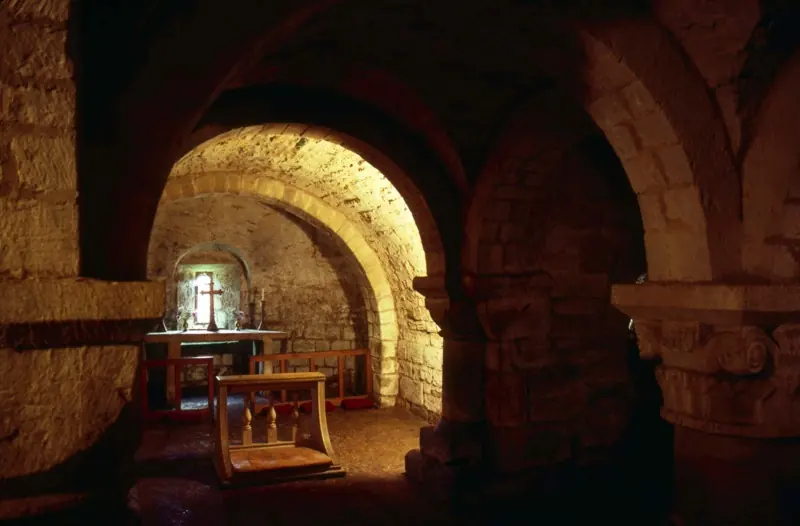
We keep the feast of St. Cedd on October 26, the anniversary of his death. Pilgrims from across Essex still walk to St. Peter-on-the-Wall at Bradwell, and Lastingham's crypt, the site of his monastery, still welcomes visitors who come to pray. See the feast day calendar.
No traditional prayer to St. Cedd has come down to us. In our own words, let us ask him to pray for the Church in England, for missionaries who go where the faith has faded, and for all who must speak a hard truth with love.
Frequently asked questions
Who was St. Cedd?
An Anglo-Saxon monk from Northumbria, the eldest of four brothers who all became priests, among them St. Chad. Sent south in 653, he preached to the East Saxons, was made their bishop, built churches at Bradwell-on-Sea and Tilbury, and later founded the monastery of Lastingham in Yorkshire.
When is the feast of St. Cedd?
October 26, the anniversary of his death in 664. Older calendars kept him on January 7.
What church did St. Cedd build?
The chapel of St. Peter-on-the-Wall at Bradwell-on-Sea in Essex, built in the 650s with stones from the old Roman fort of Othona. It is one of the oldest churches in England still standing, and Mass is still offered there.
Was St. Cedd the brother of St. Chad?
Yes. Bede names four brothers, Cedd, Cynebil, Caelin and Ceadda (Chad), and notes how rare it was that all four were priests and two became bishops. Chad succeeded Cedd as abbot of Lastingham.
Keep exploring
Sources
- Bede, Ecclesiastical History of the English People, Book III, chapters 21–26 (Fordham Medieval Sourcebook). His mission to the East Saxons, his rebuke of King Sigebert, the Lenten fast at Lastingham, his death, the thirty monks from Essex, and his part at the Synod of Whitby
- Catholic Encyclopedia (1908): St. Cedd. The date of his death, his former feast on January 7, and the later claim that he was a bishop of London
- SPAB: The edge of Essex, St. Peter, Bradwell-on-Sea. The chapel's years as a barn, its Roman materials from the fort of Othona, and its Grade I listing in 1959