St. Kaleb of Aksum (St. Elesbaan), King of Ethiopia
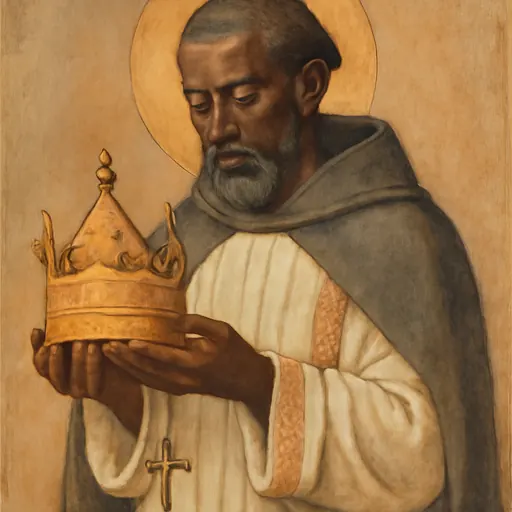
St. Kaleb of Aksum, known in the Roman Martyrology as St. Elesbaan, was the Christian king of Aksum (in today's Ethiopia and Eritrea) in the early sixth century. He crossed the Red Sea to defend the persecuted Christians of southern Arabia, then sent his crown to Jerusalem and ended his life as a monk. His feast is October 27.
Who was St. Kaleb of Aksum?
St. Kaleb of Aksum, called St. Elesbaan in the Roman Martyrology, was a Christian king of Ethiopia in the early sixth century. He ruled Aksum, the old kingdom of the northern Ethiopian and Eritrean highlands that had received the faith two centuries earlier through St. Frumentius. He is remembered for two things: he went to war to defend persecuted Christians across the Red Sea, and when the war was over he laid down his crown and became a monk.
He is a different person from the Caleb of the Old Testament, the faithful scout who entered the Promised Land with Joshua.
The Roman Martyrology sums him up in one sentence:
Likewise in Ethiopia, the holy King Elesbaan, who, after he had overcome the enemies of Christ in the time of the Emperor Justin, sent his kingly crown to Jerusalem, and made himself a monk in fulfilment of a vow, and so lived until he passed away hence to be ever with the Lord.
The life of St. Kaleb
King of a Christian nation
His coins and inscriptions call him Kaleb. His throne name was Ella Asbeha, which Greek writers turned into Elesbaas, and the Byzantine historian Procopius into Hellestheaeus. The exact years of his reign are uncertain; he was on the throne by the 520s. Procopius, writing in Constantinople within a generation, calls him "a Christian and a most devoted adherent of this faith."
The martyrs of Najran
Across the Red Sea lay Himyar, in today's Yemen. Its king, called Dunaan in the Orthodox lives and Dhu Nuwas in Arab tradition, turned on the Christians of his realm. Around 523 many were killed at the city of Najran, among them the martyr St. Arethas and his companions, whom the Church still honors.
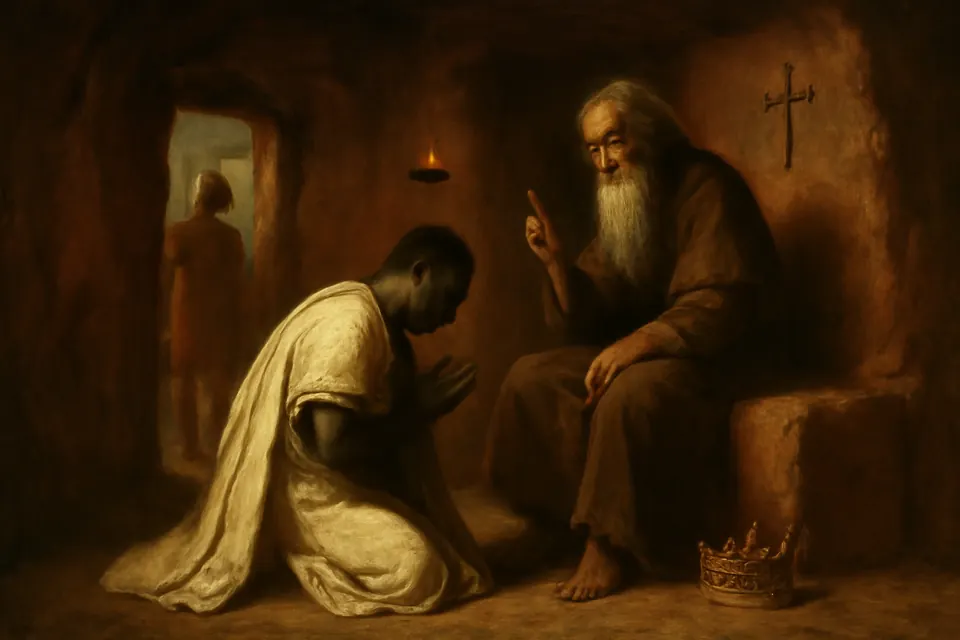
The Orthodox Church in America's life says Kaleb "was unable to stand by while those who believed in Christ were being massacred." His first campaign failed. Seeking the reason, he went to a recluse named Zenon, who told him he had acted out of personal revenge, for the Lord says, "Vengeance is mine." Zenon urged him to promise the rest of his life to God. Kaleb made the vow, sailed again, and this time defeated and captured the persecutor.
Procopius tells the same war from the Byzantine side: the king, learning that the Himyarites "were oppressing the Christians there outrageously," gathered "a fleet of ships and an army," conquered them, and "set up in his stead a Christian king."
The crown laid down
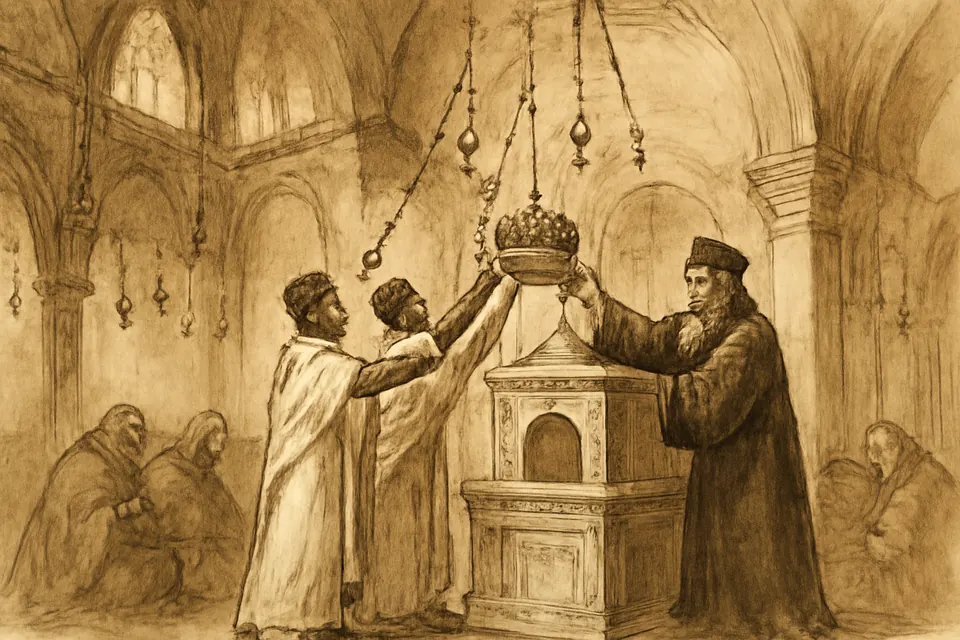
The Martyrology and the Eastern lives agree on what happened next. Kaleb kept his vow. He sent his royal crown to Jerusalem to hang before the tomb of Christ, gave up the throne and withdrew to a monastery, where, the Orthodox life says, he spent about fifteen years "in strict fasting and asceticism." It dates his death to about 553 to 555.
Miracles and legends
No miracles are told of St. Kaleb. The hermit Zenon's prophecy, and the victory that followed Kaleb's vow, are traditional, preserved in the Eastern lives. The crown sent to Jerusalem is also traditional; it is recorded in the Roman Martyrology and the Orthodox life, but no early eyewitness describes it. The war in Arabia itself is history, told by Procopius and other writers of the age.
Symbols of St. Kaleb in art
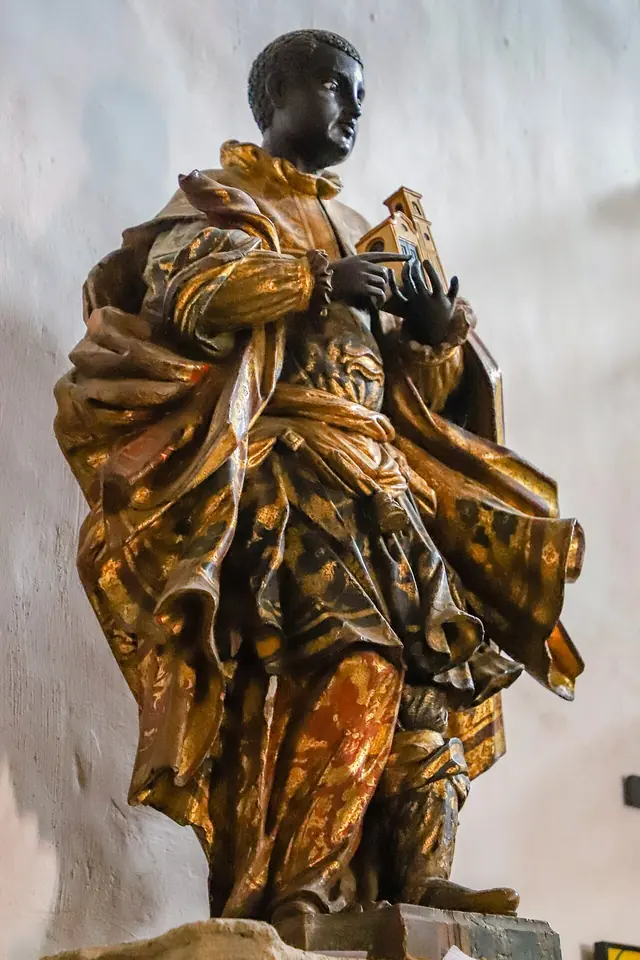
- Crown laid aside: the sign of his renunciation, the most fitting way to recognize him.
- Royal robes and monk's habit together: the king who became a monk.
- Sword, spear or armor: some Baroque statues show him as the warrior king who defended the Christians of Najran.
- Dark skin: in Brazilian and Portuguese images he is plainly an African king. In Brazil he is often paired with Santa Efigênia, an Ethiopian princess-saint of legend.
Where St. Kaleb is honored
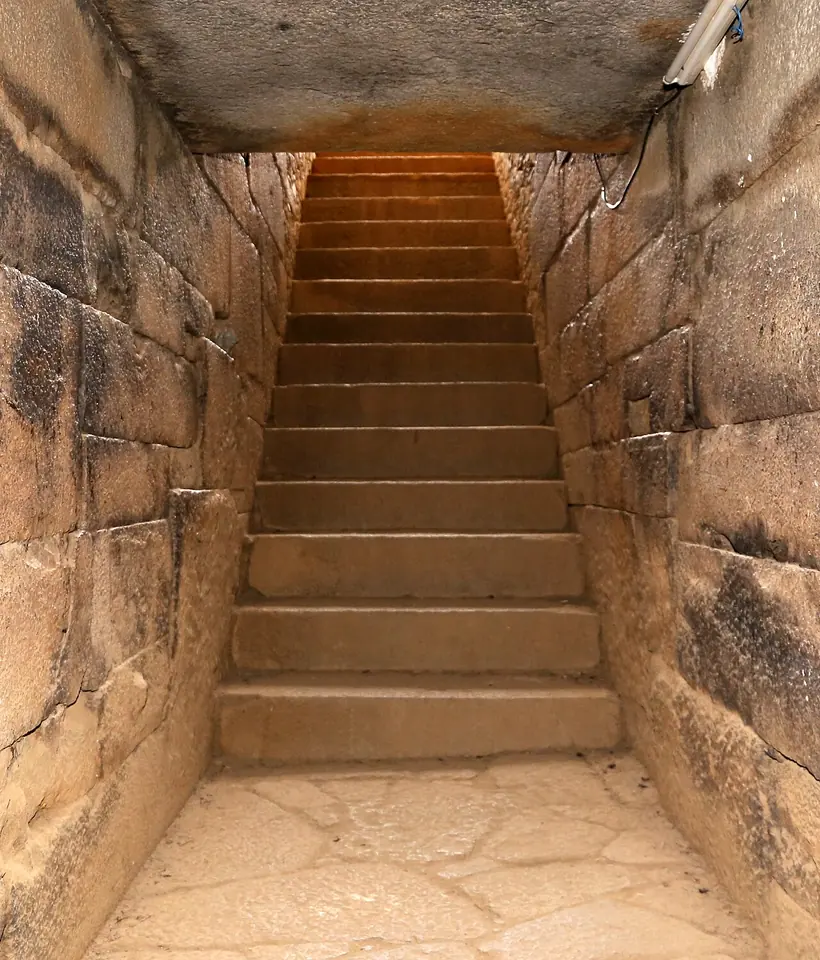
At Aksum, a pair of royal tombs on a hill outside the city carries the names of Kaleb and his son Gebre Meskel by local tradition. The Ethiopian Orthodox Tewahedo Church honors him as one of its holy kings. Among Western Catholics, his cult spread after Cardinal Caesar Baronius entered him in the Roman Martyrology in the sixteenth century. It took deep root among the Black confraternities of Portugal and colonial Brazil, which built churches in honor of Santo Elesbão. He is one of the Black saints of the Church's calendar.

Feast day
We keep his memory on October 27, as the Roman Martyrology does. The Orthodox Church in America keeps it on October 24, with the martyrs of Najran. See more saints of these days on our feast days page.

Prayer to St. Kaleb
There is no traditional Western prayer to St. Elesbaan. The Orthodox Church sings a kontakion in his honor (Tone 4) that praises him for giving up an earthly throne and crown for the sake of Christ the King and for the eternal kingdom, and honors him as a great intercessor for peace. The OCA prints the full text on its website.
Let us ask St. Kaleb to pray for persecuted Christians in Arabia, Africa and everywhere, for leaders who must choose between power and conscience, and for the ancient Church of Ethiopia.
Frequently asked questions
Who was St. Kaleb, also called St. Elesbaan?
A king of Aksum, the ancient Christian kingdom of northern Ethiopia and Eritrea, in the early sixth century. His coins and inscriptions call him Kaleb; Greek writers called him Elesbaas or Hellestheaeus, from his throne name Ella Asbeha, and the Roman Martyrology calls him Elesbaan.
What is St. Kaleb known for?
For his campaign across the Red Sea against the king of Himyar in Yemen, who had persecuted and killed Christians, including the martyrs of Najran, and for giving up his throne afterward to live as a monk.
When is the feast of St. Elesbaan?
October 27 in the Roman Martyrology. The Orthodox Church in America keeps him on October 24 with the martyrs of Najran.
Why is St. Elesbaan honored in Brazil?
In colonial Brazil, confraternities of Black Catholics took Santo Elesbão, an African king and saint, as one of their patrons, often together with Santa Efigênia. Churches and statues of him still stand in Rio de Janeiro and Salvador.
Keep exploring
Sources
- Procopius, History of the Wars, Book I, chapter 20 (trans. H. B. Dewing), Project Gutenberg. A contemporary Byzantine account of Hellestheaeus (Kaleb) and his war against the Himyarites, quoted on this page
- Blessed Elesbaan, King of Ethiopia, Orthodox Church in America. The hermit Zenon, his vow, abdication and dates
- Blessed Elesbaan, King of Ethiopia: Troparion and Kontakion, Orthodox Church in America. Full text of the kontakion
- Roman Martyrology (1916 English translation), October 27, Divinum Officium project. His Martyrology entry, quoted on this page