St. Justus of Beauvais, the Boy Martyr of Gaul
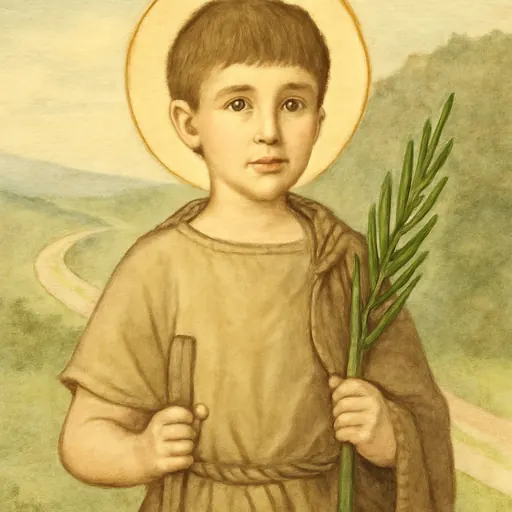
St. Justus of Beauvais, called St. Just in France, was a boy of nine from Auxerre who, the tradition holds, was beheaded near Beauvais around 287 in the persecution of Diocletian because he would not betray his father and uncle. The place is now the town of Saint-Just-en-Chaussée. We keep his feast on October 18.
Who was St. Justus of Beauvais?
St. Justus of Beauvais, known in France as St. Just, was a Christian boy of about nine who, by long tradition, was martyred near Beauvais in northern Gaul around the year 287. He came from Auxerre. The Roman Martyrology remembers him on October 18 in a single line: "In the diocese of Beauvais, St. Justus, martyr, who, being but a boy, was put to death in the persecution of Diocletian, under the governor Rictiovarus."
That line is the solid core. Around it grew a vivid story, written down in acts that came much later. The 19th-century hagiographer Sabine Baring-Gould calls them untrustworthy, since they make the persecutor Rictiovarus a contemporary of St. Amator of Auxerre, though a century lay between the two. The same story was also told, with the name changed, of a St. Justin venerated near Paris. We tell it here as tradition, the way it has been told in Beauvais and Auxerre for over a thousand years.
The journey to Amiens
The acts say Justus lived in Auxerre with his father, Justin, and his mother, Felicissima. His uncle Justinian had been taken captive and was a slave in the house of a man named Lupus in Amiens. Father and son set out north with money to buy his freedom. On the way, a man in Paris named Hippolytus took them in and fed them.
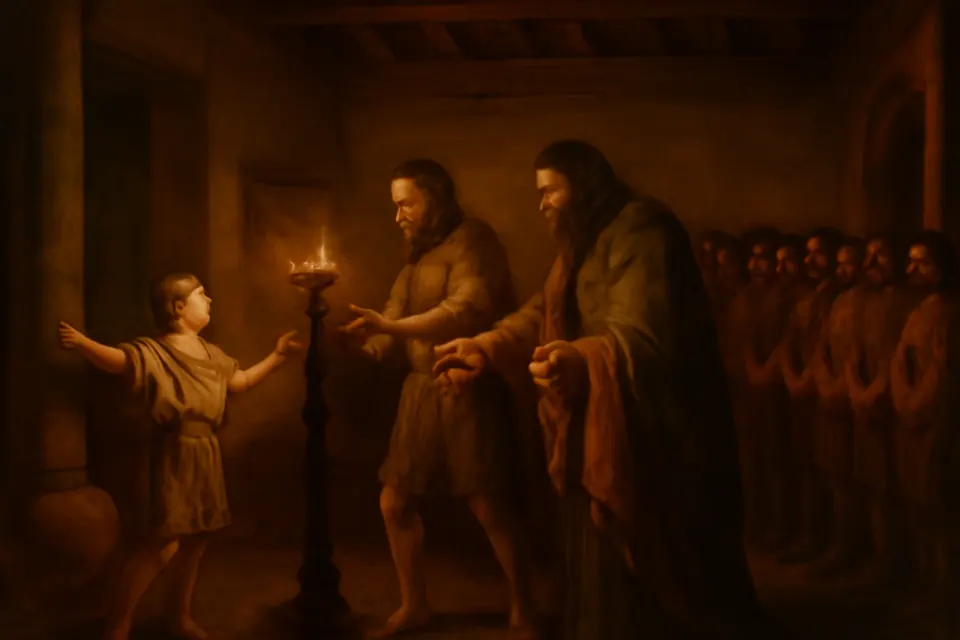
At Amiens, Lupus lined up his twelve servants, and Justinian was not among them. Then, in the evening, the boy noticed a man going about the house lighting the lamps, and cried out, "This is the man we seek." Justin paid the ransom, and the three set off for home.
The martyrdom of St. Justus
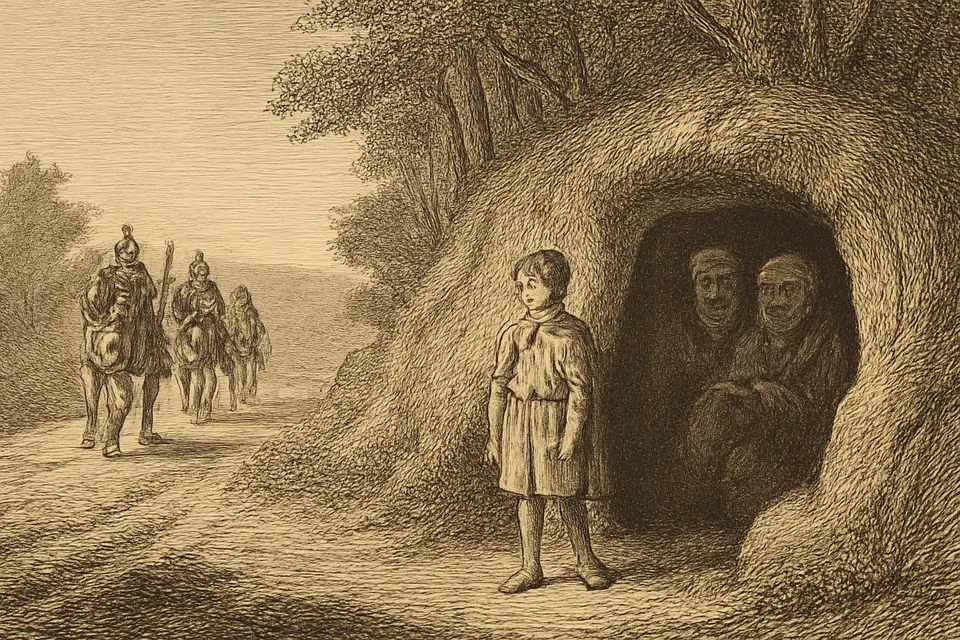
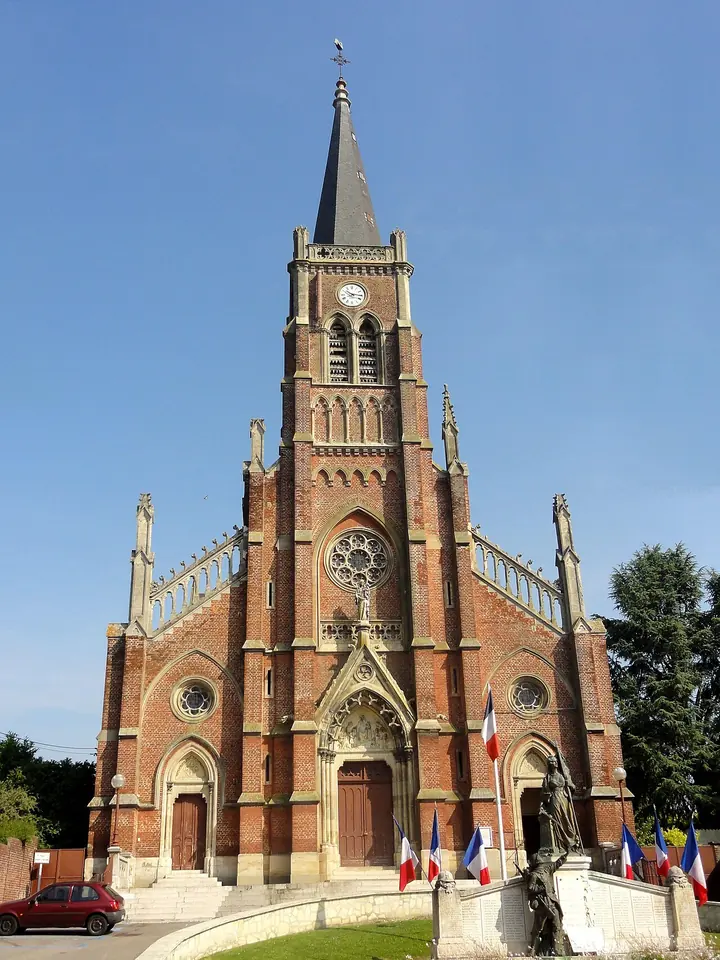
Someone told the governor Rictiovarus, who was then at Amiens, that Christians had come to ransom a slave, and he sent soldiers after them. At a place called Sinomovicus, today Saint-Just-en-Chaussée between Amiens and Beauvais, the two men hid in a cave while the boy stayed outside to keep watch. The soldiers caught him and asked where his companions were. He would not tell them, and they cut off his head.
- Traditional: the acts say the body rose, took up the head in its hands and laid it at the mouth of the cave, and the boy's soul prayed, "Lord of heaven and earth, receive my spirit, for I am innocent and clean of heart." The soldiers fled in terror. The head then asked the father and uncle to bury the body there and carry the head home to his mother, so that she could kiss it.
- Traditional: at Auxerre, the story continues, the head shone like a lamp at night in his mother's house, until it was buried and a church built over it.
Whatever later storytellers added, the heart of it is plain and moving: a child gave his life rather than betray his father. We honor that faithfulness.
The relics of St. Justus
His relics were scattered widely, and more places claimed them than one boy could supply. Baring-Gould lists them honestly: a body translated from Sinomovicus to Beauvais around 900; a body taken to the abbey of New Corbie, now Corvey in Germany, in 946, with part of a head in 949; another body at Poitiers; another, whole with its head, at Malmédy; heads at Einsiedeln and at Flums in Switzerland; and another head at the church of St. Charles in Antwerp. Many of these claims cannot all be true. What they do show is how widely the boy martyr was loved. In the Church of Saint-Étienne in Beauvais a gilded 19th-century shrine is dedicated to St. Just and St. Vaast.

Where the relics of St. Justus of Beauvais are kept: see them on the relics map →
Symbols of St. Justus in art
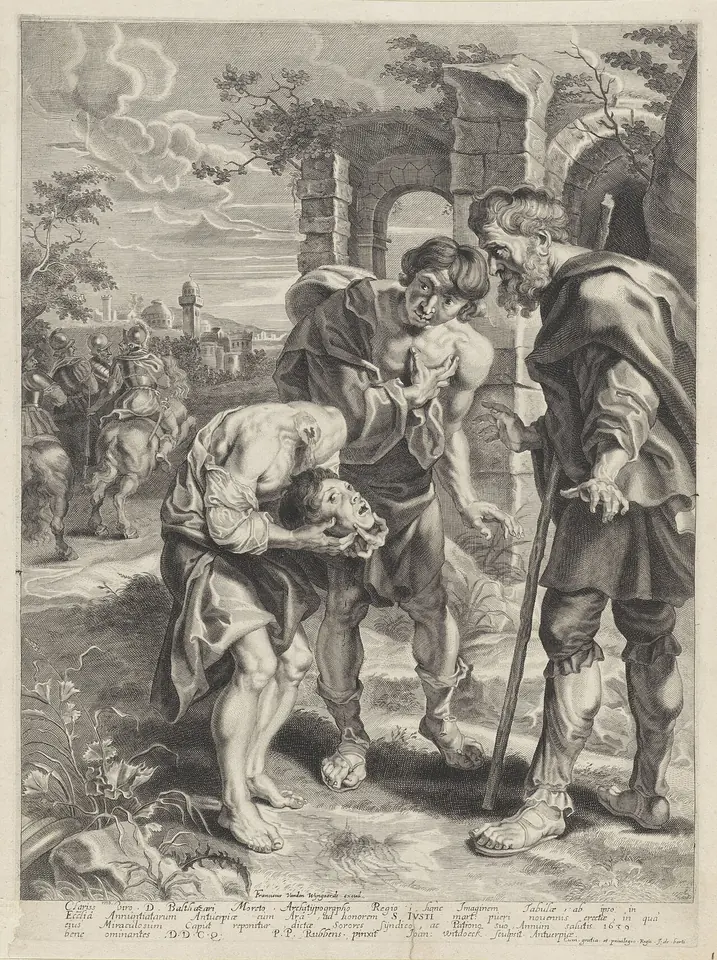
Justus is shown as a boy or young man holding his own severed head, which makes him one of the cephalophores, the "head-carrying" martyrs, like St. Denis of Paris. Rubens painted the moment when his father and uncle come out of the cave and find him standing there, and Witdoeck's engraving spread that image. He may also carry the palm of a martyr. When you see a child saint holding his head in a church of Picardy or Burgundy, it is very likely St. Just.
Feast day and prayer
We keep the feast of St. Justus of Beauvais on October 18. He is remembered above all around Beauvais and Auxerre, and he was once in the English calendars of Sarum, York and Hereford. We know of no traditional prayer to him in English. Let us ask St. Justus, who would not betray his father, to pray for children who suffer for the faith and for families separated by danger. St. Justus, pray for us.
Frequently asked questions
Who was St. Justus of Beauvais?
A Christian boy of about nine from Auxerre in Roman Gaul. According to his acts, he traveled with his father to ransom his uncle from slavery in Amiens, and was beheaded by pursuing soldiers when he refused to say where his father and uncle were hiding.
Why is St. Justus shown holding his head?
His legend says that after he was beheaded his body rose, picked up his head and spoke. Saints shown this way are called cephalophores, "head-carriers," like St. Denis of Paris.
When is the feast of St. Justus of Beauvais?
October 18, the date in the Roman Martyrology, which remembers him as a martyr "being but a boy."
Is the story of St. Justus historical?
The Church has honored him as a martyr for many centuries, but the written acts of his martyrdom are late. Baring-Gould points out that they place St. Amator of Auxerre alongside the persecutor Rictiovarus, though a century separated them.
Keep exploring
Sources
- The Roman Martyrology (1916 English edition), October 18. "St. Justus, martyr, who, being but a boy, was put to death in the persecution of Diocletian, under the governor Rictiovarus"
- Sabine Baring-Gould, The Lives of the Saints, vol. 12 (October), October 18. The acts of St. Justus, their weaknesses, the English calendars, and the many places claiming his body and head