St. Matrona of Chios
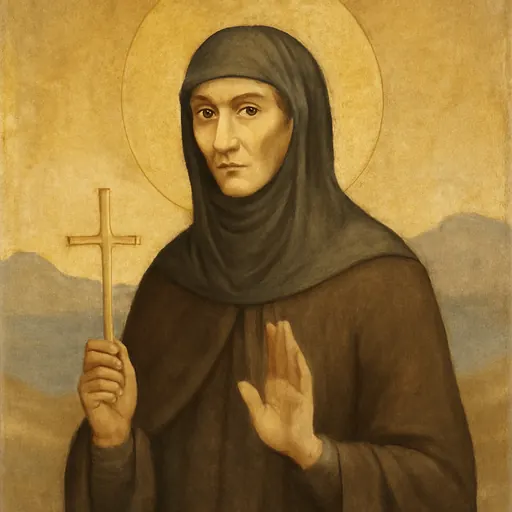
St. Matrona of Chios was a nun of the Greek island of Chios, born at Volissos to devout parents, Leon and Anna. From her youth she longed for the monastic life, founded a small monastery for women, and was known for her charity to the poor and her healing of the sick. She died before 1455. The Orthodox Church keeps her feast on October 20.
Who was St. Matrona of Chios?
St. Matrona of Chios was a nun of the Greek island of Chios, in the eastern Aegean, honored in the Orthodox Church as a venerable mother and a wonderworker. She was born at Volissos, a village in the northwest of the island, to wealthy and devout parents, Leon and Anna. She left her family's comfort for the monastic life, founded a small monastery for women, and became known across Chios for her charity to the poor and her healing of the sick. We keep her feast on October 20.
Little is certain about her dates. The Orthodox Church in America places her birth in the fourteenth century. Her church service was written by Metropolitan Niketas of Rhodes, and it survives in a manuscript dated 1455, so she must have died before that year.

Leaving home for God
From her youth, the OCA's life says, Matrona "showed an inclination for monasticism." One day she left her parents and went to live in an empty, unpopulated place to pray. Chian tradition names the spot as Katavasis, above Volissos, where a church later marked the beginning of her struggle, and adds that her parents at first tried to bring her home and marry her, until they accepted her choice.
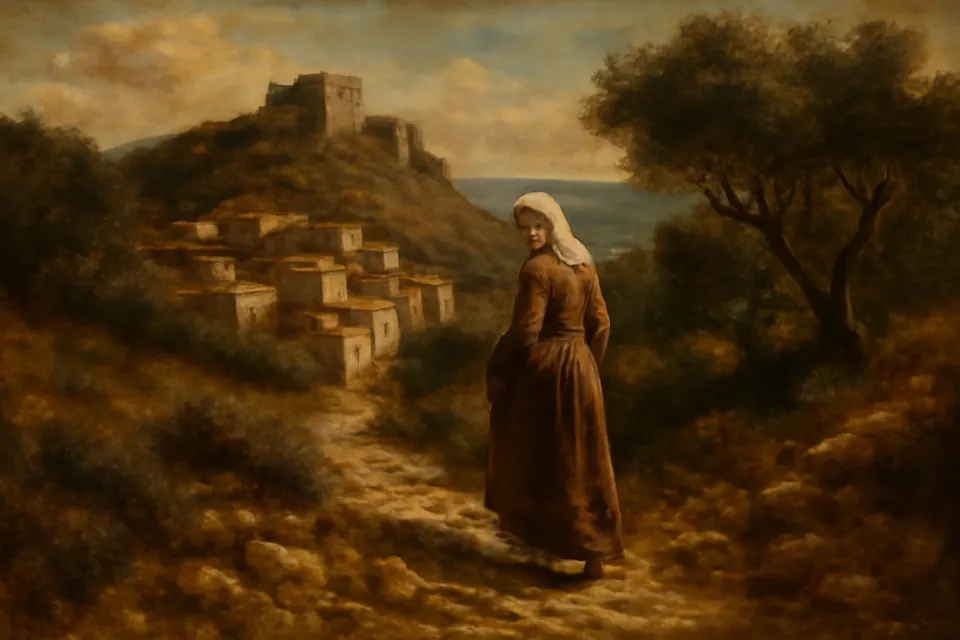
Other women came to join her, and she founded a small monastery for them. Local tradition says the community was in the town of Chios, the island's capital, and that she became its abbess, enlarged its church, and used what was left of her inheritance to build a public bath for the poor and for travelers. We give these details as tradition; the older record says only that she founded a women's monastery and that "other nuns joined her in her ascetical struggles."
Her miracles and her charity
The life calls her a worker of "many miracles both during her life and after her death," and says she "was able to heal the sick." These are traditional accounts, kept in the memory and worship of the Church of Chios rather than in investigated records. Among the stories told on Chios is that she prayed when an armed foreigner threatened her nuns, and lightning struck him down. After her death, healings were reported at her tomb in the monastery church.
Her care for the poor runs through every account of her. She was revered throughout Chios, the OCA says, "for her virtuous life and holiness."
Her death and her head
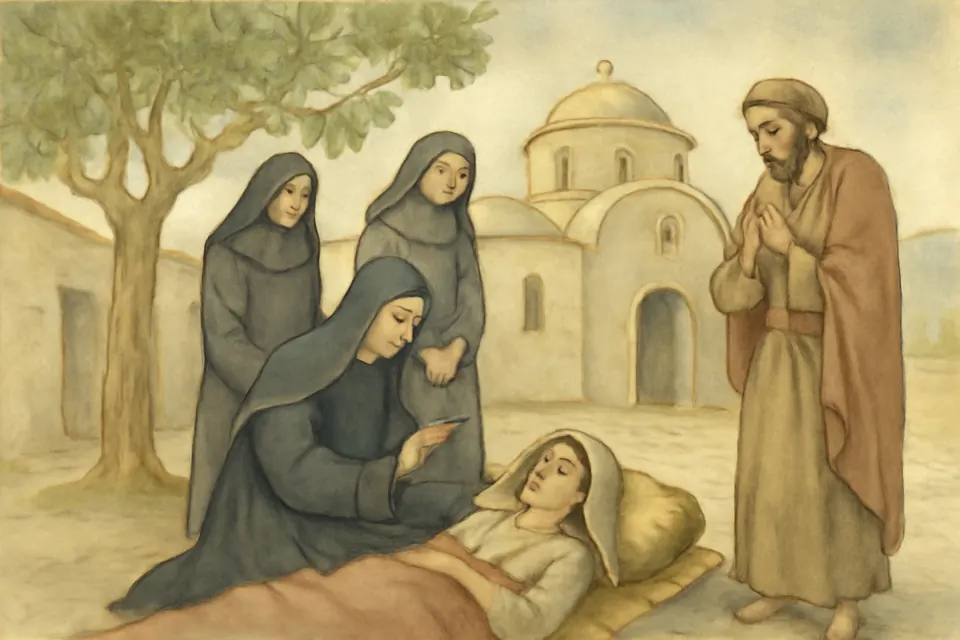
Chian tradition says she foresaw her death in a dream, fell ill for seven days, counseled her nuns, received Holy Communion and died. Some accounts give the year as 1462, which is hard to reconcile with the manuscript of 1455 that already contains her service.
The Church also keeps a second day for her, July 15, for the finding of her head, a sign that her relics were honored and, at some point, recovered.
Symbols of St. Matrona of Chios in art
Icons show her in the way the Orthodox Church paints holy nuns. Look for:
- The dark habit and veil of a nun, drawn close around an aged face.
- A cross in her right hand, the sign of one who took up the cross by renouncing the world.
- An open palm raised toward the viewer, a gesture of prayer and witness.
- An inscription naming her "the holy Matrona of Chios," which tells her apart from the other holy women named Matrona.
Where she is honored
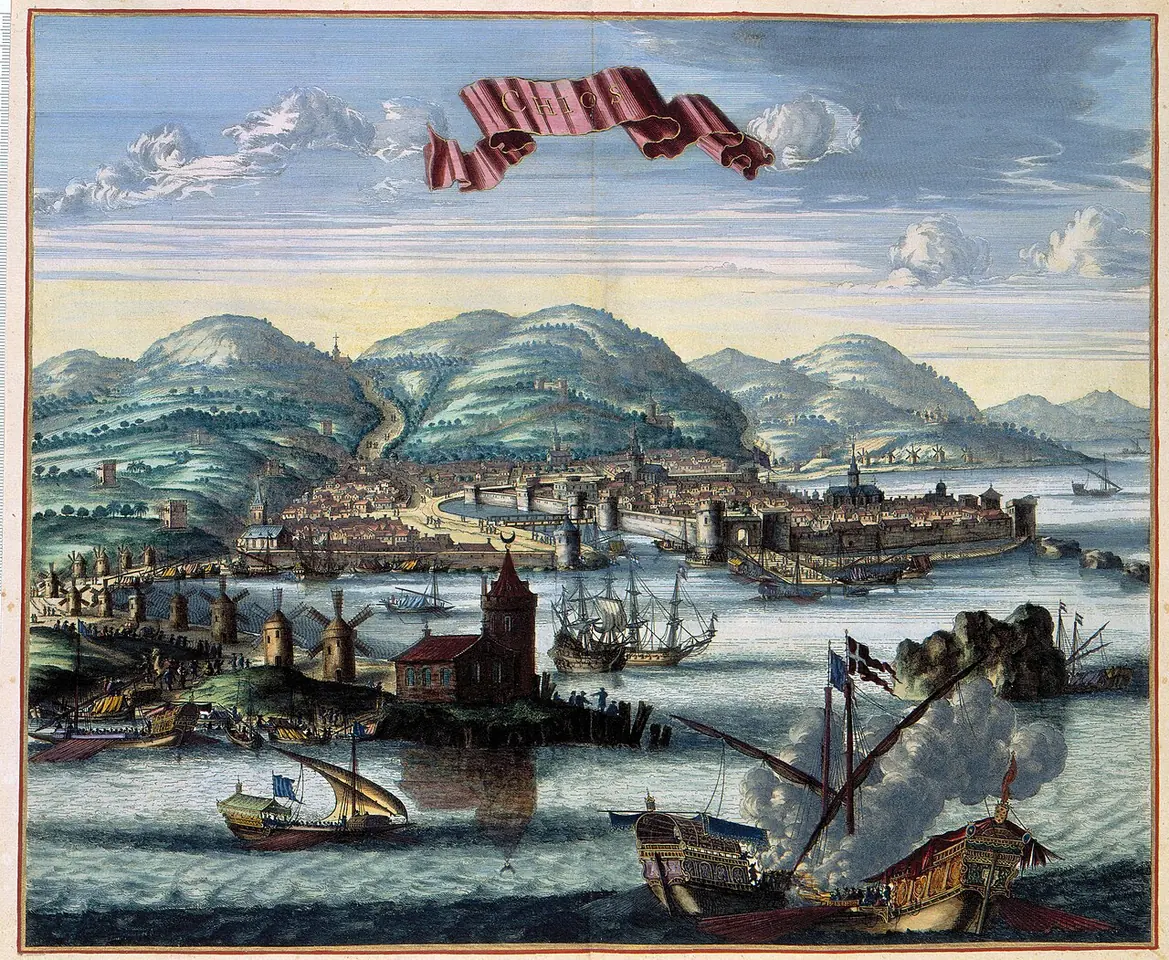
She belongs to the whole island. Tradition says that around 1470 a nobleman of Chios named Roidis, planning a summer house near the village of Mesa Didyma, saw her in a dream and built a monastery in her honor instead; a small community of nuns still keeps her feast there on October 20. Chios, the island of St. Isidore and St. Markella, counts her among its own saints.

Feast day and troparion
We keep the feast of St. Matrona of Chios on October 20, and the finding of her head on July 15. See the feast day calendar for the other saints of October.
The Orthodox Church sings this troparion to her, in Tone 3:
Following in the footsteps of Christ, you forsook the pleasures of the world, O venerable one, / and in the flesh you imitated the life of the angels. / Therefore, you have filled Chios, your native isle, with joy, / and with the gifts bestowed by the Spirit, O all-praised maiden. / Therefore, we cry out to you with joy: "Rejoice, most blessed Matrona."
Let us ask her to pray for women in religious life, for the sick, and for the people of the Greek islands: holy mother Matrona, pray for us.
Frequently asked questions
Who was St. Matrona of Chios?
A late medieval nun of the island of Chios, born in the village of Volissos to wealthy and pious parents named Leon and Anna. She left home for the monastic life, founded a small monastery for women, and was revered across Chios for her charity, her healings and her miracles.
When is the feast of St. Matrona of Chios?
October 20. The Orthodox Church also commemorates the finding of her head on July 15.
When did St. Matrona of Chios live?
The Orthodox Church in America places her birth in the fourteenth century. Her church service survives in a manuscript of 1455, so she died before that year. Some later Chian accounts give her death as 1462, which does not fit the manuscript.
Keep exploring
Sources
- Orthodox Church in America: Venerable Matrona of Chios. Her parents, the founding of her monastery, the 1455 codex of her service and the July 15 commemoration
- Orthodox Church in America: Venerable Matrona of Chios, Troparion and Kontakion. The text of the troparion
- OrthodoxWiki: Matrona of Chios. Only source found for the local traditions of Katavasis, the date 1462 and the monastery near Mesa Didyma