St. John Roberts, Welsh Benedictine Martyr of Tyburn
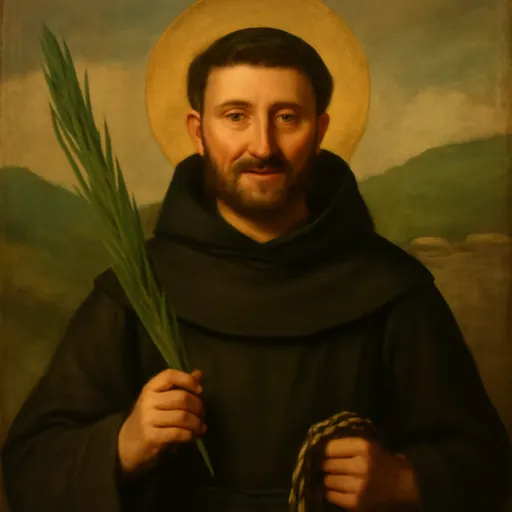
St. John Roberts (1576–1610) was a Welsh convert who became a Benedictine monk in Spain, ministered to Catholics and plague victims in London, and founded at Douai the monastery that became Downside Abbey. He was hanged at Tyburn in 1610 and canonized in 1970 among the Forty Martyrs of England and Wales, whose feast is October 25.
Who was St. John Roberts?
St. John Roberts was a Welsh Benedictine monk and priest who returned again and again to England, where his ministry was a crime, until he was hanged at Tyburn on December 10, 1610. He was the first prior of the monastery of St. Gregory at Douai, the community that still lives today as Downside Abbey in Somerset. He was thirty-four or thirty-five when he died.
He is one of the Forty Martyrs of England and Wales canonized by Pope Paul VI in 1970.
The life of St. John Roberts
From Trawsfynydd to Paris
John was born in 1575 or 1576, the son of John and Anna Roberts of Trawsfynydd, in Merionethshire in North Wales. He was raised in the Church of England; local tradition holds that he was baptized in Trawsfynydd's old parish church of St. Madryn. He went up to St. John's College, Oxford, in 1596, left after two years without a degree, and began to study law in London.

In 1598 he traveled on the Continent, and in Paris, through a Catholic friend from Wales, he was received into the Catholic Church.
A monk in Spain
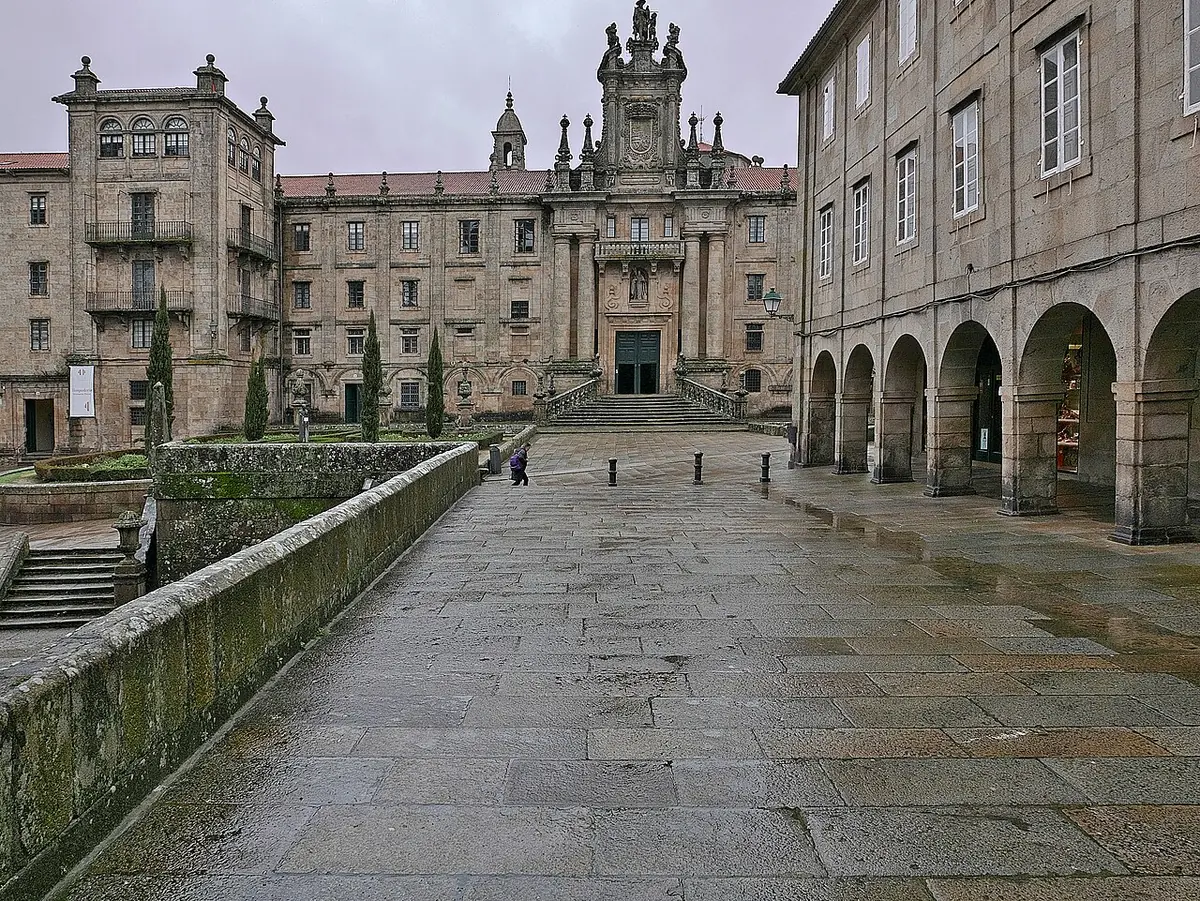
That October he entered the English College at Valladolid to train for the priesthood. The next year he left the college for the Benedictine Abbey of St. Benedict in Valladolid, and he made his novitiate at the great Abbey of San Martín in Santiago de Compostela, where he took his vows at the end of 1600. After his studies he was ordained.
Five arrests
He set out for England on December 26, 1602, and landed in April 1603. Within weeks he was arrested and banished. He came straight back and worked among the plague-stricken poor of London that summer. In 1604 he was arrested and banished again, and again he returned. On November 5, 1605, the night the Gunpowder Plot was discovered, he was found at the house of Mrs. Percy, wife of one of the plotters. He was cleared of any part in the plot but kept in the Gatehouse prison for seven months and exiled in July 1606.

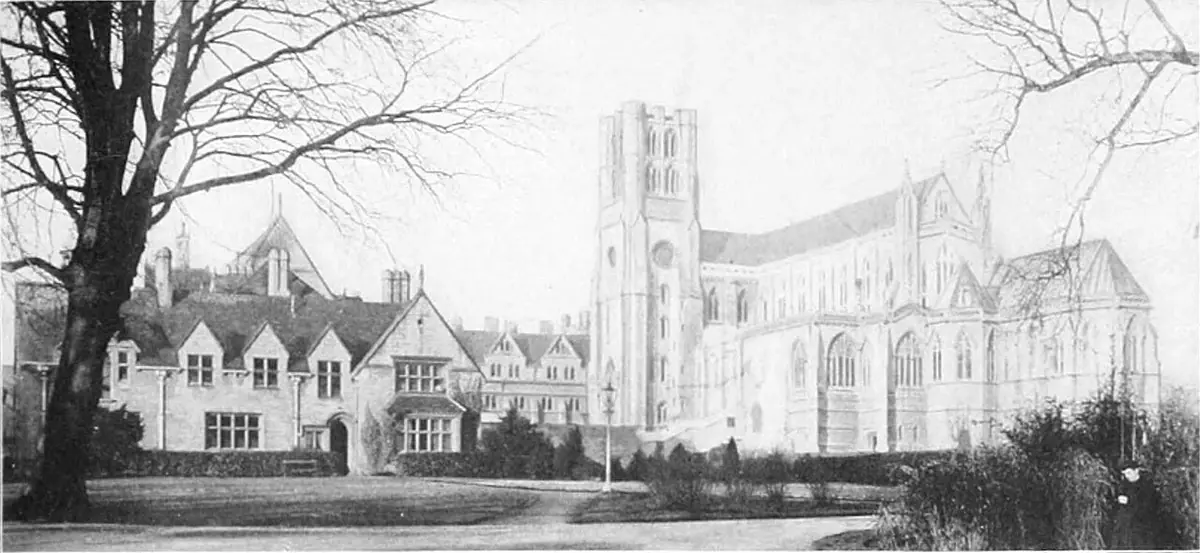
He spent most of the next fourteen months at Douai, in Flanders, where he gathered English monks who had joined Spanish monasteries into a house of their own. That was the beginning of St. Gregory's, the community that later moved to England and settled at Downside. He returned to England in 1607, was arrested, escaped, was caught again in 1609, and would have died then if the French ambassador had not won him a sentence of banishment instead.
The martyrdom of St. John Roberts
He came back once more, knowing it would cost him his life. On December 2, 1610, the pursuivants broke in as he was finishing Mass and took him to Newgate in his vestments. He was tried on December 5 and condemned under the law against priests ministering in England.
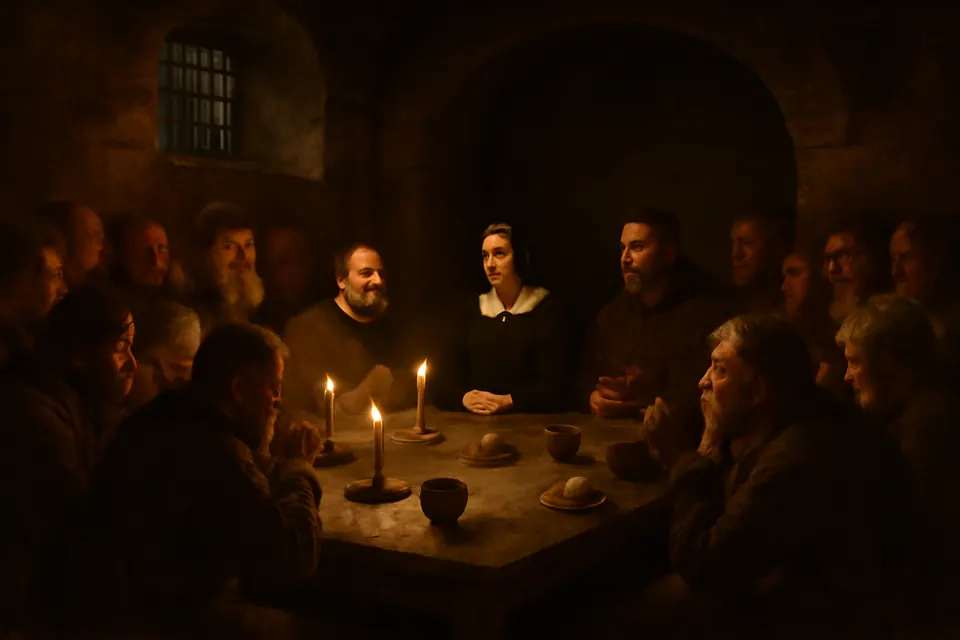
On the last night, the Spanish noblewoman Luisa de Carvajal, who lived in London to help imprisoned Catholics, arranged a supper in Newgate. Twenty prisoners sat at table with John and the secular priest Thomas Somers, who was to die with him. Her biographer, quoted by Dom Bede Camm, records John asking her: "Do not you think I may be causing disedification by my great glee? Would it not be better to retire into a corner and give myself up to prayer?" She told him he could do nothing better than let everyone see how cheerfully he went to die for Christ.
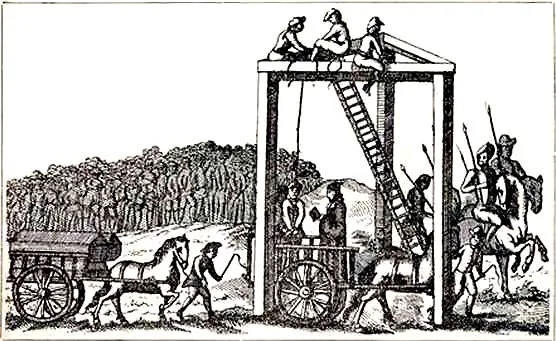
At Tyburn on December 10 he told the crowd that he died "for no other reason but that, being a priest, I must die." He reminded them that St. Augustine of Canterbury, sent by Pope St. Gregory, had been a Benedictine monk like him: "He was a monk of the Order of St Benedict; I am one likewise." When Thomas Somers was brought to the cart, John greeted him: "Come, sir, come and welcome, brother and companion in the same glorious triumph." He was hanged, drawn and quartered with Somers.
Miracles and canonization
No miracles are recorded of St. John Roberts during his life. His sanctity is the martyr's witness. Pope Leo XIII approved the introduction of his cause in 1886, and Pope Paul VI canonized him on October 25, 1970, with the other Forty Martyrs of England and Wales.
Symbols of St. John Roberts in art
Look for:
- A young Benedictine monk in a black habit.
- A martyr's palm and a rope or halter, for his death at Tyburn.
- Mass vestments or a chalice, since he was arrested at the altar.
- Downside Abbey, as its founding prior.
Feast day, relics and prayer
We honor him with the Forty Martyrs on October 25. See our feast days calendar for other saints of the season.
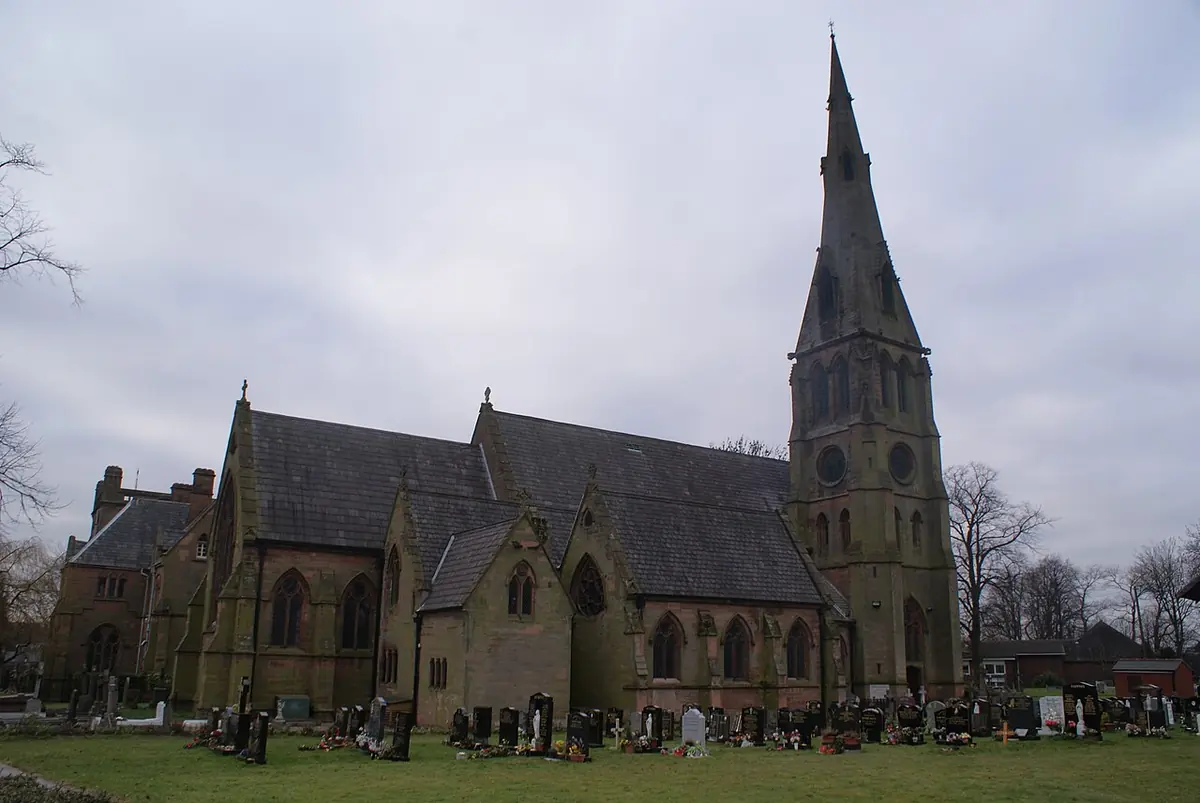
His body was carried to Douai but disappeared in the French Revolution. In 1912 the Catholic Encyclopedia recorded two of his fingers, at Downside and at Erdington Abbeys, and a few smaller relics.
No traditional prayer belongs to him alone. Let us ask him, who went to his death so joyfully, to pray for priests who serve where the faith is hard to live, and for the Church in Wales: St. John Roberts and all you holy martyrs of England and Wales, pray for us.
Where the relics of St. John Roberts are kept: see them on the relics map →
Frequently asked questions
When is the feast of St. John Roberts?
October 25, with the Forty Martyrs of England and Wales, the day kept in Wales for the Welsh martyrs. In England the martyrs are honored together on May 4. He died on December 10, 1610.
What is St. John Roberts known for?
He was the first prior of St. Gregory's at Douai, the community that became Downside Abbey, and one of the first Benedictine monks to return to England after the Reformation. He served the sick during the London plague of 1603 and died a martyr at Tyburn.
Why was St. John Roberts executed?
He was convicted under the law that made it treason for a Catholic priest to minister in England. At Tyburn he told the crowd he had committed no other crime: 'being a priest, I must die.'
Where are the relics of St. John Roberts?
His body was taken to Douai but was lost during the French Revolution. In 1912 the Catholic Encyclopedia recorded two of his fingers, one at Downside Abbey and one at Erdington Abbey, and a few minor relics.
Keep exploring
Sources
- Catholic Encyclopedia (1912): St. John Roberts. His dates, Valladolid and Compostela, the five arrests, the founding of St. Gregory's at Douai, his trial, and the relics at Downside and Erdington
- Bede Camm, A Benedictine Martyr in England: Dom John Roberts, O.S.B. (1897, Internet Archive). The supper in Newgate with Luisa de Carvajal and his words at Tyburn