Blessed Vladimir Ghika
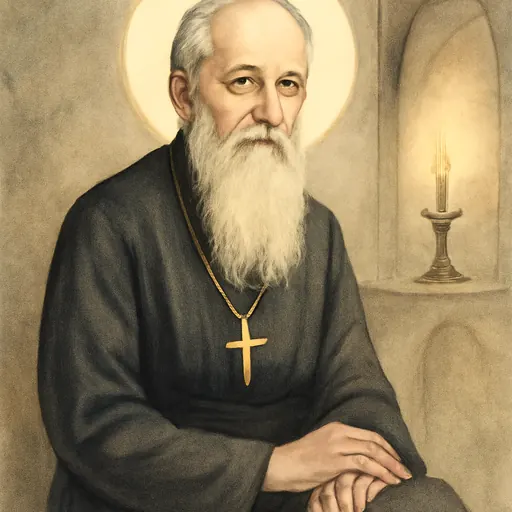
Blessed Vladimir Ghika (1873–1954) was a Romanian prince who became a Catholic in 1902, served the poor as a layman, and was ordained a priest in 1923. Arrested by the communist regime in 1952 for keeping the Church in Romania united with Rome, he died in Jilava prison on May 16, 1954. He was beatified as a martyr in 2013.
Who was Blessed Vladimir Ghika?
Blessed Vladimir Ghika was a Romanian prince who became a Catholic priest and died a martyr in a communist prison. He was born in Constantinople on Christmas Day, 1873, the grandson of the last ruling prince of Moldavia, and he died in Jilava prison outside Bucharest on May 16, 1954, at the age of eighty.
Between those dates he lived several lives: diplomat's son, student of everything, convert, lay apostle to the sick, priest of the Paris slums, friend of philosophers, traveler to Japan and the Congo, and at the end a prisoner who shared his bread. The Church declared him a martyr in 2013. We keep his feast on May 16.
A prince's son and his long road to Rome
His father, Prince General Ioan Grigore Ghika, was Romania's envoy to the Ottoman court; his mother was Princess Alexandra Moret de Blaramberg. Vladimir was the fifth of six children, and like the others he was baptized and received the sacraments in the Orthodox Church under his mother's guidance.
When he was eight his father died. The family had settled in Toulouse, in France, for the children's schooling, and Vladimir finished a law degree there. In Paris he studied political science for a diplomatic career and sat in on courses in medicine, botany, art, philosophy and history at the same time. Poor health sent him back to Romania; in 1898 he went to Rome with his brother, who was beginning his own diplomatic mission.
The Dicastery for the Causes of Saints describes a faith that grew slowly. Summers at the Orthodox liturgy, Sundays with the Protestant community of the family governess, and above all his mother, a fervent Orthodox who read Bossuet and the Imitation of Christ. In 1902, after a long road of prayer and reflection, he entered the Catholic Church. He took a degree in philosophy and a doctorate in theology at the Angelicum in Rome.
Twenty years as a lay apostle
Vladimir felt called to the priesthood, but his mother opposed it, and Pope St. Pius X advised him to stay in the world as a lay apostle for now. He obeyed. He spent his free time in the hospitals and hospices of Rome, and from a Sister Pucci and the Daughters of Charity of St. Vincent de Paul he learned a method for serving the poor. Until he was fifty he carried on this life of charity, diplomacy and study, and all the while he prepared for the altar.
Priest of the poor
On October 7, 1923, he was ordained a priest in Paris. He was given unusual privileges: he could celebrate Mass in either the Latin or the Byzantine rite, anywhere, hear confessions and receive converts. He was sent at once to the refugees pouring into Paris after the First World War and went to live among the poor at Villejuif, on the city's edge.

In 1924 he founded a small community of apostolic life inspired by St. John the Evangelist. He supported the circle of Catholic thinkers around Jacques Maritain, served on the organizing committee of the International Eucharistic Congresses, and traveled as far as Japan and the Congo for his charitable and ecumenical projects.
Romania under communism
In 1939, as Poland fell, he returned to Romania to help Polish refugees and stayed through the war. When the communist regime took power in 1948 he refused to leave. The government suppressed the Romanian Greek Catholic Church, united with Rome since 1700, and tried to cut the Latin Catholics off from the Holy See. Father Ghika put all his contacts to work to keep that bond alive and became the go-between for the one Catholic bishop's substitute still at liberty and the Pope.
On November 18, 1952, he was arrested with that substitute and others. For almost a year they were questioned harshly, then tried before a military court and condemned for spying for the Vatican. He was sent to Jilava prison near Bucharest.
There, the Dicastery writes, his courage before his persecutors gave way to an extraordinary charity toward the other prisoners, who came to him for spiritual, intellectual and physical support. Worn out by suffering and mistreatment, he died in the prison infirmary on May 16, 1954.

The Dicastery heads its account of his life with a line in Italian that sums him up. In English it reads: "Our death must be the supreme act of our life; but it may happen that God alone knows it."
Martyrdom and beatification
He was buried at once at the prison. In 1968 his family had his remains moved to Bellu Cemetery in Bucharest. After the fall of communism in 1989, the Archbishop of Bucharest opened his cause; the secret police files were slow to open, and the diocesan inquiry ran from October 2002 to June 2003. On March 27, 2013, Pope Francis declared that his death was a true martyrdom suffered for his faithfulness to Christ and the Church. He was beatified on August 31, 2013.
- Approved: his martyrdom, recognized by the decree of 2013. A martyr's beatification does not require a miracle.
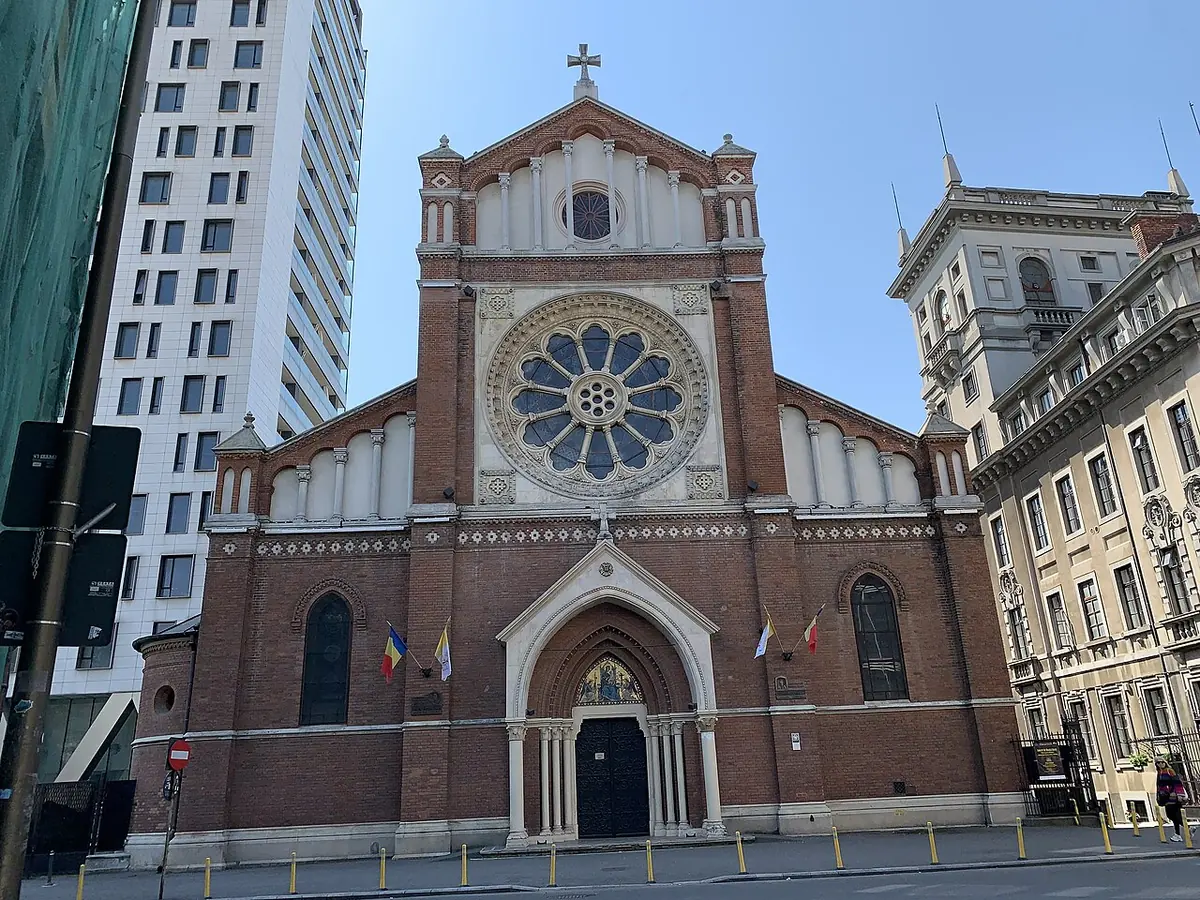
His relics are venerated in St. Joseph Cathedral in Bucharest, where Pope Francis celebrated Mass in 2019.

Symbols of Blessed Vladimir Ghika in art
Because he lived in the age of photography, he is usually shown as people knew him:
- A tall old priest with a long white beard, in a black cassock;
- Latin or Byzantine vestments, recalling his permission to serve both rites;
- Prison bars or a prison cell, for his martyrdom at Jilava;
- The poor and the sick around him, for his life of charity.
Feast day and prayer
We keep the feast of Blessed Vladimir Ghika on May 16. See the feast day calendar.
We know of no traditional prayer to him in English. Let us ask Blessed Vladimir to pray for the Church in Romania, for Christians imprisoned for their faith, for refugees and the poor of our cities, and for the unity of the Churches of East and West that he loved.
Frequently asked questions
Who was Blessed Vladimir Ghika?
A Romanian prince born in Constantinople in 1873, raised Orthodox, who entered the Catholic Church in 1902. He studied theology at the Angelicum in Rome, spent decades in charitable work, and was ordained a priest in Paris in 1923, with permission to celebrate in both the Latin and Byzantine rites. He returned to Romania in 1939 and stayed after the communists took power.
How did Vladimir Ghika die?
He was arrested on November 18, 1952, interrogated for almost a year, and condemned by a military court for spying for the Vatican. He was sent to Jilava prison near Bucharest, where he cared for his fellow prisoners. Worn out by suffering and mistreatment, he died in the prison infirmary on May 16, 1954.
When was Vladimir Ghika beatified?
Pope Francis approved the decree of his martyrdom on March 27, 2013, and he was beatified on August 31, 2013. His feast is May 16.
Where are the relics of Blessed Vladimir Ghika?
His relics are venerated in St. Joseph Roman Catholic Cathedral in Bucharest. After his death his body was buried at the prison; in 1968 his family had his remains moved to Bellu Cemetery in Bucharest.
Keep exploring
Sources
- Dicastery for the Causes of Saints: Vladimir Ghika (biography, decree on martyrdom and apostolic letter). His family, conversion, studies, ordination, Paris ministry, arrest, trial, death, 1968 reburial, the stages of the cause and the dates of the martyrdom decree and beatification
- Vatican News (Romanian), 31 May 2019: Pope Francis at St. Joseph Cathedral, Bucharest. The cathedral where the relics of Blessed Vladimir Ghika are venerated