St. Simeon Stylites the Younger, the Pillar Saint of the Wondrous Mountain
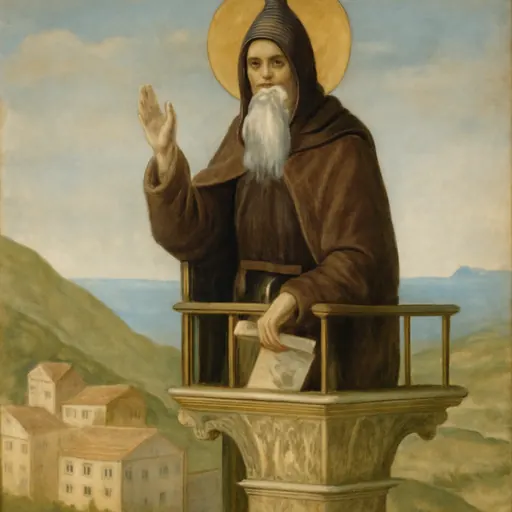
St. Simeon Stylites the Younger (521–596 or 597) was a Syrian monk who climbed his first pillar as a small boy and spent 68 years praying on pillars near Antioch, at last on the "Wondrous Mountain" named for his miracles. We keep his feast on May 24; he is honored among the great hermits of the East.
Who was St. Simeon Stylites the Younger?
St. Simeon Stylites the Younger was a Syrian monk who lived almost his whole life on top of stone pillars, praying for the world below. He was born in Antioch in 521 and climbed his first pillar while still a little boy. He stayed on pillars for 68 years, and he died on May 24, 596 or 597, on a mountain near Antioch that people called "wondrous" because of the miracles worked there. The Church keeps his feast on May 24. The Roman Martyrology remembers him as a priest and anchorite "who lived on a column in conversation with Christ, wrote various treatises on asceticism and was endowed with great charisms."
He is called "the Younger" to set him apart from St. Simeon Stylites the Elder, the first pillar saint, who died in 459. The younger Simeon took the elder as his model and bore his name.
A child dedicated to God
His father was from Edessa. His mother, Martha, is honored as a saint herself, on July 4. The Orthodox life tells that she had longed to be a nun, married in obedience to her parents, and prayed for a son she could give to God; St. John the Baptist appeared to her and foretold his birth. When Simeon was six, an earthquake struck Antioch and killed his father. The boy was lost for days in the ruined city before his mother found him.
On a pillar before his first teeth fell out
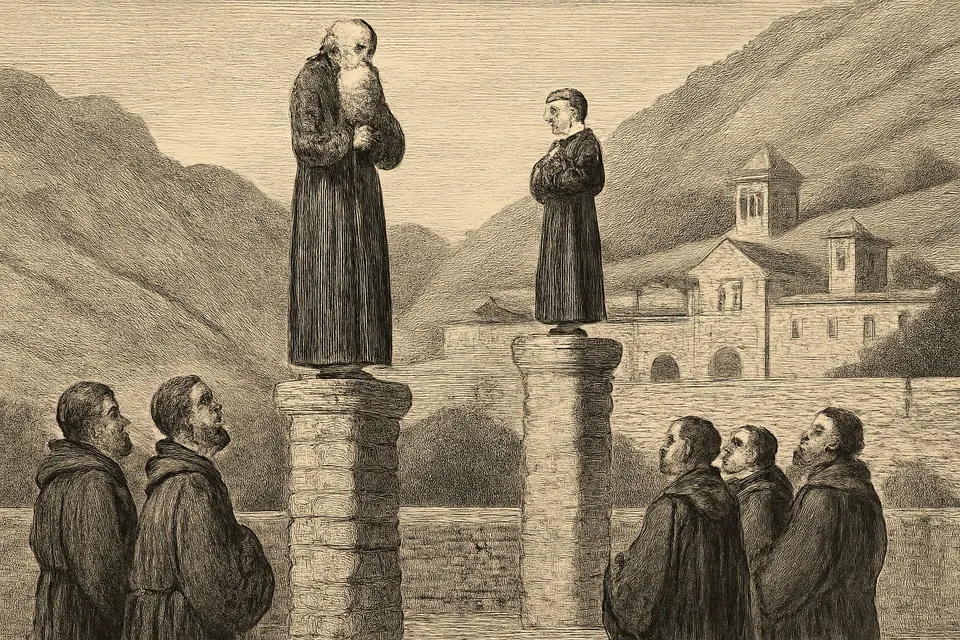
Soon afterward Simeon joined a community of monks living inside the enclosure of a pillar hermit named John. The child begged to live as his master did, and the brothers built him a small pillar close to John's. Simeon himself wrote, in a letter later copied into his mother's life, that he was already living on a pillar when he lost his first teeth. For eight years, until John died, he stayed so near his master that they could talk across the gap, and the old man kept the boy's zeal within limits.
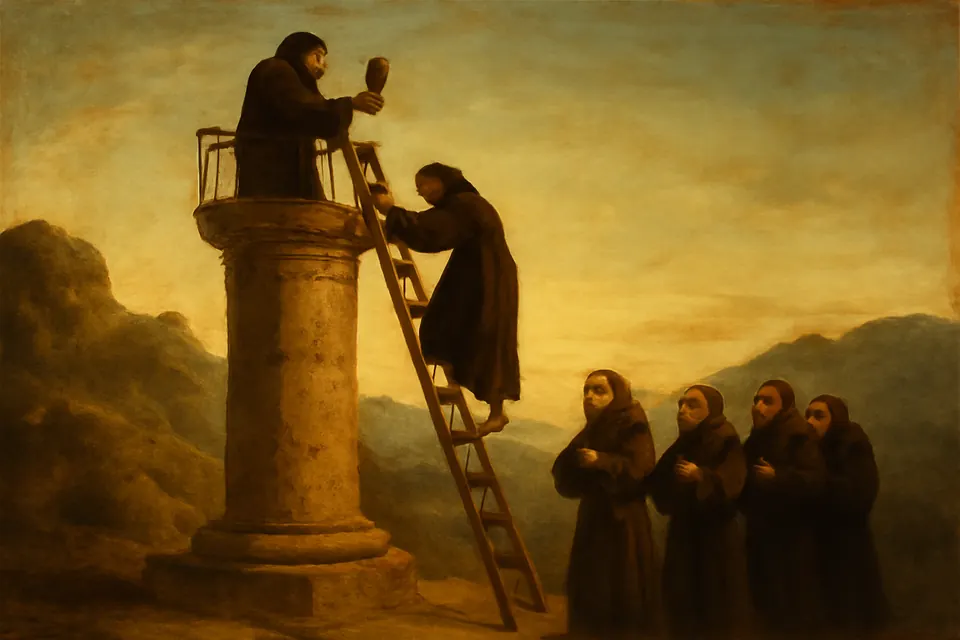
When he moved to a new, higher pillar, he spent a short time on the ground, and in that space the Patriarch of Antioch and the Bishop of Seleucia ordained him a deacon. After John's death he gave full rein to his fasting. The historian Evagrius of Antioch, writing in Simeon's own century, says that he ate only the branches of a shrub. In 560, according to the Orthodox life, Bishop Dionysius of Seleucia ordained him a priest, and from then on he offered the Holy Sacrifice on his pillar. His disciples climbed a ladder one by one to receive Communion from his hands.
The Wondrous Mountain
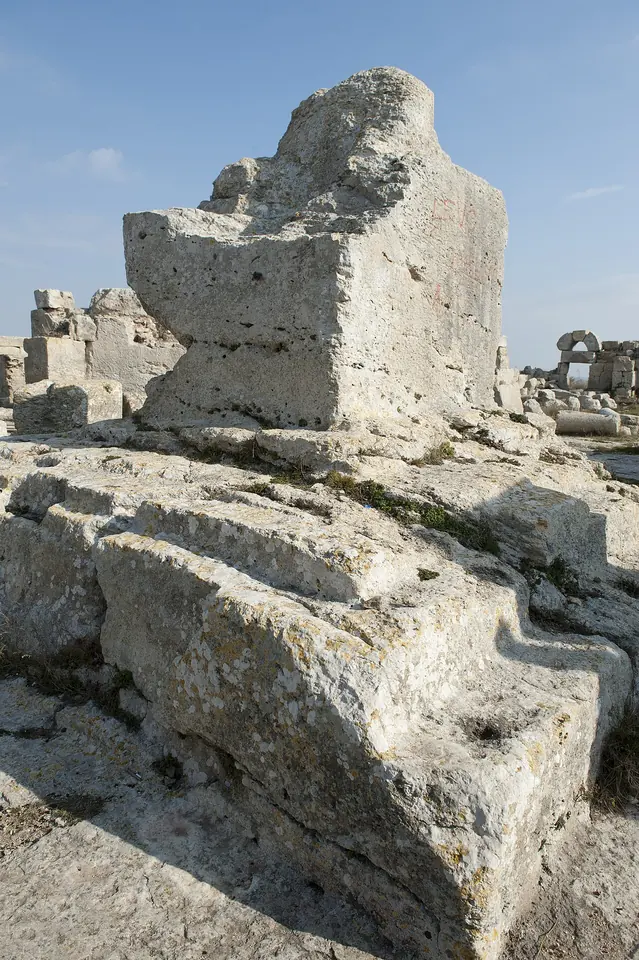
In his last decades Simeon moved to a mountain southwest of Antioch, where, the Orthodox life says, he had seen the Lord standing on a column. There he stood first on a rock and then on a pillar, while a great monastery grew around him. Pilgrims came from far away, and the sick he had healed built a church in thanksgiving. The ruins of that monastery still crown the hill near Samandağ, in Turkey, with the stump of his column in the middle of an octagonal court.
The miracles of St. Simeon
The ancient sources are full of wonders, and we offer them as reported miracles and traditional stories rather than approved ones:
- Healings of the blind, the lame and lepers, during his life and after his death.
- Healings worked through pictures of him. The Catholic Encyclopedia notes that in several cases the cure came through an image of the saint, an early witness to the veneration of holy images.
- A spring of water obtained by his prayer, and the monastery granaries filled with wheat in a time of famine.
- Prophecies, including an earthquake at Antioch, for which he called the city to repentance.
His writings
Simeon was a teacher as well as an ascetic. Small spiritual treatises under his name survive, along with letters to the emperors Justinian and Justin II and several liturgical hymns attributed to him.
Symbols of St. Simeon Stylites the Younger in art
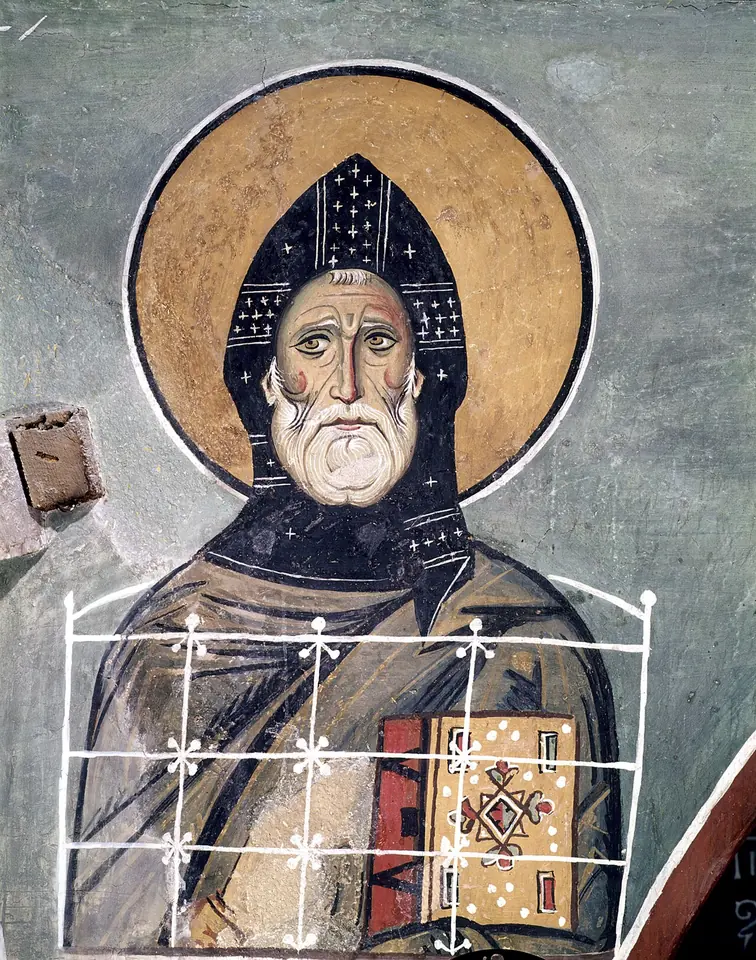
Byzantine painters show him like the elder Simeon: an old monk with a long beard in a dark habit and cowl, standing on a column whose top has a small railing or balcony. He usually holds a scroll or book, or raises his hand in blessing. Only the inscription tells the two Simeons apart, so look for the title "Thaumaturgos" or "of the Wondrous Mountain," as on the twelfth-century wall painting at Lagoudera. Some icons add the mountain or a monastery at the foot of the pillar.
Feast day and prayer
We keep the memory of St. Simeon Stylites the Younger on May 24, and his mother, St. Martha, on July 4. See the feast day calendar for the other saints of May.
The Byzantine churches sing a troparion and kontakion for his day. We know of no prayer to him in common use in English, and we will not compose one in his name. Let us ask St. Simeon to pray for all who seek God in silence and solitude, and for every child whom God calls early.
Frequently asked questions
Who was St. Simeon Stylites the Younger?
A sixth-century Syrian monk born in Antioch in 521. As a child he joined a community gathered around the pillar hermit John and was set on a pillar of his own. He lived on pillars for 68 years, was ordained a deacon and later a priest, and ended his life on a column on the Wondrous Mountain near Antioch, where he died in 596 or 597.
What is the difference between St. Simeon Stylites and Simeon Stylites the Younger?
St. Simeon Stylites the Elder (died 459) was the first pillar saint, near Aleppo. Simeon the Younger lived a century later near Antioch, took the elder as his model and bore the same name. The Elder is kept on January 5 in the West and September 1 in the East; the Younger on May 24.
When is the feast of St. Simeon Stylites the Younger?
May 24, in both the Roman Martyrology and the Byzantine calendar.
Why is it called the Wondrous Mountain?
The Catholic Encyclopedia says the mountain near Antioch where he spent his last years was called the "Hill of Wonders" because of his miracles. Greek writers call him Thaumastorites, "of the Wondrous Mountain."
Keep exploring
Sources
- St. Simeon Stylites the Younger, Catholic Encyclopedia (1912). Birth and death, his mother Martha, losing his first teeth on the pillar, 68 years on pillars, ordination, Communion by ladder, healings through his pictures, his writings
- Stylites (Pillar Saints), Catholic Encyclopedia (1912). The pillar saints of Syria and their way of life
- Venerable Simeon Stylites the Younger of Wonderful Mountain, Orthodox Church in America. The Orthodox life, the vision of Christ on the mountain, the miracles, ordination by Bishop Dionysius in 560, death in 596
- Roman Martyrology 2004 (May), GCatholic. May 24 entry