St. Felix of Cantalice

St. Felix of Cantalice (1515 to 1587) was a shepherd from the hills near Rieti who became a Capuchin lay brother and spent about forty years begging bread through the streets of Rome for his friars and the poor, thanking every giver with "Deo gratias" (thanks be to God). He was the first Capuchin to be canonized, in 1712. His feast is May 18.
Who was St. Felix of Cantalice?
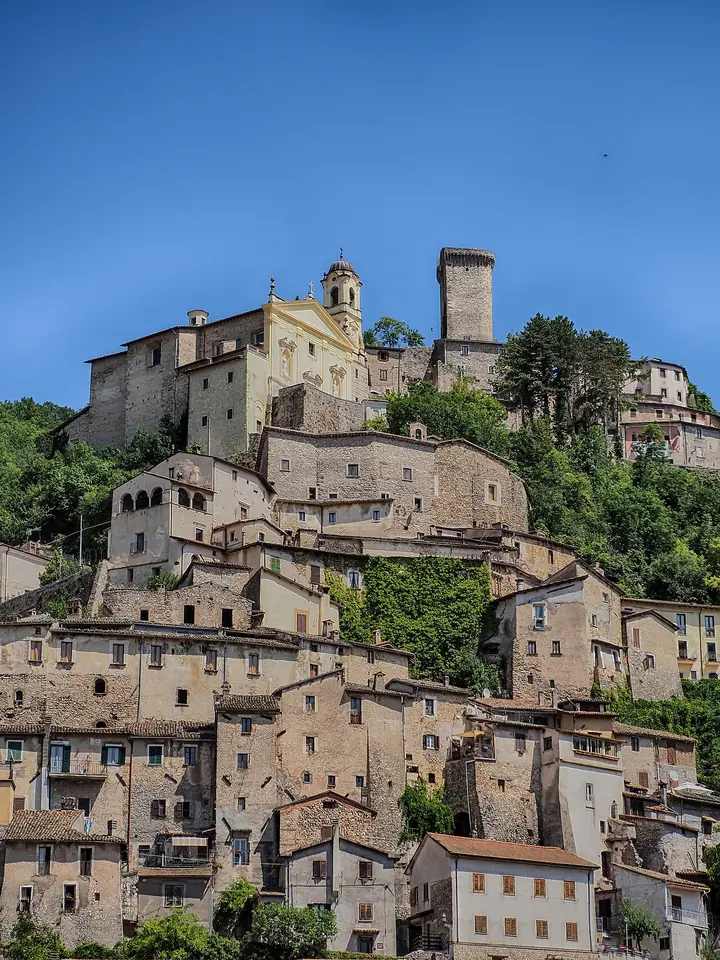
St. Felix of Cantalice was a Capuchin lay brother who could not read, spent forty years carrying a beggar's sack through the streets of Rome, and became the first Capuchin friar to be raised to the altars. He was born in 1515 in Cantalice, a hill town near Rieti in central Italy, to a family of peasant farmers. Tradition gives his birthday as May 18, the same day of the year on which he died.
Rome knew him by the two words he said all day long: Deo gratias, "thanks be to God." He said them when someone filled his sack and when someone slammed a door. St. Philip Neri was his friend, and St. Charles Borromeo asked his advice.
Let us look at his life, and ask him to teach us his gratitude.

The life of St. Felix of Cantalice
Shepherd and farmhand
Felix worked as a shepherd and then a farm laborer for more than twenty years. The Catholic Encyclopedia says he spent his free hours in prayer and admired the Desert Fathers and wished he could live as they did. He prayed while he worked, out in the fields.
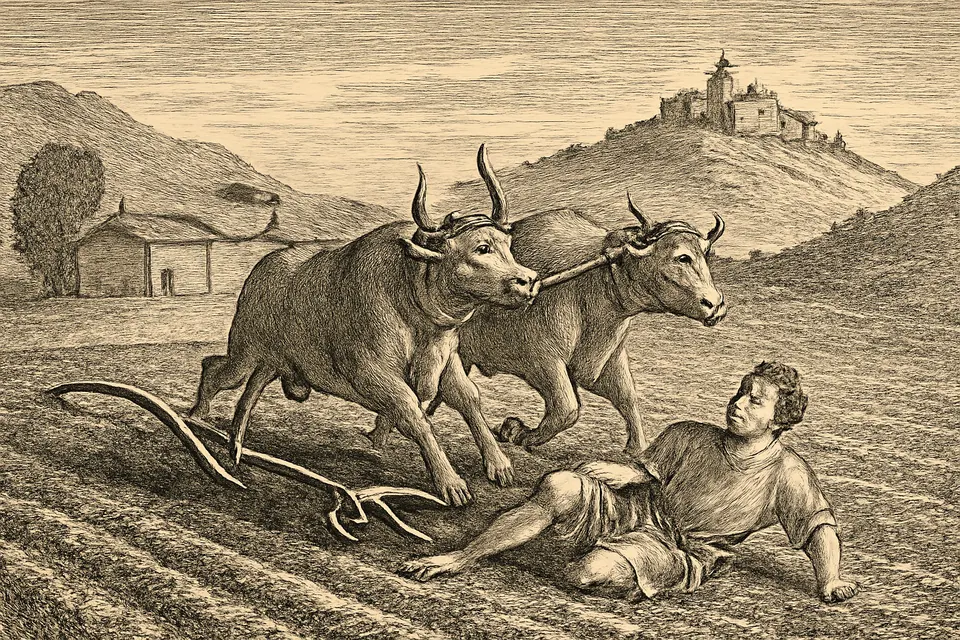
A story told in the Capuchin tradition marks his turning point. While he was plowing, the oxen bolted, and Felix was thrown in front of the plow. The blade passed over him and he got up unhurt. He took it as a sign that God wanted his whole life.
The Capuchins' donkey
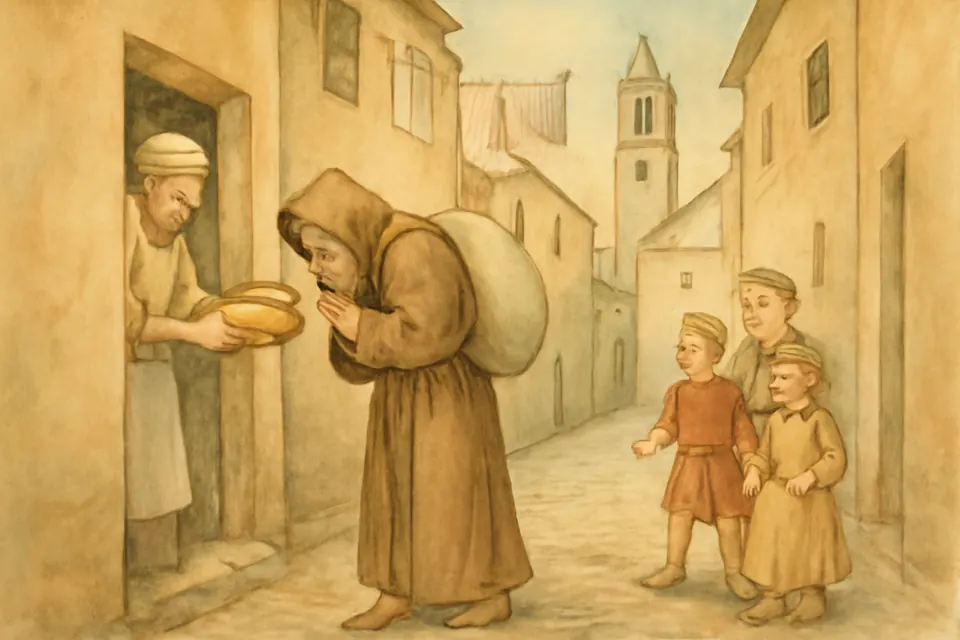
In 1543 he asked to join the Capuchins, then a young reform of the Franciscans, and he was received as a lay brother after a hard struggle with temptation in the novitiate. In 1547 he was sent to Rome and made the questor of the friary, the brother who goes out each day to beg food for the community. He kept that job for the rest of his life, about forty years.
He is remembered as "the Capuchins' donkey," the beast that carries the load so others can work. St. John Paul II recalled the name in 2000, describing Felix "walking the streets of Rome as 'the Capuchins' donkey', begging food for his brothers, responding always with his famous 'Deo Gratias', and feeding the poor from his alms-sack."
Unlettered, and wise
He never learned to read. Even so, the Catholic Encyclopedia records that theologians came to consult him on questions of Scripture and the spiritual life. He made up simple songs and taught the children of Rome to sing them, so that they learned the faith and good habits by heart. He worked beside St. Philip Neri, and St. Charles Borromeo asked his opinion on the rule he was writing for the Oblates of Milan. During the famine of 1580 the city turned to him to gather food for the hungry.
He died in Rome on May 18, 1587, at seventy-two.
The miracles of St. Felix of Cantalice
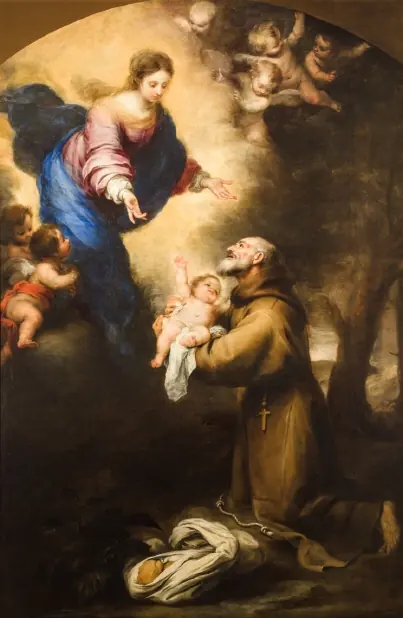
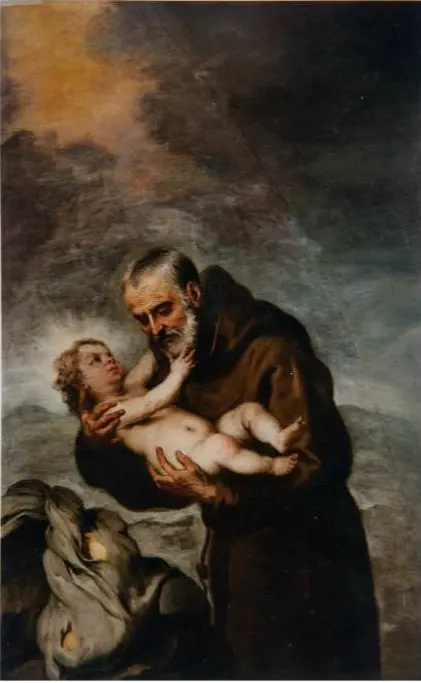
The best-known story is a vision, and it is traditional: the Virgin Mary appeared to Felix and placed the Christ Child in his arms. The old lives tell it in different settings. Painters from Seville to Lower Austria made it his portrait.
Romans also told of healings and other wonders worked through his prayers during his life and after his death. These are reported in the accounts gathered for his cause, which led to his beatification by Pope Urban VIII in 1625 and his canonization by Pope Clement XI in 1712. We have not been able to see the specific miracles approved for the canonization, so we do not describe them here.
Why St. Felix of Cantalice is honored
He has no single official patronage. The Capuchins honor him as their first canonized saint and the model of the questing brothers who beg for the community. The Felician Sisters carry his name: their foundress, Blessed Mary Angela Truszkowska, drew her inspiration "from Saint Francis of Assisi and Saint Felix of Cantalice," as St. John Paul II told her sisters in 2000. Children have a claim on him too, since he spent so many hours teaching them to sing about God.
He is a saint for anyone whose work is plain and repetitive, for those who depend on the generosity of others, and for those who want to learn to say thank you to God in every circumstance.
Symbols of St. Felix of Cantalice in art
You will know him in a church or museum by these signs:
- The Capuchin habit: a coarse brown habit with a long pointed hood and a white cord, and usually a full gray or white beard.
- The alms sack: the bag he carried on his rounds, sometimes with a gourd or flask for wine or oil. It marks him as the questing brother.
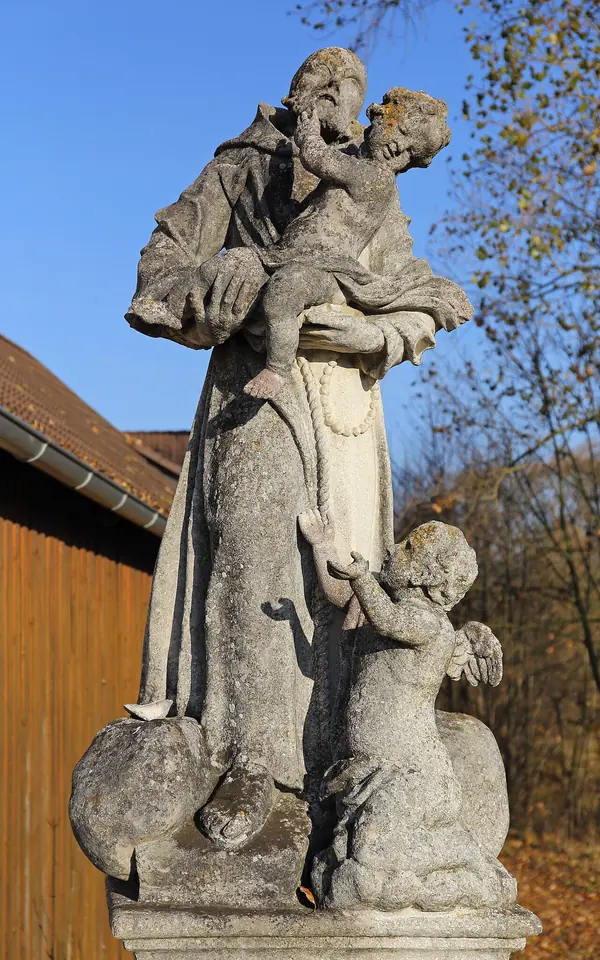
- The Infant Jesus in his arms: the most common way to show him, from the vision of the Virgin.
- The Virgin Mary above him: in larger altarpieces she leans down from the clouds to hand him the Child, as in Murillo's painting in Seville.
- A rosary: hanging at his belt.
St. John Paul II read the image as a lesson. Felix is shown holding the Child, he said, "because in bearing the burdens of the needy he had carried in his arms the poor Christ himself."
In Austria and Bohemia his statue often stands at the roadside, carved in stone with the Child in his arms.
Feast day and where he is honored
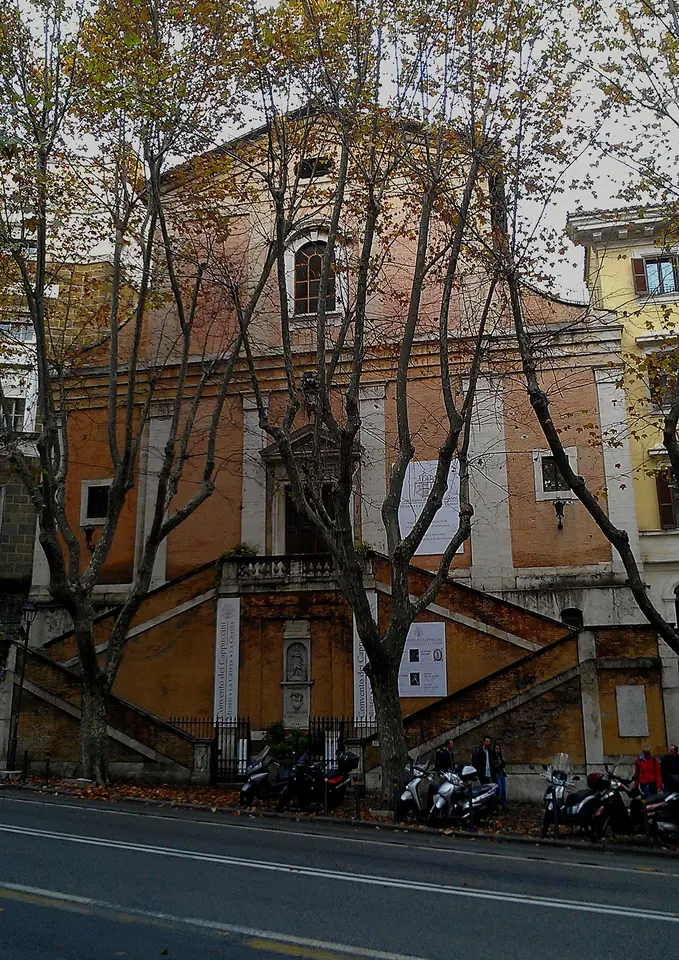
We keep his feast on May 18. His body rests in Rome in the Capuchin church of Santa Maria della Concezione on the Via Veneto, the church better known to visitors for its crypt decorated with the bones of friars. Cantalice honors him as its native son, and churches dedicated to him stand in Italy, Austria, France and well beyond.
Praying with St. Felix of Cantalice
We have not found a traditional prayer to St. Felix in a standard prayer book that we can cite, so we do not print one here. The simplest way to pray with him is the one he used all day: Deo gratias. Say it when something good is given to you, and say it again when it is not.
Let us ask St. Felix to pray for us, that we may serve without complaint, carry one another's burdens, and find Christ in the poor we meet.
Frequently asked questions
Why is St. Felix of Cantalice called Brother Deo Gratias?
Because he answered every gift, and every insult, with "Deo gratias," Latin for "thanks be to God." He said it so often on his begging rounds in Rome that people simply called him Fra Deo Gratias, Brother Thanks-be-to-God.
Why is St. Felix of Cantalice shown holding the baby Jesus?
Tradition holds that the Virgin Mary appeared to him and placed the Infant Jesus in his arms. Murillo and many other painters show that moment. St. John Paul II added a second meaning in 2000, saying Felix is shown with the Child because in carrying the burdens of the needy he "had carried in his arms the poor Christ himself."
When is the feast of St. Felix of Cantalice?
May 18, the day he died in Rome in 1587. The Capuchins keep it as a feast of their order.
Who are the Felician Sisters named after?
St. Felix of Cantalice. Blessed Mary Angela Truszkowska, who founded the congregation in Warsaw in 1855, used to take the children in her care to the Capuchin church, where they prayed before a picture of St. Felix holding the Child Jesus, and her sisters took his name.
Keep exploring
Sources
- Catholic Encyclopedia (1909): St. Felix of Cantalice. His life, his hymns for children, the famine of 1580, beatification and canonization dates, and his burial in Rome
- St. John Paul II, Address to the Sisters of Saint Felix of Cantalice (June 16, 2000). "The Capuchins' donkey," his "Deo Gratias," and the meaning of the Child in his arms