St. Cristóbal Magallanes Jara, Priest and Martyr of Mexico
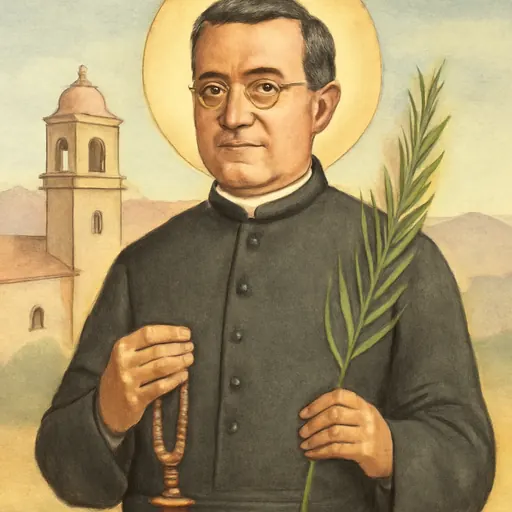
St. Cristóbal Magallanes Jara (1869–1927) was the parish priest of Totatiche, Jalisco, who founded a seminary. During the Cristero persecution he was shot without trial at Colotlán on May 25, 1927, forgiving his killers. Pope John Paul II canonized him in 2000 at the head of twenty-five martyrs of Mexico, and we keep their feast on May 21.
Who was St. Cristóbal Magallanes Jara?
St. Cristóbal Magallanes Jara was a Mexican parish priest who gave his life for Christ during the persecution of the Church in the 1920s. For seventeen years he was pastor of Totatiche, the mountain town in northern Jalisco where he was born. He was shot without trial at Colotlán on May 25, 1927, and Pope John Paul II canonized him on May 21, 2000, as the first named of the twenty-five martyrs of Mexico.
English-speaking Catholics often know him as St. Christopher Magallanes, the name the Roman Missal gives to the memorial of St. Christopher Magallanes and Companions. We keep it on May 21.
His life
A farm boy from Totatiche
Cristóbal was born on July 30, 1869, to a poor farming family in Totatiche, in the Archdiocese of Guadalajara. He worked in the fields until he was nineteen. In 1888 he entered the seminary of Guadalajara, and he was ordained a priest on September 17, 1899.
He served first as chaplain and assistant director of the Holy Spirit School of Arts and Trades in Guadalajara, then went home to Totatiche, first as an assistant and then as its pastor.
A pastor who built
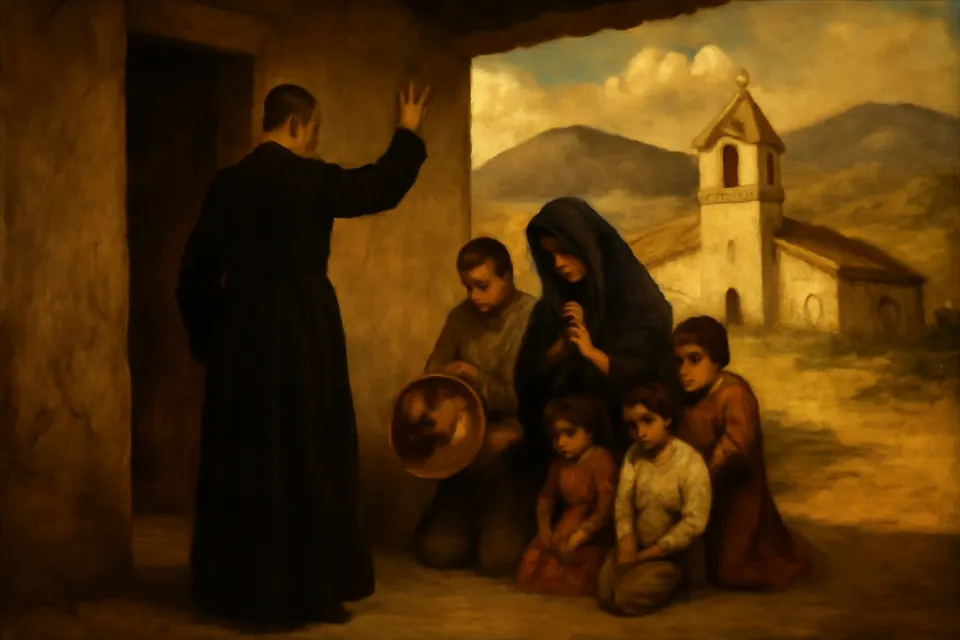
The Mexican bishops' biography remembers him for his clean life and his social work. The ACI Prensa biography gives the details: he set up catechism centers and schools in the outlying ranches, built a dam so farmers could irrigate their fields, opened a home for orphans, and divided land into small plots to help poor families. The Vatican's biography adds that he was a missionary among the Huichol people of the sierra and spread the Rosary wherever he went.
The seminary of Totatiche
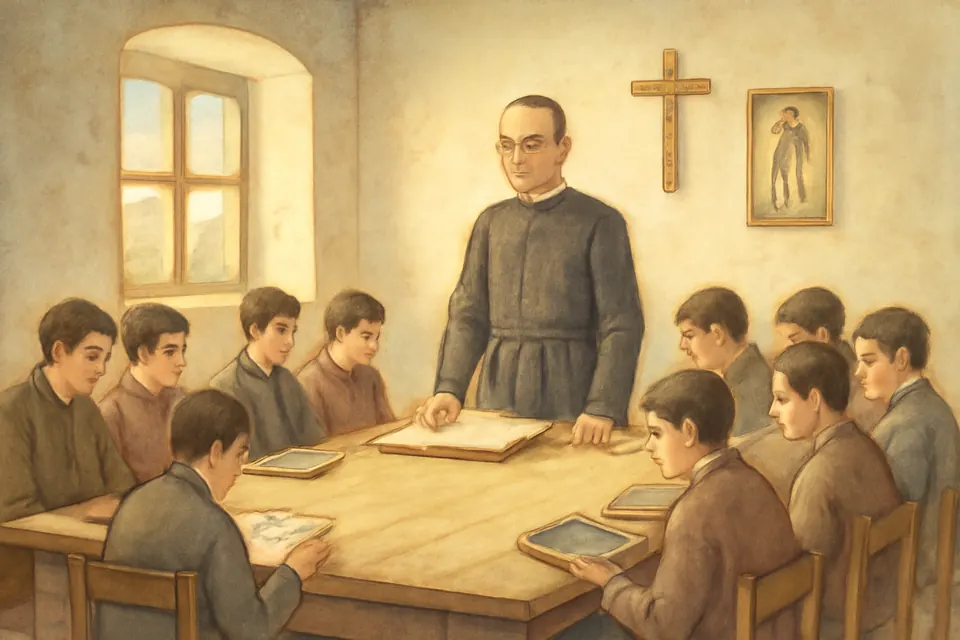
Priestly vocations were the part of the vineyard he tended most carefully. When the persecutors of the Church closed the seminary of Guadalajara, he offered to open one in his own parish to shelter and form future priests, and from 1916 it grew into a real seminary. The young priest who ran it, Agustín Caloca, would die beside him and is now a saint too.

"The weapons of the Church are persuasion"
Under President Plutarco Elías Calles the public practice of the faith was outlawed, and in 1926 the armed Cristero uprising began. Father Magallanes did not take up arms, and he did not tell his people to. Shortly before his arrest he published an article urging calm: "Religion was neither spread nor is it to be preserved by means of arms. Neither Jesus Christ, nor the apostles, nor the Church have used violence for this purpose. The weapons of the Church are conviction and persuasion through the word."
Arrest and death
On May 21, 1927, he was on his way to celebrate Mass at a ranch when fighting broke out between Cristeros and federal troops under General Francisco Goñi. Soldiers seized him. The same day they arrested Father Agustín Caloca, the young priest in charge of the seminary. Both were accused of sedition. Father Magallanes showed his article to prove the charge was false, but it made no difference.
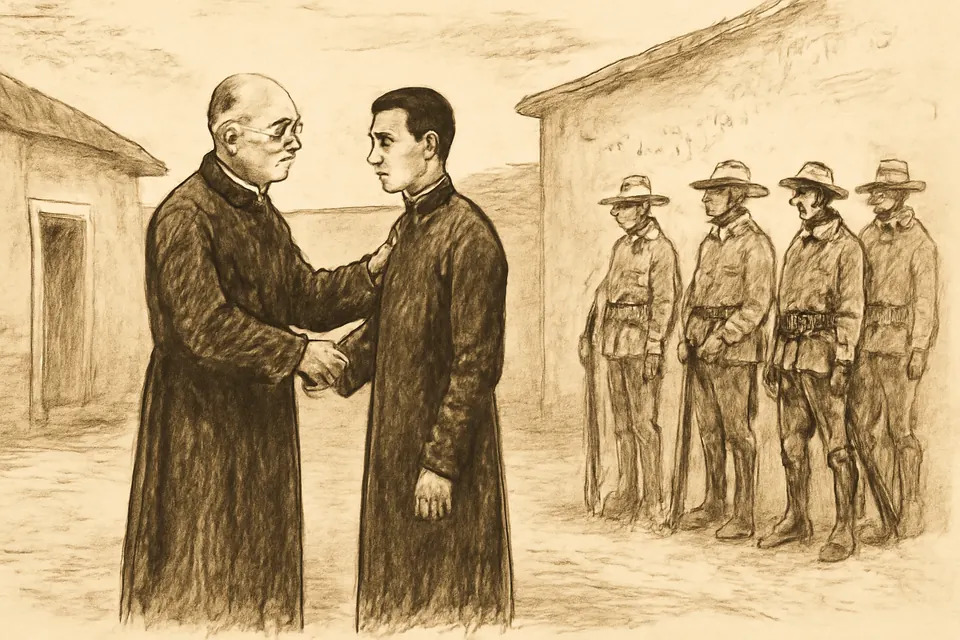
The two priests were moved under guard and, on the morning of May 25, taken into the courtyard of the municipal building at Colotlán to be shot with no trial. Father Magallanes gave his few belongings to the soldiers of the firing squad. The two priests gave each other absolution. To the younger man he said, "Be calm, son, only a moment and then heaven." Then he asked leave to speak:
I am and I die innocent; I forgive with all my heart those responsible for my death, and I ask God that my blood may serve the peace of divided Mexicans.
Martyrdom and canonization
The Church's biographies of him list no miracles; what the Church honors is his death for the faith. With him died Father Agustín Caloca, canonized the same day. Pope John Paul II beatified him on November 22, 1992, and canonized him on May 21, 2000, with twenty-four companions, most of them diocesan priests and three of them laymen. In his homily the Pope said that all of them "freely and calmly accepted martyrdom as a witness to their faith, explicitly forgiving their persecutors."
Like every martyr, he was declared a saint without the miracle normally required for canonization, because martyrdom itself is the testimony. Any favors people report through his prayers are reported graces, not formally approved miracles.
Symbols of St. Cristóbal Magallanes in art
Because he died in 1927 and was photographed in life, images of him are portraits rather than symbolic icons. He is shown as a parish priest in a black cassock, often with round glasses, sometimes with a stole for the sacraments. The martyr's palm marks his death for Christ. A rosary recalls the devotion he spread through the parishes and ranches. In group paintings of the martyrs of Mexico, beside saints such as St. Toribio Romo and St. Mateo Correa Magallanes, he usually stands in front, as the one whose name the group carries, beneath Christ the King and Our Lady of Guadalupe.
In Guadalajara Cathedral he has his own memorial niche, marked with his birthplace and the place of his death.
Where St. Cristóbal Magallanes is honored
After his death his remains were exhumed at Colotlán and brought back to the parish of Totatiche, where they rest today. Guadalajara Cathedral keeps relics of the Mexican martyrs in a reliquary beneath the cry they died with, ¡Viva Cristo Rey!
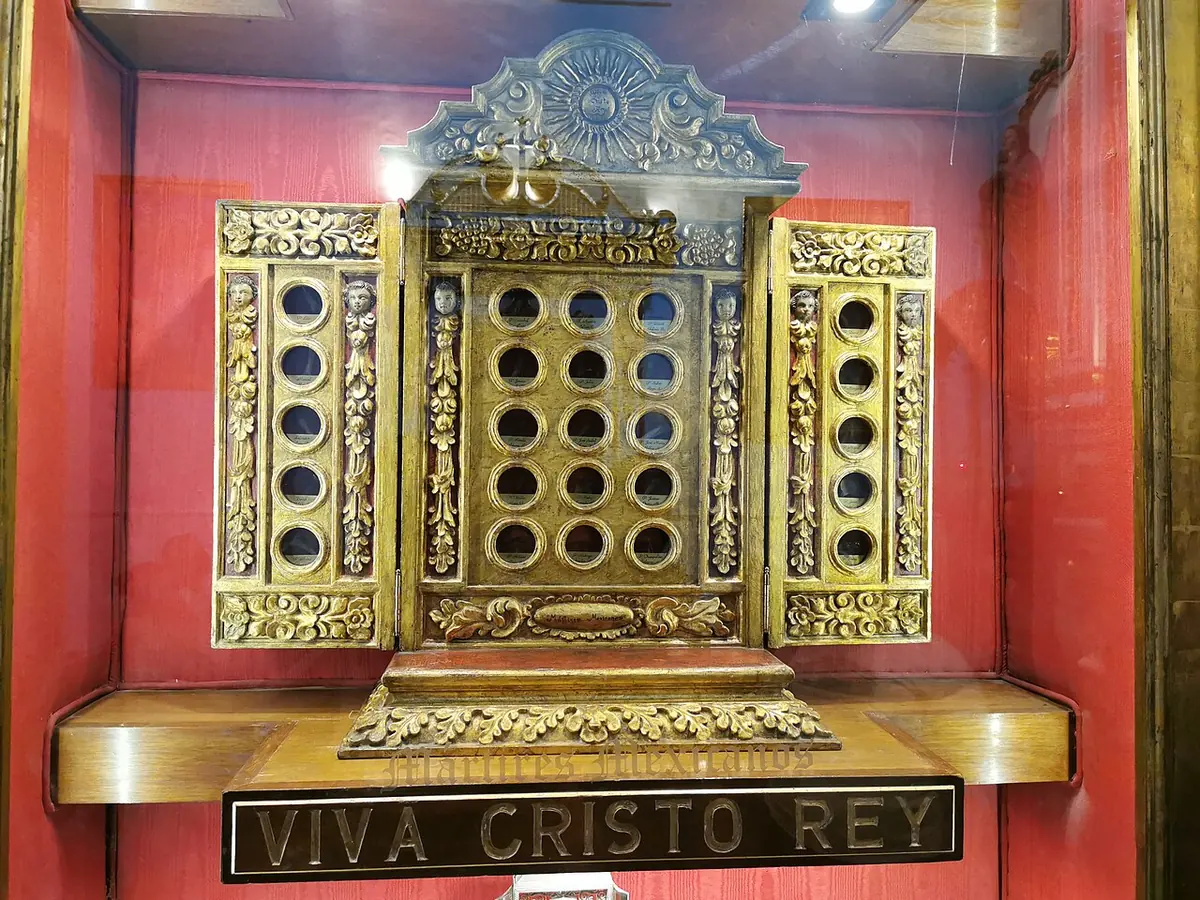
We keep his feast with all his companions on May 21; see our feast days calendar for the saints around it.
Prayer to St. Cristóbal Magallanes
The Mass of May 21 has its own collect for St. Christopher Magallanes and Companions in the Roman Missal, and we pray it with the whole Church on that day. We have not found an older traditional prayer to him alone that we could verify, so we do not print one.
Let us ask him to pray for priests and seminarians, for vocations in poor and hidden places, for Christians who suffer for their faith, and for peace among divided peoples, the grace he asked for with his last breath.
St. Cristóbal Magallanes, pray for us.
Frequently asked questions
Who was St. Cristóbal Magallanes Jara?
A Mexican diocesan priest, born in Totatiche, Jalisco, in 1869 and ordained in 1899. As pastor of his home town he opened schools and catechism centers, worked among the Huichol people, and in 1916 started a seminary in his parish. He was shot at Colotlán on May 25, 1927, during the persecution of the Church in Mexico.
When is the feast of St. Cristóbal Magallanes?
May 21, the memorial of St. Christopher Magallanes and Companions in the General Roman Calendar. The Roman Martyrology also lists him on May 25, the anniversary of his death.
What were the last words of St. Cristóbal Magallanes?
According to the biography published by the Mexican bishops, he said: "I am and I die innocent; I forgive with all my heart those responsible for my death, and I ask God that my blood may serve the peace of divided Mexicans." The Vatican's biography records that he also told his fellow priest Agustín Caloca, "Be calm, son, only a moment and then heaven."
Did Father Magallanes support the armed Cristero uprising?
No. When he was accused of sedition he showed an article he had written shortly before, urging his people to keep calm, which said that religion was not spread and must not be kept by force of arms, and that the weapons of the Church are conviction and persuasion through the word.
Keep exploring
Sources
- Cristóbal Magallanes Jara (biography for the canonization of May 21, 2000), Holy See. His mission among the Huichol, the seminary, and his words to Agustín Caloca
- Homily of Pope John Paul II, Canonization of 27 New Saints, May 21, 2000
- San Cristóbal Magallanes Jara y San Agustín Caloca Cortés, Catholic.net (from the Mexican Bishops' Conference). Ordination on September 17, 1899; the seminary from 1916; his article against armed rebellion; his last words; the return of his remains to Totatiche
- San Cristóbal de Magallanes, sacerdote, ACI Prensa. His schools, the irrigation dam, the orphanage and the land plots for the poor