Blessed Antonia Mesina
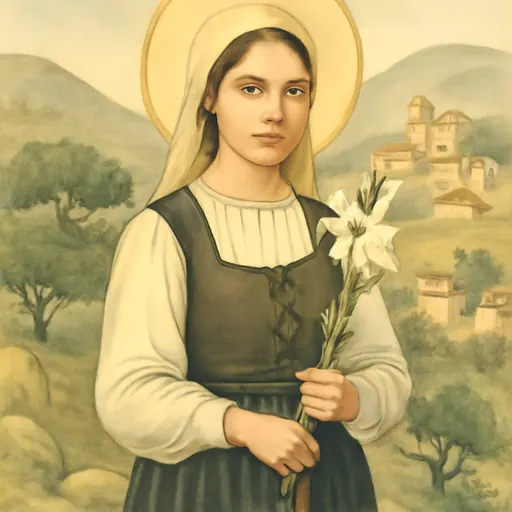
Blessed Antonia Mesina (1919–1935) was a sixteen-year-old girl from Orgosolo, in the mountains of Sardinia, a member of the girls' branch of Catholic Action, who was killed on May 17, 1935, while resisting a young man's attempt to rape her. The Church honors her as a martyr of purity. Pope John Paul II beatified her on October 4, 1987. Her feast is May 17.
Who was Blessed Antonia Mesina?
Blessed Antonia Mesina was a sixteen-year-old girl from Orgosolo, a village in the mountains of central Sardinia, who was killed in 1935 rather than consent to sin. She came from a poor family, did not get past the first grades of school, and spent her days helping her mother with a houseful of younger children. She prayed the Rosary, went to Mass and Communion, and belonged to the girls' branch of Catholic Action. Pope John Paul II beatified her on October 4, 1987, as a martyr of purity. We keep her feast on May 17.
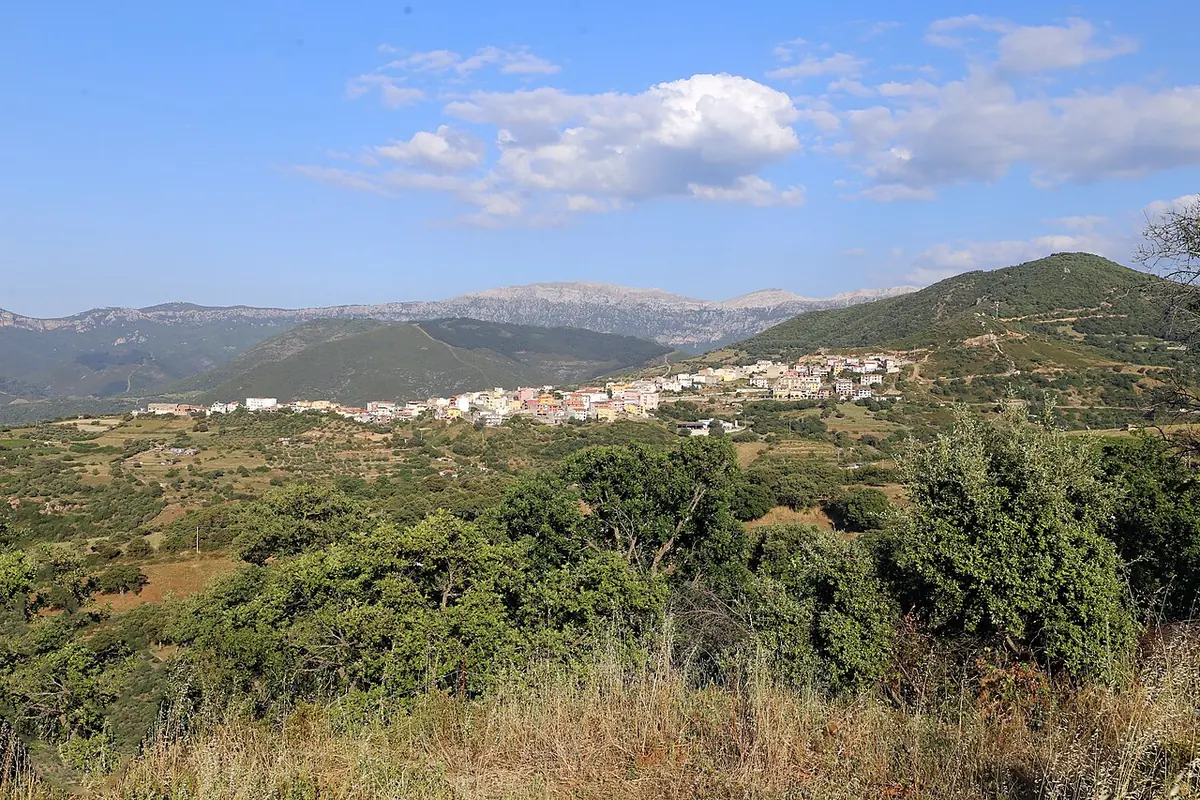
She was born on June 21, 1919, the second of the ten children of Agostino Mesina, a rural guard, and Grazia Rubanu, and was baptized in the parish of San Pietro. The Italian bishops' biography says she was a frail child who grew up strong after several illnesses. She left school after the first grades to help at home, and family duties often kept her from Catholic Action meetings too.
A girl of Catholic Action
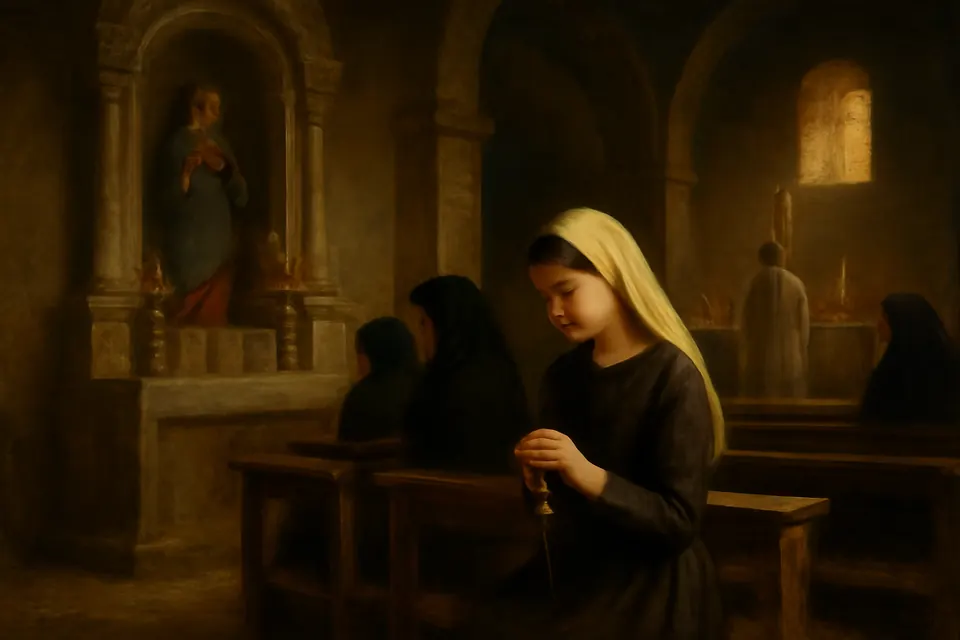
She was a "beniamina," one of the youngest members of the Gioventù Femminile of Catholic Action, from 1929 to 1931, and a full member in 1934 and 1935. In those years Armida Barelli's Crusade of Purity reached Orgosolo, with the parish priest as its champion. Antonia was reserved and determined, and she took part in the life of the village: a photograph shows her in the dress the women of Orgosolo wore for the feast of the Assumption on August 15.

Above all she loved the story of St. Maria Goretti, the Italian girl killed in 1902 for refusing her attacker. Her brother Giulio later said she owned a book about Maria's life and knew it well. Witnesses in her cause said she had told them more than once that, in the same situation, she too would let herself be killed.
May 17, 1935
On the morning of May 17, 1935, Antonia went to the early Mass of the month of Mary. Then she went out to the common woods near the village to gather firewood for baking bread, with a neighbor and friend, Annedda Castangia, who became the chief witness at both the criminal trial and the beatification inquiry.
As the two girls tied the wood into bundles a few dozen yards apart, a young man of the village attacked Antonia. Annedda heard her scream, "Babbo! Babbo! Annedda!" She fought him and broke free, but he caught her, and when she would not give in he killed her with a stone. The autopsy counted seventy-four wounds. She was not yet sixteen. Her funeral, on May 19, was attended by the whole of Orgosolo.

The examining judge at Nuoro who attended the autopsy was Francesco Coco, who decades later, as chief prosecutor of Genoa, was murdered by the Red Brigades in 1976. He left a moving testimony about her. In October 1935 Armida Barelli told Pope Pius XI the story of "the first flower cut down" of the Catholic girls' movement.
Beatification
Thousands of letters asked for her cause. John Paul II beatified her in Rome on October 4, 1987, the first Sunday of the Synod of Bishops on the laity, together with Marcel Callo and Pierina Morosini. Speaking of her he said:
The bundle of wood gathered to make bread in the oven at home, that day in May 1935, stays on the mountain beside her body, torn by dozens and dozens of blows of stone. That day another fire is lit and another bread is prepared, for a much larger family.
As in every cause of martyrdom, no miracle was required for her beatification.
Symbols of Blessed Antonia Mesina in art
Antonia lived in the age of photography, and her images follow her few photographs. Look for:
- A bundle of firewood: the wood she was gathering for the family's bread when she was killed.
- A lily: purity.
- A palm branch: the sign of a martyr.
- The dress of Orgosolo: the festival dress of her village, in which she was photographed.
Feast day, tomb and prayer
We keep her feast on May 17, the day she died. Her body rests in the crypt of the parish church of San Pietro in Orgosolo, not far from the house where she was born. See also the feast day calendar.
We have not found a widely used English prayer to Blessed Antonia. The words the Dicastery for the Causes of Saints places at the head of her biography are "Better death than sin." Let us ask her to pray for girls and young women, for victims of sexual violence, and for all who struggle to stay pure of heart. Blessed Antonia Mesina, pray for us.
Frequently asked questions
Who was Blessed Antonia Mesina?
The second of ten children of a rural guard in Orgosolo, Sardinia, born in 1919. She left school early to help her mother at home, belonged to Catholic Action, and was devoted to the Rosary and the Eucharist. On May 17, 1935, while gathering firewood after Mass, she was attacked and killed for refusing a young man's advances.
Why is Antonia Mesina called a martyr of purity?
Because she died resisting an attempted rape, like St. Maria Goretti, whose story she knew well. The Church recognized her death as martyrdom and beatified her in 1987.
When is the feast of Blessed Antonia Mesina?
May 17, the day she died in 1935.
Who was beatified with Antonia Mesina?
Blessed Marcel Callo, a young French worker who died in a Nazi camp, and Blessed Pierina Morosini, an Italian factory worker who was also killed defending her purity. John Paul II beatified all three on October 4, 1987, during the Synod on the laity.
Keep exploring
Sources
- Dicastery for the Causes of Saints: Antonia Mesina. Her family, Catholic Action dates, the festival photo, the day of her death, the seventy-four wounds, her funeral and beatification, and John Paul II's homily of October 4, 1987
- Italian Bishops' Conference, Testimoni del '900: Antonia Mesina. Her schooling, the Crusade of Purity, her love for Maria Goretti, the friend who witnessed the attack, Armida Barelli and Pius XI, and Judge Francesco Coco