Blessed Álvaro del Portillo, First Successor of St. Josemaría

Blessed Álvaro del Portillo (1914–1994) was a Spanish civil engineer who became a priest of Opus Dei, the closest collaborator of St. Josemaría Escrivá and, from 1975, his first successor. John Paul II made him the first prelate of Opus Dei and ordained him a bishop. He was beatified in Madrid on September 27, 2014, and his feast is May 12.
Who was Blessed Álvaro del Portillo?
Blessed Álvaro del Portillo was a Spanish engineer who gave his life to God in Opus Dei and spent nearly forty years at the side of its founder, St. Josemaría Escrivá. After the founder's death he led Opus Dei for nineteen years, and St. John Paul II made him its first prelate and a bishop. Pope Francis, writing for his beatification, called him the "faithful collaborator and first successor" of St. Josemaría (our translation).

The life of Blessed Álvaro
A Madrid engineer
Álvaro was born in Madrid on March 11, 1914, the third of eight children of Ramón del Portillo and Clementina Diez de Sollano. He trained as a civil engineer and taught for a time at Madrid's engineering school.
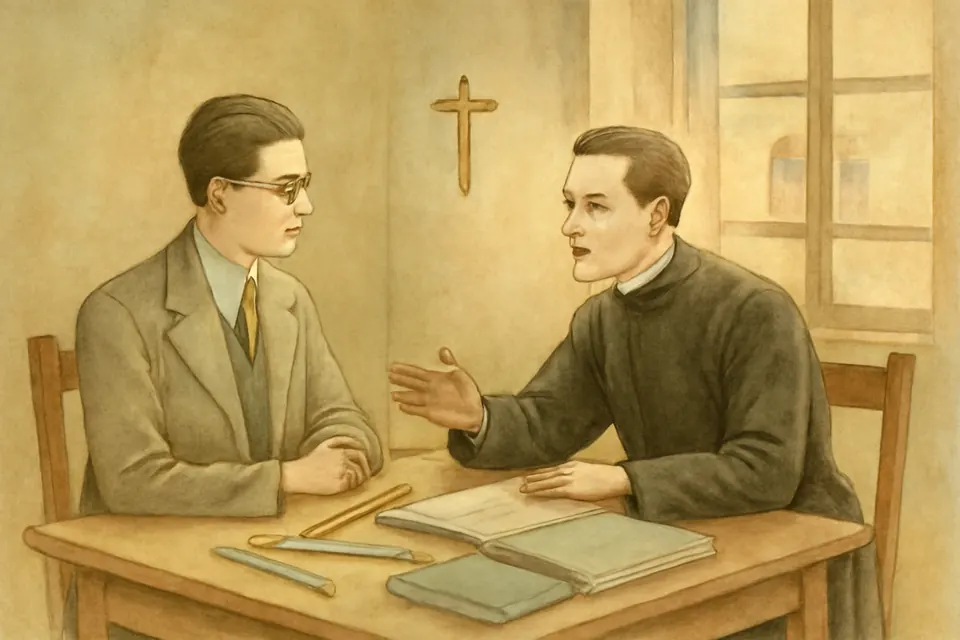
In Madrid, in his early twenties, he met Father Josemaría Escrivá. Pope Francis wrote that this meeting "set the course of his life." Álvaro asked to join Opus Dei in 1935, a year before the Spanish Civil War broke out.
Priest and right hand
On June 25, 1944, Bishop Leopoldo Eijo y Garay of Madrid ordained him with two other engineers, José María Hernández Garnica and José Luis Múzquiz. They were the first priests of Opus Dei. From 1946 he lived in Rome, and from then on he was the person St. Josemaría relied on most.
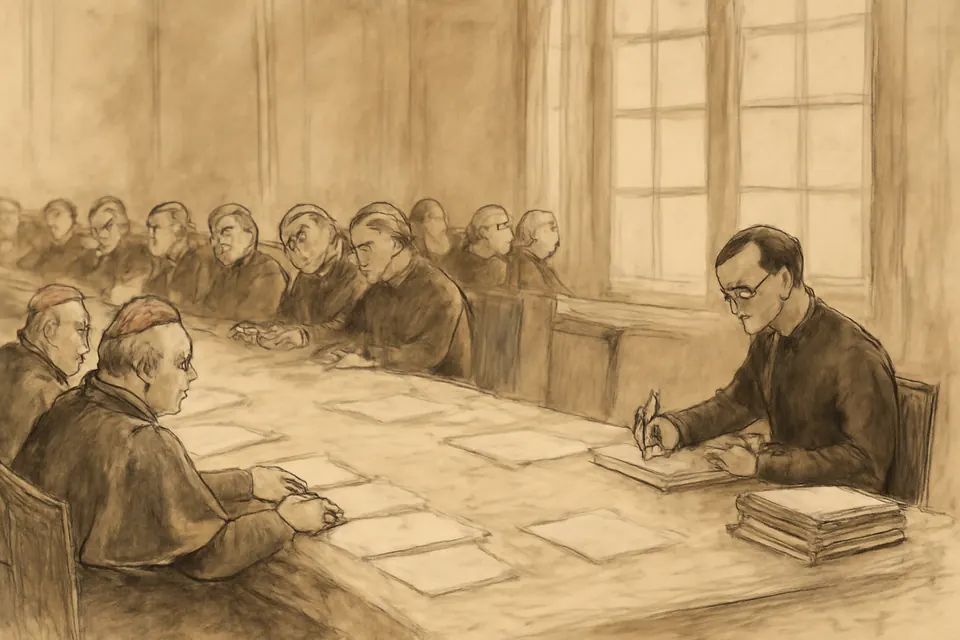
He also served the wider Church. Before and during the Second Vatican Council he worked on the preparatory commission on the laity and was a peritus (expert) of the Council, serving as secretary of its commission on the discipline of the clergy and Christian people.
Prelate and bishop
When St. Josemaría died in 1975, the members of Opus Dei elected Álvaro to succeed him. In 1982 John Paul II made Opus Dei a personal prelature and named him its first prelate, and on January 6, 1991, the pope ordained him a bishop. He traveled widely to encourage new apostolic work in many countries, as Pope Francis noted.
He died in Rome on March 23, 1994, at eighty, and was buried in the crypt of the prelature's Church of Our Lady of Peace.
The miracle and the beatification
Pope Benedict XVI declared Álvaro del Portillo Venerable on June 28, 2012, after the Holy See recognized his heroic virtues.
The miracle is approved: the recovery of José Ignacio Ureta Wilson, a baby born in Chile on July 10, 2003. He came into the world small and very sick, needed surgery within days, and then a heart operation. On August 2, in intensive care, his heart stopped and stayed stopped for more than half an hour. The doctors believed he had died.
All that time his mother, Susana Wilson, prayed the prayer card of Bishop Álvaro, finishing it and starting again, and asked others to pray with her. Then his heart started again. The next day his color had come back. In an interview published by Opus Dei she said the family "did nothing else" but pray. The medical consultants of the Holy See found the recovery inexplicable, and Pope Francis approved the miracle in 2013. José Ignacio grew up to play soccer and dance like other boys his age.
Cardinal Angelo Amato, prefect of the Congregation for the Causes of Saints, beatified him on Pope Francis's behalf on September 27, 2014, at an open-air Mass in Madrid, the city of his birth.
Many families and friends of Opus Dei report other favors received through his prayers. These are reported, not formally examined.
The holiness Pope Francis saw in him
In his letter for the beatification, Pope Francis said that Álvaro loved and served the Church "with a heart free of worldly interest, far from discord, welcoming to all" (our translation). He noted that Álvaro never complained about the Church or criticized it, even in hard times, and answered difficulties with prayer, forgiveness and charity. That is a quiet kind of holiness, and a demanding one.
Symbols of Blessed Álvaro in art
He lived in the age of photography, so artists don't use the old saints' emblems for him. Images show him as people knew him:
- Black cassock, in later images with the purple trim, skullcap and pectoral cross of a bishop.
- Round glasses and a gentle smile, the face in nearly all his portraits.
- Rosary or a small crucifix, signs of the steady prayer his friends remembered.
Look for him in Opus Dei churches and centers, often in a portrait beside St. Josemaría.
Feast day and where he is honored
His feast is May 12. Pilgrims pray at his tomb in the crypt of Our Lady of Peace in Rome, the church that also holds the body of St. Josemaría. See others honored in May on our feast days page.
Praying with Blessed Álvaro
Pope Francis's letter for the beatification recalls the short prayer Álvaro liked to repeat, especially on feasts and anniversaries:
Thank you, forgive me, help me more!
In Spanish it is ¡Gracias, perdón, ayúdame más! The pope added that Álvaro often said he stood before God "with empty hands" (our translation), trusting in mercy.
Let us use his words in our own prayer, and ask Blessed Álvaro to pray for engineers and students, for priests, and for all who try to find God in their ordinary work.
Frequently asked questions
Who was Blessed Álvaro del Portillo?
A Madrid-born engineer who joined Opus Dei in 1935, was ordained a priest in 1944, worked at the Second Vatican Council, and led Opus Dei from 1975 until his death in 1994, first as president general and then as its first prelate.
When is the feast of Blessed Álvaro del Portillo?
May 12. He died on March 23, 1994, in Rome.
What miracle led to the beatification of Álvaro del Portillo?
The recovery of a Chilean newborn, José Ignacio Ureta Wilson, whose heart had stopped for more than half an hour. Doctors judged the recovery inexplicable, and Pope Francis approved the miracle in 2013.
Where is Álvaro del Portillo buried?
In the crypt of the Prelatic Church of Our Lady of Peace on Viale Bruno Buozzi in Rome, the church of the Opus Dei prelature.
Keep exploring
Sources
- Pope Francis, Letter to Bishop Javier Echevarría on the beatification of Álvaro del Portillo, June 16, 2014 (Spanish), Vatican. His aspiration 'thank you, forgive me, help me more,' his empty-handed humility before God and his service to the Church, quoted on this page
- Blessed Alvaro del Portillo, Opus Dei. Beatification date and place, the approved miracle and the May 12 feast
- Miracle through Bishop Alvaro's intercession: recovery of Jose Ignacio, Opus Dei. The cardiac arrest of more than half an hour and the Holy See's decision
- Interview with Susana Wilson, mother of Jose Ignacio Ureta Wilson, Opus Dei. The dates of the baby's illness, the prayer card, and the words quoted on this page