St. Celestine V, the Hermit Pope Who Resigned
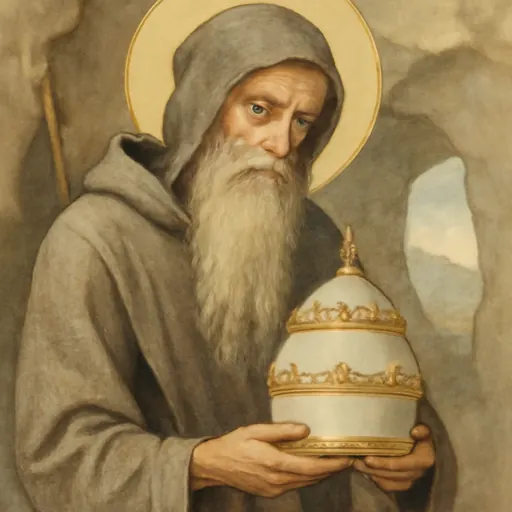
St. Celestine V was Pietro da Morrone, a hermit of the Abruzzo mountains who was elected pope in 1294, at about 84, after the Church had gone two years without one. He resigned after five months, the pope of Dante's "great refusal," and died a prisoner in 1296. His feast day is May 19, and he is the patron of L'Aquila, where he founded the Perdonanza, the pardon still kept every August.
Who was St. Celestine V?
St. Celestine V was a hermit who became pope against his will and then gave the office back. Born Pietro Angelerio in Molise, in the mountains of south-central Italy, he spent most of his long life praying in caves on Mount Morrone and the Majella in the Abruzzo, and founded a strict branch of the Benedictines that came to be called the Celestines. In July 1294, when the cardinals had failed for more than two years to elect a pope, they chose him. He was about 84.
He reigned for five months. Overwhelmed by the business of the papacy and afraid for his soul, he resigned on December 13, 1294, and asked only to go back to his cell. He never got there. His successor, Boniface VIII, kept him under guard, and he died in the castle of Fumone on May 19, 1296. Seventeen years later, in 1313, Pope Clement V declared him a saint.
Two things keep his name alive. One is his resignation, which Dante may have mocked as the "great refusal" and which Benedict XVI, who resigned himself in 2013, had honored four years earlier at his tomb. The other is a gift he left the city of L'Aquila: the Perdonanza, a plenary indulgence open to rich and poor alike, which the city still keeps every August 28 and 29.
The life of St. Celestine V
The boy from Molise who wanted God
The Catholic Encyclopedia gives his birth year as 1215. Benedict XVI, following more recent research, celebrated the 800th anniversary of his birth in 2009–2010, which places it around 1209 or 1210. He came from a poor farming family. He entered a Benedictine monastery at seventeen and was later ordained a priest in Rome.
Benedict XVI, preaching at Sulmona in 2010, called the young Pietro a "seeker of God," a man who asked the great questions: "Who am I? Where do I come from? Why am I alive? For whom do I live?" The answer he found was silence.
Hermit of Morrone and the Majella
Pietro's love of solitude took him first to a cave on Mount Morrone, above Sulmona, and later to the still wilder heights of the Majella. He took St. John the Baptist as his model. The Catholic Encyclopedia, drawing on the oldest life, describes his penances: a hair shirt roughened with knots, an iron chain around his waist, fasting every day but Sunday, and four Lents a year, three of them on bread and water. He spent the whole day and much of the night in prayer and work.
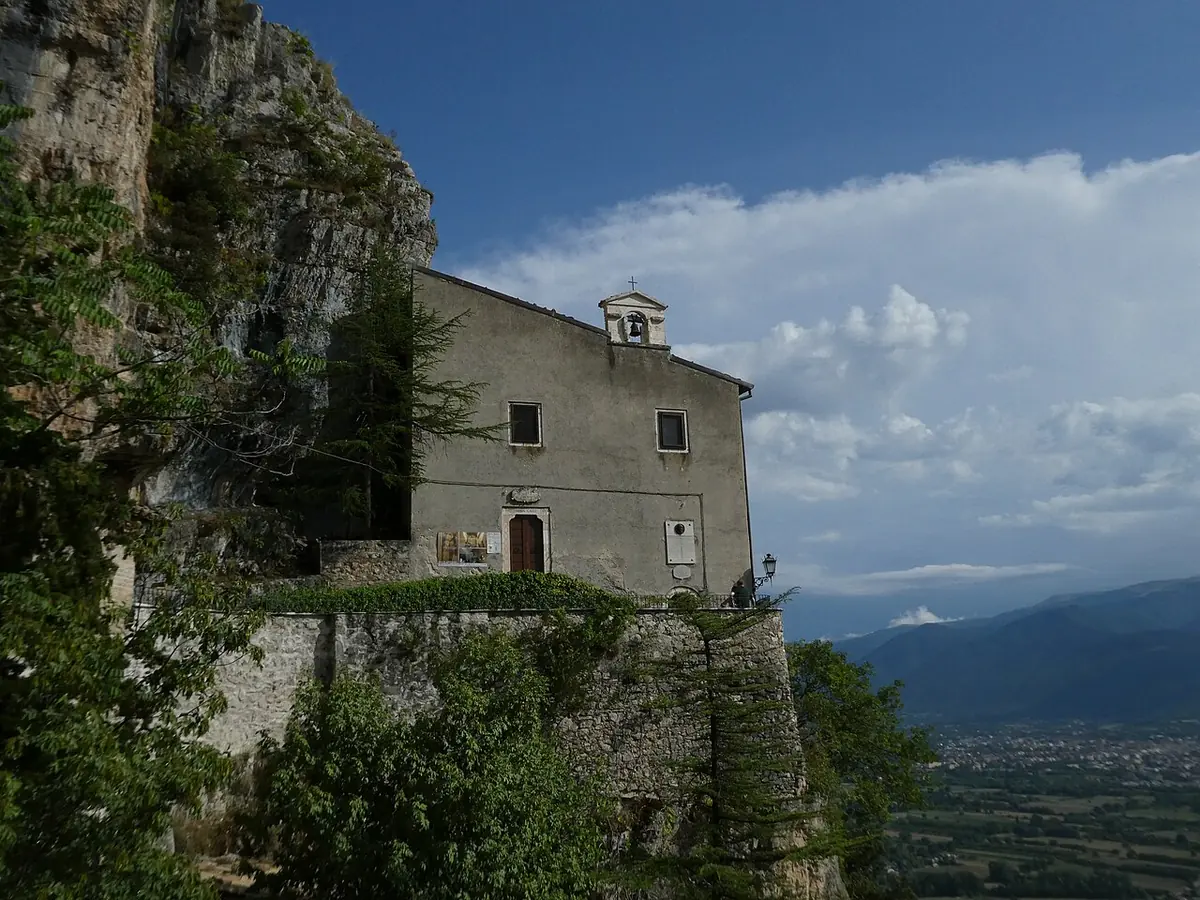
Holy hermits rarely stay alone for long. Men came to share his life, and he gave them a rule, drawn from the Rule of St. Benedict and from the writings of the reforming hermit St. Peter Damian. Pope Urban IV approved the community in 1264. By Pietro's death it had thirty-six monasteries and about six hundred monks. Their main house became the abbey of Santo Spirito, at the foot of Mount Morrone near Sulmona.
A hermit elected pope
Pope Nicholas IV died on April 4, 1292. The twelve cardinals meeting at Perugia were split between the Roman families of the Orsini and the Colonna, and neither side would give way. Two years passed. Then, the Catholic Encyclopedia relates, the old Cardinal Latino Orsini told them that God had revealed to a holy hermit that the Church would be punished if they did not do their duty within four months. Everyone knew he meant Pietro da Morrone. The exhausted cardinals elected the hermit unanimously on July 5, 1294.
Three dignitaries climbed the mountain with a great crowd to tell him. Pietro wept at the news. After a short prayer he accepted, believing it was God's will. A huge crowd, numbered at 200,000, gathered around him, and it was no longer possible to flee even if he had wanted to.
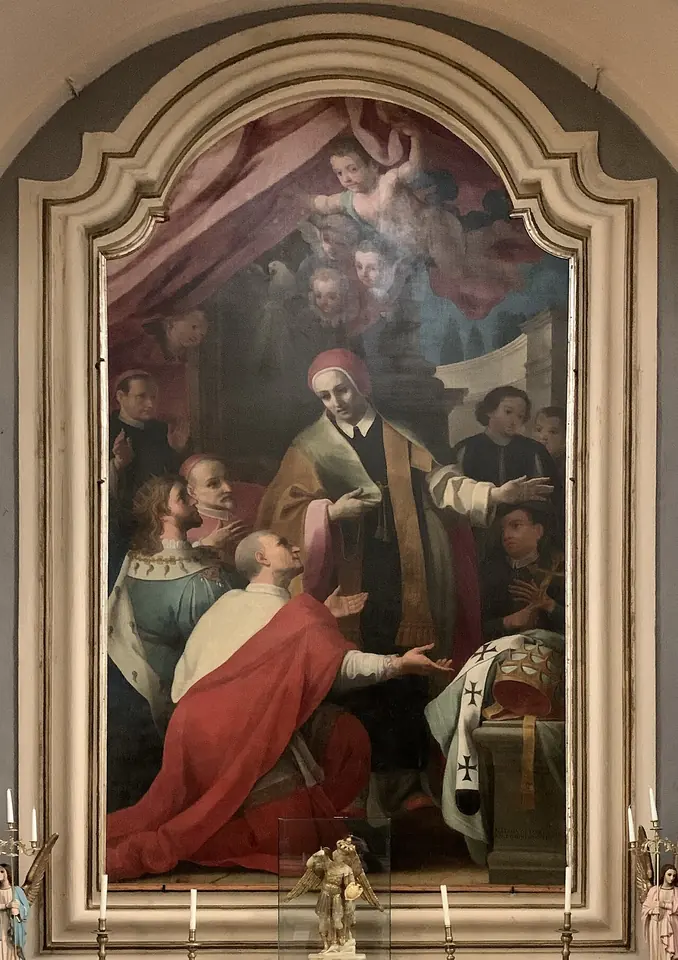
King Charles II of Naples hurried to the hermit's side with his son Charles Martel. He wanted the papacy on his side to win back Sicily, and he kept the simple old man under his influence from the start. At the king's urging, Pietro summoned the cardinals to L'Aquila, a frontier town of the kingdom of Naples, instead of going to Perugia. He rode there on a donkey, its rope held by the two kings walking beside him.
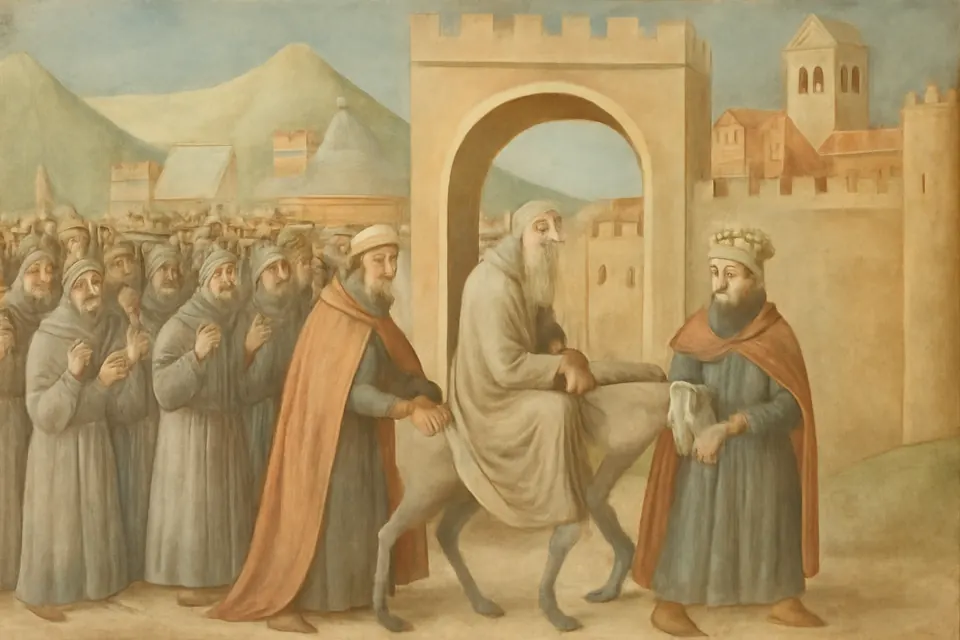
He was crowned on August 29, 1294, the feast of the Beheading of St. John the Baptist, in the church of Santa Maria di Collemaggio, which had been built at his wish and consecrated in 1288. Because only three cardinals had arrived in time, the ceremony had to be repeated a few days later in the traditional form, the only double papal coronation in history. He took the name Celestine V.
The Perdonanza
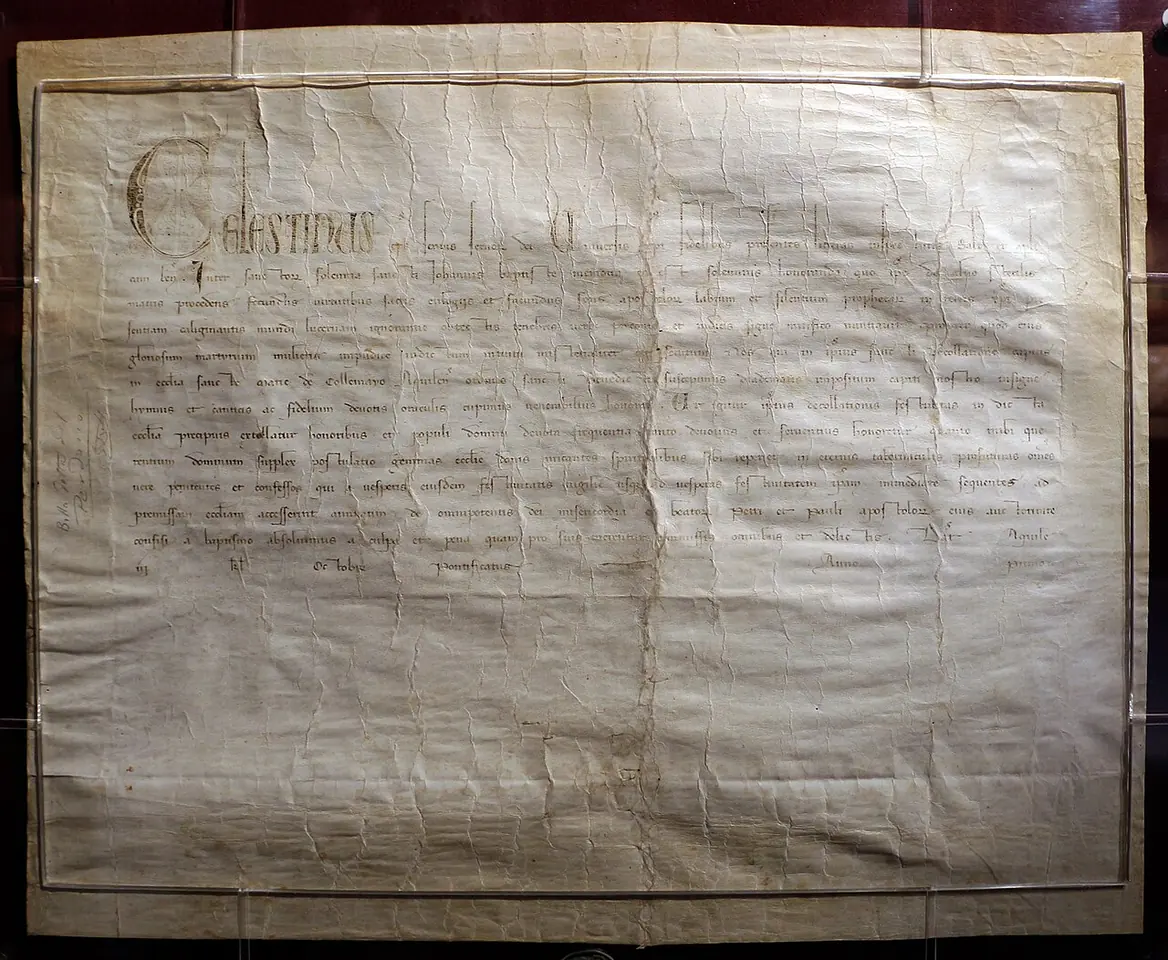
On the evening of his coronation, Celestine granted his most lasting gift. Anyone who, truly repentant and having confessed, entered Collemaggio from Vespers on the eve of the Beheading of St. John to Vespers on the feast itself would receive a plenary indulgence, every year. The papal chancery put the grant in writing on September 29, 1294, in the bull now known as the Bull of Forgiveness.
Until then, as the city's own history of the Perdonanza notes, plenary indulgences had been granted mainly to crusaders and to pilgrims to the Portiuncula of St. Francis at Assisi. Celestine asked for no money and no long journey. A poor farmer could walk in from the next valley.
Five difficult months
The papacy was not a hermitage. Celestine never went to Rome. At King Charles's wish he moved the whole Curia to Naples, where he lived in a single room of the Castel Nuovo. As Advent came, he had a small wooden cell built inside it, like his hut in the mountains.
His government was a mess, and nobody, the Catholic Encyclopedia included, pretends otherwise. On September 18 he named twelve new cardinals, seven of them French and most of the rest Neapolitans, all favorable to the king. He handed out offices and favors to anyone who asked, sometimes granting the same post to three or four people. He renewed Gregory X's strict law on conclaves, which became the lasting pattern for papal conclaves. Most of his other acts were later canceled by his successor, and no full register of them survives.
Benedict XVI put it more gently in 2010. Celestine's pontificate was "brief and troubled," he said, but it showed the marks of the Gospel: courage in proclaiming it, detachment from money and comfort, and care for the sick.
The great renunciation
Celestine felt his soul was in danger. The question was whether a pope could resign at all, since he has no superior on earth to accept a resignation. Cardinal Benedetto Caetani, the best canon lawyer in the college, concluded that he could. When rumors of a resignation spread, King Charles organized a great procession of clergy and monks around the castle to beg the pope to stay. Celestine gave them an evasive answer.
A week later his mind was made up. On December 13, 1294, he called the cardinals together, read a constitution declaring that a Roman pontiff may freely resign, and then resigned. The act of renunciation, as the city of L'Aquila gives it in translation, names his reasons: humility, weakness of body, "the malignity of the people," and the wish "to recover the tranquillity and consolation of our former life."
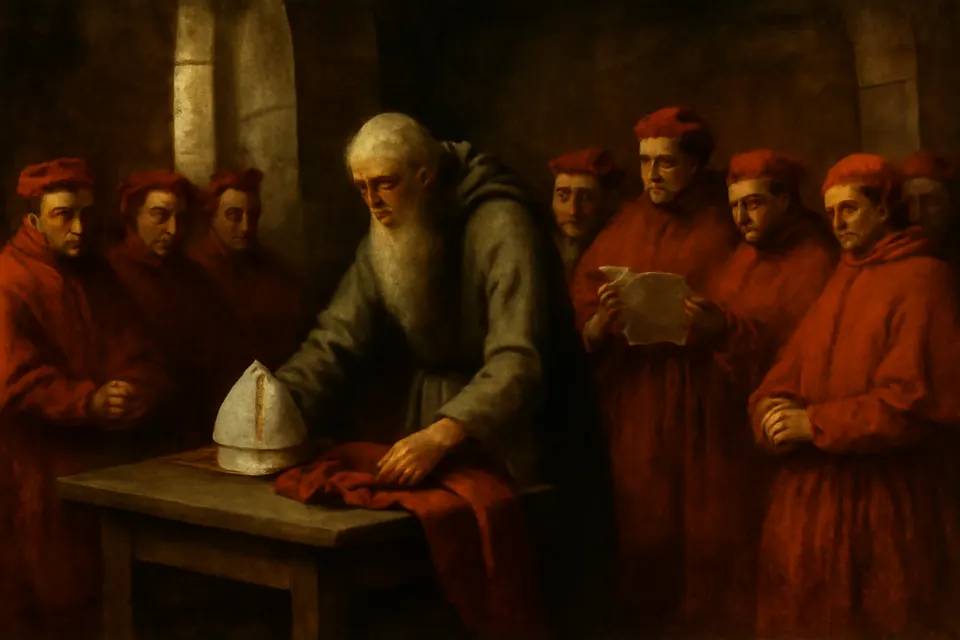
Eleven days later the cardinals elected Caetani, who took the name Boniface VIII. The new pope kept Celestine's decree. He placed it in the Church's law books, the Liber Sextus, so that no one could doubt it again. His own claim to the papacy depended on it.
Flight, capture and death
Boniface feared that his predecessor's admirers, or the king of Naples, might set the old man up as a rival pope. He took Celestine with him on the road to Rome. Celestine slipped away at San Germano and returned to his monks on the Majella, to their great joy. For months he hid in the woods and mountains. He finally tried to sail across the Adriatic, but a storm drove the ship back, and he was captured at the foot of Mount Gargano.
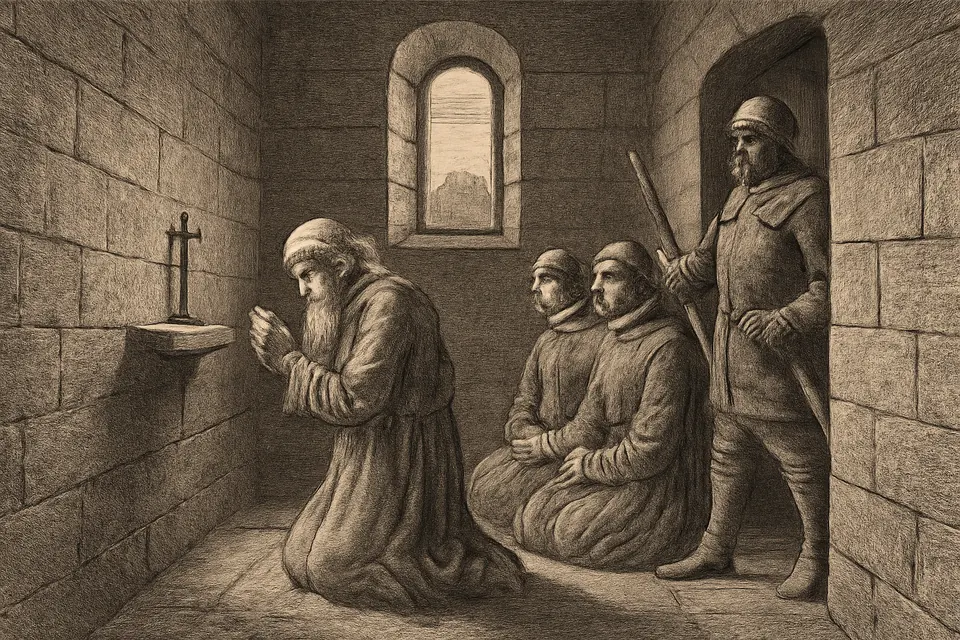
Boniface confined him in a narrow room in the tower of the castle of Fumone, near Anagni. Two monks of his order were allowed to stay with him, though the guards treated him roughly. He spent about nine months there in fasting and prayer and died on May 19, 1296, in his eighties. Rumors that Boniface had him killed spread quickly. The Catholic Encyclopedia calls them a calumny, and no solid evidence supports them.
Dante and the "great refusal"
Celestine's resignation caused a sensation, and one of the most famous lines in Italian poetry may be about him. In Canto III of the Inferno, at the gate of Hell, Dante sees the souls of the neutrals, who lived "without infamy or praise." Longfellow's translation gives the moment this way:
When some among them I had recognised,
I looked, and I beheld the shade of him
Who made through cowardice the great refusal.
Dante never names the shade. His earliest commentators, writing in the 1320s and 1330s, said he meant Celestine, and many readers still think so. Dante had good reason to resent the resignation: it opened the way for Boniface VIII, whose politics drove the poet into exile from Florence. Other readers have suggested different figures, from Esau to Pontius Pilate. The city of L'Aquila's own history of the Perdonanza suggests that Dante's charge of cowardice reflected the political quarrels of the day more than a judgment on the man.
The Church answered the question her own way. Only seventeen years after his death, and while Dante was still writing the Comedy, Celestine was raised to the altars. Petrarch, a generation later, praised his choice of solitude as courage, not weakness. In 1968 the Abruzzese novelist Ignazio Silone made him the hero of a play, The Story of a Humble Christian.
We can hold both readings with charity. Celestine knew he was not suited to govern, and he said so. He gave up the highest office in the Church to save his soul. As Benedict XVI said at Sulmona, "holiness never loses its power of attraction."
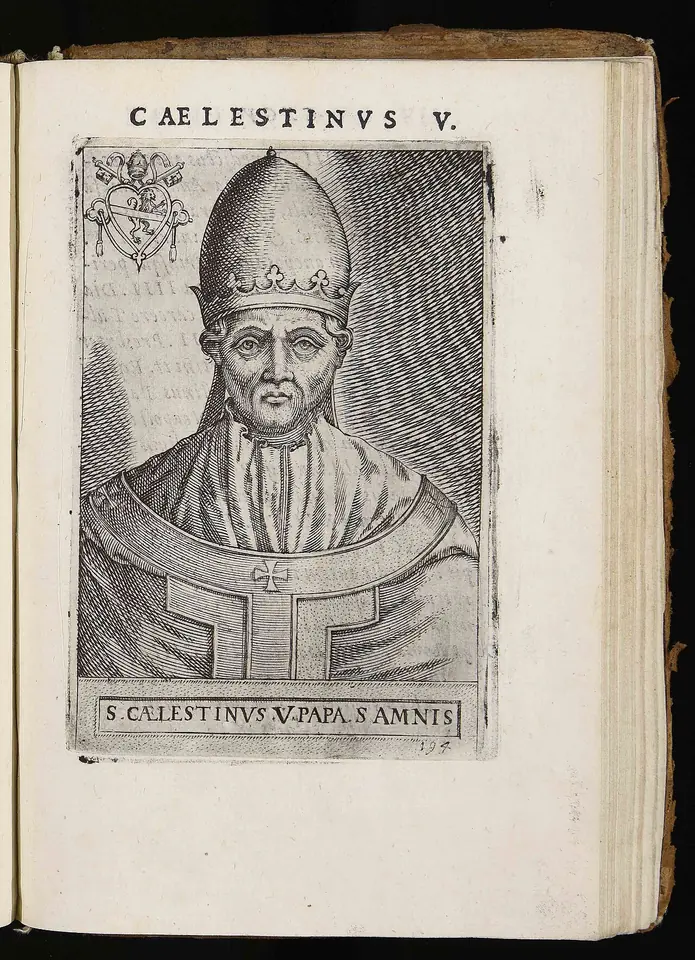
Canonization
Pressure for his canonization came quickly, partly from his monks and the people of the Abruzzo, and partly from the enemies of Boniface VIII, among them King Philip IV of France. Pope Clement V canonized him in 1313. The Church has honored him ever since as St. Peter Celestine, the hermit and confessor, and the Roman Martyrology remembers him under that name on May 19.
Some years after the canonization, in 1327, his body was moved from Ferentino, where it had been buried after his death, to the church of his order at Collemaggio in L'Aquila. There it has remained, through earthquakes, wars and restorations, for almost seven hundred years.
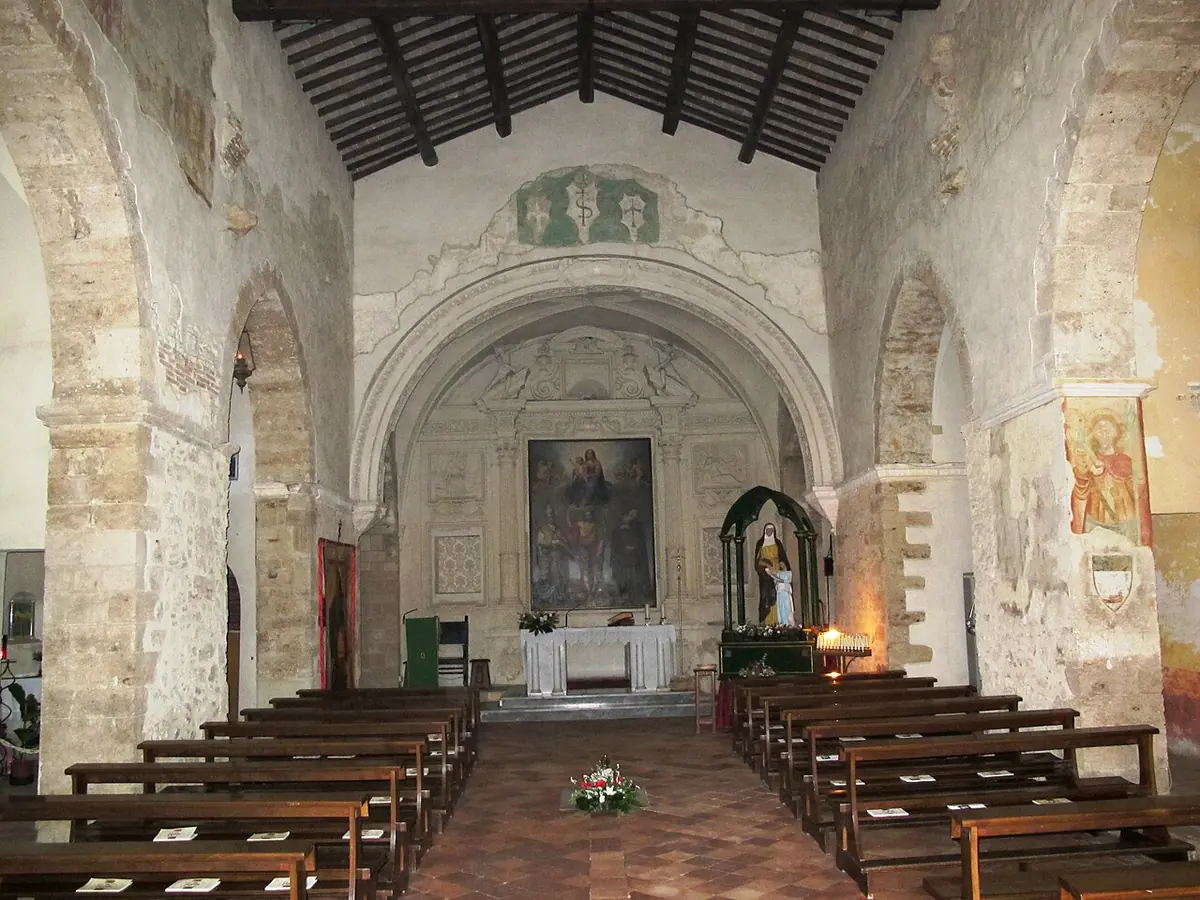
The miracles of St. Celestine V
Pietro had a reputation as a holy man and wonder-worker long before he was pope, and the cardinals' choice depended on it. Most of the stories about his miracles come from his followers' lives and from the inquiry for his canonization, and we label them carefully:
- The golden cross at Fumone (reported). The city of L'Aquila's history of his life says that chronicles of the time tell of a golden cross appearing in the air a few hours before his death, and that it is counted as his first miracle.
- Healings and wonders on the Majella (traditional). His followers told many stories of cures and signs during his years as a hermit. None was investigated the way a modern cause would require.
- Graces received at his tomb (reported). Pilgrims have come to Collemaggio for seven centuries to ask his help, and the Perdonanza draws thousands every August.
When the earthquake of April 6, 2009, brought down part of the basilica, his casket was recovered from the damaged church. Some in the city spoke of it as a sign of his protection. It is a pious reading, not an approved miracle.
L'Aquila, Collemaggio and the Perdonanza today
Collemaggio is one of the great churches of the Abruzzo, its facade patterned in pink and white stone. Its Holy Door, on the left side of the church, is opened every year on the evening of August 28 and closed at dusk on August 29. The custom of entering through it took shape in the 15th century, modeled on the Jubilees of the Roman basilicas. Vatican News calls the Perdonanza a forerunner of the first universal Jubilee, which Boniface VIII proclaimed in 1300.
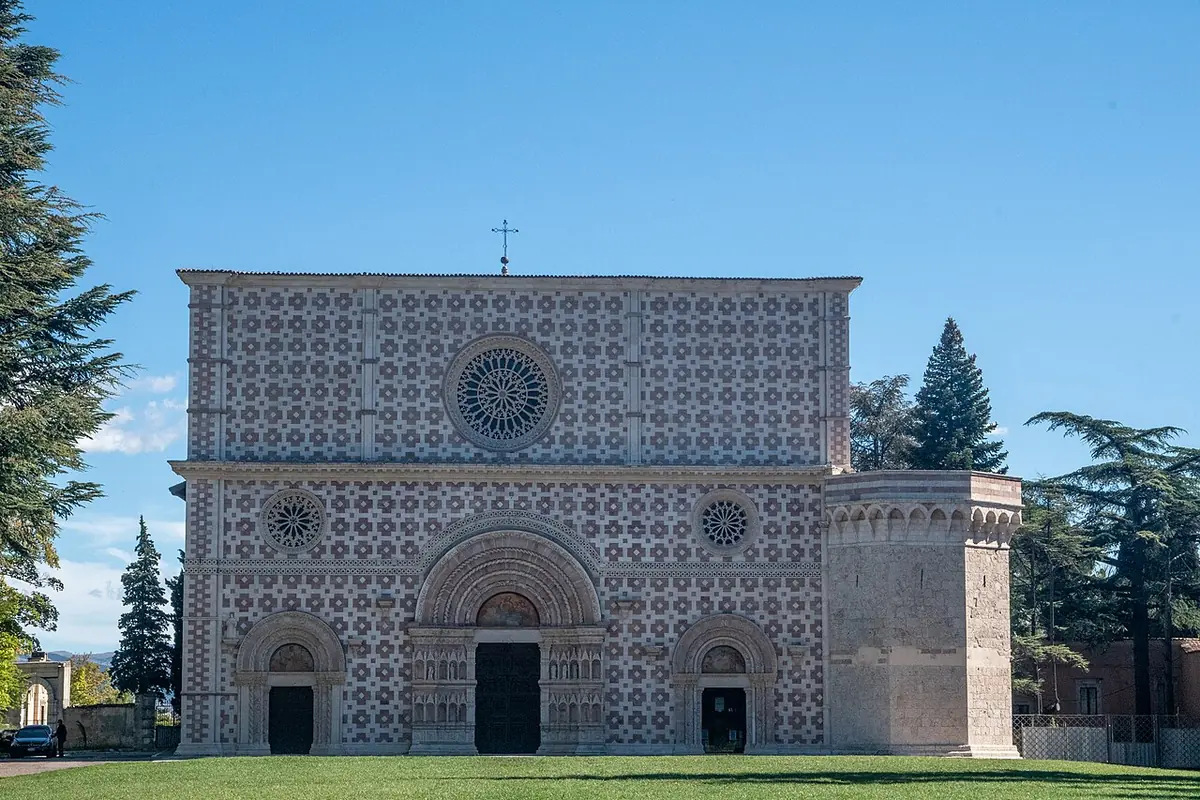
The rite has outlived the attempts to suppress it. Boniface VIII tried to annul the indulgence in August 1295, ten days before the first anniversary. The monks of Collemaggio and the city authorities refused to hand over the bull and held the celebration anyway. The parchment is still kept by the city, today in an armored chapel in the tower of the civic palace. Every August 28 the Lady of the Bull carries it in procession from the old town hall to the basilica, where it is read aloud before the Holy Door is opened. In 1967, Pope St. Paul VI confirmed the indulgence in the revised list of indulgences.
To gain the indulgence, the Archdiocese of L'Aquila asks the faithful to visit the basilica between Vespers on August 28 and sunset on August 29, pray the Creed, the Our Father and a prayer for the Holy Father's intentions, and receive Confession and Holy Communion within eight days before or after. The indulgence may be offered for oneself or for a loved one who has died.
In 2019, UNESCO added the Celestinian forgiveness celebration to its list of the Intangible Cultural Heritage of Humanity. On August 28, 2022, Pope Francis came to L'Aquila and opened the Holy Door himself, knocking three times with an olive-wood staff, and then prayed at Celestine's tomb. In his homily he called on the city to be "the capital of forgiveness, the capital of peace and of reconciliation."
Benedict XVI and the pallium on the tomb
On April 28, 2009, three weeks after the earthquake that killed more than three hundred people in and around L'Aquila, Pope Benedict XVI came to the stricken city. His first stop was Collemaggio, where part of the church had collapsed. He knelt before the urn of Celestine V and laid on it the pallium he had received at the inauguration of his pontificate in 2005.
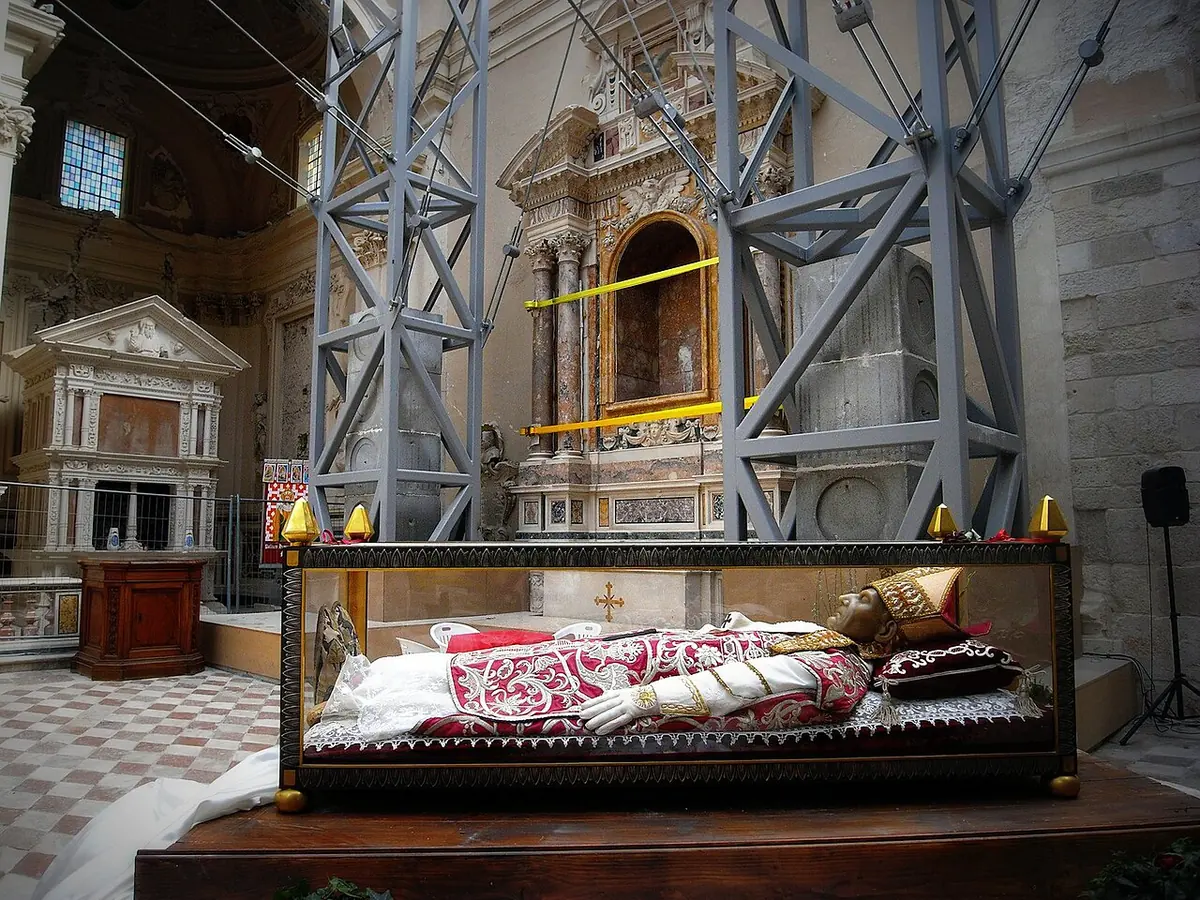
Later that day he explained the gesture to the people: "As a sign of my spiritual participation I left on his tomb... the Pallium conferred upon me on the day of the inauguration of my Pontificate." The next year, on July 4, 2010, he went to Sulmona for the 800th anniversary of Celestine's birth and preached about the hermit's silence, his sense of God's mercy, and the Perdonanza.
When Benedict XVI announced his own resignation in February 2013, many remembered that pallium. He was the first pope to resign since Gregory XII in 1415, and the first since Celestine to do so simply because he judged he no longer had the strength for the office.
Symbols of St. Celestine V in art
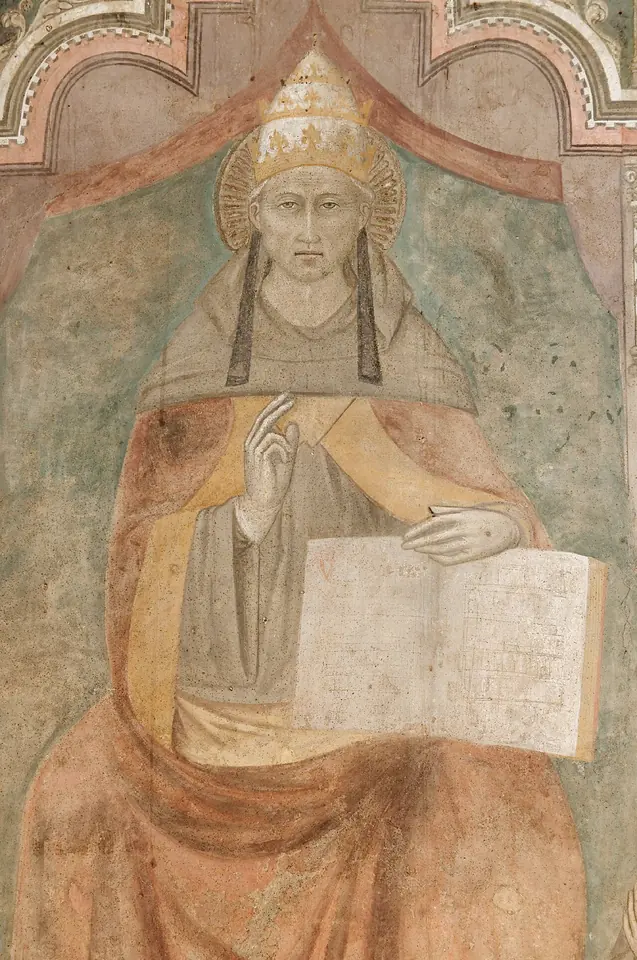
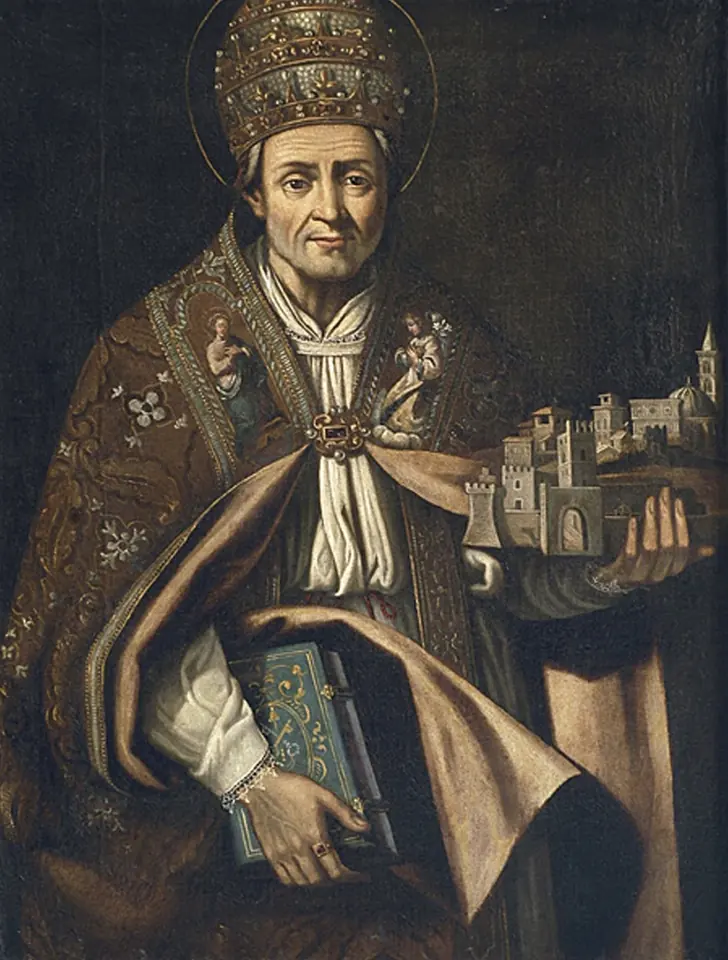
Celestine is easy to recognize once you know what to look for. Painters show him in two ways: as a pope who still looks like a hermit, or as a hermit who has set the papacy aside.
- The papal tiara, often laid aside: the triple crown is his main attribute. When it sits at his feet, on a table or in an angel's hands instead of on his head, it means his renunciation.
- The hermit's habit and long white beard: even in papal vestments he is usually shown old, thin and bearded, sometimes with the gray or white habit of the Celestines under his cope.
- A book: the rule he wrote for his monks and his life of prayer, as in Niccolò di Tommaso's panel near the top of this page.
- A model of L'Aquila: in paintings for the city he holds its walls and towers in his hand, as its protector.
- The Bull of Forgiveness: in some local images, the parchment of the Perdonanza.
Bedeschini's portrait of 1613, painted for L'Aquila, shows him in full papal dress, holding a book and a model of the walled city. Look for him above all in the churches of the Abruzzo and Molise and in the former Celestine houses of Italy and France.
The relics of St. Celestine V
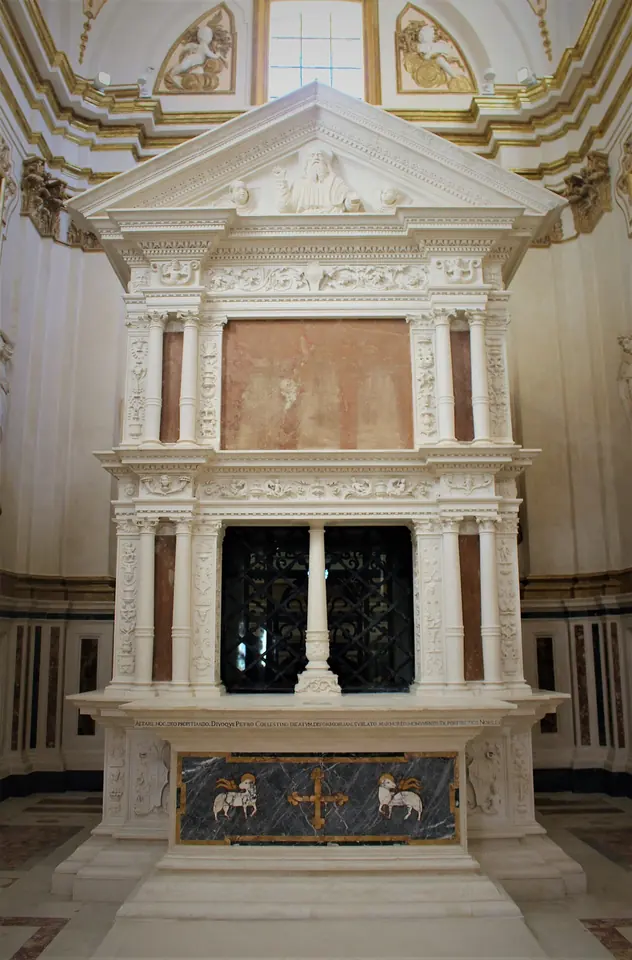
Celestine's body rests in the Basilica of Santa Maria di Collemaggio in L'Aquila. It lies in a glass casket, robed in papal vestments, with a silver mask over the face. The casket is placed in a white marble Renaissance mausoleum. The body was examined again and given new vestments in 2013, the 700th anniversary of his canonization.
Pilgrims also visit the places of his life: the hermitage of Sant'Onofrio al Morrone above Sulmona, where he heard of his election; the hermitage of Santo Spirito a Majella; the abbey of Santo Spirito al Morrone; the castle of Fumone, where he died; and the church of Sant'Antonio in Ferentino, his first tomb.
Prayer to St. Celestine V
The Church's own prayer for his feast is the collect of the Mass of St. Peter Celestine on May 19, from the traditional Roman Missal. It asks for his humility:
O God, Who raised blessed Peter Celestine to the lofty dignity of Supreme Pontiff and taught him to prefer self-abasement instead; mercifully grant that by his example we may look upon all worldly things as naught, and may be worthy to reap in joy the rewards promised to the humble.
The Latin original begins: Deus, qui beátum Petrum Cœlestínum ad summi pontificátus ápicem sublimásti, quique illum humilitáti postpónere docuísti...
There is no long-standing popular novena to St. Celestine in English. Let us ask his prayers when we must make a hard choice about our work or our vocation, when an honor or a responsibility weighs on us, and when we need the courage to admit our limits. Let us pray, too, for the Holy Father, as Celestine's own Perdonanza asks of everyone who comes through the Holy Door. And when we have sinned and feel far from God, we can remember the old hermit who opened a door of mercy to the poorest pilgrim and ask him to help us walk through it. St. Peter Celestine, pray for us.
Frequently asked questions
Why did Pope Celestine V resign?
He felt that the business of governing was crushing his life of prayer and that he wasn't fit for the office. His act of renunciation gave as reasons humility, weakness of body and the hostility of the people, and his wish to recover the peace of his former life. On December 13, 1294, after five months as pope, he read the decree that a pope may resign and then laid down the office.
Was Celestine V the first pope to resign?
He is the first pope whose resignation is clearly documented and settled in Church law. A few earlier popes are said to have stepped down, but those cases are obscure or disputed. Celestine first decreed that a pope may freely resign, and his successor Boniface VIII put that decree into the Church's law books. Gregory XII resigned in 1415, and Benedict XVI in 2013.
Is Celestine V in Dante's Inferno?
Probably. In Canto III of the Inferno, Dante sees among the souls who refused to take sides "the shade of him / Who made through cowardice the great refusal." Dante never gives the name, but his earliest commentators took it to mean Celestine, and most readers still do. Some scholars propose other figures. The Church judged him differently and canonized him in 1313.
What is the Perdonanza Celestiniana?
It is the Celestinian Pardon, a plenary indulgence that Celestine V granted in 1294 to everyone who, truly repentant and having confessed, visits the Basilica of Santa Maria di Collemaggio in L'Aquila from Vespers on August 28 to Vespers on August 29. The Holy Door is opened on the evening of August 28. UNESCO added the celebration to its Intangible Cultural Heritage list in 2019.
Where is Pope Celestine V buried?
His body lies in a glass casket inside a Renaissance mausoleum in the Basilica of Santa Maria di Collemaggio in L'Aquila, the church where he was crowned. He was first buried at Ferentino, and his remains were moved to L'Aquila in 1327.
Did Boniface VIII murder Celestine V?
There is no good evidence for it. Boniface kept his predecessor under guard in the castle of Fumone, where he died after about nine months, in his eighties, attended by two monks of his order. Rumors of murder spread among Boniface's enemies, but the Catholic Encyclopedia calls the charge a calumny.
When is St. Celestine V's feast day?
May 19, the day he died in 1296. It is his date in the Roman Martyrology, and the traditional Missal keeps it as the feast of St. Peter Celestine.
What was Pope Celestine V's real name?
Pietro Angelerio (also spelled Angeleri). He was known as Pietro da Morrone, Peter of Morrone, after the mountain above Sulmona where he lived as a hermit. As a saint he is often called St. Peter Celestine.
Sources
- Catholic Encyclopedia (1908): Pope St. Celestine V
- Benedict XVI, Homily at Sulmona for the 800th anniversary of the birth of St. Peter Celestine (July 4, 2010)
- Benedict XVI, Address in L'Aquila after the earthquake (April 28, 2009)
- Perdonanza Celestiniana (City of L'Aquila): The Bull of Forgiveness, Latin text and English translation
- Vatican News: Pope Francis opens Holy Door of Celestinian Pardon in L'Aquila (August 28, 2022)
- UNESCO: Celestinian forgiveness celebration
- Dante, Inferno, Canto III, Longfellow translation (Project Gutenberg)
- Divinum Officium: Mass of St. Peter Celestine, May 19 (1962 Roman Missal, collect in Latin and English)