St. Dioscorus of Alexandria, Egyptian Martyr Under Diocletian

St. Dioscorus of Alexandria was a young Christian of Upper Egypt who refused to sacrifice to the gods or hand over the holy books under Diocletian. He was imprisoned and tortured in Alexandria and beheaded about 305 to 307. His feast is May 18. He is not the fifth-century patriarch Dioscorus I of Alexandria.
Who was St. Dioscorus of Alexandria?
St. Dioscorus of Alexandria was a young Egyptian Christian who gave his life for Christ in the last and fiercest persecution of the Roman Empire, about the years 305 to 307. He came from Upper Cynopolis, the town the Copts called Qais, in Middle Egypt. His father was a lector, a reader of the Scriptures in the Church's liturgy, so Dioscorus grew up close to the holy books. In the end he would not give them up. We keep his feast on May 18.
A word first about his name. Many people who search for "St. Dioscorus of Alexandria" are looking for Dioscorus I, patriarch of Alexandria from 444, who was deposed by the Council of Chalcedon in 451 and is honored as a saint by the Coptic Orthodox Church. This page is about a different man: the martyr Dioscorus, who lived and died a century and a half earlier and is in the Roman Martyrology.

The martyrdom of St. Dioscorus
The holy books
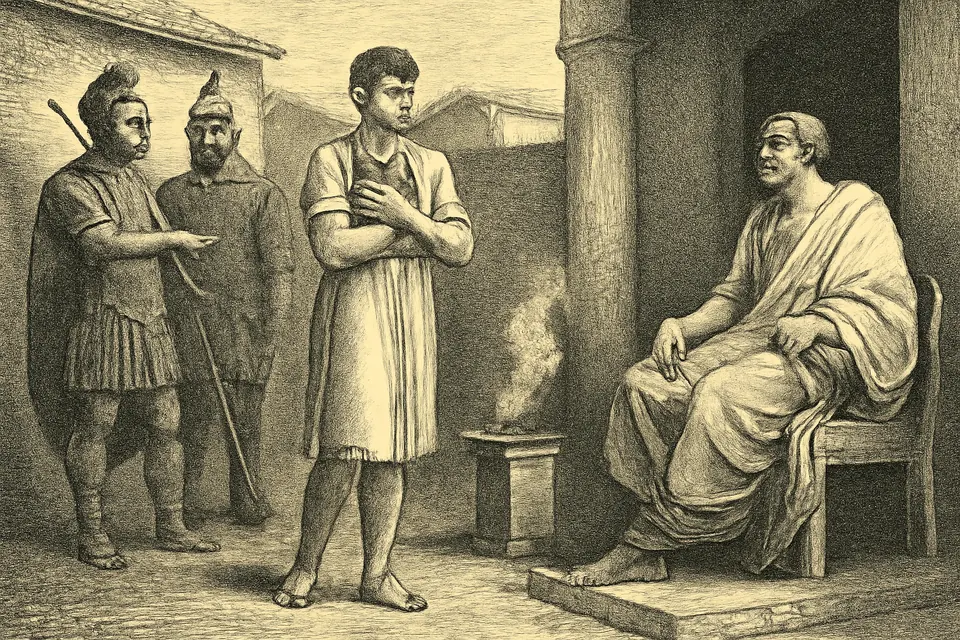
Diocletian's first edict against the Christians, in 303, ordered churches destroyed and the Scriptures handed over and burned. Later edicts demanded that everyone offer sacrifice to the gods. According to the account in the Bibliotheca Sanctorum, summarized on Santi e Beati, Dioscorus was a curialis, a man of the local town council, and he was arrested because he refused to do either: he would not sacrifice, and he would not surrender the sacred books.
Prison and torture at Alexandria
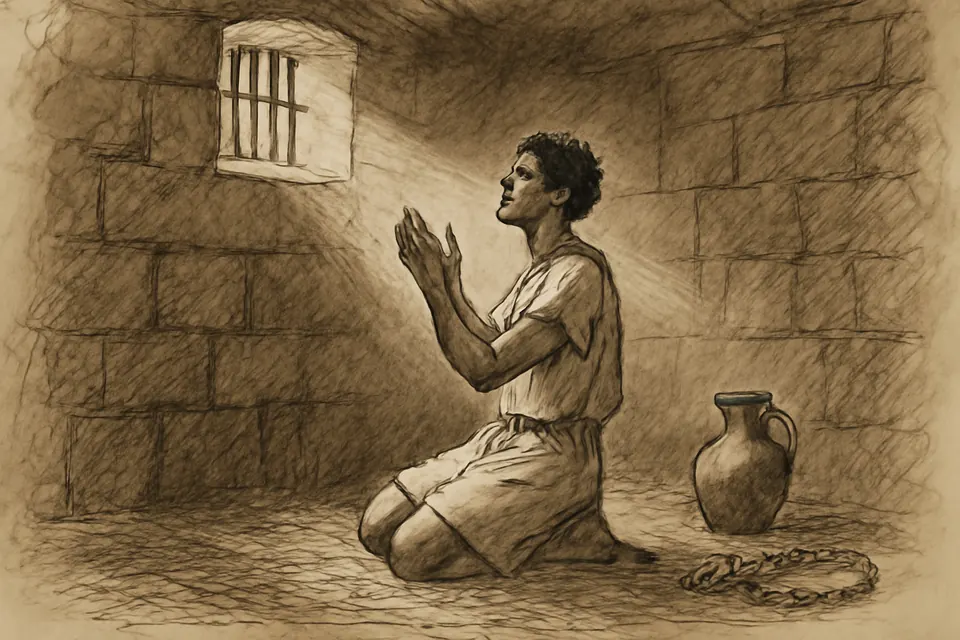
He was sent down the Nile to Alexandria, the capital of Roman Egypt. There, after a long imprisonment, he suffered several kinds of torture by order of the prefect Culcianus, the Roman governor of Egypt. Dioscorus did not give way. He was condemned and beheaded, about 305 to 307.
The Roman Martyrology now remembers him in these words, as Santi e Beati gives them in Italian: in Egypt, St. Dioscorus, martyr, who, the son of a lector, after many kinds of torment completed his martyrdom by beheading.
Egypt in the Great Persecution
Dioscorus was one of very many. Eusebius of Caesarea, who traveled in Egypt during these years, wrote in Book VIII of his Church History that he saw crowds condemned in a single day, "some suffering decapitation, others torture by fire," and that the Christians received the sentence "with joy and laughter and cheerfulness," singing hymns to the end. He names among the noble martyrs of Egypt Philoromus, a high official at Alexandria, and Bishop Phileas of Thmuis, whom judges and family alike begged to save themselves. Dioscorus, a town councilor and the son of a lector, belongs to that same company.
What the sources tell us
Dioscorus is one of the better-documented martyrs of Egypt. The Martyrology of St. Jerome, compiled in the fifth century, already lists him on May 18. His passion survives in a Latin translation in two versions and in a fragment in Syriac. Hippolyte Delehaye, the great Bollandist scholar, judged that it began as a good contemporary account, which was later reworked and decorated with material borrowed from a much weaker biography. The English scholar Rendel Harris once suggested that the cult of Dioscorus was a Christian disguise for the pagan Dioscuri, Castor and Pollux. Delehaye and Pio Franchi de' Cavalieri rejected that idea.
The older tradition
Medieval martyrologies told the story with more color. The Acta Sanctorum, the Bollandists' great collection, quotes Peter de Natalibus, who followed Usuard and Ado: the governor had Dioscorus's flesh torn with iron hooks and burning lamps held to his sides; then a brilliant heavenly light terrified the executioners so that they fell to the ground; at last he was burned with red-hot metal plates and so completed his martyrdom. Those older books called Dioscorus himself a lector. The heavenly light is a traditional miracle, known only from these later retellings. The modern Roman Martyrology follows the passion and says he was beheaded.
The French martyrologist Saussay wrote that his relics had been received at Liège, but the Bollandists could find no trace of it in that city's breviaries and asked the people of Liège to tell them if they knew more. No shrine of his relics is known today.
Symbols of St. Dioscorus in art
Dioscorus is rarely painted, and there is no fixed image of him. When artists did portray him, they drew on the martyrology story:
- Torches or burning lamps: the fire held to his sides, as in Jacques Callot's etching for May 18.
- Book of the Scriptures: the holy books he refused to surrender, and his family's office of lector.
- Martyr's palm: his victory in death.
Callot made his tiny oval prints for Les Images de tous les saints, a picture calendar with a saint for every day, published in 1636. His Dioscorus is a young man tied to a post between two executioners with torches. If you find a martyr with torches in an image for May 18, it is almost certainly Dioscorus.
Feast day
We keep his feast on May 18, the day given in the Martyrology of St. Jerome and the Roman Martyrology. The Byzantine synaxaria mention him on October 13.
Praying with St. Dioscorus
We know of no traditional prayer to St. Dioscorus that we can cite, so we ask his help simply: "St. Dioscorus, pray for us."
He died rather than hand over the Word of God, and his father had read that Word aloud in church. Let us ask him to pray for lectors and catechists, for Christians in Egypt today, and for all believers who are pressed to give up their faith or their Scriptures.
Frequently asked questions
Who was St. Dioscorus of Alexandria?
An Egyptian martyr of the Great Persecution, from Upper Cynopolis (Qais), the son of a lector. He refused to offer sacrifice or give up the sacred books, was tortured at Alexandria under the prefect Culcianus, and was beheaded about 305 to 307.
When is the feast of St. Dioscorus?
May 18 in the Roman Martyrology and in the ancient Martyrology of St. Jerome. The Byzantine synaxaria mention him on October 13.
Is St. Dioscorus the same as Pope Dioscorus of Alexandria?
No. Dioscorus I was patriarch of Alexandria from 444 and was deposed by the Council of Chalcedon in 451; the Coptic Orthodox Church honors him as a saint. The martyr Dioscorus lived a century and a half earlier and died in the persecution of Diocletian.
Is the story of St. Dioscorus historical?
Largely, yes. His passion survives in two Latin versions and a Syriac fragment, and the great Bollandist Hippolyte Delehaye judged it to rest on a contemporary account, later reworked and decorated with borrowed details.
Keep exploring
Sources
- San Dioscoro di Alessandria, Santi e Beati. Joseph-Marie Sauget's article from the Bibliotheca Sanctorum: his origin at Upper Cynopolis, his father the lector, the prefect Culcianus, the dates, the Byzantine October 13 commemoration, Delehaye's judgment of the passion and the rejected Dioscuri theory; also the current Roman Martyrology text (in Italian)
- De S. Dioscoro lectore, martyre in Aegypto, Acta Sanctorum, May, vol. IV (Internet Archive). The older martyrology tradition from Peter de Natalibus, Usuard and Ado: the hooks, the lamps, the heavenly light that terrified the executioners, the red-hot plates, and the unconfirmed claim of relics at Liège (in Latin)
- Eusebius, Church History, Book VIII, New Advent. Eyewitness description of the mass martyrdoms in Egypt (chapter 9), with Philoromus and Phileas