St. Joseph of Optina
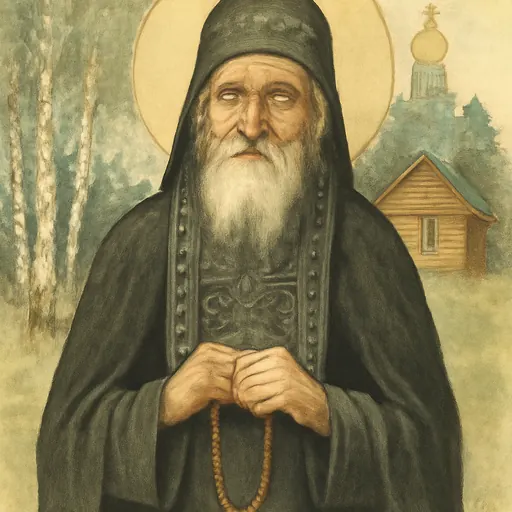
St. Joseph of Optina (1837–1911), born John Litovkin, was the cell-attendant of St. Ambrose of Optina for thirty years and after Ambrose's death the elder of Optina Monastery and spiritual father of the Shamordino Convent. Humble and sparing with words, he answered people with the counsel of Ambrose rather than his own. The Russian Orthodox Church glorified him with the Optina Elders in 2000, and keeps his feast on May 9 (22).
Who was St. Joseph of Optina?
St. Joseph of Optina was a Russian monk who spent fifty years in one small house in the skete of Optina Monastery, first as the servant of a great elder and then as an elder himself. For thirty years he was the cell-attendant of St. Ambrose of Optina, and after Ambrose died in 1891 the monks and nuns turned to Joseph as naturally as they had turned to his teacher.
The Russian Orthodox Church keeps his feast on May 9 (May 22 on the civil calendar), the day he died in 1911.
The life of St. Joseph of Optina
An orphan boy
He was born John Litovkin on November 2, 1837, in the village of Gorodishche in Kharkov Province, and named for St. John the Merciful. His parents, Euthymius and Maria, were simple, generous people who read the lives of the saints to their six children. John was sickly, nearsighted and partly deaf in one ear, and a happy, affectionate child all the same.
His father died when he was four. When he was eight, according to his Life, he froze in the middle of a game, raised his arms to the sky and fell unconscious; when he woke he said he had seen the Queen of Heaven, and he knew her "because she had a crown with a cross." His mother died of cholera in 1848, and the boy of eleven was passed from house to house, among them a tavern keeper's and a grocer's. He made his way to a cousin in Novocherkassk, eating nothing on the journey because he was too ashamed to beg, and remembered all his life the warm roll a stranger gave him outside the church.
To Optina
His sister, by then Mother Leonida in the Borisovsk convent, urged him toward the elders of Optina. On the road to a pilgrimage at Kiev he visited her, and her eldress told him plainly: "Forget about Kiev. Go to the Elders at Optina." He reached Optina driving a cart for some nuns, who jokingly introduced him to Elder Ambrose as "Brother John." Ambrose answered, "This Brother John will prove useful to us, and to you." On March 1, 1861, Ambrose told him to stay.
Fifty years beside the elder
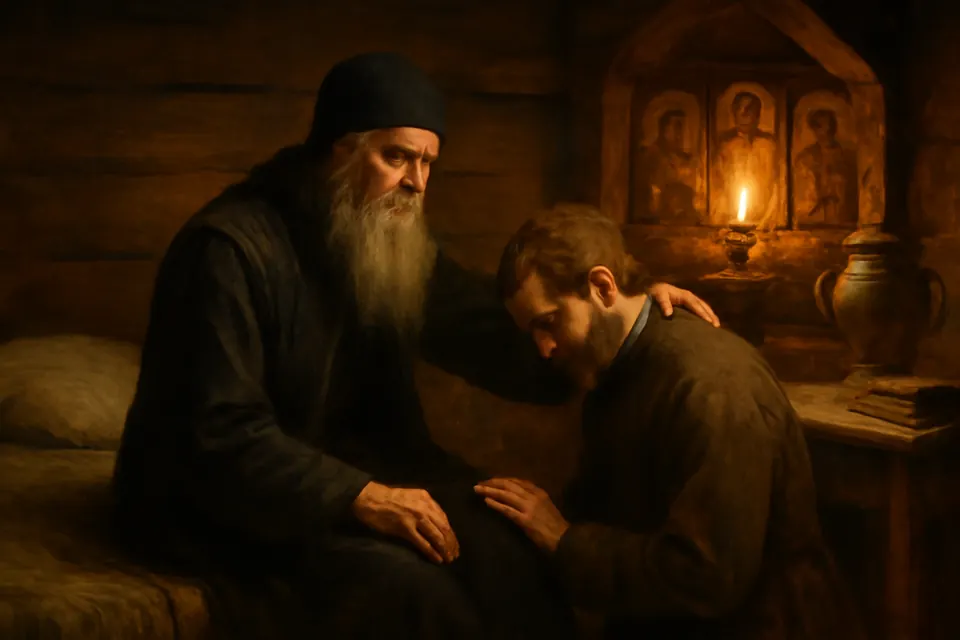
In June 1861 he moved into Ambrose's quarters as cell-attendant, and he stayed there for the next fifty years. The constant crowd of visitors troubled him at first. Once, as he was thinking he might do better at Kiev or on Mount Athos, he felt a hand on his shoulder and heard the elder say, "Brother John, it's better here than it is on Athos. Stay with us." He fell at Ambrose's feet in repentance.
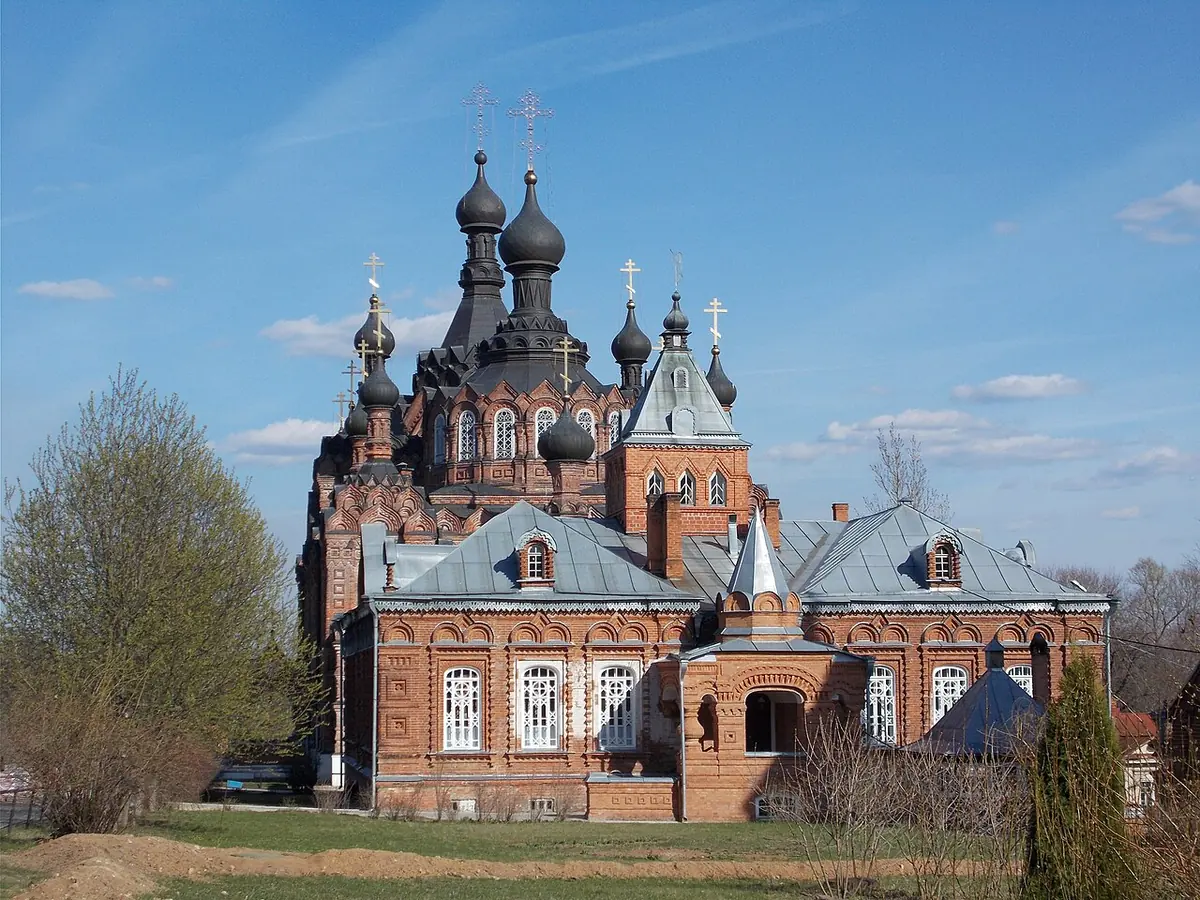
He was tonsured a monk on June 16, 1872, and given the name Joseph after St. Joseph the Hymnographer. He was ordained deacon in 1877, almost by accident, when the abbot suggested him over tea, and priest on October 1, 1884, at the opening of the Shamordino Convent that Ambrose had founded.

Elder of Optina
In 1888 Joseph fell gravely ill and received the great schema; his Life says that Ambrose later told people Joseph had seen the Mother of God during that illness. He recovered and began hearing confessions for the aging Ambrose, who sent people to him "not just once, but always." When Ambrose died on October 10, 1891, the monks began coming to Joseph of their own accord, and the nuns of Shamordino were told, "At Optina all we have Father Joseph as our common Elder, and he must be yours as well."
He was named confessor of the brotherhood in 1893 and head of the skete in 1894 after the death of St. Anatole. He governed, the OCA says, "not by issuing orders, but with paternal love and humility." Weak and often ill, he gave up the office in 1905 but kept receiving his spiritual children. He died on the evening of May 9, 1911, after receiving Communion that morning, "with a smile on his face," and was buried at the feet of Elder Ambrose.
Miracles of St. Joseph of Optina
- The vision of the Queen of Heaven in childhood: traditional, from his Life.
- His village house spared from fire: traditional. The Life says he prayed to the Mother of God during a great village fire, and his family's house alone was not burned.
- Healings in his lifetime and at his burial: reported. The Life says he healed the afflicted while he lived and that several miracles took place on the day he was buried. These have not been examined in the way the Catholic Church investigates miracles.
His counsel
He said little and never spoke on his own authority. When people asked his advice, he quoted Ambrose or told a story from Ambrose's life. When a monk wondered why so learned an elder did not say more, Joseph explained with St. Peter of Damascus that one should not offer advice unless asked, so that the good comes from the other's free choice. Looking back on his own path to the monastery, he once said: "As soon as one begins to think of following the path to salvation, obstacles and temptations begin to appear."
Symbols of St. Joseph of Optina in art
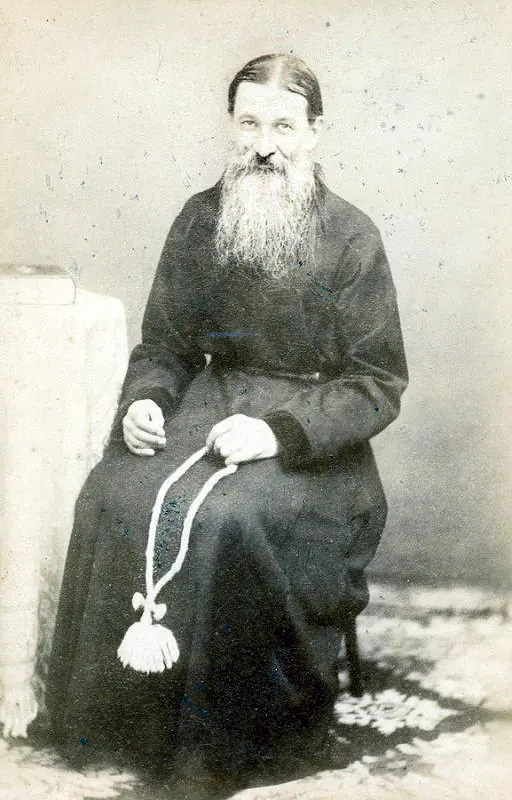
Icons of him follow his photographs: a frail old monk with a long, thin white beard. Look for the black great schema embroidered with the cross, a prayer rope, and often a scroll with words of counsel.
Feast day and glorification
His feast is May 9 on the Julian calendar (May 22 civil), and he is remembered with all the Optina Elders on October 11 (24). See our feast days page. The Moscow Patriarchate approved local veneration of the Optina Elders on June 13, 1996, and glorified them for the whole Russian Church on August 7, 2000.
Prayer to St. Joseph of Optina
The Orthodox Church sings this troparion (Tone 8) on his feast, in the translation of the Orthodox Church in America:
By a flood of tears you made the desert fertile, / and your longing for God brought forth fruits in abundance. / By the radiance of miracles you illumined the whole universe! / O our holy father Joseph, pray to Christ our God to save our souls!
Let us ask St. Joseph of Optina to pray for spiritual fathers and mothers, for all who serve the sick and the old, for orphans, and for anyone tempted to leave the place where God has put them. Holy Father Joseph, pray to God for us.
Frequently asked questions
When is the feast day of St. Joseph of Optina?
May 9 on the Julian calendar (May 22 on the civil calendar), the day he died in 1911. He is also remembered with all the Optina Elders on October 11 (24).
How was St. Joseph of Optina related to St. Ambrose?
He was Ambrose's cell-attendant from 1861 until Ambrose's death in 1891, and Ambrose prepared him to be his successor. Ambrose even began sending his spiritual children to Joseph for confession while he was still alive.
Why did St. Joseph of Optina say so little?
He followed the old monastic rule, which he took from St. Peter of Damascus, that one should not give spiritual advice unless asked, so that the benefit comes from the other person's free choice.
Keep exploring
Sources
- Orthodox Church in America: Venerable Joseph of Optina. His full life, from his birth on November 2, 1837, to his death on May 9, 1911; the 1996 and 2000 glorifications
- Orthodox Church in America: Venerable Joseph of Optina, Troparion. Text of the troparion in Tone 8