St. Peter Thomas, Carmelite and Latin Patriarch of Constantinople
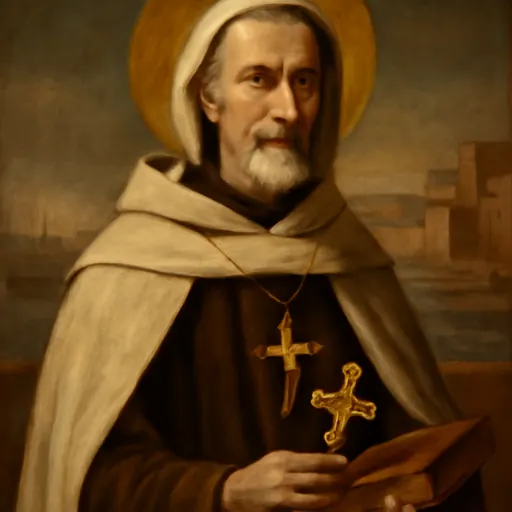
St. Peter Thomas (about 1305–1366) was a French Carmelite friar, born to a poor serf's family in Périgord, who became a papal diplomat, archbishop of Crete and Latin Patriarch of Constantinople. He died at Famagusta in Cyprus on January 6, 1366. The Carmelites keep his memorial on January 8.
Who was St. Peter Thomas?
St. Peter Thomas was a French Carmelite friar of the 14th century who rose from deep poverty to become a bishop, a papal legate and the Latin Patriarch of Constantinople. He spent his last twelve years traveling for the popes of Avignon, carrying letters to kings, emperors and doges, trying to make peace between Christians and to bring the Greek and Latin churches together. He died at Famagusta in Cyprus on January 6, 1366.
We know him well because two men who loved him wrote his life almost at once. One was Philippe de Mézières, chancellor of the King of Cyprus, who called Peter his spiritual father. The other was the Franciscan John Carmesson, who preached at his funeral.
The Carmelite Order keeps his memorial on January 8.
The life of St. Peter Thomas
A poor boy from Périgord
Peter was born about 1305 in a village of southern Périgord that Mézières calls Salimaso de Thomas, probably today's Lebreil near Salles-de-Belvès, where people still honor him. His father was a serf. When his brother died, Peter left home so as not to be one more mouth for his parents to feed. He went to school at Monpazier and then at Agen, living on alms and teaching younger children to earn his keep.
The Carmelite prior of Lectoure noticed him and set him to teach. Soon after, he received the Carmelite habit, probably at Bergerac, made his vows and was ordained a priest. The Carmelite biography says Our Lady helped him in his poverty during these years.
Teacher and preacher
Peter taught logic and philosophy in the Carmelite houses of Bordeaux, Albi and Agen, studied in Paris and lectured at Cahors. There, Mézières writes, he preached during a procession held to end a terrible drought, and a "miraculous rain" fell.

In 1345 his order elected him procurator general and sent him to the papal court at Avignon. He was a small, plain man; his superior general was embarrassed to present him to the cardinals. But Cardinal Elias Talleyrand of Périgord took his countryman under his protection and had him named apostolic preacher. Peter finished his doctorate in theology at Paris and returned to preach at the papal court. When Pope Clement VI died in 1353, Peter walked with the funeral procession to La Chaise-Dieu and preached at each of its twelve stops.
The pope's legate
From then on his life was a series of missions. He was sent to make peace between Venice and Genoa, and to Milan, Naples, Serbia and Hungary. He was consecrated bishop of Patti and Lipari in Sicily in 1354. On a crossing of the Adriatic, his companions credited his prayer with saving them from a Turkish attack and a storm.
In 1357 he was in Constantinople, where the emperor John V Palaeologus made his submission to the pope and received Communion from him. Pope Innocent VI made him bishop of Coron in Greece and legate for the East in 1359. On Easter Sunday 1360 he crowned his friend Peter of Lusignan as King of Jerusalem at Famagusta.
Not every page of these years is gentle. On Crete he moved hard against a heresy among the Latins, and one man was burned at the stake, the harsh justice of his age. In Cyprus he tried, at great risk to his life, to win the Orthodox clergy to union with Rome; Greek chroniclers of the island remember those efforts very differently.
Patriarch and crusader
Urban V made him archbishop of Crete in 1363, and in 1364 Latin Patriarch of Constantinople and legate for the crusade King Peter of Cyprus was preparing. The fleet sailed from Venice in June 1365. In October it reached Alexandria in Egypt. Mézières writes that Peter Thomas held up a relic of the True Cross before the assault and gave the army courage, and the city fell. Within a week, fearing a counterattack, the crusaders abandoned it against his advice and sailed back to Cyprus.

His death at Famagusta
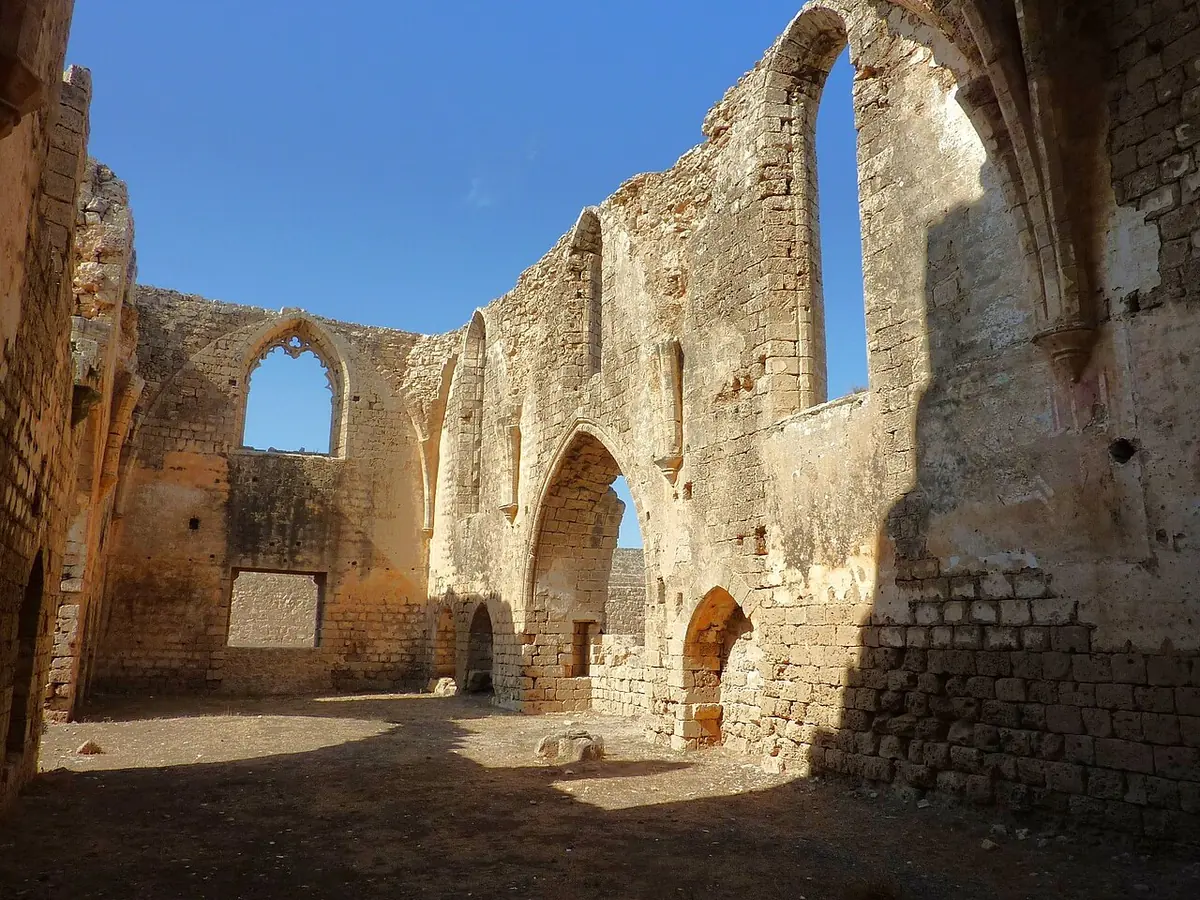
Back at Famagusta, Peter was preparing to return to the pope when he caught a chill during the Christmas feasts of 1365. He grew weaker each day, gave away everything he had, and died in the Carmelite convent on January 6, 1366, "reduced to skin and bones," as Mézières put it.

The miracles of St. Peter Thomas
His biographers report wonders during his life and after it. These are reported miracles: written down by people who knew him and gathered for an inquiry into his holiness, but never examined in a modern canonization process.
- The rain that fell at Cahors as he preached during a drought.
- Rescue from a Turkish attack and a storm while crossing the Adriatic in 1355.
- Ecstasies in prayer at Famagusta.
- The women who watched over his body said it seemed surrounded by light. His body lay in the church for six days while crowds came, Greeks among them, and healings were reported before and after his burial. When the tomb was opened on May 8, 1366, the body was found whole.
A diocesan inquiry began at Famagusta on April 14, 1366. King Peter of Cyprus asked Pope Urban V to canonize him. His cult was later confirmed by Paul V in 1609 and Urban VIII in 1628. His tomb disappeared after the Turkish conquest of Cyprus in 1571 and an earthquake in 1735.
Symbols of St. Peter Thomas in art
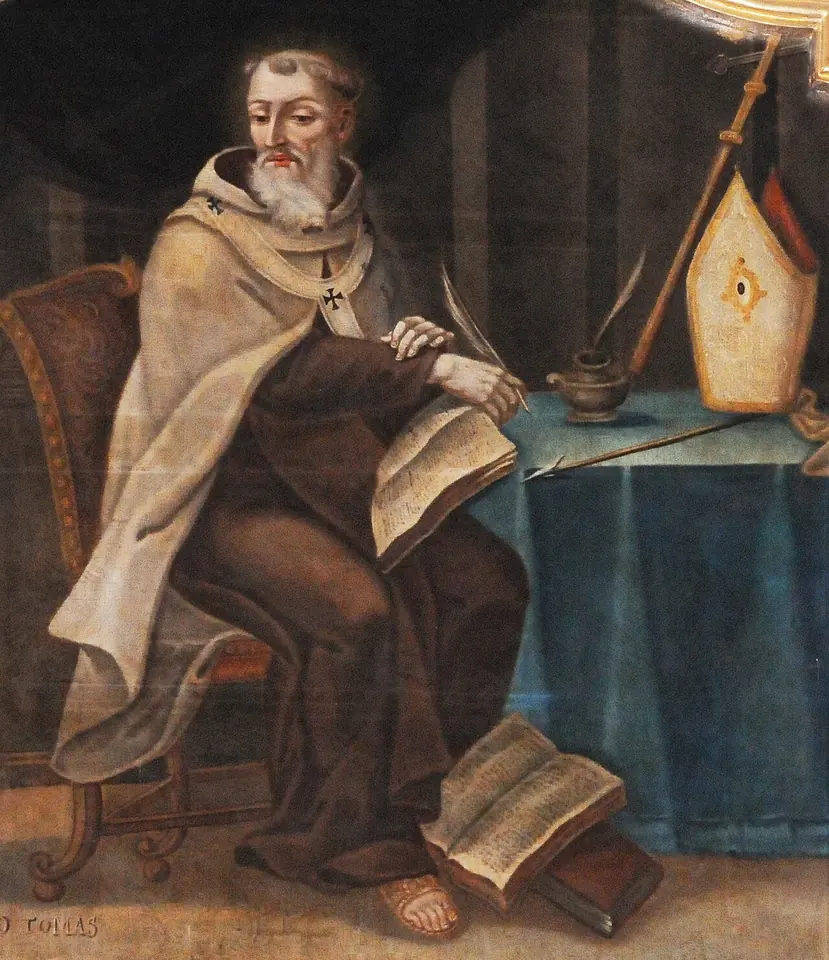
He is painted in the brown Carmelite habit and white mantle, usually with the miter and crozier of a bishop, sometimes with the double-barred cross of a patriarch. A book and pen point to his learning. Some images show him with a relic of the cross, for Alexandria. The Braga painting at the top of this page combines several of these: the writing table, the open book, the miter and the crozier.
Feast day and prayer
The Carmelite Order and the diocese of Périgueux keep his memorial on January 8, two days after the day of his death. See the other saints of January on our feast days calendar, and read more about his order's patroness at Our Lady of Mount Carmel.
No traditional prayer to St. Peter Thomas is in wide use outside the Carmelite liturgy. Let us ask him to pray for all who work for peace among nations and for the unity of Christians, causes he served until his strength ran out. St. Peter Thomas, pray for us.
Frequently asked questions
Who was St. Peter Thomas?
A Carmelite friar and theologian from southwestern France who served the popes at Avignon as preacher and legate. He worked for peace between Italian cities, for union with the Greek Church, and for the crusade of King Peter I of Cyprus. He was named Latin Patriarch of Constantinople in 1364.
When is the feast of St. Peter Thomas?
January 8 in the Carmelite calendar and the diocese of Périgueux. He died on January 6, 1366, the feast of the Epiphany.
Was St. Peter Thomas canonized?
His cult was confirmed by Pope Paul V in 1609 and by Urban VIII in 1628, according to the Carmelite Order. A diocesan inquiry into his holiness began at Famagusta in April 1366, only weeks after his death.
Who wrote the life of St. Peter Thomas?
His spiritual son Philippe de Mézières, chancellor of the King of Cyprus, wrote it in the Lent after his death. The Franciscan John Carmesson, who preached at his funeral, wrote another. Joachim Smet's edition of Mézières's Life was published in Rome in 1954.
Keep exploring
Sources
- Peter Thomas (ab. 1305-1366) Saint, patriarch, Carmelite Order (O.Carm.). The detailed Carmelite biography: his birth, missions, the rain at Cahors, Alexandria, his death, the six days of veneration, the cult approvals and the feast on January 8
- Joachim Smet, ed., The Life of Saint Peter Thomas by Philippe de Mézières (Rome: Institutum Carmelitanum, 1954). The near-contemporary Life written by his spiritual son