St. Edmund Arrowsmith, Jesuit Martyr of Lancashire

St. Edmund Arrowsmith (1585–1628) was a Lancashire priest, and later a Jesuit, who served the hidden Catholics of his home county for fifteen years. Betrayed by a young man he had rebuked, he was hanged, drawn and quartered at Lancaster on August 28, 1628. He is one of the Forty Martyrs of England and Wales.
Who was St. Edmund Arrowsmith?
St. Edmund Arrowsmith was a Lancashire priest who gave fifteen years to the hunted Catholics of his own county and then gave his life for them. Born at Haydock in 1585, he trained for the priesthood abroad, came home in 1613, joined the Society of Jesus in the 1620s, and was hanged, drawn and quartered at Lancaster on August 28, 1628, for the crime of being a priest. Pope Paul VI canonized him on October 25, 1970, as one of the Forty Martyrs of England and Wales.
Those who knew him remembered a small, sickly man with a quick wit and a smile he could not keep off his face, even in the dock. We keep his memory on August 28.
The life of St. Edmund Arrowsmith
A family of confessors
Bishop Richard Challoner, who gathered the lives of the English martyrs in the eighteenth century from manuscripts sent to him from Douai, says Edmund came from a family who had suffered for the faith for two generations. His grandfather Thurstan Arrowsmith died in prison. When Edmund was a small child, the pursuivants searched his parents' house, tied the whole household two by two and drove them to Lancaster jail, leaving four little children standing in their nightclothes in the cold until neighbors came in to dress them.
He was baptized Brian. At school, Challoner writes, he said the little hours of Our Lady's office with his brothers on the walk there each morning, and vespers and compline on the way home.
Douai and the mission
In December 1605 he reached the English College at Douai, where he was confirmed and took the name Edmund, after his uncle, a priest and professor there. His health broke down more than once, so his superiors moved him quickly to ordination. He was made a priest at Arras on December 9, 1612, and on June 17, 1613, he was sent to England.
The printed account of his death, published in 1630, describes him as "a man of mean presence but of great innocency in his life," and "ever of a cheerful countenance." A fellow priest said he was so eager to argue with Protestant ministers that he jokingly told him to "carry salt in his pocket" to season his zeal. Arrested once, about 1622, he was brought before the Protestant bishop of Chester and debated with his ministers over supper, then released with other priests when King James pardoned them. Soon after, he entered the Society of Jesus, making his novitiate in a two- or three-month retreat in Essex rather than going abroad.
Betrayed
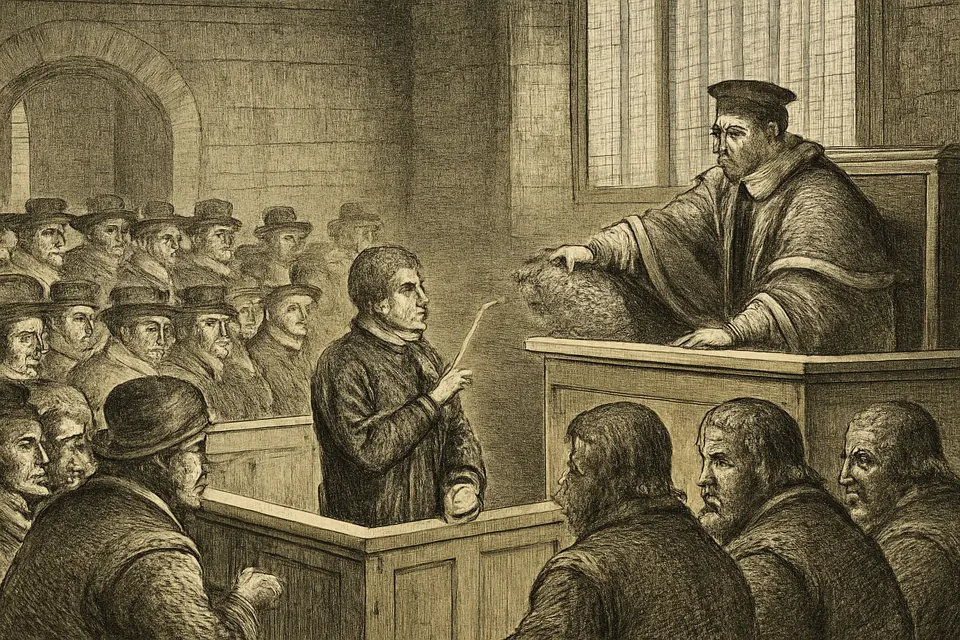
In the summer of 1628 he reproved a young man for an incestuous marriage. The man betrayed him to a justice of the peace, and he was ridden down on the highway. On August 26 he was brought before Judge Sir Henry Yelverton. Asked, "Are you a priest?" he made the sign of the cross and said, "I would to God I were worthy." No proof of his priesthood was ever produced, but the jury found him guilty of high treason. When the sentence was read he fell to his knees and said aloud, "Deo gratias," and then, in English, "God be thanked."
He spent his last two days in a hole so small he could not lie down, loaded with the heaviest irons in the castle.
Martyrdom at Lancaster
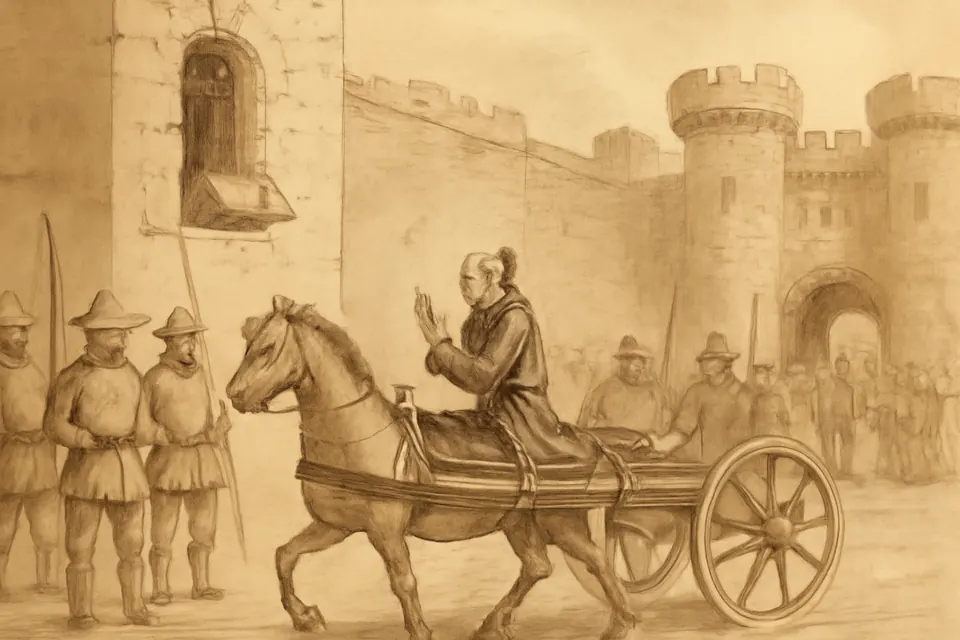
On August 28, as he was carried through the castle yard, his fellow prisoner Father John Southworth, himself a future saint, appeared at a window. Arrowsmith raised his hands for absolution, as they had agreed, and Southworth absolved him in sight of the crowd. He was dragged on a hurdle to the gallows. When a minister offered him his life if he would conform, he answered, "O sir, how far am I from that? tempt me no more; I will not do it, in no case, on no condition." His last words were "Bone Jesu." The next day a Catholic farmer, Richard Herst, was hanged at the same place by the same judge.
Miracles and the Holy Hand
As a martyr, Edmund Arrowsmith was canonized without a miracle being required. Two wonders are linked to his name.
- Reported: the favors, "spiritual and temporal," which the Catholic Encyclopedia of 1909 says are won through his "Holy Hand," preserved at St. Oswald's in Ashton-in-Makerfield.
- Reported: the Lancashire priest St. Ambrose Barlow, martyred in 1641, wrote from prison that Arrowsmith had come to his bedside the night before Arrowsmith's death and told him, "I have already suffered; you shall also suffer." The story comes down in Barlow's brother's account.
Symbols of St. Edmund Arrowsmith in art
- Black cassock or Jesuit habit: his priesthood and his vows in the Society of Jesus.
- Martyr's palm: the victory of his death for the faith.
- Rope or noose: the manner of his death at Lancaster.
- A raised hand: a reminder of the Holy Hand at Ashton.
Most modern images follow the traditional portrait at the top of this page.
Feast day and shrine
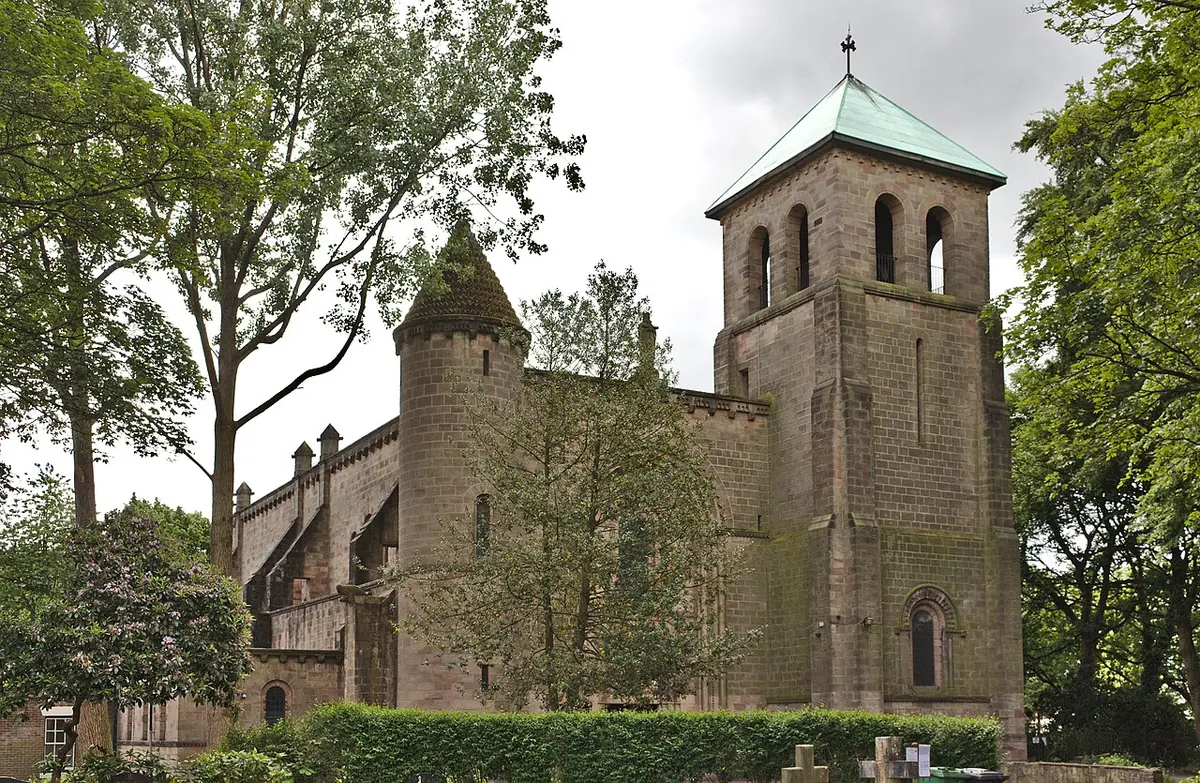
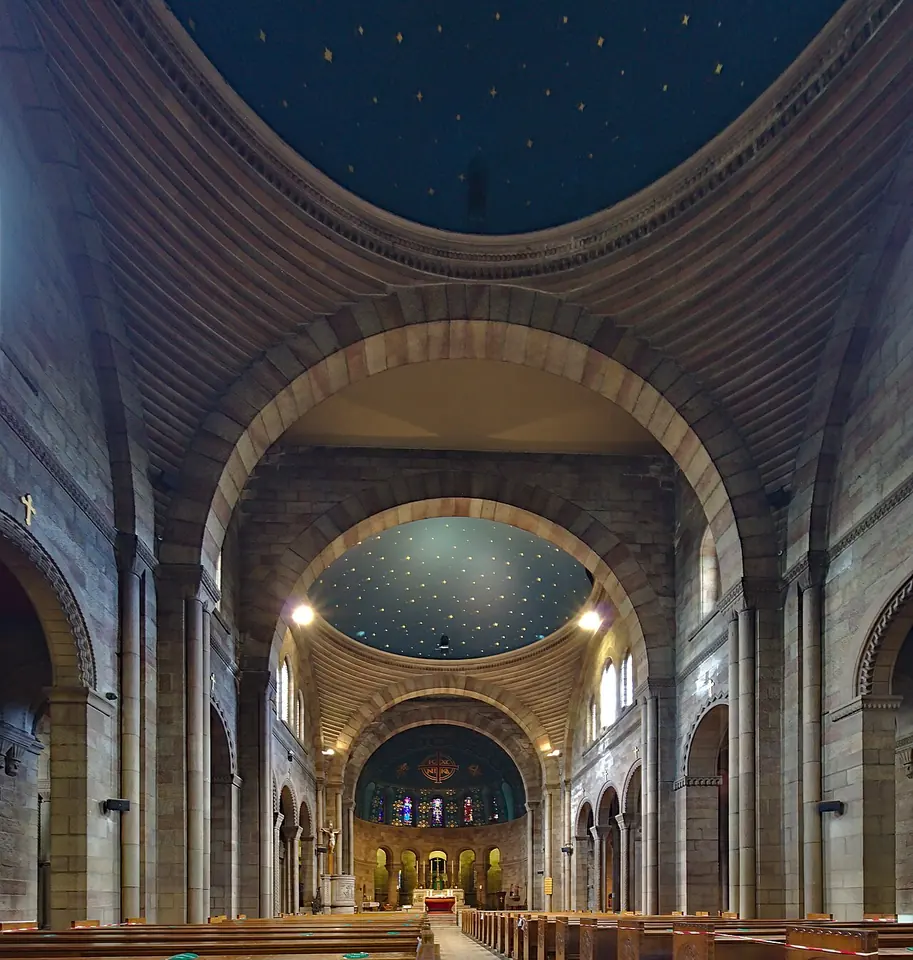
We remember him on August 28, and with all the martyrs of England and Wales. The Holy Hand is kept at the church of St. Oswald and St. Edmund Arrowsmith in Ashton-in-Makerfield, a few miles from Haydock, where pilgrims still come to pray. See the other saints of August on our feast days page.
Prayer of St. Edmund Arrowsmith
We know of no traditional prayer to him in English, but Challoner preserves the words he repeated on the hurdle and at the foot of the ladder, and we can make them our own:
"I freely offer Thee my death, O sweet Jesus, in satisfaction for my sins; and I wish this little blood of mine may be a sacrifice for them."
St. Edmund Arrowsmith, pray for priests, for all who suffer for the faith, and for England.
Frequently asked questions
Who was St. Edmund Arrowsmith?
A Catholic priest from Haydock in Lancashire, born in 1585, trained at the English College at Douai and ordained in 1612. He worked secretly in Lancashire from 1613, joined the Jesuits in the 1620s, and was executed at Lancaster in 1628 for being a priest. Paul VI canonized him in 1970.
What is the Holy Hand of St. Edmund Arrowsmith?
A hand of the martyr, kept as a relic at the church of St. Oswald and St. Edmund Arrowsmith in Ashton-in-Makerfield, near his birthplace. The Catholic Encyclopedia (1909) speaks of the many favors, spiritual and temporal, sought through it.
When is the feast of St. Edmund Arrowsmith?
August 28, the anniversary of his death. He is also honored with the Forty Martyrs of England and Wales, canonized on October 25, 1970.
Why was Edmund Arrowsmith executed?
He was found guilty of high treason for being a priest and a Jesuit and for persuading people to the Catholic faith, under the laws of the time. Challoner notes that no proof of his priesthood was brought at the trial.
Keep exploring
Sources
- Richard Challoner, Memoirs of Missionary Priests (1924 ed.), Edmund Arrowsmith, pp. 362–372, archive.org. His family's sufferings, Douai, ordination at Arras on December 9, 1612, his character, the trial before Judge Yelverton, the absolution by John Southworth, his words on the scaffold, and the date August 28, 1628
- Ven. Edmund Arrowsmith, Catholic Encyclopedia (1909), New Advent. The Holy Hand at St. Oswald's, Ashton
- Saint Edmund Arrowsmith, The Society of Jesus. Baptized Brian; confirmed as Edmund after his uncle; first arrest and release
- 25 ottobre 1970: Canonizzazione di quaranta martiri dell'Inghilterra e del Galles, homily of Paul VI, vatican.va. The canonization of the Forty Martyrs