St. Henry Morse, the Plague Priest

St. Henry Morse (1595 to 1645) was an English Jesuit priest who nursed the sick and dying during the London plague of 1636, caught the plague himself, recovered, and was hanged at Tyburn for his priesthood on February 1, 1645. Pope Paul VI canonized him in 1970 among the Forty Martyrs of England and Wales.
Who was St. Henry Morse?
St. Henry Morse was an English Jesuit priest who gave his life twice over: once to the plague-stricken poor of London, and then to the hangman at Tyburn. Born a Protestant in Suffolk in 1595, he became a Catholic as a young man, was ordained in Rome, and spent the rest of his life going back and forth between English prisons and the English mission. In 1636 he nursed the sick through an outbreak of plague in London and caught it himself. On February 1, 1645, he was hanged, drawn and quartered at Tyburn for being a priest.
Pope Paul VI canonized him on October 25, 1970, as one of the Forty Martyrs of England and Wales. We keep his feast on February 1.
A convert from Suffolk
Henry was born in Brome, Suffolk, in 1595, and was baptized in the Church of England. Michael Holman SJ, writing for the Jesuits in Britain, tells us he spent a year at Cambridge and another at the Inns of Court in London. By nineteen he had gone to the English College at Douai in France, where, according to the Catholic Encyclopedia, he was received into the Catholic Church on June 5, 1614.
He came home to settle family affairs and was arrested, probably at Dover, and imprisoned for four years. Even there, Holman notes, he looked after the sick prisoners around him. Freed in an amnesty, he went back to Douai and then to the English College in Rome, where he was ordained a priest. He set out for the English mission on June 19, 1624.
He joined the Society of Jesus in England, and he made his novitiate in an unusual place: York Castle, where he was imprisoned for three years, with a fellow prisoner, Father John Robinson, as his novice master. Banished in 1628, he served as chaplain to English and Irish soldiers in the Low Countries before returning to England at the end of 1633.
The plague priest of St. Giles
In the spring of 1635 his superior sent him to the parish of St. Giles-in-the-Fields, then one of the poorest and most crowded districts of London. Plague broke out that year and spread through the warm months of 1636. Catholic families were cut off from the help of the Anglican parishes, and the sick were shut up in their houses with their families.
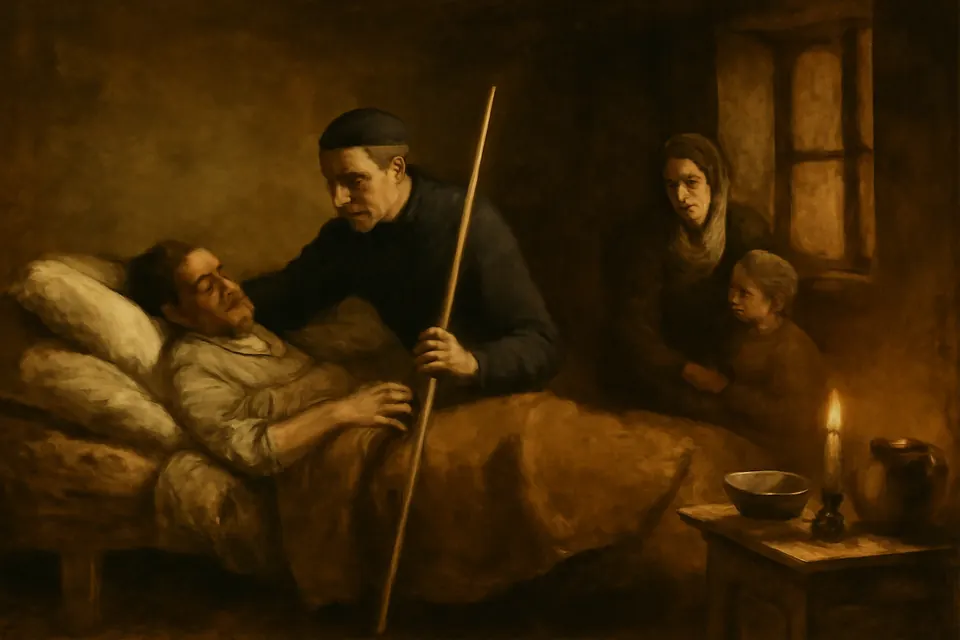
Father Morse worked there beside a secular priest, St. John Southworth, who would also die at Tyburn and is now among the canonized martyrs. Together they raised money for food, medicine and clothing, first from wealthy Catholics in London, then from Catholics across the country, with Queen Henrietta Maria as the chief donor. Holman writes that Morse made his own list of the sick each week from the parish list and went from house to house, wearing a mark on his clothing and carrying a white stick so that others could keep their distance.
Father Alegambe, one of his first biographers, wrote in 1657 that he was "entering rooms infected with foul and pestilential air, sitting down on a bed in the midst of squalor of the most repulsive and contagious nature." At first Morse kept a little distance, hearing confessions and giving Communion but not anointing the dying. Southworth rebuked him for it, and Morse took the rebuke humbly and from then on gave all three sacraments. He closed the eyes of the dead, washed and laid out their bodies, and blessed them before burial. The Catholic Encyclopedia records that about ninety Protestant families were received into the Church through him that year.
Then he caught the plague himself. A Catholic physician, Doctor Turner, lanced his sores and nursed him. When Morse protested at the danger, Turner answered that it was his duty to serve a priest who had given himself to saving the lives of the poor. Morse recovered.
On trial
He was arrested in 1636 and held in Newgate. At his trial a poor woman, Elizabeth Godwin, testified to what he had done:
I being a poor labouring woman never did or was able to keep a servant, and being shut up seven weeks, buried three of my little children, which Mr Morse relieved with Her Majesty's and divers Catholics' alms.
He was found guilty of being a priest and not guilty of drawing the king's subjects from their allegiance, and sentence was put off. On April 23, 1637, still in prison, he made his solemn profession as a Jesuit. Afterward he wrote this prayer, which Holman quotes:
May God grant that while I live I may never cease to act in a manner worthy of this high honour which I acknowledge I have done nothing to deserve from his hand and providence; and may I bear always in my heart the testimony of my gratitude, and, as long as I live never cease to give thanks for it, if not by the increase of good works, at least by the desire to accomplish them.
At the queen's request he was released on bail in June 1637. When a royal proclamation of 1641 ordered all priests out of the country, he left voluntarily so that the men who had stood bail for him would not suffer, and served as chaplain to an English regiment in the Spanish army.
Martyrdom at Tyburn
He came back to England in 1643, in the middle of the Civil War. After about a year and a half he was caught, held at Durham and Newcastle, and sent to London by sea. On January 30, 1645, he was condemned to death on the old conviction of 1636.
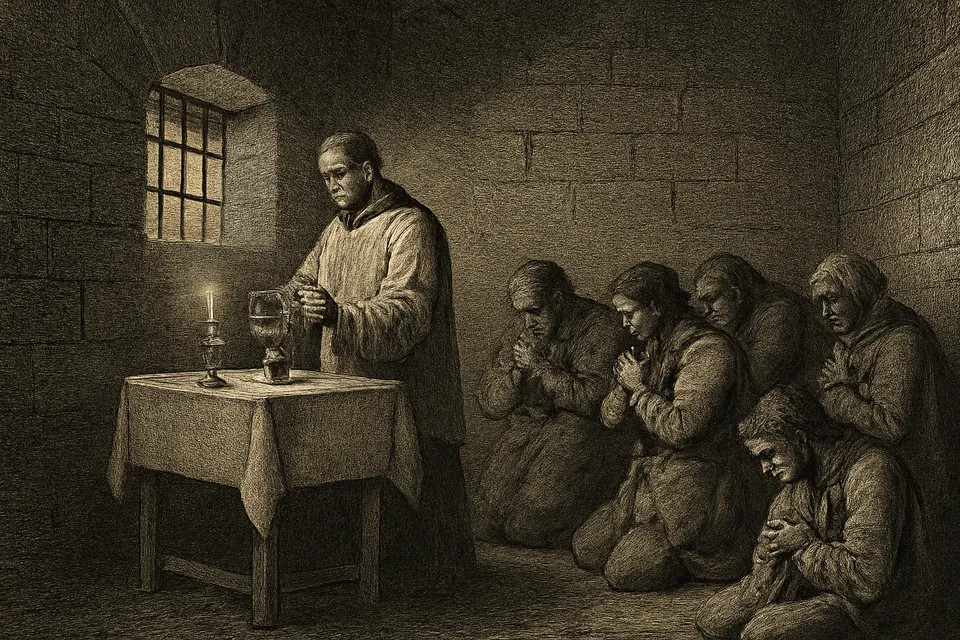
Early on the morning of February 1, he said his last Mass in Newgate and said goodbye to his fellow prisoners. Then he was dragged on a hurdle to Tyburn. The Catholic Encyclopedia records that the French ambassador came with all his suite, as did the Count of Egmont and the Portuguese ambassador. With the rope already around his neck, Holman writes, he struck his breast three times, a signal to a priest in the crowd to give him absolution. He was allowed to hang until he was dead before the rest of the sentence was carried out. The ambassadors' servants dipped their handkerchiefs in his blood.
Ambrose Corby, who had known him in Rome, wrote that he died "in the presence of an almost infinite multitude looking on in silence and in deep emotion," and called him "a saviour of life unto life."
Miracles of St. Henry Morse
The 1970 canonization of the Forty Martyrs of England and Wales was based on their martyrdom. One early wonder is reported: the Catholic Encyclopedia records that in 1647 many people troubled by evil spirits were relieved through the application of his relics.
Symbols of St. Henry Morse in art
There are few images of St. Henry Morse:
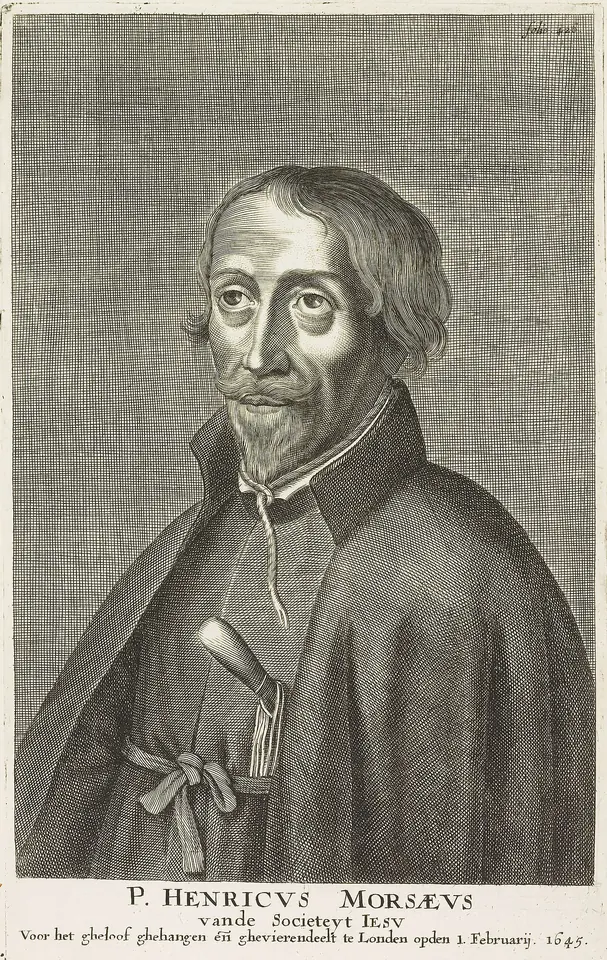
- Jesuit cassock and cloak: the plain black dress of a seventeenth-century Jesuit, as in the old Flemish engraving on this page.
- Rope and knife: the signs of his hanging and quartering at Tyburn; the engraving shows a cord around his neck and a knife tucked into his sash.
- Martyr's palm: in modern images of the Forty Martyrs.
- White staff: a fitting sign of his plague ministry, from the white stick he carried on his rounds.
Where St. Henry Morse is honored
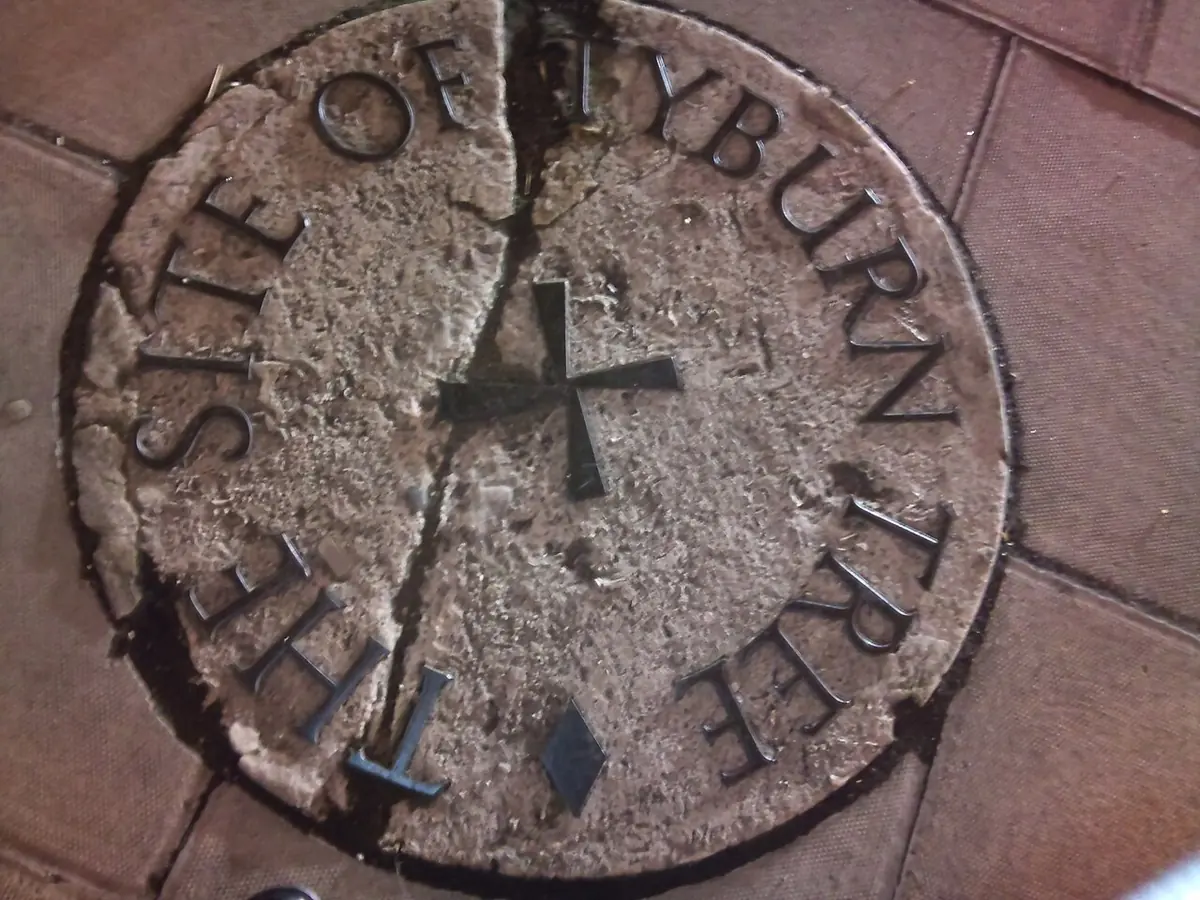
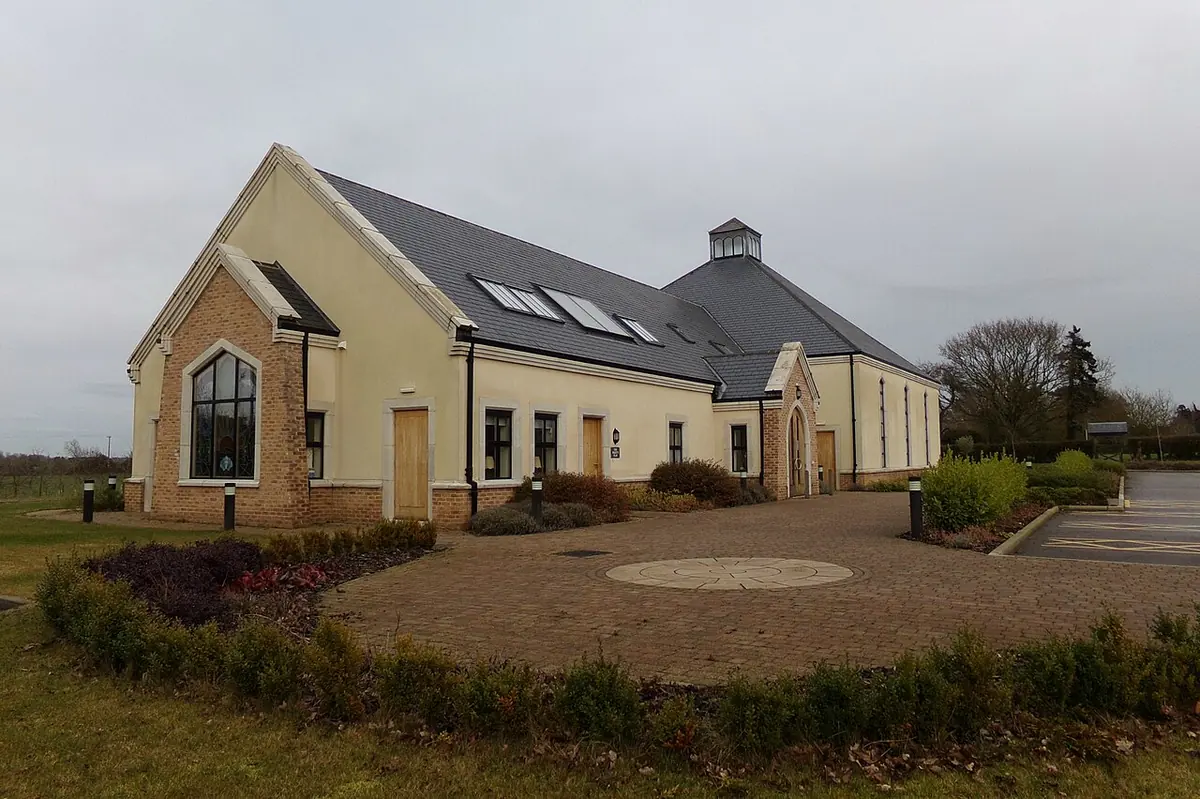
Tyburn, near today's Marble Arch, is where he and many other Catholic martyrs died; a stone in the pavement marks the site of the gallows. In 2012 a new Catholic church dedicated to him, St. Henry Morse, was built in Diss in Norfolk, a few miles from his birthplace.
Prayer of St. Henry Morse
The prayer above, written after his solemn vows in prison, is his own, and we can make it ours as an act of thanksgiving. Let us ask St. Henry Morse to pray for nurses, doctors and chaplains who care for the sick in times of epidemic, for converts, and for the Church in England and Wales. See more saints on the feast day calendar.
Frequently asked questions
Why is St. Henry Morse called the plague priest?
In 1635 and 1636 he worked in the poor parish of St. Giles-in-the-Fields in London during an outbreak of plague, visiting the sick, bringing them the sacraments, raising money for food and medicine, and laying out the dead. He caught the plague himself and recovered. Jesuit writers have called him "the priest of the plague" ever since.
When is the feast of St. Henry Morse?
February 1, the day he was martyred at Tyburn in 1645. He is also honored with the Forty Martyrs of England and Wales, canonized together on October 25, 1970.
Was St. Henry Morse born Catholic?
No. He was born in 1595 in Suffolk and baptized in the Church of England. He studied at Cambridge and at the Inns of Court in London, and was received into the Catholic Church at the English College at Douai in 1614.
Is there a church dedicated to St. Henry Morse?
Yes. St. Henry Morse Catholic Church in Diss, Norfolk, a few miles from his birthplace, was built in 2012.
Keep exploring
Sources
- Catholic Encyclopedia (1911): Ven. Henry Morse. Reception at Douai in 1614, his trials, the bail at the queen's request, the execution, the ambassadors at Tyburn, and the relics in 1647
- Michael Holman SJ, St Henry Morse SJ: 'A saviour of life unto life', Thinking Faith (Jesuits in Britain), 2020. The plague ministry in St. Giles, Elizabeth Godwin's testimony, the white stick, Fr. Alegambe and Ambrose Corby, and his prayer after his profession
- Pope Paul VI, Homily for the canonization of the Forty Martyrs of England and Wales, October 25, 1970 (Italian, vatican.va). The canonization
- St. Henry Morse Catholic Church, Diss. The parish church built in 2012