Blessed Dominic Barberi

Blessed Dominic Barberi (1792–1849), Dominic of the Mother of God, was an Italian Passionist priest who felt called from his youth to England. He founded the first Passionist houses there and, on October 9, 1845, received John Henry Newman into the Catholic Church at Littlemore. Pope Paul VI beatified him in 1963; England keeps his feast on August 26.
Who was Blessed Dominic Barberi?
Blessed Dominic Barberi was an Italian Passionist priest who spent almost thirty years waiting to go to England, and then spent the last eight years of his life there. He founded the first houses of his order on English soil, preached across the Midlands, and on the night of October 8–9, 1845, received John Henry Newman into the Catholic Church. In religion he was Dominic of the Mother of God. England keeps his feast on August 26.
He was born near Viterbo on June 22, 1792, the youngest of six children of a peasant family. His parents died when he was small, and his mother's brother, Bartolomeo Pacelli, took him in.
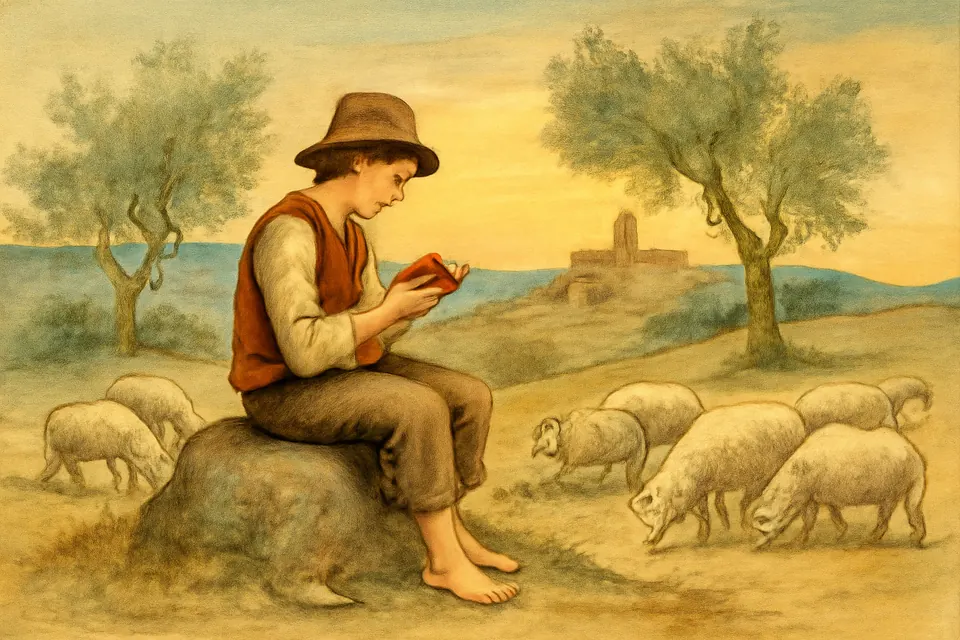
The shepherd who learned to read
As a boy Domenico kept sheep and later worked on the farm. He had no regular schooling. A kind Capuchin taught him his letters, a country lad his own age taught him to read, and after that he read every book he could find. He was deeply religious from childhood, and he believed, the Catholic Encyclopedia says, that God had told him he was meant to announce the Gospel and bring back stray sheep.
He was received into the Congregation of the Passion in 1814. That same year, as a novice praying before the altar of Our Lady, he understood that his field would be northwest Europe, "especially England." Pope Paul VI, quoting the Passionist records at his beatification, said this call came to him in 1814. Dominic was ordained a priest on March 1, 1818.
Theologian and superior
For about ten years he taught philosophy and theology to young Passionists, and then served as rector, provincial consultor and provincial. He gave missions and retreats and wrote a great deal: courses of philosophy and moral theology, a book on the Passion, a work on the sorrows of Our Lady, a refutation of Lamennais, sermons. Paul VI noted that his study of papal infallibility anticipated what the First Vatican Council would define.
In 1841 he wrote a Latin letter to the professors of Oxford, answering the objections of Anglicans to the Catholic faith. England was never far from his mind.
The mission to England
In 1840 he founded the first Passionist house in Belgium, at Ere near Tournai. In 1842, twenty-eight years after he first felt the call, he established the Passionists in England at Aston Hall in Staffordshire. Catholics were few and wary, and a foreign friar in a black habit was a strange sight, but he kept preaching. In his seven years in England he founded three houses of his congregation; Paul VI counted four.
Newman at Littlemore
In the fall of 1845 Newman, the leader of the Oxford Movement, had decided to become a Catholic. One of his friends at Littlemore had been received by Fr. Dominic at Aston, and when Dominic was to pass through Oxford on his way to Belgium, Newman asked him to call. On October 8, 1845, Newman wrote to his friends:
I am this night expecting Father Dominic, the Passionist, who, from his youth, has been led to have distinct and direct thoughts, first of the countries of the North, then of England.
He is a simple, holy man; and withal gifted with remarkable powers. He does not know of my intention; but I mean to ask of him admission into the One Fold of Christ.
Fr. Dominic received Newman's profession of faith at Littlemore that October, together with two of his companions. Paul VI was careful to say that Dominic did not cause Newman's conversion, which came after long and painful thought. But Newman never forgot him. "He had a great love for England," Newman later wrote of him, and Paul VI made those words the heart of his English address at the beatification.

In 1846 Dominic also received into his congregation the Hon. George Spencer, who became Fr. Ignatius of St. Paul.
His death and beatification
Dominic died on August 27, 1849, at a small railway station near Reading, worn out at fifty-seven. He was buried under the high altar of St. Anne's Retreat at Sutton, St. Helens.
- Approved: Pope Paul VI beatified him on October 27, 1963, during the Second Vatican Council. Closing his English address, the Pope said of Dominic's love for England: "We shall nourish great hope, and raise long supplication in prayer."
Symbols of Blessed Dominic Barberi in art
- The black Passionist habit with the white sign of the Passion on the breast: a heart topped by a cross.
- Pen and paper: the theologian and writer.
- The map of England or the British Isles: his lifelong call.
- A crucifix: the Passion of Christ, which the Passionists vow to keep alive in memory.
Feast day, tomb and prayer
England keeps his feast on August 26. His tomb is in the church of St. Anne and Blessed Dominic in Sutton, St. Helens, and a parish church at Littlemore bears his name. See also the feast day calendar and St. Paul of the Cross, founder of the Passionists.
There is no traditional prayer to Blessed Dominic in common use. Let us ask him, who waited nearly thirty years for the work God had promised him, to pray for Christian unity, for England, and for all who are seeking the truth as Newman did.

Frequently asked questions
Who was Blessed Dominic Barberi?
An orphaned shepherd boy from near Viterbo who became a Passionist priest, theologian and missionary. After nearly thirty years of hoping, he came to England in 1841, founded the first Passionist houses there, and received John Henry Newman and many others into the Catholic Church. He died in 1849.
When is the feast of Blessed Dominic Barberi?
August 26 in the national calendar of England. He died on August 27, 1849, and some calendars give that date.
Did Dominic Barberi convert John Henry Newman?
He received Newman into the Church at Littlemore in October 1845, but Newman came to that decision through years of his own study and prayer. Pope Paul VI said so plainly at the beatification. Newman wrote the night before that he meant "to ask of him admission into the One Fold of Christ."
Where is Blessed Dominic Barberi buried?
At the church of St. Anne and Blessed Dominic in Sutton, St. Helens, in northwest England, where he was first buried under the high altar of the Passionists' St. Anne's Retreat.
Keep exploring
Sources
- Catholic Encyclopedia (1909): Dominic of the Mother of God. His life, foundations in Belgium and England, his converts, his writings and his burial at Sutton
- Pope Paul VI, address for the beatification of Fr. Dominic of the Mother of God (October 27, 1963). The beatification, his call to England in 1814, the four houses he founded, and Newman's words about him
- John Henry Newman, Apologia Pro Vita Sua (1865), Newman Reader. Newman's letter of October 8, 1845, on Father Dominic
- Liturgy Office of England and Wales: Liturgical Calendar, August 2026. His optional memorial on August 26 in England