St. Maria Troncatti
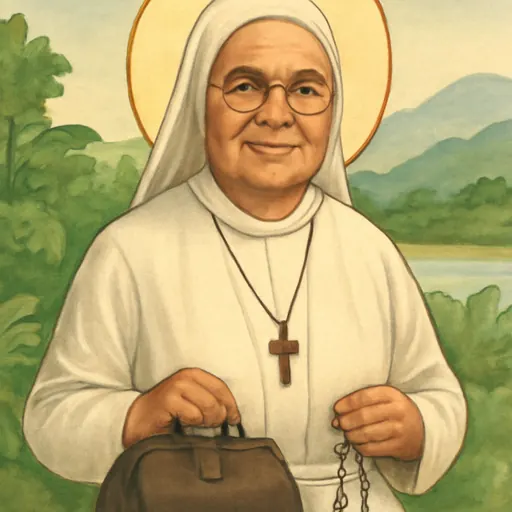
St. Maria Troncatti (1883–1969) was an Italian Salesian sister who spent 44 years among the Shuar of Ecuador's Amazon as a nurse, surgeon, catechist and peacemaker. The Shuar called her madrecita, little mother. She died in a plane crash at Sucúa on August 25, 1969, her feast day, and Pope Leo XIV canonized her on October 19, 2025.
Who was St. Maria Troncatti?
St. Maria Troncatti was an Italian Salesian sister who gave forty-four years of her life to the Shuar people in the Amazon forest of Ecuador. She was a nurse by training and, out of necessity, a surgeon, dentist, pharmacist and midwife as well, but above all she was a catechist who wanted every patient to meet Christ. The Shuar called her madrecita, "little mother." When the small plane carrying her crashed on takeoff at Sucúa on August 25, 1969, the radio of the Shuar Federation announced: "Our mother, Sister Maria Troncatti, has died."
She was born in 1883 in the Alps of northern Italy, beatified in Ecuador in 2012, and canonized by Pope Leo XIV on October 19, 2025, World Mission Sunday. In his homily the Pope named her among the new saints as an evangelizer and missionary. We keep her feast on August 25.
The life of St. Maria Troncatti
A girl from the mountains
Maria was born on February 16, 1883, at Corteno Golgi, a village in the Val Camonica above Brescia, into a large family of cattle farmers. She grew up working in the fields and caring for her younger brothers and sisters, very close to her father, Giacomo, and to her older sister Caterina. She was confirmed at three and made her First Communion at six.
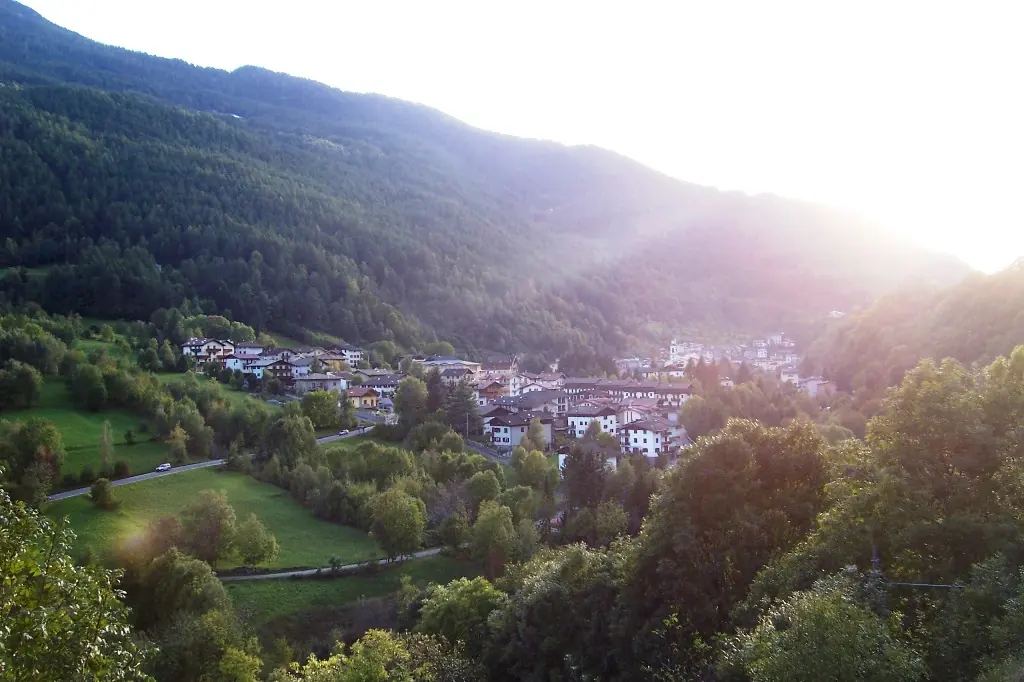
At school her teacher gave her the Salesian Bulletin to read, and the stories of missionaries in South America took hold of her. At fifteen she joined the parish Daughters of Mary and began to think of religious life. Her father was not keen. Out of obedience to him and to her parish priest, she waited until she came of age, which was twenty-one in those days, and on October 15, 1905, she left home for the Daughters of Mary Help of Christians, the sisters founded by St. John Bosco and St. Mary Mazzarello.
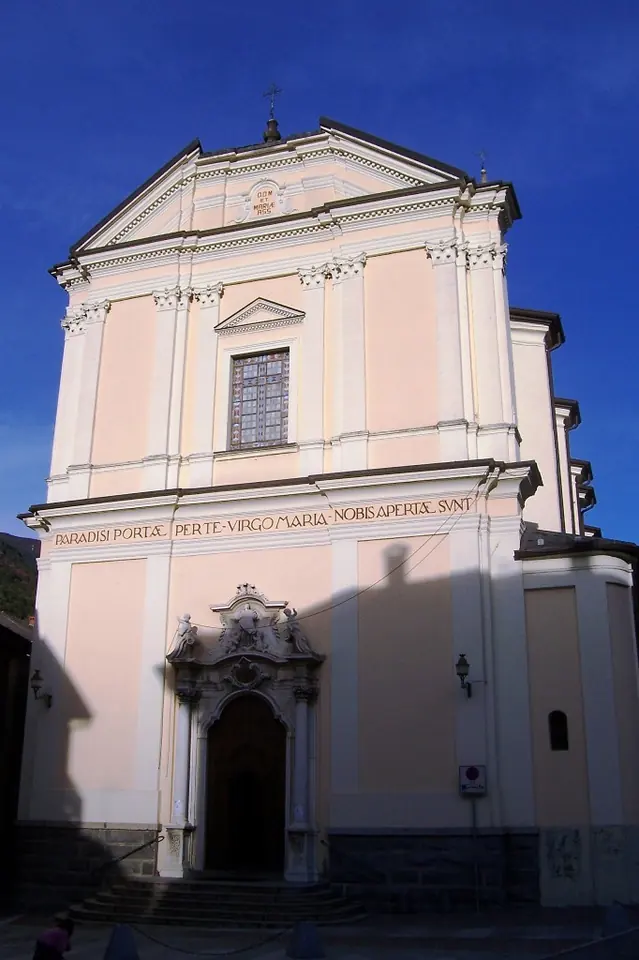
Sickness, a blessing and the war
She made her first vows at the motherhouse in Nizza Monferrato on September 17, 1908. Her health worried her superiors: an infected finger that a doctor wanted to amputate, then typhoid fever. The Dicastery records that Blessed Michael Rua, John Bosco's successor, blessed her in the infirmary and foretold a long, hard-working life. A rest at the sea at Varazze restored her, and she stayed there about ten years.
During World War I she took a special nursing course and worked as a Red Cross nurse in the military hospital at Varazze, caring for soldiers brought back from the front. It was the medical school God gave her for the Amazon.
On June 25, 1915, a flood struck Varazze. Maria was caught in it and promised Our Lady that if she lived, she would go to the missions. She was saved, and her congregation counts the rescue as a grace of Mary Help of Christians. It took seven years for the promise to come due. In 1922 the Mother General, Caterina Daghero, told her she was going to Ecuador. She sailed on November 9, 1922, at thirty-nine, and never came home.
Into the forest
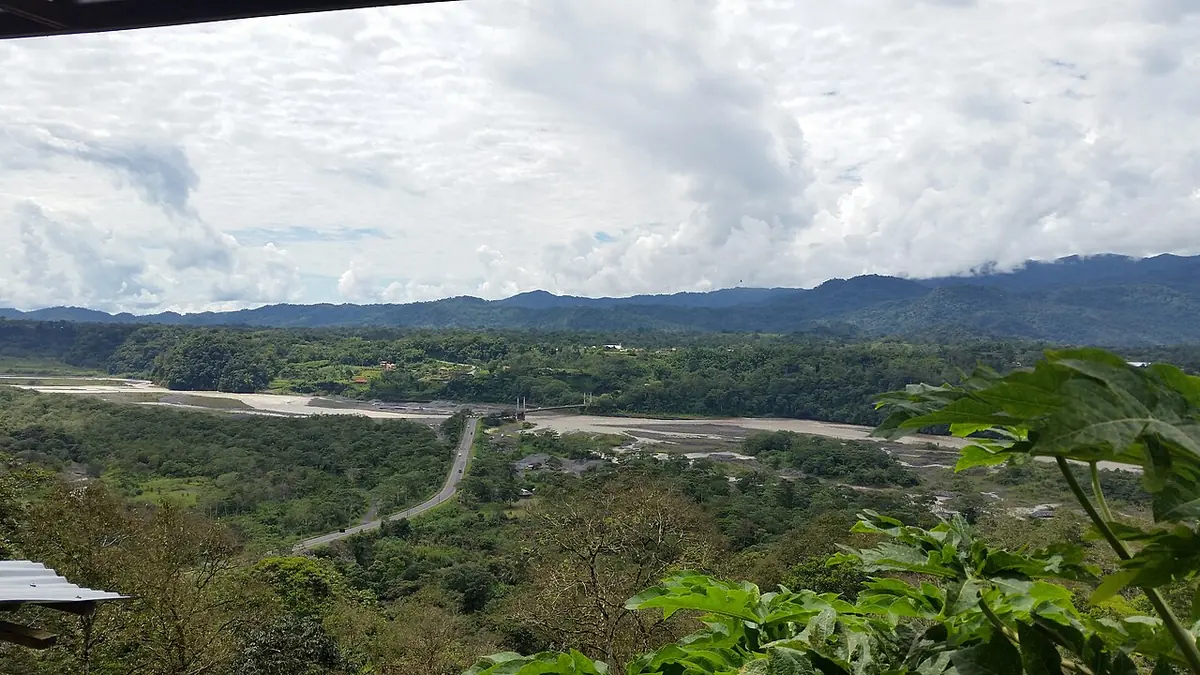
For three years she served at Chunchi, a small town in the Andes, where she improvised a clinic and a little pharmacy, the botiquín. In 1925 she set out with Bishop Domenico Comin, Salesian missionaries and two other sisters for the Vicariate of Méndez in the Amazon. They rode on horseback to Pailas, at about 10,000 feet, and then went on foot for days, fording rivers, crossing on bridges of liana vines, and sometimes riding on the backs of Shuar guides. They reached Macas on December 4, 1925, the feast of the town's beloved image of the Purísima, Our Lady of the Immaculate Conception.

The pocketknife
Soon after the sisters arrived, the daughter of a Shuar chief was wounded by a bullet. Sister Maria, with no surgical instruments, took out the bullet with a pocketknife. The girl lived. The Salesian Bulletin and Agenzia Fides both tell the story, and from that day, Fides says, the Shuar called her La Madrecita. Later retellings add that the chief had threatened the sisters if his daughter died; the older accounts we found don't say so.
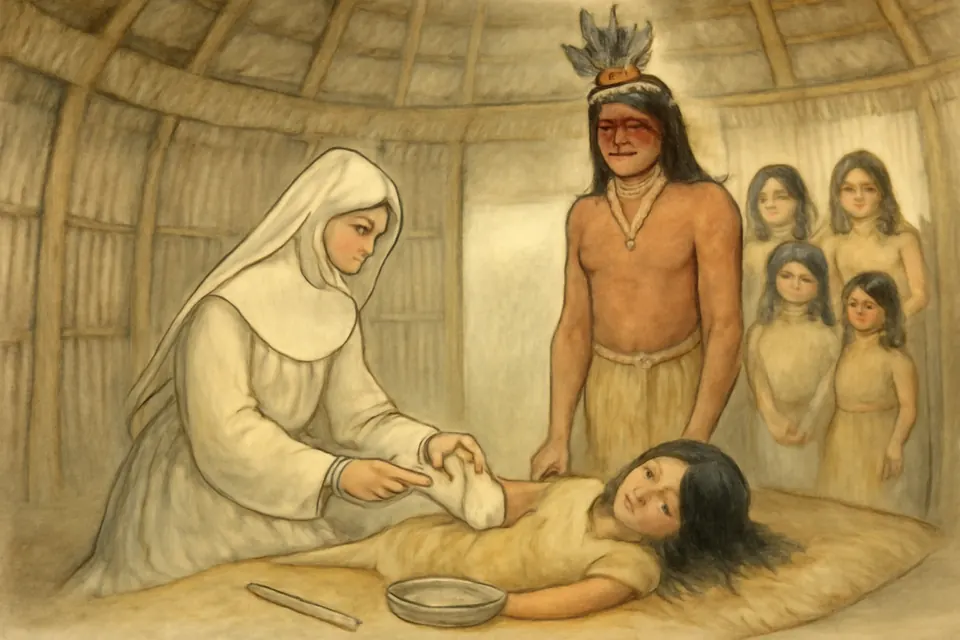
The sisters then settled in a small house on a hill at Macas, a settlers' village ringed by Shuar homes, near the Upano River.
Nurse, catechist and mother
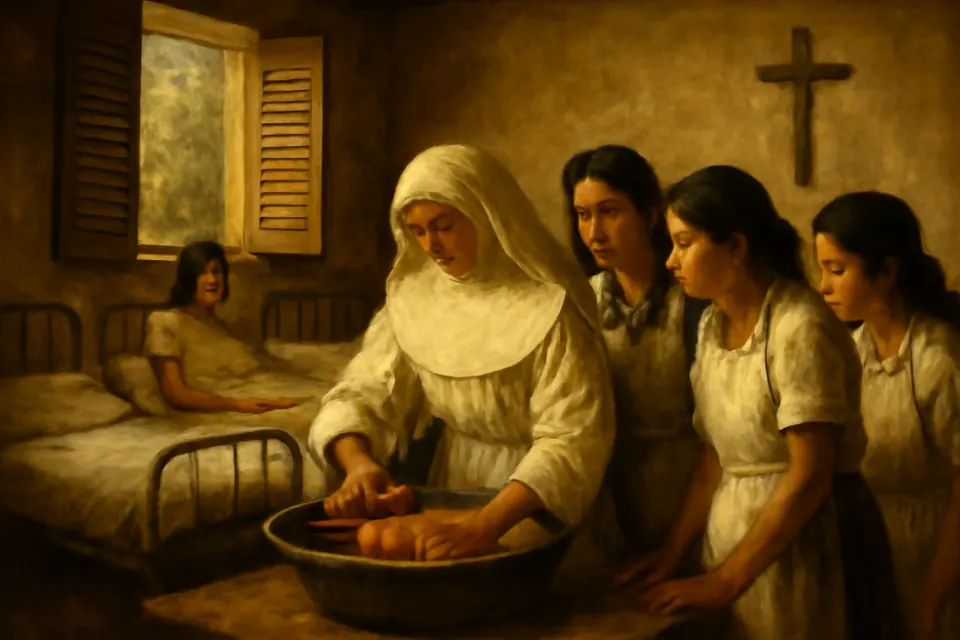
For the next four decades she worked from Macas, from the mission of Sevilla Don Bosco across the Upano River, and from Sucúa, with only one break, from 1934 to 1938, when she ran a charitable work in Guayaquil. She treated smallpox and measles epidemics that killed many Shuar, went from hut to hut to visit the sick, and spoke of Christ in the Shuar language.
She cared especially for Shuar women, who were often given in marriage without their consent and burdened with the heaviest work. She taught sewing, hygiene, child care and cooking, and prepared young couples for marriage. In 1930 Macas saw its first Christian wedding of two young Shuar who had chosen each other freely, and hundreds of families followed. In 1954, at seventy, she saw the Pius XII Hospital at Sucúa open, and she trained its nurses herself.
Her days began early. Witnesses at her beatification remembered her in the church at three or half past three in the morning, making the Stations of the Cross, and in adoration before the Blessed Sacrament from four to five. "One look at the crucifix gives me life and courage to work," she said.
Fr. Giovanni Vigna, who worked beside her, wrote: "She was the very embodiment of simplicity and evangelical shrewdness. With what exquisite motherliness does she win hearts!"
Peacemaker to the end
In 1969 tension between settlers and the Shuar turned violent. On July 4 a deliberate fire destroyed the mission at Sucúa in a single night. Sister Maria begged the leaders of the Shuar Federation to give up any thought of revenge and said she would offer her own life for peace. "I am offering my life to Our Lord for the good of the white people and the Shuar," she used to say.
On August 5 she went to Macas for the feast of the Purísima. Afterward she told one of her sisters, Pierina Rusconi, under a promise of secrecy, that the Purísima had told her to prepare herself, because something serious would soon happen to her.

Twenty days later, on August 25, 1969, she left Sucúa for a retreat in Quito. The little plane crashed seconds after takeoff at the edge of the forest. She was the only one killed. She was eighty-six. "I am happier every day about my religious missionary vocation!" she had written.
The miracles of St. Maria Troncatti
Two healings through her intercession have been examined by the Church and approved.
For her beatification: In April 2002, Josefa Yolanda Solórzano Pisco, of the diocese of Portoviejo in Manabí province, fell ill with what looked like the flu. Within days she was jaundiced, bruised, feverish and delirious, and then in a coma. Her family took her home to die. A Salesian priest told them about Sister Maria and urged them to pray to her. At dawn on May 10, 2002, Yolanda began to recover, and she returned to full health.
For her canonization: On February 2, 2015, a Shuar carpenter, Juwa Juank Kankua Bosco, was sharpening a blade on a grinder when the stone shattered and struck him in the forehead. He suffered an open skull fracture with loss of brain tissue, was carried on a stretcher, flown to Macas and then operated on at Ambato, where the neurosurgeon told his family there was no hope. His brother-in-law and sister began to pray to Blessed Maria Troncatti, and a large picture of her was hung in the room where he lay in a vegetative state. In late March or early April 2015, Juwa dreamed of a woman in white who said she was Sister Maria Troncatti and told him he would be healed. He woke able to move his arm and leg and to speak a few words, and he recovered steadily. A medical check in 2022 found him fully healed. The Dicastery's medical board called the cure rapid, complete, lasting and scientifically inexplicable on March 7, 2024, and Pope Francis approved the miracle later that year.
Other favors are reported by people who pray to her in Ecuador and Italy but have not been examined. Her rescue from the flood at Varazze in 1915 is remembered by her congregation as a grace of Our Lady.
Beatification and canonization
The diocesan inquiry into her life was held at Macas in 1986 and 1987, with a second inquiry at Brescia in 1989. Pope Benedict XVI declared her Venerable on November 8, 2008. Cardinal Angelo Amato beatified her at Macas on November 24, 2012, recalling St. Rose of Lima, the first flower of holiness in the New World.
On October 19, 2025, Pope Leo XIV canonized her in St. Peter's Square with St. Ignatius Maloyan, St. Peter To Rot, St. Vincenza Maria Poloni, St. Carmen Rendiles, St. José Gregorio Hernández and St. Bartolo Longo.
What St. Maria Troncatti is invoked for
The Church has not named her the official patron of any group. People who love her ask her prayers above all for the sick and for those who nurse them, for missionaries, for the Shuar and the other peoples of the Amazon, and for reconciliation where communities are divided, as the Salesian prayer below asks. You can find official patronages on our patron saints page, including the patron saints of nurses.
Symbols of St. Maria Troncatti in art
She lived in the age of photography, so images of her follow her real face: round, cheerful, sun-browned, with glasses in her later years. Look for:
- The habit of the Salesian Sisters: in the Amazon, a white habit and veil, sometimes with a large white apron for work.
- A medicine bag or nurse's kit: her care for the sick.
- A crucifix and rosary: the prayer that carried her work.
- Shuar women and children around her: her spiritual motherhood, the madrecita.
- The forest and the river: the selva that was, in the Dicastery's phrase, the "homeland of her heart."
Her images are new, and no single tradition has formed yet. The pictures most often seen in Ecuador are devotional paintings based on her photographs.
Where she is honored
Her remains rest in the chapel at Sucúa, beneath an altar dedicated to her. In July 2025, before the canonization, a tribunal of the Vicariate of Méndez carried out the canonical recognition of her remains and their treatment for conservation. A new sanctuary in her honor has been planned in Sucúa.
At Macas, the cathedral and the great statue of the Purísima recall the Lady to whom Sister Maria entrusted her mission from its first day there, December 4, 1925.
Prayer to St. Maria Troncatti
The Salesian family uses this prayer, from Pierluigi Cameroni's Like Stars in the Heavens (2022), written when she was still Blessed:
Merciful Father, through the work of the Holy Spirit you raised up motherly charity in Blessed Maria Troncatti, virgin, in proclaiming Christ to the people. Grant that we may be instruments of reconciliation and peace and grant us the graces that we ask for through her intercession. Through Christ our Lord. Amen.
Let us ask St. Maria Troncatti to pray for the sick and those who care for them, for missionaries far from home, and for peace between peoples who fear each other. We remember her on August 25; see the other saints of the season on our feast days calendar.
Frequently asked questions
Who was St. Maria Troncatti?
An Italian religious sister of the Daughters of Mary Help of Christians (the Salesian Sisters), born in 1883 in Corteno Golgi near Brescia. A Red Cross nurse in World War I, she went to Ecuador in 1922 and worked among the Shuar of the Amazon until her death in 1969, running dispensaries and a hospital, training nurses and teaching the faith.
When is St. Maria Troncatti's feast day?
August 25, the day she died in 1969. The Salesian family keeps it, and the Church in Ecuador honors her as one of its own.
When was Maria Troncatti canonized?
Pope Leo XIV canonized her in St. Peter's Square on October 19, 2025, World Mission Sunday, together with six others, including Ignatius Maloyan, Peter To Rot, Bartolo Longo and José Gregorio Hernández. She had been beatified at Macas, Ecuador, on November 24, 2012.
What miracles are attributed to Maria Troncatti?
Two healings were approved by the Church. For her beatification, the recovery in May 2002 of Josefa Yolanda Solórzano Pisco, who was in a coma and sent home to die in Manabí province. For her canonization, the recovery of a Shuar man, Juwa Juank Kankua Bosco, from a severe open head wound suffered in February 2015.
Where is St. Maria Troncatti buried?
In the chapel at Sucúa, in Ecuador's Morona Santiago province, where her remains rest beneath an altar dedicated to her. A larger sanctuary in her honor has been planned in Sucúa.
Keep exploring
Sources
- Dicastery for the Causes of Saints: Maria Troncatti (Italian). Her life, the 1915 flood at Varazze, her prediction from the Purísima, the 1969 fire at Sucúa, both approved miracles, the beatification homily of Cardinal Amato (Macas, November 24, 2012) and the canonization (our translations)
- Pope Leo XIV, Homily for the canonization of seven Blesseds, October 19, 2025
- Agenzia Fides: "I must be a missionary": Sister Maria Troncatti will be proclaimed a Saint during World Mission Sunday 2025. The pocketknife surgery, "La Madrecita," the Shuar Federation radio announcement, and her tomb at Sucúa
- Salesian Family Bulletin: Sr. Maria Troncatti, A Missionary of Love in Ecuador. Fr. Giovanni Vigna's testimony and the prayer from Pierluigi Cameroni, Like Stars in the Heavens (2022)
- ACI Prensa: Sor María Troncatti, Comisión vaticana verifica restos mortales de la futura santa salesiana (Spanish). The canonical recognition of her remains at Sucúa in July 2025